


More news on this day
As the 90th Masters Tournament unfolds from April 9 to 12, 2026, Augusta once again becomes the center of the golfing world, its quiet neighborhoods and pine-lined streets reshaped into a global festival site for one extraordinary week.
Get the latest news straight to your inbox!
A Record-Breaking Edition Of Golf’s Most Iconic Major
The 2026 Masters is marking a milestone year at Augusta National Golf Club, with the 90th playing of the tournament coinciding with one of the most competitive leaderboards and most lucrative prize structures in major championship golf. Published coverage indicates that the event’s purse has climbed to 22.5 million dollars, with 4.5 million dollars going to the winner, underscoring how the Masters has consolidated its position at the top of the men’s game.
The championship again occupies its traditional early April slot, with four days of play from Thursday to Sunday on the 7,768-yard, par-72 layout in Augusta, Georgia. Reports highlight how the meticulously prepared fairways, lightning-fast greens and familiar landmarks such as Amen Corner are providing a demanding stage for the world’s elite professionals and invited amateurs, drawing millions of viewers worldwide.
This year’s tournament is also framed by a compelling storyline at the top of the sport. Rory McIlroy has arrived as defending champion after completing the career Grand Slam at Augusta and then successfully retaining the green jacket, placing extra focus on the chase for majors and adding a layer of drama that is resonating far beyond core golf audiences.
Alongside the on-course action, the modern Masters now lives across broadcast, digital and social platforms in a way that would have been unthinkable a generation ago. International broadcasters carry feeds into homes on multiple continents, while official tournament apps and streaming services provide dedicated coverage of featured groups and key holes, helping to turn one Georgia city into a shared experience for fans around the world.
Economic Surge: A Week That Rewrites Augusta’s Balance Sheet
For Augusta itself, Masters Week represents much more than four days of golf. Local tourism and business analyses in recent years have estimated that the annual tournament generates well over 100 million dollars in total economic impact for the metropolitan area, with direct visitor spending on accommodation, dining, transportation and retail combining with longer-term exposure for the city as a destination.
Short-term rentals and hotel rooms across the region are heavily booked months in advance of the 2026 event. Data from housing and travel platforms cited in recent industry reporting show steep increases in nightly rates during Masters Week, with investors often tailoring properties specifically for tournament patrons and corporate groups. Real estate professionals describe the Masters as a recurring driver of demand for upscale, well-located homes that can be marketed seasonally to visiting fans.
Augusta’s hospitality sector gears up accordingly. Restaurants extend hours, pop-up venues appear around Washington Road and downtown, and local businesses from car services to caterers add staff to cope with demand. The city’s convention and visitors bureau has previously projected that tens of thousands of additional jobs and shifts are supported directly or indirectly by Masters-related trade each spring, underlining the tournament’s central role in the local economic calendar.
The tournament’s influence also reaches into infrastructure and community investment. Publicly available information on recent projects points to Augusta National’s involvement in funding road improvements, public spaces and youth facilities in surrounding neighborhoods, signaling how the club’s global event is intertwined with the city’s long-term development.
Airports, Fairways And Fan Logistics In A Global Festival City
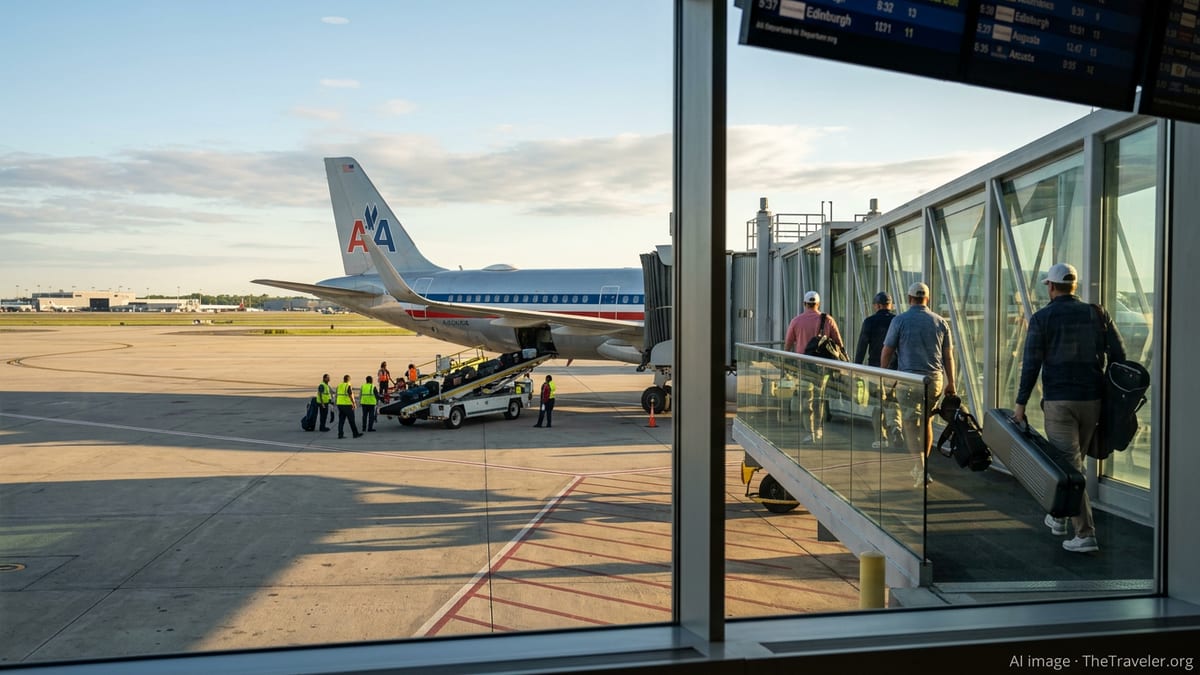
Transport data and aviation coverage show how Masters Week transforms Augusta Regional Airport into one of the busiest business aviation hubs in the United States, despite its modest year-round traffic. Reports in 2026 point to more than 2,000 private jets operating in and out of the airport during tournament week, stretching tower operating hours and filling aprons with aircraft carrying executives, celebrities and high-spending visitors.
On the ground, the logistical footprint is just as striking. Tournament guidance for 2026 describes free patron parking lots opening early each morning and filling quickly as spectators stream toward the gates. Local media coverage emphasizes the importance of planning routes, using designated shuttles where available and allowing extra time for security screening, with Augusta’s streets temporarily reoriented around the flow to and from Augusta National.
Inside the gates, detailed policies shape the spectator experience, from strict rules on mobile phone use to regulations on chairs, bags and ticket transfers. The result is a controlled environment that aims to preserve the tournament’s traditions while accommodating crowds that can swell into the tens of thousands on practice and competition days, many of them experiencing Augusta for the first time.
The festival character extends beyond the course perimeter. Nearby neighborhoods host informal viewing gatherings, rental homes function as corporate hospitality suites and downtown businesses stage Masters-themed events. For one week each year, Augusta’s identity, traffic patterns and daily rhythm pivot around the tournament, blurring the line between sporting event and citywide celebration.
A Local Culture Shaped By A Global Audience
The Masters’ global profile has also helped shape the culture of Augusta itself. Commentators have described how the city’s civic life, from hospitality training programs to volunteer networks, has evolved around the annual influx of international guests. Residents often schedule family events, school breaks and business plans around Masters Week, treating it as a defining marker of the local calendar.
At the same time, Augusta’s neighborhoods are increasingly visible to a worldwide audience. Human-interest features in regional and national outlets highlight stories of long-time residents who rent out their homes, entrepreneurs who build businesses around tournament services and first-time visitors discovering the region’s food, music and riverfront attractions beyond the club’s gates.
The city’s relationship with the tournament has also deepened in the wake of recent challenges. Coverage of Augusta’s recovery from severe storm damage and broader economic headwinds has frequently cited Masters-linked partnerships as catalysts for rebuilding community facilities and public amenities. That narrative lends the 2026 edition an additional layer of symbolism, presenting the tournament not only as a showcase of elite golf but also as a sign of local resilience.
For many residents, the annual return of the Masters has come to represent a kind of cultural homecoming, as former Augustans and repeat visitors converge on the city. The mix of tradition and renewal, played out against the familiar backdrop of azaleas and towering pines, reinforces Augusta’s dual identity as both a small Southern city and the temporary capital of the golf world.
Digital Access Extends Augusta’s Reach Far Beyond Georgia
While only a limited number of patrons can walk the fairways in person, the 2026 Masters is leveraging extensive digital coverage to turn Augusta into a truly global festival venue. Broadcast schedules released in recent days outline wall-to-wall coverage on major networks in North America and Europe, supplemented by official streaming platforms that deliver multiple feeds, featured groups and dedicated coverage of famous stretches such as Amen Corner and the closing holes.
Technology reports note that fans can follow real-time scoring, shot-by-shot tracking and high-definition video from anywhere with an internet connection, often accompanied by analysis and data visualizations. This layered experience allows viewers in distant markets to feel embedded inside the event, even as ticket availability and on-site capacity remain tightly controlled.
The reach extends across social media, where clips of spectacular shots, crowd reactions and iconic vistas circulate within minutes. Influencers, golf content creators and mainstream outlets all amplify Augusta’s imagery, contributing to a sense of shared participation that echoes a music festival or global sporting carnival, even for those nowhere near Georgia.
For Augusta, that virtual audience translates into long-term visibility. Tourism specialists point out that viewers who first encounter the city through Masters coverage often become future visitors, whether for golf trips, conventions or leisure travel. In that way, the 2026 Masters not only crowns a champion but also refreshes the world’s connection to a city that, for one week each year, becomes the unofficial capital of golf.