


More news on this day
Flight disruptions are persisting at Miami International Airport after an Amazon-branded cargo jet overran a runway on Sunday, killing five people on the ground and triggering days of delays as investigators examine what caused the aircraft to leave the paved surface and plow through airport perimeter areas.
Get the latest news straight to your inbox!
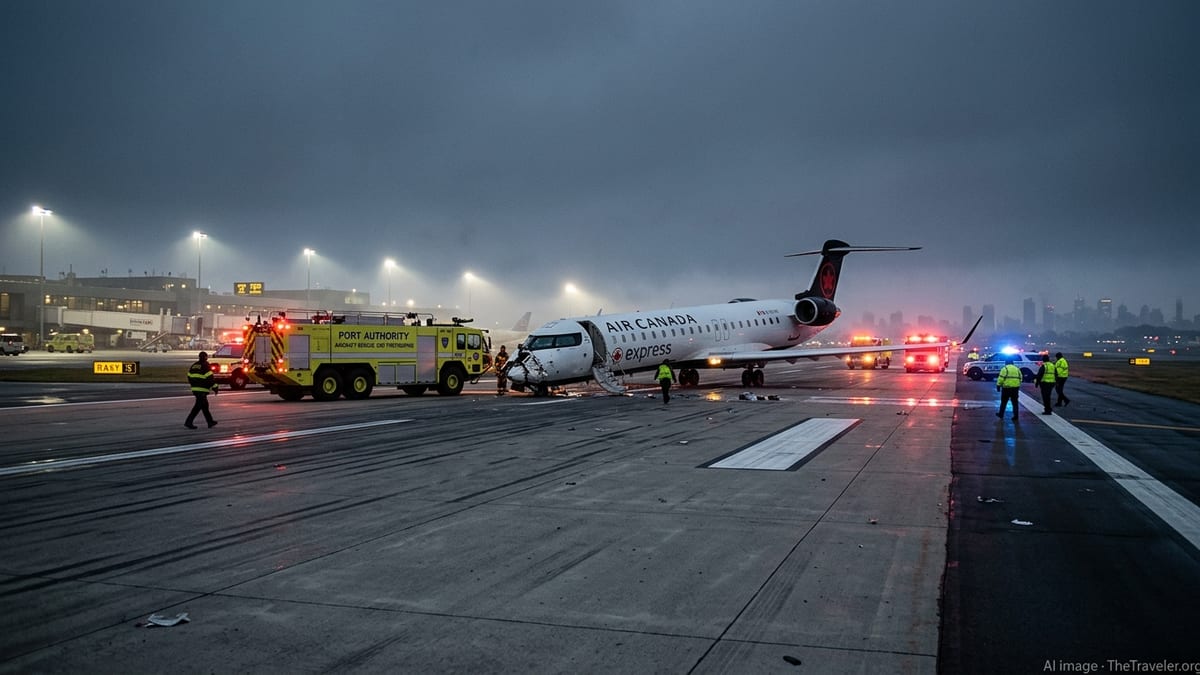
Runway overrun leaves aircraft disabled at northwest end of MIA
Publicly available information from federal investigators shows that 21 Air Flight 7598, a Boeing 767-300 freighter operating for Amazon’s Prime Air network, was arriving from San Juan on the afternoon of September 6 when it overran Runway 30 at Miami International Airport. The aircraft left the diagonal runway at speed, continued beyond the paved surface and came to rest near the airport’s northwest boundary after striking vehicles outside the airfield fence.
According to the National Transportation Safety Board’s preliminary accident page, the cargo jet was completing a scheduled cargo run under Part 121 regulations when the runway excursion occurred. The event is listed as a runway overrun at the end of Runway 30, with the investigation status marked as ongoing and a dedicated team assigned to collect data from the scene and from onboard systems.
Coverage from aviation industry outlets describes how the impact and resulting fire left the widebody freighter disabled at the far end of the airfield complex. Photos and video shared publicly show the fuselage resting beyond airport property, with extensive emergency response activity in the surrounding area and heavy smoke visible across much of the western side of the airport.
Early reporting from national and local outlets indicates that the aircraft struck at least one airport vehicle and another vehicle on a public roadway that runs along the perimeter of the airfield. The wreckage path, stretching from the departure end of the runway to a road and nearby parking areas, is now a focal point for investigators mapping skid marks, debris and damage to safety infrastructure.
Five killed on the ground as investigators study flight data
Published accounts from multiple news organizations report that the five people killed in the crash were all on the ground, traveling in a van used by a contracted cleaning company working at the airport and in an SUV on a public street. Two additional occupants of the van survived with injuries, according to detailed summaries of the accident released in Spanish and English language coverage.
Reports indicate that the pilots survived the impact and were taken to hospital with injuries. Aviation accident summaries compiled by national outlets note that the crew had already flown two earlier segments that day before the San Juan to Miami leg, and that investigators are looking at the full duty day, weather conditions and runway configuration as they reconstruct the landing sequence.
The NTSB has confirmed through its public docket that both the cockpit voice recorder and the flight data recorder were recovered from the aircraft and sent to Washington for analysis. Television and online coverage of an NTSB media briefing describe plans to review several hours of data, including approach speed, autobrake settings, thrust reverser use and any indications of a late go-around attempt.
Written summaries of that briefing note that investigators are also gathering surveillance footage from the airport, performance data from the airline and maintenance logs for the Boeing 767. While the cause of the accident remains undetermined, safety specialists quoted in trade publications point to the global trend of runway excursions being among the most common serious incidents in commercial aviation.
Miami flight delays gradually ease as runway capacity returns
The immediate impact on travelers was severe. Aviation trade reporting and local news outlets describe how Miami International Airport briefly implemented a full ground stop after the crash, suspending both arrivals and departures while firefighters worked to control the blaze and emergency teams secured the area at the northwest end of the field.
According to published coverage that cites airport statements, all four of Miami’s runways and connecting taxiways were temporarily closed as debris, foam and emergency equipment blocked key intersections. Flight-tracking analysis shared by aviation enthusiasts on social platforms showed scores of diversions to Fort Lauderdale, Orlando and other airports, along with holding patterns for inbound international flights waiting for updates on the airfield’s status.
By Monday morning, public information from the Miami-Dade Aviation Department indicated that two of the four runways had reopened, allowing limited operations to resume. Delays nonetheless remained significant, with some reports pointing to hours-long waits, extended tarmac times and a heavy backlog of aircraft repositioning into and out of South Florida.
As of Wednesday, online airport notices and airspace advisories show multiple active runway and taxiway restrictions still in place around the accident site. These advisories highlight displaced thresholds, closed segments of the diagonal runway, and restrictions on certain taxi routes that normally support Miami’s complex mix of domestic, international and cargo operations.
Runway safety infrastructure and EMAS questions surface
Beyond the immediate human toll and operational disruption, the accident has revived questions about runway safety infrastructure at Miami International Airport. Commentaries and explainers from national broadcasters and aviation-focused publications note that the overrun occurred at a runway end that does not use an engineered material arresting system, or EMAS, a technology designed to decelerate aircraft that leave the paved surface.
Analysis shared in aviation forums and summarized in mainstream coverage points out that many large U.S. airports have installed EMAS at runway ends where there is not enough room for a full safety area. The system typically consists of crushable concrete blocks that rapidly slow an aircraft without causing it to flip or break apart. In Miami’s case, publicly available information suggests that the airport relies on conventional runway safety areas rather than arrestor beds at the incident runway.
Previous federal documents on Miami’s capital program highlight investments in runway incursion mitigation projects, including upgrades to hot spot areas where taxiways intersect runways. Commentators now anticipate that the NTSB will closely examine how the existing safety area functioned in this event, whether additional features might have reduced the distance the aircraft traveled beyond the runway and what role, if any, local terrain and adjacent roadways played in the outcome.
Safety specialists interviewed by news outlets emphasize that even if EMAS or other features are not mandated at a particular runway, high-profile events like this one often prompt broader reviews of national standards. Depending on the investigation’s findings, regulators and airport operators could revisit guidance on runway end protections at busy hubs with limited space around the airfield perimeter.
Airlines, cargo operators and travelers adjust to ongoing disruption
Airlines serving Miami have spent several days adjusting schedules and rerouting aircraft as the airport works around the damaged runway and associated closures. Travel industry analysts quoted in business press coverage note that Miami’s role as a major connecting hub for Latin America and the Caribbean amplifies the impact of any prolonged capacity reduction, especially at the tail end of the U.S. summer holiday period.
Cargo networks have also been forced to adapt. The affected Boeing 767 was operating in Amazon’s Prime Air network, and logistics publications report that the company has been shifting some overnight freight to alternate gateways while Miami’s runway configuration remains constrained. These changes, combined with diversions and crew repositioning, can temporarily affect delivery timings for certain routes, even when customers are far from South Florida.
For passengers, publicly available data from flight-tracking sites and airline alerts show an uneven picture: some carriers have resumed near-normal operations, while others continue to post delays and cancellations on select services into Miami. Travel advisers recommend that anyone flying through the airport this week build in extra connection time, monitor their flight status closely and consider flexible rebooking options where available.
As the investigation moves into a more technical phase, attention is likely to focus on how quickly Miami International Airport can restore full runway capacity and what longer-term safety or infrastructure changes may emerge from the findings. For now, the combination of a complex accident scene and constrained airfield geometry continues to ripple through airline schedules across the region.
NTSB accident page for 21 Air Flight 7598