


More news on this day
Air traffic across the Middle East is edging back toward growth as global and regional airlines rebuild schedules to key hubs, even while war-related airspace closures, diversions and sporadic cancellations continue to unsettle long-haul travel corridors between Europe, Asia and Africa.
Get the latest news straight to your inbox!
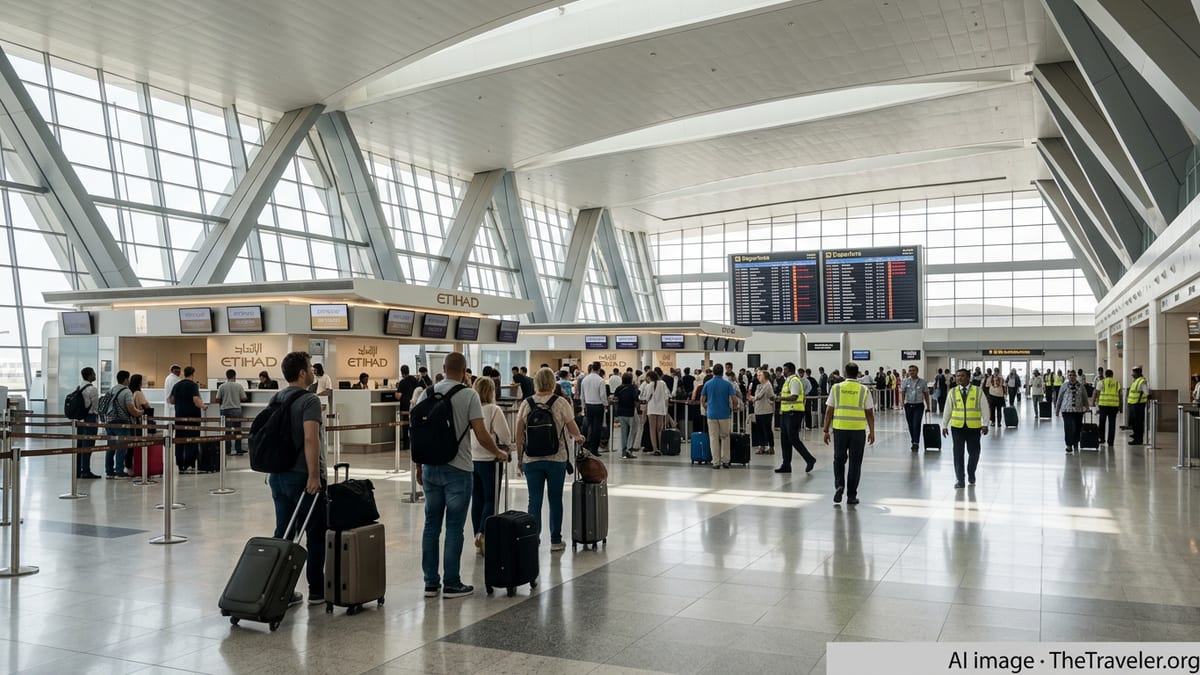
Traffic rebounds as hubs reopen but demand remains fragile
Industry data released in late May and early June indicate that the global air travel recovery is still intact, but the Middle East conflict has slowed regional momentum and reshaped traffic flows. The International Air Transport Association has reported that war-related disruption in the Middle East was severe enough to pull global passenger demand into negative territory in April 2026, even though load factors reached record highs on many routes as airlines consolidated capacity.
Separate analysis from airport and airline groups shows that major Middle Eastern hubs collectively lost tens of millions of passengers in March and April as airspace closures and missile strikes forced widespread cancellations. Passenger volumes at leading Gulf airports fell by more than half year on year at the height of the crisis, underlining the systemic role the region plays as a bridge between continents.
By May, however, publicly available traffic figures and schedule data started to show a partial rebound. Air navigation restrictions were eased in the United Arab Emirates and other Gulf states, allowing Dubai, Abu Dhabi and Doha to move from skeleton operations back toward more regular schedules. While overall volumes remain below pre-crisis projections, aviation analysts describe the current phase as one of recovery rather than shutdown.
Travel industry commentary suggests that demand is uneven across markets. Long-haul connecting traffic that relies on Gulf hubs has been slower to return than point-to-point journeys within the wider Middle East and to nearby regions such as East Africa. Forward booking data for the June to September period compiled by airline and consultancy reports shows softer demand into the conflict zone and stronger growth toward Asia Pacific, where some travelers are now choosing routings that avoid the Gulf entirely.
Gulf and regional carriers restore networks in phases
Flag carriers in the Gulf and wider Middle East have leaned on phased restart strategies to rebuild their networks as airspace gradually reopens. Public statements and schedule filings show that airlines based in the United Arab Emirates, Qatar and Saudi Arabia progressively reintroduced flights on key trunk routes once operational conditions allowed, prioritizing links to Europe, South Asia and major regional capitals.
Qatar Airways, for example, has recently announced the resumption of passenger services to multiple Iraqi cities, alongside restored frequencies to Dubai, Sharjah, Bahrain and Damascus. The carrier has signaled that its global network will expand to more than 150 destinations by mid-June, a significant step up from the reduced schedules operated during the peak of the conflict-related shutdowns.
Other Gulf airlines have followed a similar pattern, restarting select routes where demand is strongest and where overflight permissions are stable, while keeping some destinations suspended or operating at reduced frequency. Industry recovery trackers compiled from flight-tracking platforms highlight a steady week-by-week increase in departures from major hubs since early April, although overall activity remains below levels seen before the Iran war.
Airlines headquartered outside the region are also recalibrating. European and Asian carriers that halted services to Gulf and Levant destinations in March have begun returning in limited numbers, particularly on high-yield routes linking major capitals to Dubai and Doha. However, many continue to route flights around sensitive airspace, adding time and fuel burn to journeys to South and Southeast Asia, and some long-planned route launches into Tel Aviv and other high-risk markets remain on hold.
Persistent disruptions on key international routes
Despite the clear signs of recovery at several Middle Eastern hubs, travel disruption remains a defining feature of the current landscape. Data cited by European aviation agencies in April showed that flight cancellations on routes between the United Kingdom and the Middle East had fallen sharply from their March peak but were still elevated compared with a typical year, underscoring the lingering volatility.
Airport associations for the Asia Pacific and Middle East regions report that nearly one-fifth of all east–west connecting capacity was effectively removed from the global system at the height of the crisis due to Gulf airspace restrictions. Although some of that capacity has been restored, analysts estimate that millions of passengers either postponed trips, rebooked through alternative hubs or never traveled at all during the March and April period.
Schedules to Israel remain particularly constrained. Ben Gurion Airport has gradually reopened for commercial operations, but several major global airlines continue to suspend or limit services to Tel Aviv, citing the security environment and operational complexity of flying into the country. Recently published updates from North American carriers show extended pauses on some routes through at least the northern hemisphere winter season, even as one or two services are tentatively penciled in for later in the year.
Beyond outright cancellations, rerouting remains a major source of disruption. Many airlines are avoiding the most sensitive parts of Middle Eastern airspace, adding up to an hour or more to certain long-haul flights between Europe and Asia. This has operational knock-on effects, including tighter aircraft rotations, shifted crew schedules and reduced slack in the global network, which in turn leaves carriers more vulnerable to delays when weather or technical issues arise.
Financial pressures mount as costs rise
The recovery in traffic is taking place against a backdrop of mounting financial pressure. IATA’s latest financial outlook, released in early June, projects that the overall profitability of the airline industry in 2026 will be roughly half of earlier expectations, with the Middle East conflict and higher jet fuel prices identified as key headwinds.
Longer routings around closed or restricted airspace are directly increasing fuel consumption and crew costs, particularly on heavily trafficked corridors between Europe and Asia that previously relied on Gulf overflights. At the same time, capacity constraints at recovering hubs are pushing up fares in some markets, as fewer available seats chase resilient demand from both leisure and corporate travelers.
Specialist fare and booking analyses produced in April suggest that corporate and marine travel segments have been forced to absorb some of the sharpest increases, as urgent travel needs leave limited flexibility to shift dates or routings. For leisure travelers, higher prices are combining with perceived security risks to dampen demand into certain destinations, even as other markets see strong rebound driven by pent-up appetite for long-haul holidays.
Industry commentary notes that airlines with diversified networks and stronger balance sheets are generally better positioned to navigate the current environment. Carriers heavily exposed to Gulf hubs or reliant on thin-margin connecting traffic face tougher choices about whether to operate longer, more expensive routes or to temporarily withdraw from markets until conditions stabilize.
Travelers adapt as network resilience improves
For passengers, the gradual restoration of flights has gone hand in hand with an adjustment in expectations. Consumer surveys cited by IATA show that traveler satisfaction with recent trips remains high overall, but that many now anticipate possible last-minute changes, longer journey times and additional security-related checks when flying through or near the Middle East.
Travel advisories issued by governments and airlines in recent months have encouraged passengers to monitor bookings closely, allow extra time for connections and consider flexible tickets that permit changes without heavy penalties. Travel forums and agency reports indicate that some long-haul travelers are proactively choosing routes through alternative hubs in Europe or Asia, even when Gulf options are available, in an effort to reduce perceived risk.
At the same time, there are signs that the global aviation system is adjusting to the new pattern of airspace availability. European network managers report that overall traffic across the continent has returned to modest growth compared with 2025, even with the added complexity of Middle Eastern reroutings. Capacity redeployments by airlines have helped maintain connectivity between major economic regions, although often via different paths than before.
Analysts caution that the pace of Middle East aviation recovery will remain closely tied to geopolitical developments. For now, the direction of travel is upward: more flights, more open airspace and more options for passengers. Yet the persistence of diversions, residual cancellations and elevated fares on key international routes underscores how fragile that recovery still is, and how central the region has become to the resilience of the global air network.