


More news on this day
Hundreds of flights across the Middle East have been cancelled or severely delayed as renewed airspace restrictions and security concerns disrupt operations in the United Arab Emirates, Kuwait, Saudi Arabia, Türkiye and beyond, affecting carriers including Pegasus Airlines, Saudia and Etihad Airways.
Get the latest news straight to your inbox!
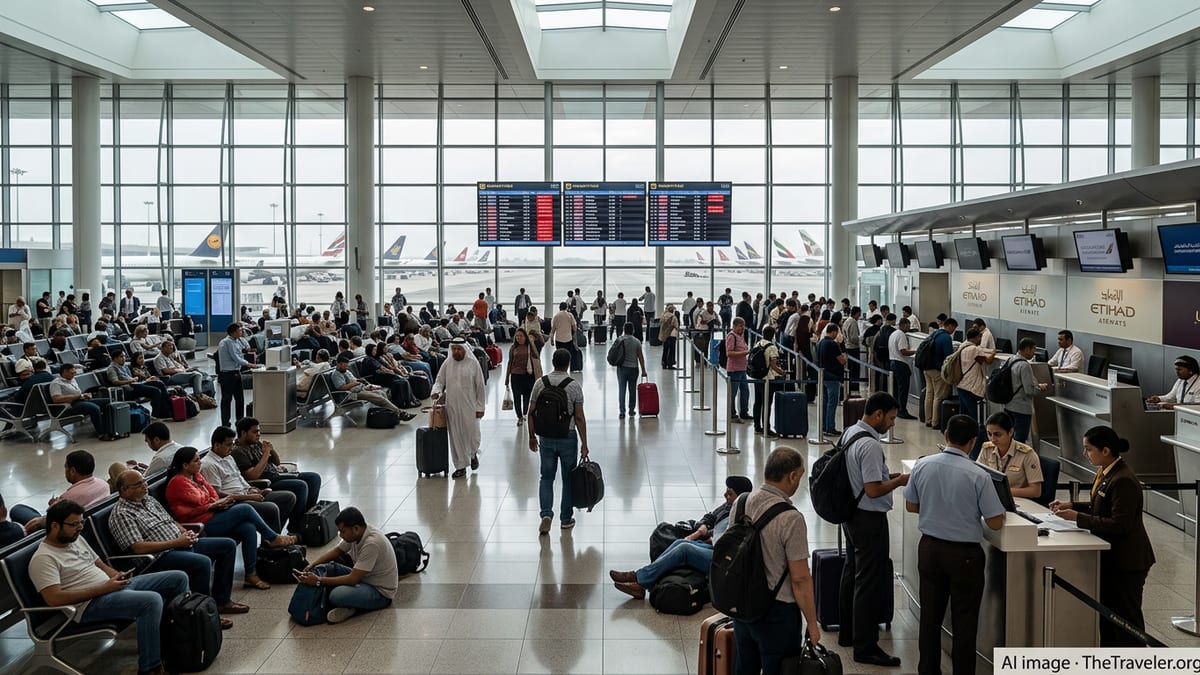
Regional Airspace Tensions Trigger New Wave of Disruptions
Published coverage from regional outlets shows that simmering security tensions and intermittent strikes linked to the wider Iran conflict have once again squeezed key air corridors in the Gulf and Levant. Recent reports describe intermittent closures and capacity cuts affecting airspace over or around Kuwait, parts of Saudi Arabia, and routes linking the United Arab Emirates with neighboring states.
According to aviation data cited by multiple news organizations, at least 178 flights have been cancelled and more than 1,100 delayed on routes touching the Middle East in the latest 24 hour period, as airlines rework schedules or hold departures while conditions are reassessed. Those figures span domestic and international services involving hubs in the UAE, Kuwait, Saudi Arabia, Türkiye and nearby countries.
While major international gateways such as Dubai and Abu Dhabi remain partially operational, carriers have adjusted timetables, rerouted flights along longer paths, or temporarily pulled services to several destinations. This has added strain to a region that has been grappling with rolling disruptions since the onset of the Iran war and subsequent attacks on airport and energy infrastructure earlier this year.
The renewed turbulence comes on top of months of instability in regional air travel, with analysts and logistics providers warning that repeated airspace closures, last minute schedule changes and longer routings are constraining capacity and driving uncertainty for passengers and cargo alike.
Pegasus Airlines Extends Cancellations on Middle East Routes
Turkish low cost carrier Pegasus Airlines has been among the most affected regional operators. Company announcements and local media reports earlier this year detailed a sweeping suspension of flights from Türkiye to Kuwait, Bahrain, Qatar, Saudi Arabia, the United Arab Emirates, Jordan and Lebanon during peak phases of the conflict. Those cancellations were repeatedly extended as airspace over several Gulf states and parts of Iraq and Iran remained restricted.
In its most recent updates, Pegasus has continued to limit operations to parts of the Middle East, with flights on a number of city pairs either suspended or operating at reduced frequency. Travel advisories have highlighted cancellations on routes linking Istanbul with Kuwait, Dubai, Abu Dhabi, Sharjah and other Gulf points on selected dates, leaving many passengers scrambling for alternative connections via Europe or more southerly corridors.
Industry observers note that Turkish carriers have played a pivotal role in connecting Europe with the Gulf and South Asia, meaning any disruption in their Middle East schedules can ripple outward to long haul networks. For Pegasus, a carrier heavily reliant on point to point leisure and migrant worker traffic, the repeated stoppages represent both a commercial challenge and a test of its ability to adapt in a highly volatile operating environment.
Passenger advocacy groups in Türkiye and across the region have urged affected travelers to monitor airline apps and booking platforms closely, as rolling adjustments mean flight status can change multiple times in a single day.
Saudia, Etihad and Gulf Carriers Grapple With Kuwait and Saudi Constraints
Flag carriers Saudia and Etihad Airways, along with other Gulf operators, have also been forced to confront intermittent restrictions, especially around Kuwait and selected airports in Saudi Arabia. According to recent coverage in Gulf based media, Kuwait International Airport has experienced temporary suspensions of operations during security incidents, with airlines diverting or cancelling services at short notice.
In Saudi Arabia, reports point to days of disrupted operations at Abha and other southern airports following missile attacks and security alerts, prompting some international and regional carriers to cancel or reroute flights. Saudia has adjusted its schedules on routes linking Saudi cities with the UAE and Jordan, at times operating only a limited number of daily services where fuller schedules had been planned.
Etihad Airways, based in Abu Dhabi, has meanwhile published advisories for flights between the UAE and Kuwait, listing certain services as cancelled or pending update while others continue to run under revised timings. Travel columns in regional newspapers describe passengers facing extended layovers in Abu Dhabi and Riyadh as aircraft and crews are repositioned to accommodate last minute airspace decisions.
These operational pressures come at the height of the busy summer season, when Gulf carriers normally record high load factors on routes connecting Europe, Asia and Africa. The necessity to reroute around sensitive airspace or suspend certain city pairs altogether has translated into longer flight times, constrained capacity and pockets of significant delay.
Delays Outpace Cancellations as Airlines Rebuild Fragile Schedules
While headline numbers highlight more than 170 outright cancellations, the latest disruption cycle has produced an even larger wave of delays. Aviation analytics cited by international media indicate that over 1,100 flights linked to the region have departed late as traffic is funneled through narrower corridors and subjected to tighter air traffic control spacing.
In Kuwait, flight boards in recent days have shown clusters of delayed arrivals from Istanbul, Abu Dhabi and other regional hubs, including services operated by Pegasus Airlines, Etihad Airways and Turkish Airlines. Reports describe aircraft holding in stacks outside congested airspace or waiting on the ground for revised departure clearances as conditions shift.
Across the wider Middle East, carriers are attempting to piece together more stable schedules after months of volatility tied to the Iran war and related tensions. Government briefings and logistics industry updates note that while some major hubs are again handling near normal volumes, the operating environment remains fluid, with more modest disruptions capable of quickly compounding into broader delays when capacity is already tight.
For travelers, the practical impact is that delays are now often measured in hours rather than minutes, even on flights that ultimately operate. This has knock on consequences for missed connections at global hubs in Europe and Asia, as well as for cargo shipments that rely on tight transfer windows to keep supply chains running smoothly.
What Travelers Should Expect in the Coming Days
Publicly available advisories from airlines and foreign ministries consistently urge passengers booked on Middle East routes to remain flexible and prepared for changes. With airspace restrictions and security alerts evolving rapidly, schedules can shift until shortly before departure, particularly on routes involving Kuwait, parts of Saudi Arabia and nearby conflict affected zones.
Travel experts recommend that passengers prioritize direct services where possible and build in additional connection time when itineraries require transfers through Gulf hubs such as Dubai, Abu Dhabi, Doha, Riyadh or Istanbul. Where cancellations occur, many airlines in the region have been offering fee free rebooking windows and, in some cases, refunds or travel vouchers, particularly for tickets issued before key escalation dates earlier in the year.
Analysts tracking the sector caution that further disruption cannot be ruled out as the security situation in and around the Gulf remains unsettled. At the same time, there are signs that carriers are becoming more adept at operating within the constraints, using alternative routings over Egypt, the southern Arabian Peninsula and the Caucasus to keep long haul networks connected.
For now, however, the latest tally of 178 cancellations and 1,126 delays underscores how fragile the regional aviation recovery remains. Passengers planning to transit through the Middle East in the coming days are being advised, through airline channels and media reports, to check flight status regularly and to prepare for a journey that may be longer and more complicated than originally scheduled.