


More news on this day
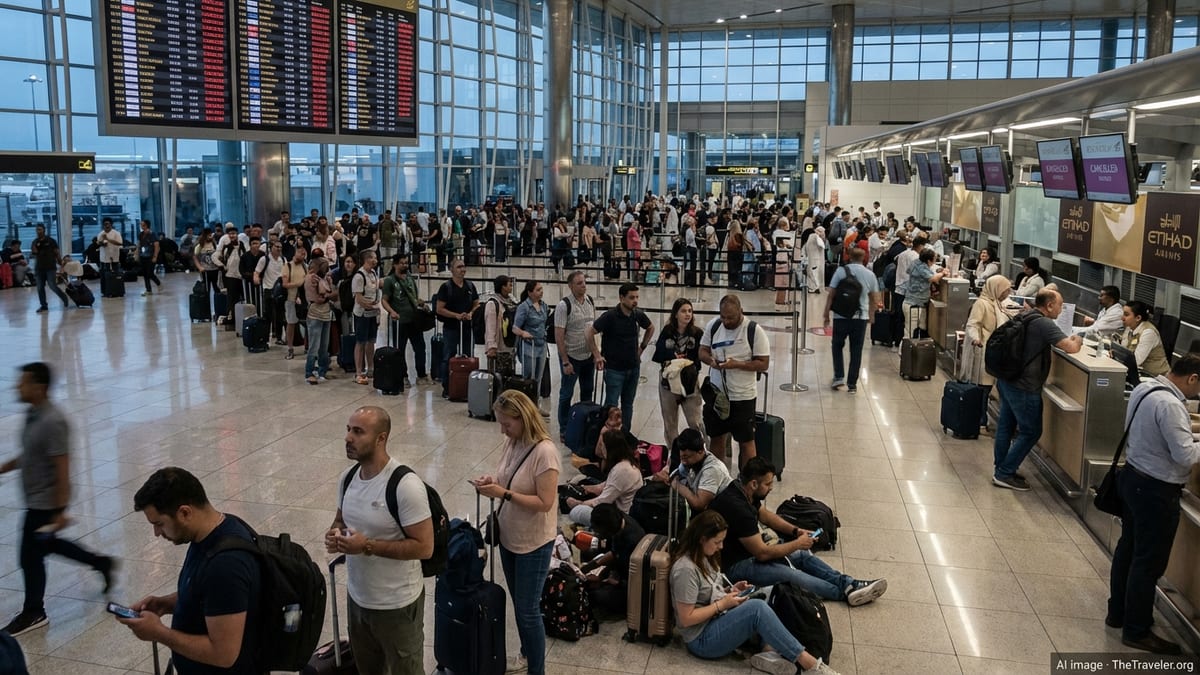
Air travel across the Middle East is facing another turbulent spell as Dubai, Jeddah and other major hubs report scores of cancellations and hundreds of delays in a 24-hour window, straining airline operations and disrupting travel plans for thousands of passengers.
Get the latest news straight to your inbox!
Ripple Effects From Regional Tensions Hit Major Hubs
Recent escalations in US Iran tensions and related airspace risk advisories are driving fresh volatility across Middle East aviation networks. Publicly available information from regional media and aviation trackers shows that carriers are reworking schedules, rerouting flights and in some cases extending suspensions on selected routes.
Advisories from regulators and airports indicate that airspace over the UAE, Bahrain, Kuwait and Jordan remains technically open, but airlines are building in extra margins for safety and operational flexibility. This combination has produced a patchwork of delays and cancellations rather than blanket shutdowns, leaving passengers facing uncertainty even where airports remain fully operational.
Data compiled by passenger rights platforms shows the scale of the disruption. A recent 24 hour snapshot for the wider region cited 59 cancellations and more than 1,200 delays, with Dubai International and major Saudi hubs such as Jeddah and Riyadh among the hardest hit. The knock-on impact extends to secondary airports as aircraft and crews fall out of position.
While not every wave of disruption is identical, the current pattern continues a months-long trend in which geopolitical tensions, dynamic airspace restrictions and airline risk assessments combine to create an unstable operating environment across the Gulf and neighboring states.
Dubai and Abu Dhabi See Elevated Delays and Targeted Cancellations
Dubai International Airport, the region’s largest hub, is again at the center of the latest disruption. Coverage from UAE based outlets shows a mix of operating, delayed and cancelled services for both Emirates and flydubai, alongside international carriers using the airport as a gateway between Europe, Asia and Africa. Flights to key long haul destinations such as London and New York remain in high demand but are also featuring in delay lists as schedules are adjusted at short notice.
In Abu Dhabi, Zayed International Airport is reporting similar pressures. Arrivals and departures across Etihad Airways’ European, Asian and regional networks have been running behind schedule, with some services departing significantly later than timetabled. Delays to flights from cities including Cairo, Ahmedabad, Calicut, Sialkot and Tbilisi highlight how secondary markets are also feeling the strain.
Operational updates from Gulf based carriers repeatedly advise passengers to allow additional time at the airport, complete online check in where possible and monitor flight status until departure. This reflects an environment in which flight plans can change quickly in response to evolving airspace guidance or congestion as airlines funnel more traffic through fewer approved corridors.
The Middle East’s larger hubs typically handle hundreds of flights per day, so even a relatively small proportion of cancellations and rolling delays can generate substantial disruption. Crowded departure halls, longer aircraft turnaround times and crew re rostering challenges all combine to make it harder for airlines to return to normal schedules once a disruption wave begins.
Jeddah and Saudi Gateways Under Strain
Saudi Arabia’s key international gateways, including Jeddah’s King Abdulaziz International Airport, are also contending with the regional turbulence. Flight status trackers for routes between Dubai and Jeddah show pushed back departure times and extended journeys, underscoring the vulnerability of high frequency corridors that rely on precise scheduling to keep capacity flowing.
Industry reporting points to wider schedule adjustments across the Saudi network, with services linking Jeddah, Riyadh and Dammam to Gulf neighbors experiencing a mix of delays and, in some cases, outright cancellations. Demand on these routes remains strong, especially for religious travel and business traffic, which means capacity constraints can quickly translate into backlogs of passengers seeking alternative options.
Budget and hybrid carriers operating into Saudi Arabia are also navigating the same airspace and operational challenges. When flights are delayed or cancelled, aircraft can miss subsequent rotations, compounding the disruption and leading to late running services on entirely different city pairs later in the day.
The pressure on Jeddah is particularly significant given its role as a gateway for Umrah pilgrims and regional connecting traffic. Even limited disruptions at peak times can have outsized consequences for travelers working within tight itineraries or onward connection windows.
Knock On Impact Across Secondary Airports and International Carriers
The immediate effects at marquee hubs such as Dubai, Abu Dhabi and Jeddah are being amplified by disturbances across a wider web of regional and international airports. A recent disruption report highlighted that delays and cancellations radiated out from core Gulf hubs to locations including Cairo, Doha and Tel Aviv, as well as to secondary UAE airports such as Sharjah.
International airlines have responded by extending suspensions or capacity cuts on certain Middle East routes. Carriers from Europe, North America and Asia continue to revise forward schedules for cities including Dubai, Riyadh and Beirut, often avoiding Iranian, Iraqi and Israeli airspace while conflict related advisories remain in place. Some have pushed back resumption dates for suspended services into October and beyond, citing the fluid security situation.
At the same time, several regional airlines have prolonged temporary withdrawals from specific markets. For example, operators in Central Asia have extended suspensions on Dubai flights through the end of September, explicitly linking the decisions to ongoing instability and associated operational constraints in Middle East airspace.
This layering of regional and long haul adjustments means that even when local conditions at a particular airport appear stable, overall connectivity can remain weaker than usual. Passengers may find fewer available seats on alternative flights or longer connection times as airlines consolidate schedules.
What Travelers Can Expect and How to Navigate Disruptions
For travelers, the headline numbers of dozens of cancellations and hundreds of delays in a short period translate into practical challenges at check in, boarding gates and onward connections. Travel rights organizations note that although many of these disruptions are linked to conflict related airspace issues that may be categorized as extraordinary circumstances, airlines are still expected to offer rebooking options or refunds when flights are cancelled.
Advisories from airports and carriers consistently stress the importance of checking flight status before leaving for the airport and staying alert to schedule changes via apps, text alerts or airline websites. With departure times shifting, reaching the airport too early or too late can complicate rebooking or security screening, particularly when terminals are crowded.
Analysts tracking the situation suggest that the pattern of rolling, short notice disruptions is likely to continue as long as regional tensions remain elevated and airspace risk assessments are frequently updated. Travellers planning itineraries through Dubai, Jeddah or other Middle East hubs in the coming weeks may want to build in longer connection buffers and consider flexible or changeable tickets where possible.
While the latest wave of 58 cancellations and nearly a thousand delays highlights the fragility of the regional flight network, it also demonstrates how airports and airlines are attempting to keep corridors open under challenging conditions. Schedules remain in flux, but core connectivity between the Middle East and the rest of the world is still operating, albeit with heightened risk of disruption.
https://www.airhelp.ca/flight-disruptions/middle-east-flight-delays-cancellations-31082026/
https://www.thenationalnews.com/travel/2026/09/01/uae-dubai-flights-status/