


For many visitors, Bandra is the first real taste of Mumbai beyond the airport glass: a mix of corporate towers in BKC, sea-facing promenades, and boutique hotels tucked into leafy lanes. The good news is that Bandra sits relatively close to Chhatrapati Shivaji Maharaj International Airport (CSMIA). The challenge is navigating traffic, transport apps, and luggage after a long flight. This guide breaks down the most practical ways to get from Mumbai Airport to Bandra, with realistic journey times, typical costs, and on-the-ground tips for both business and leisure travelers.
Get the latest updates straight to your inbox!
Understanding the Route: Terminals, Distance and Traffic Reality
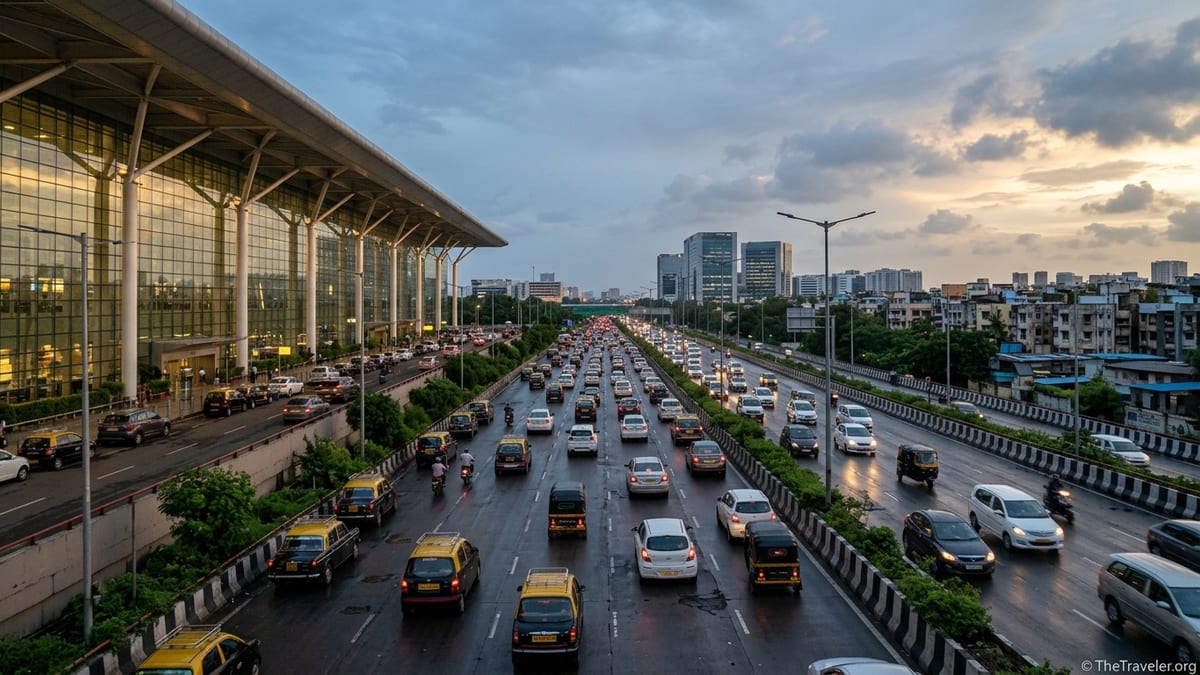
Mumbai’s main airport, CSMIA, has two passenger terminals: T2 for most international and some domestic flights, and T1 for many low-cost domestic carriers. Both sit in the Andheri area of suburban Mumbai. Bandra and Bandra Kurla Complex (BKC) lie to the south-west, along the Western railway corridor and the main highway that runs toward South Mumbai. In straight-line terms, the distance between the airport and Bandra is modest, roughly 7 to 10 kilometers depending on your exact hotel location, but the driving time can swing widely with traffic.
In light traffic late at night, a taxi or app cab from T2 to a Bandra West hotel near Hill Road can take about 20 to 25 minutes. During a weekday evening peak, the same trip can stretch to 45 minutes or more, especially if there is congestion at the Western Express Highway bottlenecks approaching Kalanagar and the BKC junction. For business travelers heading to corporate offices in BKC, the distance can be as little as 6 to 8 kilometers, but the internal BKC loops and signal-heavy junctions often add 10 to 15 minutes to the ride.
Mumbai’s monsoon, usually June to September, adds another layer. Heavy rain can slow traffic dramatically and cause localized waterlogging on stretches near the Vakola flyover and Kalanagar, both on the way from the airport toward Bandra. If you are landing in the late afternoon or early evening in peak monsoon, it is sensible to budget up to an hour for what would otherwise be a quick airport transfer, especially if you have a meeting scheduled in BKC.
For most visitors carrying luggage, the practical options are prepaid airport taxis, app-based cabs such as Uber and Ola, or a combination of metro or train with short taxi or auto rickshaw hops. The best choice depends on your arrival time, budget, familiarity with Indian cities, and how comfortable you are managing bags in crowded areas.
Taxi and Prepaid Cabs: Easiest All-in-One Option
Traditional black-and-yellow or fleet taxis remain the simplest door-to-door choice, particularly if you are new to Mumbai or arriving after a long-haul flight. Inside T2 and T1 arrivals, look for official prepaid taxi and car rental counters run in coordination with airport authorities. You pay a fixed fare at the counter, get a printed slip, and are directed to a designated pickup lane. This avoids haggling and helps if you do not yet have a local SIM or ride-hailing app set up.
Typical prepaid fares from T2 to Bandra or BKC are often in the range of a few hundred rupees, with small variations depending on the vehicle type and current price revisions. As a rough benchmark, recent fare boards and aggregator comparisons show airport to Bandra or BKC sedans often quoted in the ₹350 to ₹500 bracket for standard taxis, with larger vehicles costing more. These official counters may factor in airport access fees but tolls, if any, are usually extra and mentioned on the slip or by the driver before departure.
For travelers heading to premium hotels like the Trident BKC, Sofitel BKC, or Taj Lands End in Bandra West, hotel-arranged cars are another option. These are more expensive than city taxis, but they offer meet-and-greet inside the terminal, assistance with luggage, and clear communication about where to meet the driver. A business traveler arriving on a tight schedule, for example for a day trip of meetings in One BKC or the Jio World Convention Centre, may find the predictability worth the extra cost, especially during peak hours.
When using a street taxi from outside the terminal area to return from Bandra to the airport, insist on the meter. Mumbai taxis are metered, and the driver should start the electronic meter at the base fare. If you are leaving from a hotel, the concierge can usually summon a reliable radio taxi or help you identify a legitimate cab. For very early morning flights, pre-booking through a known taxi company or your hotel ensures you are not searching for a cab on empty streets at 3 am.
Uber and Ola: App Cabs from T1 and T2 Explained
App-based taxis such as Uber and Ola are widely used between Mumbai Airport and Bandra, and they are often cheaper or at least competitive compared to prepaid taxis, especially outside of high surge periods. At T2, both services use designated pickup zones in the multi-level parking structure. Recent rider reports describe Ola and Uber pickup levels labelled around P4 or similar, while some premium categories use marked “Ola Zone” or reserved bays. Signage inside the terminal points towards “App Cab” areas, and staff or security guards at arrivals can direct you if the layout has been updated.
The most practical way to manage an app pickup is to request your car only once you are near the correct level, not immediately after clearing customs. Mumbai’s T2 is large, and walking from arrivals to the app cab bay can take 10 to 15 minutes if you have luggage. If you order the car too early, the driver may arrive and start the waiting timer before you reach the pickup point. Many frequent travelers suggest messaging the driver through the app with your exact pillar number or zone code once you reach the bay, such as “Standing near P4, Zone C,” to avoid confusion.
For cost, airport to Bandra trips on UberGo or Ola Mini can sometimes be in the approximate ₹250 to ₹400 range in off-peak hours, rising with surge pricing during morning and evening peaks or heavy rain. A mid-range or premium cab such as Uber Premier or Ola Prime might land closer to ₹450 to ₹700, depending on demand and exact drop-off point, for example a business hotel in BKC versus a sea-facing property in Bandra West. The app will show an estimated fare before you confirm, but be aware that tolls, if used, are typically added on top.
To reduce friction, ensure you have a functioning data connection as soon as you land. Many international travelers either enable roaming, buy an eSIM covering India, or pick up a local SIM at the airport arrivals area. If you do not have mobile data, app cabs become difficult to use, and an official prepaid taxi is usually the better choice. Also, be cautious about unsolicited assistance near the pickup zones. Touts sometimes offer to “help you find your Uber or Ola” and then try to persuade you into an unmetered ride at a higher price.
Auto Rickshaws: Where They Can and Cannot Go
Auto rickshaws, the three-wheeled open vehicles common across Mumbai’s suburbs, are a useful low-cost option in the Bandra and airport corridor, but with important limits. By regulation, autos operate in Mumbai suburbs roughly from Bandra and Sion northwards, and they are generally not permitted in South Mumbai. Within their permitted zones, they run on a meter, like taxis, and are a normal way for locals to go from places such as Bandra station or BKC to nearby offices or hotels.
At present, direct auto access all the way to the elevated terminal roads of T2 is restricted. Recent traveler experiences describe dedicated auto bays at a lower level or near the city bus area rather than right at the main arrivals curb. This means that if you want to take an auto from the airport, you may need to follow signs or ask staff for the auto stand, then queue at an official line. Alternatively, some visitors choose to walk a little outside the formal airport zone and hire an auto from the main road, but this exposes you to unregulated pricing and extra hassle with luggage.
Within Bandra, autos are extremely handy for short hops once you have already checked into your hotel. For example, a traveler staying near Linking Road could take a quick auto ride to Bandra station to catch a suburban train, or from BKC to a restaurant in Bandra West. These rides are typically inexpensive, but drivers near affluent areas such as BKC are sometimes reluctant to follow the meter and may quote a flat fare. If you are visiting on business and in a rush, it can be easier to accept a slightly higher fixed price for a 10-minute ride than to argue for strict meter use, but know that by rule autos in Mumbai are supposed to go by the meter.
With luggage, especially large suitcases, autos are not ideal for the airport-to-hotel leg, even where technically allowed. They lack enclosed storage, expose your bags to dust and rain, and do not offer the same sense of security as a locked car. Consider autos more for last-mile, low-luggage moves inside Bandra and nearby neighborhoods, and rely on taxis or app cabs for the main transfer from or to the airport.
Metro and Train Combinations: For Light Luggage and Peak-Hour Savings
For cost-conscious travelers or repeat visitors familiar with Indian cities, combining public transport with short taxi or auto rides can significantly cut both time and fare, especially during rush hours when road traffic is heavy between the airport and Bandra. Mumbai’s expanding metro network already serves the airport vicinity with stations near T1 and T2, and there are metro lines and suburban train links into BKC and Bandra’s western side. However, journeys involve multiple changes, stairs or escalators, and crowds, so they are best attempted with light, manageable luggage.
One typical pattern involves taking the metro from the airport area toward a station serving BKC, then switching to an auto or taxi for the final stretch. For instance, a business traveler landing at T2 with only a cabin bag and heading to an office in BKC might use the airport-connected metro station, change at a major interchange toward BKC, and then take a short auto ride from the BKC metro exit to their exact office building. This can bypass some of the Western Express Highway congestion at peak times and keep total costs significantly below a dedicated car.
The traditional Mumbai suburban trains also connect Andheri and Bandra along the Western Line. In theory, you could take a taxi or auto from T2 to Andheri or Vile Parle station, board a Western Line train toward Churchgate, and get off at Bandra. From there, an auto or taxi would take you to Bandra West or BKC. This route is extremely cheap compared to a taxi all the way, with train fares usually in the tens of rupees, but it exposes you to crowded platforms and standing-room-only carriages in peak hours.
If you choose a train or metro combination, buy your ticket or card before entering the system, keep small notes or digital payment ready, and avoid rush-hour windows such as 8 am to 10:30 am and 6 pm to 9 pm on weekdays. Travelers with children, elderly companions, or bulky suitcases are generally better off in a taxi or app cab even if it costs more. But solo travelers on a budget, especially those staying near Bandra station or in budget hotels around Khar and Santacruz, can find metro or train combinations practical outside peak times.
Choosing the Right Option for Business vs Leisure Stays
The best route from Mumbai Airport to Bandra depends heavily on your purpose of visit and where you are staying. Business travelers heading to conferences or meetings in BKC usually prioritize predictability and comfort. If you have back-to-back meetings at offices such as ICICI Bank, Citibank, or global consultancies in One BKC or nearby towers, an airport hotel car or a pre-booked app cab in a comfortable category like Ola Prime or Uber Premier is usually the most sensible choice. It allows room for a laptop bag, garment bag, and checked luggage without stress.
For example, a consultant flying in at 9 am for a midday presentation at the Jio World Convention Centre might book a hotel car from a BKC business hotel. Despite the short distance, morning traffic and any delay at the pickup bays can eat into buffer time. With a pre-arranged car, the driver is already tracking the flight and waiting in the designated parking area, minimizing coordination. The slightly higher per-kilometer cost is a reasonable trade-off against the risk of missing a high-stakes meeting.
Leisure travelers, especially those staying in Bandra West’s boutique hotels and guesthouses near Chapel Road, Carter Road, or Pali Hill, often balance cost with the experience of the city. A couple arriving mid-afternoon might comfortably take an UberGo from T2, enjoy the drive past the Western Express Highway and the Bandra flyover, and reach a sea-facing café on Carter Road in under 45 minutes. If they are on a tighter budget and landing in off-peak hours, they might even consider a metro plus auto rickshaw combination, treating it as an early taste of Mumbai’s everyday rhythm.
Families with young children usually appreciate the space and air conditioning of a private car. If you are heading to a family-friendly property like Taj Lands End or a serviced apartment in Bandra’s residential lanes, a sedan or SUV class vehicle gives room for strollers, extra bags, and car seats. In such cases, it is worth selecting a larger vehicle on Uber or Ola rather than hoping a small hatchback will be adequate, and confirming with the driver that they are comfortable with your luggage volume before you exit the terminal.
Luggage, Safety and On-Arrival Practicalities
How you travel from the airport to Bandra is closely tied to how much luggage you have and how comfortable you are moving with it. Taxis and app cabs easily accommodate two standard medium suitcases and a couple of carry-on bags. Anything beyond that, such as equipment cases for a film shoot or multiple large suitcases for a long relocation, may require booking a larger vehicle category or even two cars. When using apps, look for options like XL or SUV and mention your luggage in the notes so drivers can decide if they can take the trip.
Safety is generally good on the airport–Bandra corridor. Mumbai has a reputation for being relatively safe late at night compared with many big cities, and the route to Bandra is busy and well-patrolled. Still, it is wise to take normal precautions. Only use official taxi counters or verified app cabs, confirm the license plate in the app before getting in, and avoid accepting rides from drivers who approach you directly inside the terminal offering “cheap taxi” without any meter or booking reference. Keep passports, wallets, and electronics in a small daypack that stays with you on the seat, not in the trunk with checked baggage.
For women traveling alone at night, many prefer app cabs because journey details and GPS tracks can be shared in real time with friends or family. Another option is to ask your hotel to organize a trusted driver. If you arrive after midnight, the roads to Bandra are usually clearer, and a trip that takes 40 minutes at 6 pm might only take 20 to 25 minutes after 1 am. Do remember that some building gates in quieter Bandra lanes may close partially late at night, so if you are heading to a homestay or small guesthouse, inform your host of your flight details and approximate arrival time.
On arrival at your Bandra hotel, check quickly that you have all your bags before letting the car go. It is surprisingly easy to leave a small backpack in the footwell after a long flight. If you are paying cash for a street taxi, keep some smaller notes ready, as drivers may be short on change for large denomination bills. If you are paying via e-wallet or card within Uber or Ola, confirm the fare on the screen before pressing pay, and be aware of any tolls that might have been added.
The Takeaway
The journey from Mumbai Airport to Bandra is short in kilometers but shaped by traffic, time of day, and your own tolerance for complexity. For first-time visitors or those arriving tired, official prepaid taxis, hotel cars, or app-based cabs like Uber and Ola offer straightforward, air-conditioned transfers in the range of a few hundred rupees, with typical travel times of 20 to 45 minutes. Business travelers heading to BKC or major hotels often value the predictability of pre-booked cars, while repeat visitors and budget-conscious solo travelers may experiment with metro or suburban train combinations when traveling light.
Auto rickshaws have a supporting role rather than a starring one on this corridor. They are invaluable for short hops within Bandra and between stations and hotels, but less suitable for the full airport transfer, especially with luggage. Whatever you choose, planning for peak traffic, keeping your luggage manageable, and using official channels for taxis and app cabs will make your first hour in Mumbai smoother. With a bit of foresight, you can turn a potentially stressful airport transfer into an easy transition from runway to sea breeze.
FAQ
Q1. How long does it usually take to get from Mumbai Airport to Bandra?
In light traffic, the drive can be around 20 to 25 minutes, but in peak rush hour or heavy rain it can stretch to 45 minutes or even close to an hour.
Q2. What is the typical taxi or Uber fare from the airport to Bandra?
For a standard sedan, many recent fares fall roughly in the ₹250 to ₹500 range depending on time of day, demand, and whether you use a prepaid taxi or an app cab.
Q3. Is it safe to take Uber or Ola at night from the airport to Bandra?
Yes, most travelers use app cabs safely at night. Share your trip details with a trusted contact, verify the car number, and use the pickup zones inside the airport.
Q4. Can I take an auto rickshaw directly from the airport to my hotel in Bandra?
There are designated auto rickshaw areas at lower levels near the airport, but access can be limited and awkward with luggage. Autos are better for short hops within Bandra than for the full airport transfer.
Q5. What is the best option if I have a lot of luggage or am traveling with family?
Book a regular taxi, an app cab in a larger vehicle category such as an SUV, or a hotel-arranged car so you have enough space for bags, strollers, and child seats.
Q6. Are metro or train options realistic from the airport to Bandra?
Yes, but they involve changes and crowds. They are most suitable if you are traveling light, know how to handle metro or suburban trains, and are not in a rush.
Q7. How do I avoid being overcharged by taxi or auto drivers?
Use official prepaid counters or app cabs when possible, insist on the meter for street taxis and autos, and confirm any tolls or flat fares before starting the ride.
Q8. Should business travelers heading to BKC book a car in advance?
It is a good idea, especially for tight schedules. Hotel cars or pre-booked app cabs reduce waiting time at the airport and make the journey more predictable.
Q9. What is the best option for a late-night arrival into Mumbai?
Late at night, an official prepaid taxi, hotel-arranged car, or app cab is usually fast and convenient, since roads are quieter and public transport options are limited.
Q10. Can my Bandra hotel help arrange airport pickups and drops?
Most full-service hotels and many boutique properties in Bandra and BKC can organize reliable airport transfers for a set fee if you share your flight details in advance.