


More news on this day
Hours after a rare nationwide halt to U.S. flight departures brought air travel to a standstill on Friday, the Federal Aviation Administration lifted the ground stop, but passengers across the San Francisco Bay Area remained stranded amid lingering delays and cancellations.
Get the latest news straight to your inbox!
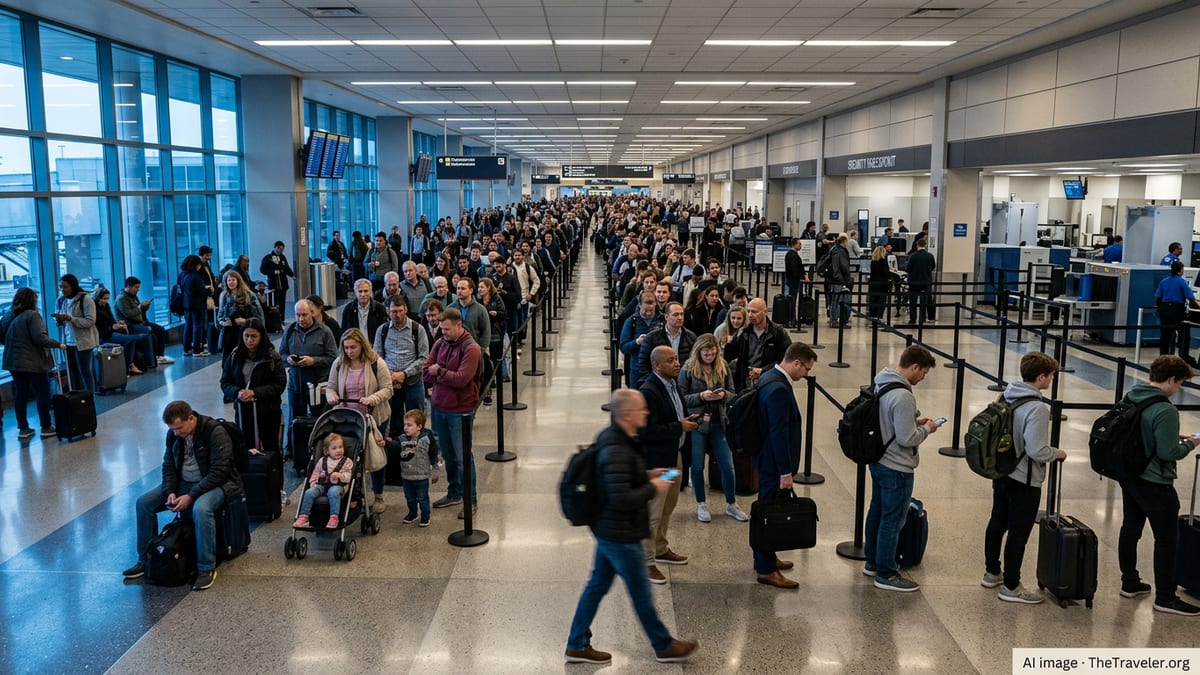
Hours-long halt ripples across Bay Area airports
The Federal Aviation Administration imposed the nationwide ground stop on the afternoon of Friday, November 13, citing serious telecommunications and communications issues affecting multiple air traffic control facilities. Departures were paused at airports across the country while thousands of aircraft already in the air were allowed to continue to their destinations under heightened procedures.
San Francisco International Airport, Oakland International Airport and Mineta San Jose International Airport quickly felt the impact. Publicly available flight data showed departures out of all three airports largely frozen for several hours, with only limited exemptions for certain international and critical flights. Terminals that normally cycle passengers through continuously became holding areas for travelers facing indefinite waits.
By early evening, the FAA confirmed that the nationwide order had been lifted, and Bay Area airports began gradually resuming departures. Local airport statements indicated that operations were transitioning back to normal schedules, but warned that the recovery would be slow as aircraft and crews remained out of position across the national network.
Travelers at SFO reported scenes of packed gate areas, long customer-service lines and departure boards filled with delayed or canceled flights. At Oakland, at least a dozen departures were listed as canceled by late afternoon, with more showing rolling delays, while San Jose saw a mix of cancellations and extended holds as airlines waited for updated departure clearances.
‘It was a bit scary’: Passengers caught in mid-crisis
The abrupt halt left many passengers in the Bay Area struggling to understand what was happening. Some learned of the situation only when they noticed every status board at their terminal shifting to show systemwide delays. Others were already seated on aircraft waiting for takeoff when crew members announced that no flights nationwide were being cleared for departure.
Reports from travelers on social media and in local coverage described a sense of unease, particularly among those who heard only that there had been a national order to stop flights. While federal officials emphasized that there was no indication of a security threat, the scope of the disruption invited comparisons to the post-September 11 shutdown and a 2023 nationwide pause linked to a technical failure in a key safety system.
At San Jose, one of the most widely noted local impacts was a charter flight carrying San Jose State University’s football team, which was forced to pause taxiing as the ground stop took effect. Elsewhere in the region, passengers recounted being held onboard for extended periods while airlines waited for gates to open or for revised departure slots, leading to hours-long tarmac delays.
For many travelers, the experience brought home how dependent modern air travel is on complex national systems. As one Bay Area flyer described in local television coverage, watching information screens suddenly fill with the same delay message across every airline “was a bit scary,” because it suggested a single point of failure affecting the entire country’s skies.
What caused the nationwide ground stop
According to publicly available federal advisories compiled after the incident, the FAA’s national command center ordered the stop as telecommunications problems spread across multiple air route traffic control centers and terminal radar facilities. The agency described the move as an abundance of caution taken while specialists worked to confirm the stability of critical communication links between controllers and aircraft.
Statements summarizing the sequence of events indicate that at the time the order took effect, more than 3,500 planes were already in the air over the United States. Controllers relied on established contingency procedures to keep those flights moving, gradually reducing the number of aircraft airborne to a few hundred over the next several hours while departures from airports remained largely frozen.
The ground stop, which lasted for roughly five hours before being lifted in the evening on the East Coast, is being characterized as one of the most extensive interruptions to U.S. air travel in decades. Nationally, tracking services recorded thousands of delayed flights and widespread cancellations, and industry analysts expect the disruption to reverberate through airline schedules into the weekend.
Aviation experts quoted in national coverage have noted that while the system is designed with redundancies, a failure affecting core communications can trigger rapid, nationwide decisions to protect safety. The incident is likely to prompt renewed scrutiny of federal modernization projects and the resilience of the infrastructure that underpins the country’s busy airspace.
How long the disruption will affect Bay Area travel
With the ground stop now lifted, Bay Area travelers are facing a different challenge: working through the backlog. Airlines must reposition aircraft that ended up at unscheduled airports, reassign crews who have hit duty-time limits and accommodate passengers whose connections evaporated when the system shut down.
At SFO, live departure boards late Friday showed a mix of newly reinstated flights, ongoing delays and a rising number of cancellations as airlines reset their schedules. Oakland and San Jose reflected a similar pattern, with some evening flights departing, others delayed into the night and some removed from the schedule entirely.
Travel industry analysts say the most visible impacts will likely extend into Saturday, November 14, with scattered disruptions persisting beyond that for routes that rely on tightly choreographed aircraft rotations. Travelers flying through the Bay Area over the weekend can expect crowded terminals, limited standby options and a greater chance of missed connections at major hubs.
Given the scale of the interruption, publicly available guidance from consumer advocates stresses the importance of monitoring airline apps and notifications closely, confirming flight status before heading to the airport and preparing for longer-than-usual waits at check-in and security. Those who are already at Bay Area airports are being encouraged to stay in close contact with their carrier for rebooking options and updates.
What stranded travelers should know about their options
The nationwide nature of the shutdown raises immediate questions about passenger rights, particularly for those stuck in the Bay Area. Publicly accessible federal rules require airlines to provide refunds when a flight is canceled and the traveler chooses not to be rebooked, even in situations caused by government directives rather than by the carrier’s own operations.
Consumer resources highlight that travelers affected by significant schedule changes, including substantial departure delays or revised routings through different airports, may also qualify for refunds in certain circumstances. However, compensation such as hotel vouchers and meal credits typically depends on individual airline policies and is more commonly offered when disruptions stem from issues within the carrier’s control rather than external orders.
Advocacy organizations recommend that stranded passengers keep documentation of any cancellations or major delays, including screenshots of itineraries and written notices from airlines. Those departing from SFO, Oakland or San Jose who incurred additional expenses for lodging or meals during the stoppage may find that some credit card travel protections offer partial reimbursement, depending on their card’s terms.
For now, the priority for many Bay Area travelers is simply getting moving again. With aircraft gradually taking off and arrival banks rebuilding, the region’s airports are shifting from a day defined by an unprecedented standstill to a difficult, crowded restart that will test the resilience and patience of everyone trying to reach their destination.