


More news on this day
The Federal Aviation Administration has lifted a rare nationwide ground stop that halted most departing flights across the United States on Friday, November 13, 2026, leaving tens of thousands of travelers facing long delays, cancellations and missed connections as airlines work to untangle the backlog.
Get the latest news straight to your inbox!
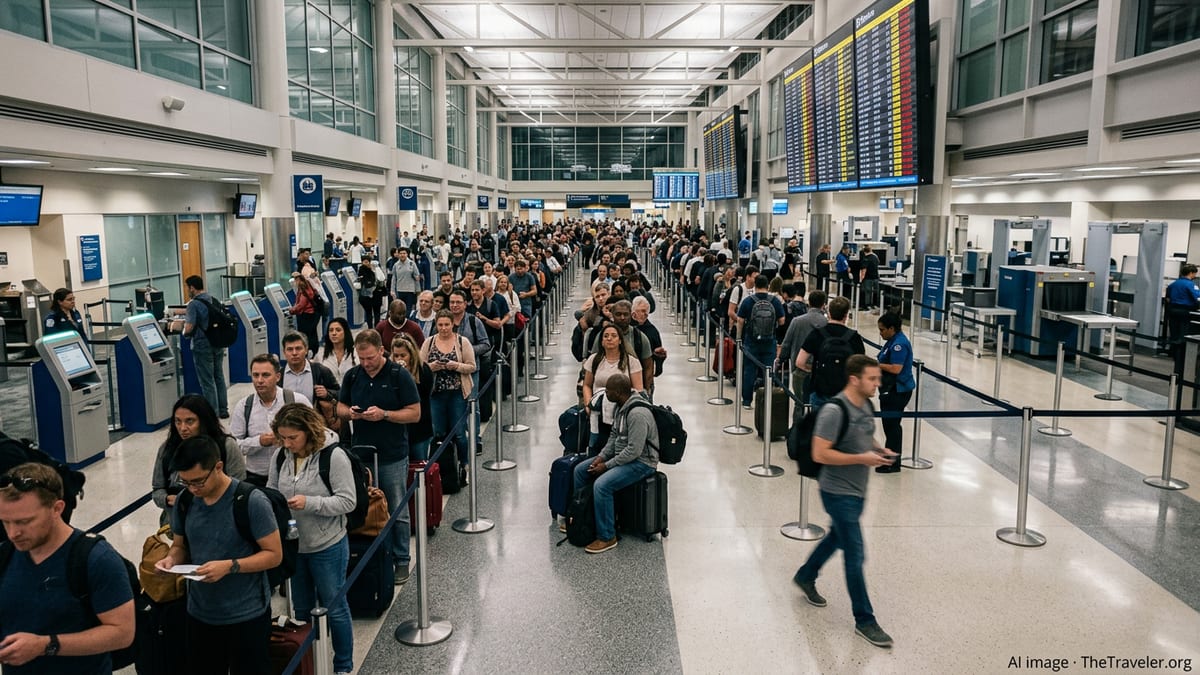
Ground stop lifted after hours of nationwide disruption
According to publicly available advisories and live updates from multiple outlets, the FAA issued the nationwide ground stop at about 3:54 p.m. Eastern on Friday, citing “extraordinary circumstances” and serious communication problems affecting multiple air traffic control centers. The halt covered departures from all U.S. airports, while aircraft already in the air were allowed to continue to their destinations.
An FAA operations advisory later indicated that the Command Center’s nationwide restriction was canceled at 8:19 p.m. Eastern, ending more than four hours in which new departures were effectively frozen. Live coverage from national broadcasters and local stations reported that the number of planes in U.S. airspace was steadily reduced during that window as controllers focused on landing aircraft safely and managing congested taxiways and gates on the ground.
Transportation coverage from major news organizations notes that the event marked the first coast-to-coast ground stop since January 2023, when an outage in a pilot-notification system briefly forced a nationwide pause. This latest disruption, tied to communications and telecommunications infrastructure, was significantly longer and came at the start of a busy November travel weekend.
Communications failure at air traffic centers under scrutiny
Publicly available information from the FAA and network news outlets indicates that the ground stop was triggered by widespread communications issues at Air Route Traffic Control Centers, the facilities that handle high-altitude traffic across broad regions of U.S. airspace. Statements cited in national broadcasts describe “telecommunications issues” and “instability” in radar and voice systems that prompted the halt as a safety measure while engineers worked to isolate the problem.
Early reports point to overloaded network routers and related hardware problems in key parts of the system, rather than a cyberattack. Transportation briefings summarized by major newspapers and television networks emphasize that there was no evidence of a deliberate intrusion as of late Friday night, while acknowledging that full technical investigations were still in the early stages.
Specialized aviation coverage and reference documents show that a ground stop is among the most stringent traffic management tools available to the FAA. Once activated, it overrides other measures and can be applied nationally, regionally, or to specific airports and routes. In this case, the decision to extend the order nationwide meant that any departure requiring interaction with affected facilities was held until the agency judged communications stable enough to resume limited operations.
Passengers face cascading delays, cancellations and missed connections
From New York to California, local newsrooms reported packed terminals and long lines at check-in counters and customer service desks as travelers tried to rebook or reroute. Images from airports including LaGuardia, Boston Logan, Detroit Metro, Jacksonville, Sacramento and others showed departure boards filled with “delayed” and “canceled” notices throughout the afternoon and evening.
Coverage from regional broadcasters and public radio highlighted passengers who spent hours on board aircraft that had pushed back from gates before the ground stop took effect, only to be parked on taxiways while crews awaited updated instructions. Some travelers were eventually brought back to the terminal, while others remained on board as gates and jet bridges were fully occupied.
Flight-tracking services cited in national reports estimated that thousands of departures and arrivals were disrupted nationwide, affecting major network carriers as well as low-cost and regional airlines. At some hubs, aircraft arriving after the ground stop lifted still waited extended periods for open gates, compounding delays and pushing crews toward their duty-time limits, which can force additional cancellations.
For travelers, the timing was especially challenging. The outage struck late on a Friday with many weekend leisure trips, college events and professional sports games on the schedule. College and professional teams in football, basketball and hockey were among those scrambling to adjust logistics, according to sports-focused coverage that tracked team charters stuck on tarmacs or re-routed through secondary airports.
Airports and airlines race to recover schedules
Airport authorities from Bellingham, Washington, to Mobile, Alabama, issued alerts noting that the nationwide ground stop had been lifted, while urging passengers to check directly with airlines before heading to the terminal. Some advisories on airport sites were updated into the late evening, underscoring that local operations were still experiencing heavy disruption even after the official halt ended.
Airlines began rebuilding their schedules once the FAA allowed departures to resume, prioritizing aircraft already on the ground and attempting to reassign equipment and crews to cover as many flights as possible. Industry analysts quoted in national coverage noted that the ripple effects are likely to continue into the weekend, particularly for smaller markets that rely on limited daily frequencies.
Publicly available status boards for major hubs showed that, even after the ground stop was lifted, queues for takeoff persisted at airports such as Dallas Fort Worth and Chicago O’Hare as controllers worked through backlogs. Aviation observers highlighted that recovery after such an event is rarely immediate; airlines must reposition planes, reset crew schedules, and accommodate displaced passengers, tasks that can take one to two days depending on the severity of the disruption.
Travelers holding tickets over the next several days are being advised by airlines and airport bulletins to monitor their flight status frequently, allow extra time at the airport, and be prepared for gate or schedule changes on short notice. Customer service and call centers for airlines and online travel agencies also faced high demand as stranded passengers sought alternative routes, refunds, or travel credits.
Safety procedures and questions about aging infrastructure
Aviation experts interviewed across print, broadcast and online outlets pointed to the event as another illustration of the strain on the nation’s air traffic control infrastructure. Technical explainers published overnight describe how controllers and pilots rely on redundant systems and established “lost communications” protocols to maintain separation between aircraft if channels fail, which helps explain why planes already in the air were allowed to continue flying even as new departures were stopped.
Publicly available background material on the 2026 communications outage notes that it follows a series of modernization initiatives, including the rollout of new airspace management tools and increased reliance on data networks. While those systems are designed with redundancy, the incident has raised renewed questions in policy and industry circles about the resiliency of telecom hardware that underpins them, particularly routers and switches at high-traffic facilities.
Discussion in transportation policy forums and early political reactions summarized in national coverage suggest that funding for upgrades to radar, communications and network infrastructure is likely to become a focus in the coming weeks. Lawmakers who have previously called for more investment in the National Airspace System are using the scale of Friday’s disruption as a fresh example of the economic and personal impact when a critical system falters.
For now, publicly available information from airports, airlines and tracking services indicates that U.S. air traffic is moving again, but under continued strain. As investigations proceed and more technical details are released, regular travelers are likely to watch closely for assurances that the systems directing their flights are robust enough to avoid a repeat of one of the most far-reaching interruptions to U.S. air travel in decades.