


More news on this day
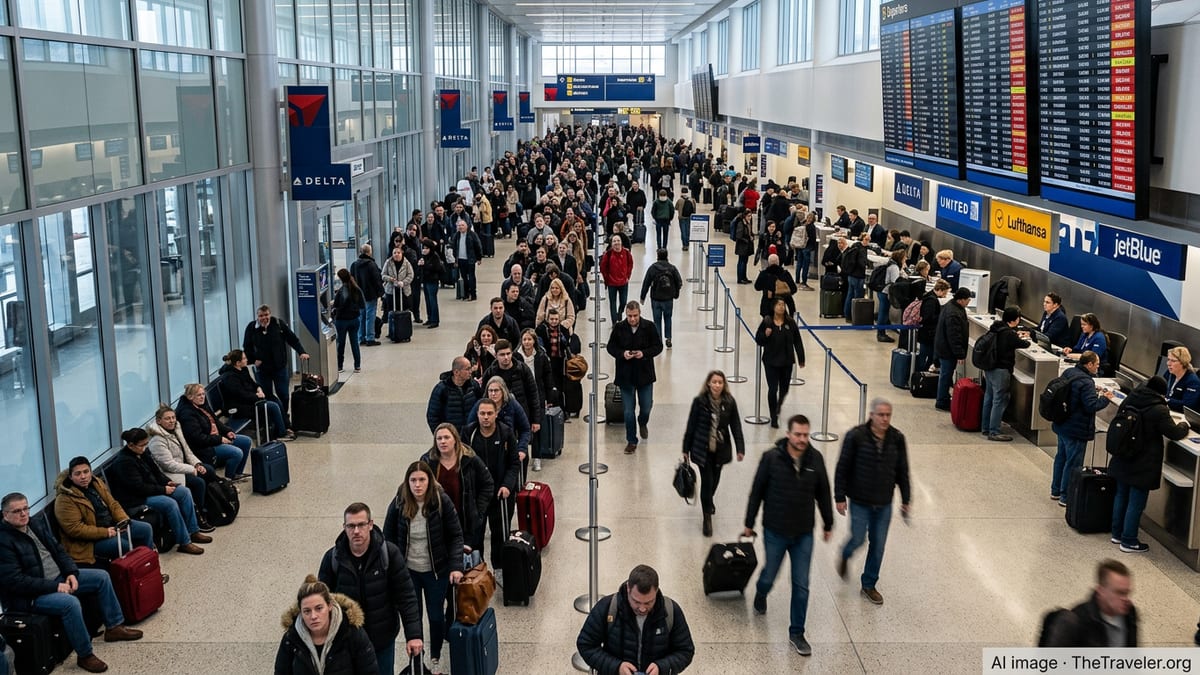
A rare nationwide ground stop across the United States ended Friday evening after a communications failure hit air traffic control facilities, but passengers at major hubs woke up Saturday to lingering disruptions, crowded terminals and improvised plans to reach their destinations.
Get the latest news straight to your inbox!
What happened and when flights resumed
Publicly available advisories show that the Federal Aviation Administration ordered a nationwide halt to most U.S. departures on Friday, November 13, citing “extraordinary circumstances” and safety concerns tied to a telecommunications outage affecting regional air route traffic control centers. The stoppage began in the late afternoon Eastern time, affecting traffic from large coastal gateways to smaller regional airports inland.
According to multiple news reports and compiled FAA advisories shared publicly, the command center cancelled the nationwide ground stop shortly after 8:15 p.m. Eastern, once controllers had reduced the number of aircraft in the sky and restored enough communications capacity to safely manage handoffs between regions. Limited exceptions were made for medical, law enforcement and other priority flights, but routine commercial departures were largely held at gates or on taxiways until the order was lifted.
Coverage from national and local outlets indicates that the outage followed a day of strain on technology systems nationwide, and that the failure cut or degraded communications links between all 22 high altitude air route traffic control centers that manage aircraft between airports. The incident marked the first full nationwide ground stop since a January 2023 software failure in the FAA’s Notice to Air Missions system and invited renewed scrutiny of long-planned modernization projects.
By early Saturday, November 14, data from flight tracking services showed departures slowly recovering but overall volumes still well below typical levels for a November weekend. Airlines continued to re-sequence aircraft and crews after hours of suspended operations, creating a patchwork of new departure times that changed repeatedly overnight.
Nationwide disruption and the scale of delays
Air travel data compiled by major tracking platforms and cited in news coverage indicate that thousands of flights were delayed on Friday and into Saturday, with several hundred cancellations concentrated at the country’s largest hubs. Major connecting airports such as Atlanta, Dallas Fort Worth, Denver, Chicago O’Hare, Los Angeles and New York’s three main airports reported departure boards dominated by orange and red delay notices long after the ground stop ended.
Reports from individual airports describe lines for customer service stretching down concourses as travelers tried to rebook missed connections or secure overnight accommodation. At hubs like Orlando, San Francisco and Washington, images showed passengers sitting on the floor near clustered power outlets while they refreshed airline apps for updated departure times.
Regional carriers feeding the big networks faced particular challenges because aircraft and crews were out of position when operations restarted. Public information from airline operation centers suggests that some late-night flights were converted to “ferry” legs without passengers, simply to relocate aircraft where they would be needed for the Saturday morning schedule. That choice helped stabilize operations but left some travelers waiting until the next day for an available seat.
International services were also affected. Long-haul flights heading toward the United States from Europe and Asia adjusted speeds or departure times to avoid arriving while arrival flows were restricted, according to airline status pages and independent flight tracking. Some passengers landing after the ground stop ended still missed domestic onward connections because their inbound aircraft had been held earlier in the day.
On the concourse: how stranded passengers coped
Travelers’ reactions, shared widely on social media platforms and in broadcast coverage, highlighted a mix of frustration, resignation and occasional moments of solidarity. Passengers stuck at large hubs described crowded gate areas where people traded chargers and snacks, while others reported spending hours on hold with airline call centers trying to rearrange complex itineraries.
Posts from flyers at Los Angeles, Dallas Fort Worth and Atlanta recounted announcements of a nationwide ground stop coming only after boarding had completed, followed by extended waits on the tarmac while crews waited for clearance or a gate to open. Some passengers reported that pilots relayed only limited information, noting a communications issue at the national level and emphasizing that safety was not compromised on individual flights.
At other airports, public reporting shows that some travelers were advised to leave security and return home or to hotels once it became clear that late-evening flights would not depart before crew duty limits were reached. Families traveling with small children, sports fans heading to weekend games and business travelers connecting from international flights were among those most affected by missed connections and unexpected overnight stays.
For many, the experience reinforced the value of basic contingency planning. Travelers who had packed medications and a change of clothes in carry-on bags, or who held flexible hotel reservations, reported fewer practical problems than those whose checked bags were inaccessible once flights were scrubbed. Access to airport lounges offered some respite for those with memberships or premium tickets, although several reports described those spaces reaching capacity quickly.
Airline responses and what travelers can expect next
Major U.S. carriers updated their travel advisories Friday evening and overnight, outlining flexible rebooking policies for passengers affected by the ground stop. Publicly posted waivers for airlines such as United and others allow customers booked to travel between November 12 and November 20 to change to a new date within that window without paying a change fee, provided origin and destination remain the same. Fare differences may still apply on some routes, and basic economy tickets remain more restricted on certain carriers.
Some airlines are also enabling same-day standby without additional charges for customers whose original flights were significantly delayed or canceled, according to information on their websites. However, limited seat availability during a busy autumn travel weekend means that not all passengers can be rebooked onto their preferred flights, particularly on popular leisure routes to Florida, Hawaii and major city breaks.
Hotel and meal support varies by airline and by the cause of disruption. Because the issue originated with national air traffic control infrastructure rather than a specific carrier, published customer service guidelines indicate that many airlines are not automatically offering vouchers for overnight stays. Some travelers holding premium status or co-branded credit cards report receiving gesture accommodations, while others have turned to travel insurance policies for reimbursement.
Travel experts interviewed in media coverage recommend that passengers affected by the ground stop monitor both airline apps and airport departure boards, as reassignments of aircraft can open up new options with little notice. They also suggest checking nearby airports within driving distance, where earlier departures or open seats may appear as operations normalize.
What this means for upcoming trips
For travelers with flights in the coming days, the most immediate impact is likely to be residual delays rather than outright cancellations. Scheduling data indicates that airlines are working to restore normal patterns over the weekend by assigning reserve crews and repositioning aircraft overnight. Even so, some early-morning departures on Saturday and Sunday may be affected if inbound aircraft arrive late or crews reach duty limits.
Passengers starting trips this weekend are being encouraged through public advisories and travel columns to arrive at the airport earlier than usual, especially at busy hubs where security and check in lines may be longer while airlines handle rebookings. Building extra buffer time into connections, particularly when linking a domestic flight to an international long haul, can reduce the risk of misconnecting if minor delays continue.
Industry analysts quoted in recent coverage note that the event is likely to intensify debate over the pace of FAA technology upgrades, including the rollout of new systems designed to give controllers and airlines a shared, real time view of the national airspace. They also point to recent announcements about retiring legacy equipment at hundreds of facilities by 2028 as a sign that planners are attempting to reduce the risk of similar outages in the future.
For now, travelers whose plans were disrupted by the ground stop are focused less on long term policy questions and more on the practicalities of getting home or on to long awaited vacations. With the grounding order lifted and communications partially restored, U.S. air travel is moving again, but the ripple effects are likely to be felt across concourses and departure boards through at least the rest of the weekend.