


More news on this day
Transpacific travelers at Seoul Incheon International Airport faced hours of uncertainty after the United States Federal Aviation Administration lifted a nationwide ground stop on Friday, with an Asiana Airlines flight to New York and a Korean Air service to Atlanta ultimately canceled despite the resumption of U.S. departures.
Get the latest news straight to your inbox!
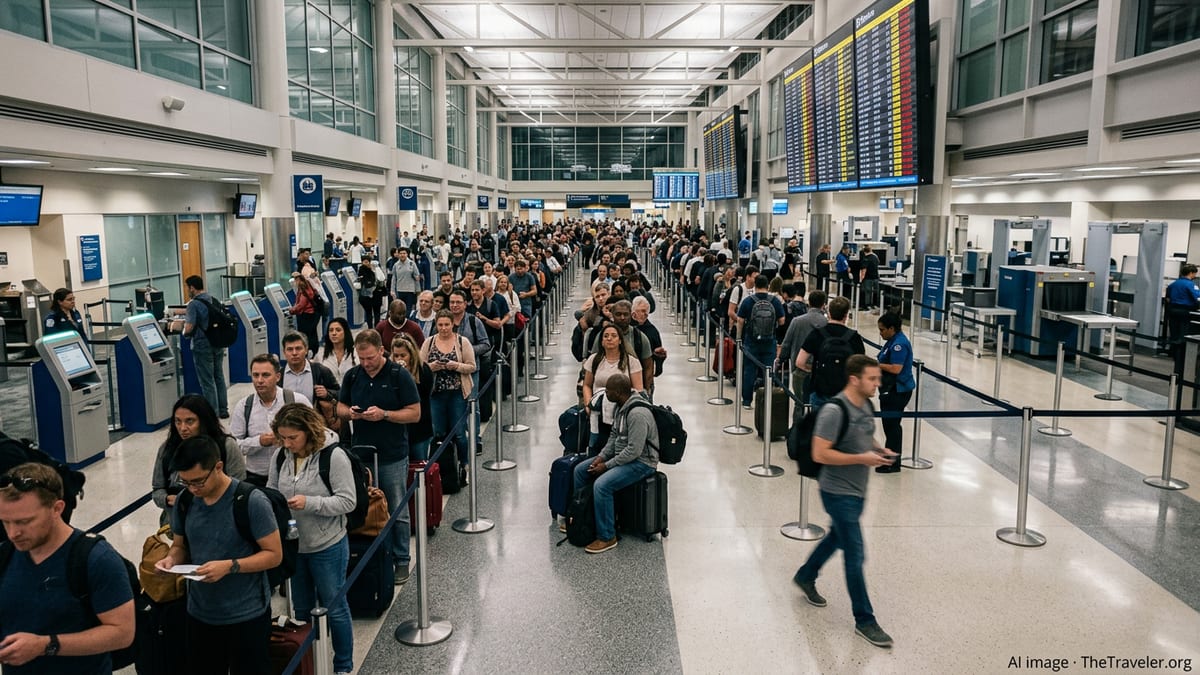
Ground Stop Ends, But Disruptions Spill Across the Pacific
The FAA issued a rare nationwide halt on departures at U.S. airports on Friday, citing communication problems at regional air traffic control centers. Publicly available flight tracking data and media coverage show that, at the height of the disruption, more than ten thousand flights within, into and out of the United States were delayed and several thousand were canceled, creating a rolling backlog that is expected to last through the weekend.
By late afternoon in the United States, the agency announced that departures could resume, and major U.S. hubs began ramping up operations. However, the knock-on effects extended far beyond U.S. borders. Long-haul routes that depend on coordinated slots, crew duty windows and onward connections, including transpacific departures from Seoul Incheon, remained vulnerable to disruption even after the ground stop was formally lifted.
For passengers departing Asia for U.S. destinations, the timing of the outage coincided with overnight and morning departure banks in Korea. As airlines reassessed aircraft positions and crew availability, some services were delayed, while others were taken off the schedule entirely, despite the FAA signaling that U.S. airspace was again accepting departures.
Passengers Stranded At Incheon As Key U.S.-Bound Flights Scrubbed
At Incheon, South Korea’s main international gateway, the ripple effects were particularly acute for travelers booked on an Asiana Airlines flight to New York John F. Kennedy International Airport and a Korean Air flight to Hartsfield-Jackson Atlanta International Airport. Flight listing services and local media reports indicate that both long-haul departures were first held as the ground stop unfolded, then canceled later in the operating day as it became clear that crews and aircraft could no longer be turned within duty-time limits or secure arrival slots in the United States.
The cancellations came just weeks after Incheon itself experienced a separate day of disruption due to a malfunction in an airline network that supports ticketing and check-in. At that time, airport operator data showed dozens of delayed flights and more than a thousand outbound passengers temporarily stranded in the terminal. The latest events layered a U.S.-originated traffic freeze on top of a system that has already been under strain from recent technical issues and steady demand on transpacific routes.
Travelers booked on the canceled Asiana and Korean Air services faced a familiar sequence: waiting in departure areas for updates, watching information screens cycle through new times, and then learning that their flights would not operate at all. With both New York and Atlanta serving as critical entry points for onward domestic connections, the cancellations also created uncertainty for passengers holding separate tickets or tight onward itineraries in the United States.
Why Flights Were Canceled Even After The Ban Was Lifted
The decision to cancel rather than delay the Incheon departures reflects how sensitive long-haul operations are to schedule shocks. Airline scheduling data and prior regulatory filings show that carriers on the Incheon to New York and Incheon to Atlanta corridors operate near the limits of aircraft utilization and crew duty rosters. Once a multi-hour ground stop pushes an aircraft’s arrival into a congested time window in the United States, the knock-on effect can disrupt turnaround times, gate availability and connecting banks.
According to operational guidance published by regulators and industry groups, airlines must also comply with crew duty and rest requirements. When a delay risks pushing pilots or cabin crew beyond their maximum duty period, operators may opt to cancel a flight rather than depart late and be forced into a diversion or an operational breach on arrival. This is especially relevant for overnight transpacific sectors, where crews are scheduled for lengthy duty stretches and where diversion options are more limited once an aircraft is over the ocean.
Infrastructure and technology transitions within the U.S. air traffic system have added further complexity. Public FAA planning documents show that the agency is in the midst of replacing decades-old systems and distributing new digital information platforms across hundreds of facilities. Recent advisories have highlighted how fiber disruptions or communication outages can trigger delays and, in severe cases, cancellations. Friday’s ground stop reinforced how issues inside the U.S. system can cascade onto foreign departure boards, even when origin airports like Incheon are operating normally.
What Stranded Passengers Can Expect In Terms Of Care And Compensation
For passengers stranded at Incheon by cancellations tied to a U.S. ground stop, the question of compensation is complicated. U.S. Department of Transportation guidance on air travel rights explains that airlines are generally not required under U.S. law to provide meals or hotel vouchers in the event of delays or cancellations attributed to air traffic control or other operational constraints outside the carrier’s direct control. Instead, any assistance is usually determined by the airline’s own customer service policies and contract of carriage.
International rules can, in some cases, offer additional avenues. The United States is party to the Montreal Convention, which allows travelers on international itineraries to seek reimbursement for certain proven financial losses stemming from delay or cancellation. Guidance from consumer authorities notes that this typically requires passengers to file a claim with the airline, supported by receipts for out-of-pocket expenses such as lodging, meals or replacement transport, and that compensation is subject to liability limits and exclusions.
In practical terms, publicly available airline policies indicate that major carriers in Korea and the United States may provide varying levels of support, particularly when passengers are connecting to or from their own flights. Those with separate tickets or complex itineraries involving multiple airlines may find fewer guaranteed protections. Consumer advocates frequently advise stranded travelers to document all expenses, keep boarding passes and booking confirmations, and contact their carrier through both airport staff and digital channels to explore rebooking options.
Advice For Travelers On Upcoming Seoul–US Flights
With the FAA lifting its ground stop but warning of continued congestion, industry observers expect lingering disruptions on routes between Asia and the United States over the coming days. Historical data from prior large-scale outages suggest that it can take a full day or more to reposition aircraft and crews and to work through the backlog of displaced passengers, especially on long-haul routes linked to busy hubs such as New York and Atlanta.
Travelers due to fly from Incheon to U.S. destinations in the next 24 to 48 hours are being urged, in publicly available advisories, to monitor their bookings closely using airline apps and airport information boards. Rebooking options may include alternative routings through West Coast gateways, changes to nearby U.S. airports, or, in some cases, travel on partner airlines that still have available seats. Given that many transpacific flights operate at high load factors, same-day reaccommodation into the same cabin may be limited.
Passengers connecting beyond New York or Atlanta are also being encouraged by consumer groups and travel agents to build in additional time at their first U.S. point of entry. Even if their long-haul sector from Incheon operates on schedule, domestic networks are still absorbing the shock of thousands of earlier delays and cancellations. Allowing longer connection windows and keeping flexible plans at the destination can help reduce the stress of unforeseen changes as the system gradually returns to normal.