


More news on this day
A rare nationwide ground stop by the Federal Aviation Administration can leave thousands of travelers facing cascading delays, missed connections and outright cancellations. Knowing the difference between what airlines must do and what they may choose to offer is crucial in the hours after flights are halted.
Get the latest news straight to your inbox!
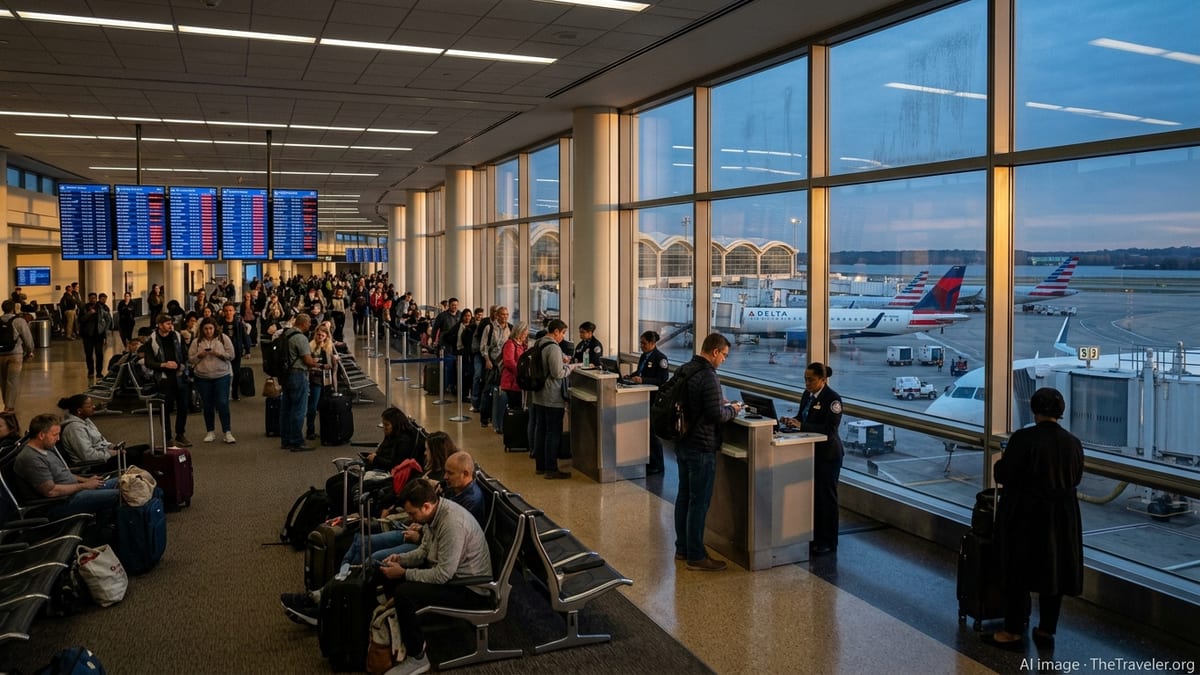
How FAA Ground Stops Disrupt Flights
Ground stops are traffic management orders that require some or all departures to stay on the ground, typically because of safety or air traffic control concerns. Publicly available information from the FAA and recent media coverage shows that such nationwide orders are uncommon, but when they occur they can quickly ripple across the U.S. aviation system by preventing takeoffs, forcing reroutes and clogging airport gates.
During a nationwide stop, airlines usually halt boarding and pushbacks, and may pause check in for affected departures. Flights already in the air generally continue to their destinations, but they can face holding patterns or diversions if congestion builds. Even after the FAA lifts the order, it can take hours for schedules to recover as aircraft and crews are out of position.
Travelers may feel the impact far from the original problem. A technical issue affecting air traffic control centers or a key FAA system on the East Coast, for example, can lead to cancellations for evening departures on the West Coast when aircraft that were supposed to arrive never show up. That means passengers dealing with delays long after the safety issue is resolved are often encountering knock on operational problems inside individual airlines.
The timing of the ground stop also matters. If it stretches into late afternoon or evening, same day rebooking options shrink as the last bank of departures fills up or cancels. In those cases, what happens next for passengers largely depends on airline policies, the cause of the disruption and how quickly travelers act at the airport or online.
What Airlines Must Do After Cancellations and Long Delays
U.S. Department of Transportation guidance explains that if a flight to, from or within the United States is cancelled for any reason, passengers are entitled to a refund of the unused portion of their ticket if they choose not to travel, even on nonrefundable fares. Public information on the DOT “Fly Rights” pages also notes that travelers may be entitled to a refund of certain optional fees, such as checked baggage, if the related service was not provided because the flight was cancelled.
For delays, federal rules are more limited. The DOT’s consumer information on flight delays indicates there is no specific time threshold in U.S. law that automatically triggers cash compensation for passengers when a flight is significantly delayed, including when a delay stems from FAA air traffic decisions. Instead, airlines set their own service commitments, which are summarized in the DOT’s Airline Cancellation and Delay Dashboard. These commitments typically cover items such as meal vouchers, hotel accommodations and ground transportation when disruptions are within the airline’s control, for example due to crew or maintenance issues.
Ground stops ordered for safety or air traffic reasons are generally categorized as outside an airline’s control. DOT materials and carrier customer service plans indicate that in these cases airlines are still required to provide a refund if a flight is cancelled and the passenger decides not to travel, but they are usually not obligated under federal rules to provide hotel rooms or meal vouchers. Some carriers may still offer vouchers as a courtesy, but these gestures are voluntary and can vary by route, fare type and membership status in an airline’s loyalty program.
Separate from cancellation and delay policies, tarmac delay rules impose clear limits when passengers are kept on an aircraft that is not moving. DOT regulations specify that airlines operating from U.S. airports may not keep travelers on a plane on the tarmac for more than three hours on domestic flights, or four hours on international flights, without an opportunity to deplane, subject to narrow safety and air traffic control exceptions. Federal guidance further notes that carriers must provide food and water no later than two hours into a lengthy tarmac delay and must ensure access to working lavatories and necessary medical care.
Immediate Steps Passengers Can Take at the Airport
When a nationwide ground stop is announced, information screens and airline apps may initially show generic causes such as weather or air traffic control. Travelers facing an interruption can improve their options by acting quickly on several fronts at once, even before an official cancellation appears.
Publicly available guidance from airlines and consumer advocates suggests starting with the carrier’s app or website to look for self service rebooking tools. Many major U.S. airlines now allow travelers to switch to later flights or different routings at no additional fare when widespread disruptions occur, especially if they have issued a formal travel waiver. Because seats on later departures fill rapidly, using these tools can secure an acceptable option before long lines build at airport customer service counters.
At the same time, passengers can queue at an airline help desk while also calling the carrier’s customer service number from their mobile phones. Reports from previous system wide disruptions show that phone and chat agents may have access to the same or better inventory than airport staff, and working multiple channels can increase the chances of finding a workable itinerary. Travelers who booked through an online travel agency may need to contact that company as well, since some tickets are controlled by the agency rather than the airline.
For those who no longer wish to travel, asking directly for a refund instead of credit can be important. DOT refund guidance emphasizes that when a flight is cancelled or significantly changed and the passenger chooses not to fly, a refund to the original form of payment is required. If an airline initially offers only a voucher, travelers can reference the federal refund policy and request that the funds be returned instead, particularly when the disruption stems from an FAA order that made the original trip impossible.
Managing Missed Connections, Hotels and Extra Costs
One of the most disruptive effects of a ground stop is the collapse of carefully timed connections, especially on multi segment itineraries. If a first leg is delayed or cancelled, passengers can ask to be rebooked at no additional cost on a later connecting flight on the same route or, in some cases, on an alternate routing that reaches the same destination. Publicly posted customer service plans for large U.S. carriers indicate that when a missed connection is caused by the airline, they typically provide this rebooking without extra fare or change fees.
However, when the root cause is classified as an air traffic or FAA issue, housing and meal support is less clear cut. The DOT’s Airline Cancellation and Delay Dashboard shows that U.S. carriers generally reserve hotel vouchers and ground transportation for disruptions within their control. After a ground stop, airlines may decline to cover overnight accommodations, stating that the event was outside their control, or they may provide discounted “distressed traveler” rates at nearby hotels instead of complimentary rooms.
Passengers who must stay overnight can reduce costs by asking gate or customer service agents whether any distressed traveler rates are available, then contacting hotels directly from the terminal. It can also be useful to keep receipts for food, transport and lodging, even if reimbursement is not guaranteed. Some travelers later seek partial reimbursement through travel insurance policies, many of which treat air traffic control closures or government orders as covered reasons for trip interruption, subject to the specific terms of each policy.
Travelers with separate tickets on different airlines or low cost carriers can face additional complications. Because these bookings are treated as distinct journeys, one airline may not assume responsibility for a misconnection involving another carrier. In these cases, passengers often must negotiate changes on each ticket independently, which can increase both time and expense when widespread disruptions are underway.
Using Official Tools and Filing Complaints if Necessary
In the aftermath of a ground stop, travelers trying to understand what an airline will do for them can consult official resources in addition to the carrier’s own website. The DOT’s Airline Cancellation and Delay Dashboard summarizes, for each major U.S. airline, what amenities the carrier commits to provide in the event of cancellations and significant delays within its control, including whether it guarantees free rebooking, meal vouchers or hotel accommodations. While these commitments do not typically extend to FAA ordered events, they help clarify where carrier responsibilities begin and end.
The DOT’s “Fly Rights” guidance and aviation consumer pages also outline how to file complaints when passengers believe a carrier has not honored its obligations. Travelers can submit complaints directly to the department’s aviation consumer protection office, which tracks patterns of service problems and may take enforcement action in cases of widespread noncompliance with federal rules, such as the tarmac delay limits or refund requirements.
For travelers who booked as part of a package through a tour operator or cruise line, customer contracts sometimes include additional protections if a government order prevents travel. Publicly available terms from some large travel companies describe scenarios in which customers can receive credits or alternative departures when flights are cancelled due to events outside the airline’s control. Reviewing these terms and contacting the company promptly can open options beyond what the airline alone is offering at the airport.
Because policy details and airline commitments can change, passengers affected by future ground stops may face a slightly different landscape from those traveling during earlier disruptions. Checking the latest information from the DOT and the operating carrier as soon as a problem arises remains one of the most reliable ways for travelers to understand their options, assert their rights and decide quickly whether to wait, reroute or walk away from a disrupted trip.