


More news on this day
A viral video of a stranded airline passenger confined onboard an aircraft during the November 13 nationwide ground stop in the United States has put an intensely personal face on a sprawling night of aviation turmoil, drawing new attention to how long travelers can be kept on the tarmac when the system suddenly grinds to a halt.
Get the latest news straight to your inbox!
Ground Stop Freezes a Nation’s Skies
The Federal Aviation Administration ordered a rare nationwide ground stop on the evening of November 13, halting departures at airports across the United States as air traffic control communications systems became overloaded. Publicly available information indicates that the pause in departures lasted for more than four hours before the agency began gradually lifting restrictions and allowing flights to resume.
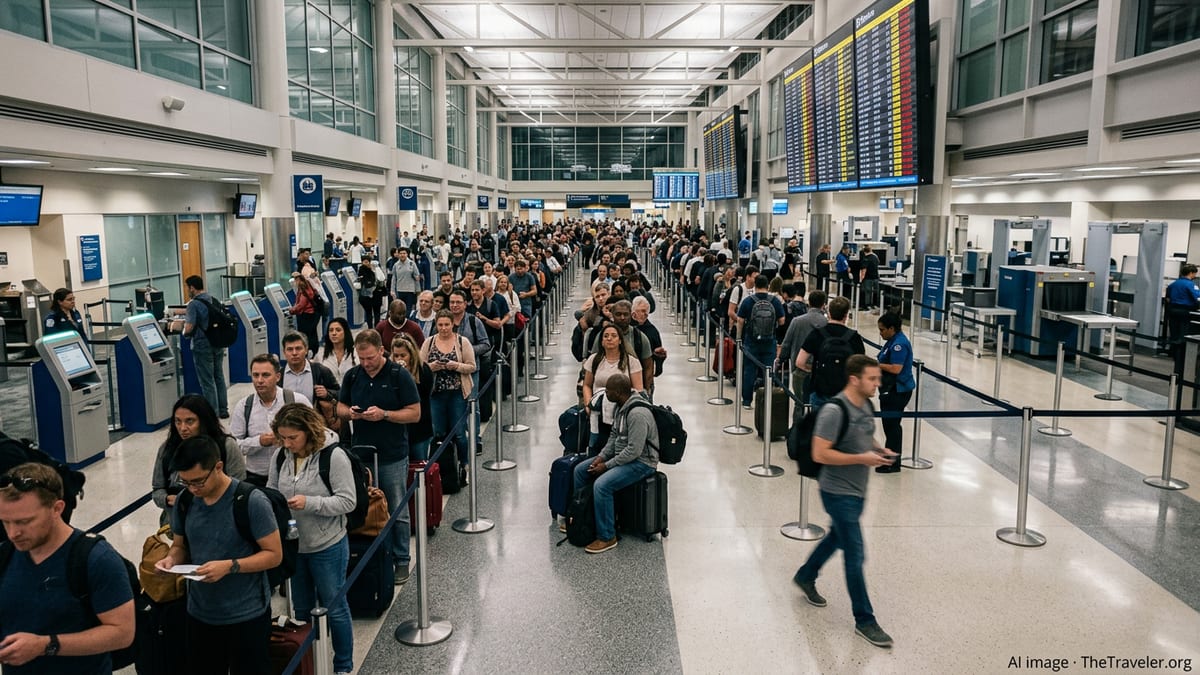
According to published coverage by major U.S. outlets, the disruption affected tens of thousands of scheduled departures and arrivals and rippled across every major hub, from Atlanta and Chicago to Los Angeles and New York. Airports reported crowded gate areas, mounting queues at customer service desks, and growing stacks of delayed and diverted flights that would take days to unwind.
Images and broadcast segments compiled overnight showed aircraft lined up on taxiways, departure boards filled with delays, and passengers camped out in concourses as airlines worked to rebuild schedules. The ground stop, introduced “for reasons of safety,” came with little advance warning for people in the air or already boarded on planes.
Transportation officials speaking in public briefings described the trigger as a failure in aging communications and radar infrastructure that became overwhelmed with data, rather than evidence of a cyberattack. The immediate priority, they indicated, was to stabilize the system and safely space aircraft already in the air before allowing new departures to launch.
Viral Clip From a Trapped Cabin
It was inside one of those grounded aircraft that the latest viral travel video was recorded. In the clip, which circulated widely on social media and appeared in coverage by national broadcasters on November 13 and 14, a visibly exhausted passenger films a dimly lit cabin, explaining that the flight has been stuck on the ground for hours during the nationwide ground stop.
The footage, taken on a domestic U.S. flight that had already left the gate, shows rows of passengers seated with window shades drawn and cabin lights low. The narrator describes missed connections, uncertainty over when a gate will open, and confusion about what is happening outside the aircraft. View counts on several platforms climbed rapidly overnight as viewers linked the video to broader reports of the systemwide grounding.
Similar videos emerged from other airports, including Los Angeles and regional hubs, where arriving aircraft faced long waits for available gates. One widely shared post from Los Angeles International Airport described a two-hour flight followed by more than five hours waiting on the taxiway with no opportunity to disembark, turning a short domestic hop into an all-day ordeal.
Television segments and online reports highlighted these individual accounts to illustrate the human impact of the network-wide disruption, contrasting airborne calm with growing frustration in packed cabins and crowded terminals. For many travelers, the only real-time information came from phone alerts, airline apps, and news notifications rather than announcements from the flight deck or airport displays.
Tarmac Delays and Passenger Rights
The viral video has renewed focus on U.S. rules governing how long passengers can be kept onboard an aircraft during extended delays. Federal regulations define a tarmac delay as the period when an aircraft is on the ground with passengers onboard who have no opportunity to deplane. Under rules enforced by the Department of Transportation, covered U.S. airlines must generally provide passengers on domestic flights the chance to leave the aircraft before a tarmac delay exceeds three hours, subject to specific safety and air traffic control exceptions.
The same regulations require airlines to provide adequate food, potable water, access to functioning lavatories, and comfortable cabin temperatures during long onboard delays. Carriers must also have contingency plans for tarmac delays filed with regulators and posted publicly, outlining how they will handle such events.
During a nationwide ground stop, however, the picture can become more complicated. Safety and air traffic control considerations can limit the ability of planes to return to gates or to use remote stands, especially when gate space is constrained by a sudden surge of grounded aircraft. Industry analysts cited in recent coverage note that when hundreds of flights are out of position and airports are saturated, deplaning every affected cabin within the three-hour window can be logistically challenging.
Transportation data published in recent air travel consumer reports shows that extended tarmac delays are relatively rare but do occur each year across multiple carriers and airports. The events of November 13 are expected to feature prominently in upcoming statistics, as airlines file required reports detailing any onboard delays that exceeded three or four hours, depending on route and airport type.
Airlines Scramble to Recover
For airlines, the viral cabin video underscores how quickly travel disruptions can become reputational crises. Publicly available airline statements on November 13 and 14 emphasized apologies to affected passengers and urged travelers to monitor apps and notifications for rebooking options. Some carriers offered travel waivers, allowing customers to change flights without additional fees within specified date ranges.
Operational data compiled by flight-tracking services indicated that thousands of flights were delayed or canceled over the course of the evening, with cascading impacts expected through the weekend as crews and aircraft were repositioned. Grounded planes across the country meant that some early-morning departures on November 14 were already out of sequence before the day began.
Travel experts quoted in news coverage suggested that travelers with flexible plans consider shifting departures to later in the weekend to avoid the initial recovery rush. Those who must fly were urged to leave extra time for security, prepare for possible connection issues, and keep essential items such as medication, chargers, and basic toiletries in carry-on bags rather than checked luggage.
At affected airports, airport operators reported crowding at customer service counters and long lines at food outlets as travelers waited out delays. Some concessions extended hours to accommodate stranded passengers, while airport communications teams used social media and in-terminal announcements to share updates on local impacts of the national directive.
Longer-Term Questions for Travelers
Beyond the immediate delays, the stranded passenger video and other clips from the November 13 ground stop are feeding into a broader public discussion about aviation resilience and passenger protections. Commentaries in national newspapers and magazines in the hours after the incident questioned whether decades-old systems are being asked to handle volumes and complexity that exceed their original design.
Policy specialists cited in that coverage pointed to recent regulatory efforts that require clearer disclosure of delay causes and more detailed reporting on tarmac events, arguing that transparent data can help travelers compare airline performance and inform future rulemaking. A pending framework tied to the most recent FAA reauthorization directs carriers and the government to categorize delays more precisely, including those attributable to air traffic control and infrastructure issues.
For everyday travelers, the lessons are more practical. Travel advisors note that while rare, national ground stops and large-scale system outages can strand passengers far from home or their intended destination, sometimes onboard aircraft for extended periods. Being familiar with airline tarmac delay plans, carrying essentials in a small bag, and maintaining access to mobile data or airport Wi-Fi can make it easier to respond when events unfold rapidly.
The November 13 ground stop is likely to remain a reference point for future debates about investments in air traffic infrastructure and the scope of passenger rights. For many who watched or shared the stranded passenger video, the memory may be simpler: an unexpectedly long night on the tarmac, waiting for the lights on the departure board to finally turn from red back to green.