


More news on this day
Britain’s top air traffic controller is again under intense scrutiny after another major flight disruption, renewing questions about how resilient the UK’s aviation infrastructure is and whether passengers are being adequately protected when systems fail.
Get the latest news straight to your inbox!
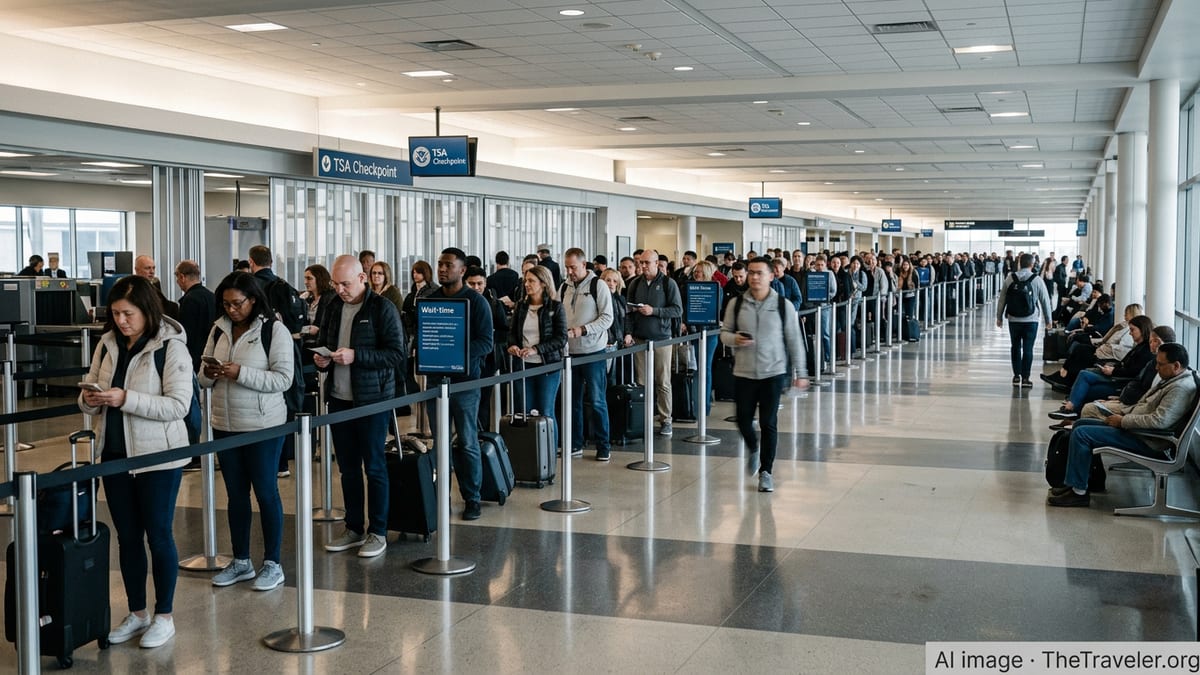
Fresh disruption revives memories of 2023 system failure
The latest wave of cancellations and delays linked to a NATS technical problem has unfolded against the backdrop of an already bruising period for the UK’s air traffic control operator. Recent disruption affected more than a thousand flights in and out of British airports and left terminals crowded with stranded passengers, according to flight-tracking data and news agency reporting. The episode has drawn immediate comparisons with the August 28, 2023 failure that crippled the country’s flight-planning system at the height of the summer season.
On that 2023 bank holiday Monday, NATS’ automated flight plan processing system shut down after encountering what investigators later described as a highly unusual set of data conditions. With both the primary and back-up systems affected, controllers were forced to process flight plans manually, sharply reducing capacity and triggering widespread cancellations and diversions across Europe. Subsequent documentation from the UK Civil Aviation Authority (CAA) and NATS showed that around a quarter of a million passengers were caught up in the fallout over several days.
The new disruption has reignited public debate about whether lessons from that earlier crisis have been fully implemented. For airlines and travellers, the latest problems appear less severe in overall scale than the 2023 collapse, but the recurrence of technology-related delays has further eroded confidence in the robustness of a system on which every commercial flight in UK airspace depends.
Travel industry observers note that for leisure and business passengers alike, the distinction between different types of failure is largely academic. What matters at the check-in desk or departure gate is whether the plane is leaving on time and, if not, who will cover the cost of hotel rooms, meals and missed connections when an air traffic control issue makes travel plans unravel.
Independent reviews put governance and resilience under the spotlight
After the 2023 collapse, the CAA ordered an independent review into NATS’ flight-planning system, appointing an expert panel to analyse the technical root cause, business continuity planning and the broader industry response. The final report, published in late 2024, concluded that the trigger was a specific set of data in a flight plan that the software had not been designed to handle. While the panel did not find evidence of a cyberattack, it highlighted a single point of failure in both the main and back-up systems and recommended stronger safeguards, more robust data validation and a clearer focus on resilience.
The review also placed governance firmly on the agenda. NATS operates as a public-private partnership, with a mix of government, airline and institutional shareholders. The report urged a sharper alignment of that ownership model with the need to invest in core infrastructure and contingency capability, particularly at peak holiday periods when any outage rapidly cascades into thousands of disrupted journeys. Regulators have since pressed NATS to demonstrate concrete changes, from upgraded software to revised operational procedures and training.
In parallel, NATS commissioned its own major incident investigation into the 2023 failure. The internal report, led under the company’s safety management framework, set out a program of technical fixes and process improvements, including changes to how anomalous flight plans are handled and how quickly the system can be safely restarted if unusual data is detected. Publicly available summaries stress that the outage did not compromise the safety of aircraft in flight, but acknowledged that the duration and scale of disruption were unacceptable to airlines and passengers.
The latest disruption is likely to be measured against those earlier promises. Aviation analysts indicate that regulators, parliamentarians and consumer advocates will be examining whether recommendations on redundancy, testing and crisis communication have been fully implemented, and whether the most recent incident suggests residual vulnerabilities in the network.
Martin Rolfe under rising political and industry pressure
Martin Rolfe, chief executive of NATS, has become a key focus of criticism whenever air traffic disruption occurs. Following the 2023 meltdown, UK parliamentary committees called NATS leaders to give evidence on the causes of the failure, the timeline of the response and the steps being taken to prevent a recurrence. Transcripts of those sessions show MPs questioning how both the primary and fallback systems could be disabled by a single anomalous flight plan and probing whether investment and staffing levels had kept pace with the post-pandemic recovery in air travel.
Airlines have also voiced frustration. Senior figures in the low-cost sector, which typically operates at tight margins and high aircraft utilisation, have been particularly vocal about the financial hit from grounded planes and displaced crews. Carrier executives have used public hearings and media interviews to argue that they face compensation obligations to passengers when events are not under their direct control, while the air navigation service provider that triggered the disruption faces fewer direct financial penalties.
In this context, the renewed disruption has led to fresh scrutiny of both Rolfe’s leadership and NATS’ wider accountability framework. Public documents, including NATS’ annual report, present an organisation keen to demonstrate that it has absorbed lessons from previous crises, with references to safety performance, technology upgrades and recruitment at busy airports such as Gatwick. Yet for passengers facing hours in airport queues, those commitments can appear abstract, and attention inevitably turns to senior executives and boards when problems recur.
Political pressure is likely to intensify if further failures occur or if investigations reveal that recommended safeguards were not fully in place. Industry commentators point out that the chief executive’s position can quickly become precarious when complex technical failures intersect with mass public inconvenience, particularly in an environment where governments are keen to show responsiveness to consumer anger.
Passenger compensation and industry-wide costs under review
Beyond the immediate operational questions, the financial consequences of air traffic control failures remain a contentious issue. Estimates published after the August 2023 outage suggested that airlines collectively faced costs running into tens of millions of pounds from compensation, re-routing, aircraft repositioning and crew rescheduling. Some carriers have since argued that the current UK and European compensation frameworks place a disproportionate burden on airlines for events caused by external infrastructure providers.
Consumer advocates counter that passengers need clear, enforceable rights regardless of where in the aviation system a failure originates. Reports from the 2023 incident describe families sleeping in terminals, holidaymakers losing entire trips and business travellers missing critical meetings. For those affected, the key considerations were access to real-time information, accommodation, rebooking options and transparent guidance on how to claim refunds or statutory compensation.
Regulators have indicated through public statements and policy papers that they are continuing to examine whether the balance of obligations between airlines, airports and air navigation service providers remains appropriate in an era of increasing digital complexity. The independent review of the 2023 failure recommended better coordination across the industry and clearer contingency planning for large-scale disruption events, including more consistent approaches to passenger welfare.
The latest NATS-related disruption could accelerate these discussions. If the pattern of incidents points to structural vulnerabilities rather than isolated mishaps, pressure is likely to grow for a refreshed regulatory settlement that ties service performance more closely to financial incentives and penalties, while safeguarding the stability of a system that underpins the wider UK travel and tourism economy.
What the latest disruption means for future UK travel
For travellers planning trips in and out of the UK, recurring questions around NATS’ systems raise understandable concerns about reliability. Aviation safety specialists emphasise that even during severe technical failures, aircraft are handled conservatively and safely, with capacity reductions designed to prevent controllers from being overloaded. However, while safety remains the industry’s overriding priority, the trade-off has been significant uncertainty for passengers when key digital infrastructure falters.
Airlines and airports are increasingly advising travellers to build in more flexibility around busy holiday periods, use carrier apps for live updates and keep essential items, including medication and travel documents, in hand luggage in case of unexpected delays. Some tour operators and corporate travel managers are also reviewing contingency plans, from alternative routings to longer connection times at major hubs that depend heavily on UK airspace.
In the longer term, the combination of regulatory scrutiny, political attention and commercial pressure may drive further investment in modernising the UK’s air traffic management systems. Industry briefings reference a pipeline of upgrades to flight data processing, cyber security and cross-border data exchange with neighbouring air navigation service providers. The challenge for NATS and its leadership is to deliver this modernisation at pace while maintaining day-to-day reliability for millions of passengers.
How effectively the organisation responds to the latest disruption, and how convincingly it can demonstrate that recent events are catalysts for lasting improvement rather than signs of a deeper systemic problem, will shape confidence in UK air travel for years to come. For now, the spotlight remains firmly on the NATS chief executive and the resilience of the country’s unseen but essential air traffic control network.
CAA independent review of August 2023 NATS failure
CAA overview of NATS August 2023 system failure review