


More news on this day
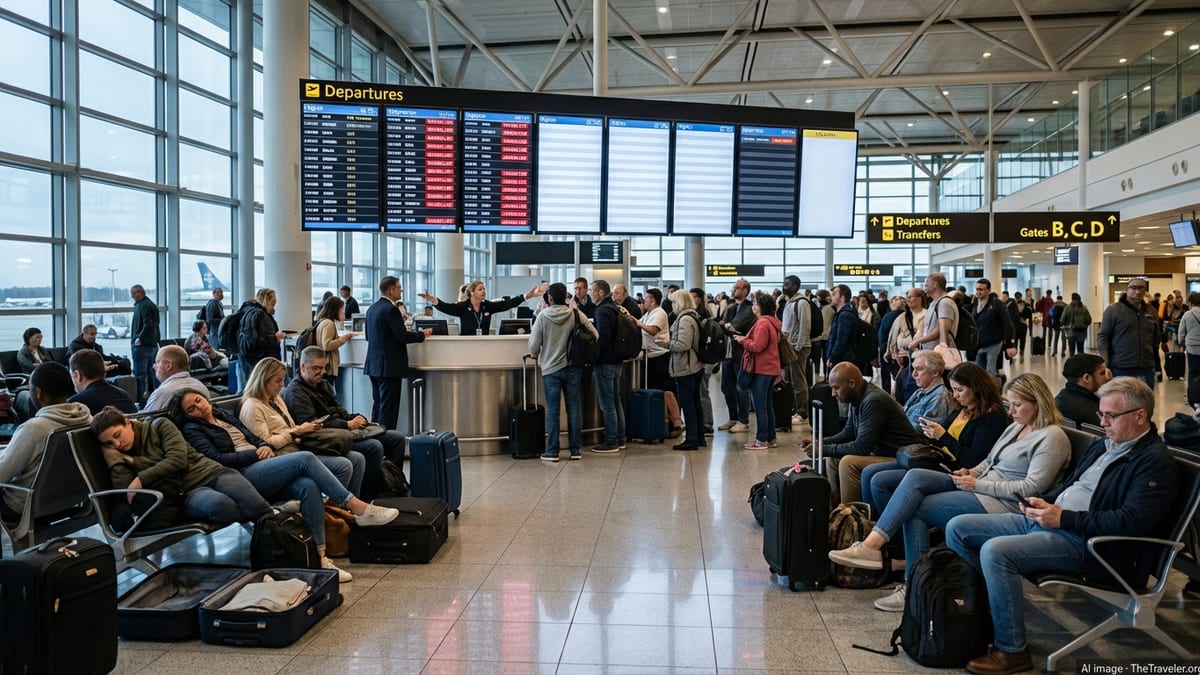
A fresh outage at UK air traffic control provider NATS has triggered widespread cancellations and diversions, prompting a patchwork of rescue flights and extra services as airlines race to bring stranded passengers home.
Get the latest news straight to your inbox!
What triggered the latest NATS disruption
Publicly available information indicates that the latest disruption stems from a significant technical problem within the UK’s air traffic management network, affecting NATS systems that handle flight plans and traffic flows in and out of some of the country’s busiest airports. The incident echoes the August 28, 2023 failure of NATS’ flight planning subsystem, when a software issue forced controllers to fall back on manual processing and sharply reduced airspace capacity.
Independent reviews commissioned by the UK Civil Aviation Authority into the 2023 event describe how a single corrupted or non standard flight plan could trigger a shutdown in automatic processing, leading to flow restrictions across the network. Although the current outage is still being analysed, early reports suggest a similar pattern of heavy delays and widespread cancellations as traffic levels had to be throttled for safety while engineers worked on restoring normal operations.
Background documents on the earlier outage show that even a seven hour loss of full system functionality can ripple into several days of disruption as aircraft and crews end up out of position. Airlines responding to today’s event appear to be drawing on those lessons, moving more quickly to create recovery schedules, authorise extra flying and communicate options for rebooking where possible.
British Airways: consolidation, widebodies and targeted rescue sectors
British Airways, the largest operator at London Heathrow, has been among the hardest hit by the NATS outage, with a substantial number of short haul and some long haul services cancelled or heavily delayed. According to live flight tracking data and airport schedules, the carrier is responding with a mix of consolidating lightly booked rotations, upgauging aircraft on key routes and mounting targeted rescue flights on core European and domestic links.
In practice, this means that some passengers originally booked on multiple frequencies to cities such as Edinburgh, Glasgow, Dublin or Amsterdam are being re accommodated on fewer flights operated with larger aircraft. Additional late evening and early morning departures are being slotted in where air traffic capacity allows, creating de facto rescue sectors aimed at clearing backlogs that built up during the height of the outage.
Observers following British Airways’ operations note that some empty or lightly loaded positioning flights are also being used to pick up stranded customers, particularly on leisure heavy routes from Mediterranean airports into Heathrow and Gatwick. These aircraft would in many cases have needed to move for scheduling reasons; repurposing them as revenue rescue services helps accelerate the recovery while limiting the need for wholesale cancellations later in the week.
easyJet and low cost rivals add repatriation capacity
Low cost carriers with large UK footprints, notably easyJet, are also leaning on the rescue flight playbook first used at scale after the August 2023 NATS failure. At that time, the airline publicly confirmed running dedicated repatriation flights into London Gatwick and using larger aircraft on key sun routes to bring back customers who were left overseas when their original flights were cancelled.
Current schedule data and airport advisories suggest a similar pattern in response to the latest outage. Extra late night arrivals into Gatwick and other bases are appearing from popular holiday destinations in Spain, Portugal, Greece and Italy, often using Airbus A321neo aircraft with higher seating capacity. These flights are primarily aimed at clearing backlogs of passengers who were unable to travel during the peak of the disruption.
Other low cost operators serving the UK, including Ryanair and Wizz Air, are also adjusting their schedules to support recovery, although they generally frame such changes as standard operational management rather than formal “rescue” services. In some cases, aircraft are being ferried empty into constrained airports early in the morning so they can operate additional outbound services during the day once NATS capacity improves.
Long haul and non UK airlines: selective extra services and re routes
For long haul and non UK based airlines, the NATS outage is mainly being handled through selective extra services and routing changes rather than wholesale rescue schedules. Transatlantic and Asia bound carriers have in many cases held flights on the ground at departure airports, re timed services to avoid peak restrictions and, where slots permit, added ad hoc sections on routes with high numbers of stranded passengers.
Some European and Middle Eastern airlines are operating additional inbound flights to secondary UK airports less affected by the outage, such as Birmingham or Manchester, and busing passengers onward when connections into London remain constrained. This approach spreads demand away from Heathrow at times when its movements remain tightly capped under air traffic flow restrictions.
Where aircraft and crew are badly out of position, airlines are running positioning sectors that double as commercial flights, selling seats to passengers caught up in the disruption. Industry coverage of the 2023 NATS incident notes that several airlines took this approach then, effectively turning necessary ferry flights into rescue operations. Early indications suggest the same strategy is being adopted again, especially on busy European city pairs.
What passengers can expect over the next 48 hours
Experience from the August 2023 NATS outage, as documented in independent reviews and passenger experience reports, suggests that the immediate system failure is only the first phase of disruption. The second phase tends to come as airlines attempt to rebuild normal schedules while still accommodating thousands of travellers whose original flights were cancelled or severely delayed.
In the current situation, passengers are likely to see a mix of short notice schedule changes, aircraft swaps and extra sections added at off peak times as airlines try to use every available slot for recovery flying. Even where NATS has restored normal technical capability, flow restrictions and knock on crew duty limits can continue to cap the number of flights that can operate for at least a day or two.
Travel industry bodies point out that UK and EU air passenger regulations remain in force throughout, meaning that airlines are generally responsible for providing re routing at the earliest opportunity, as well as care and assistance at airports. Rescue flights and repatriation services form part of that response, but they sit alongside options such as refunds, hotel vouchers and alternative routings via less congested airports.
For now, the most reliable guidance for affected travellers remains to monitor airline apps and airport departure boards closely, rather than relying on historical schedules. With NATS focused on stabilising the system and airlines racing to restore connectivity, the shape of the rescue flight programme is expected to keep evolving throughout the next 24 to 48 hours.
UK Civil Aviation Authority: NATS August 2023 failure review hub
Independent review into August 2023 NATS flight planning system failure
NATS Major Incident preliminary report, 28 August 2023
Coverage of the August 2023 NATS outage and airline disruption