


More news on this day
The Nigerian Civil Aviation Authority has ordered Nigerian carrier Air Peace to compensate passengers affected by a heavily delayed Lagos–Enugu flight, after a preliminary probe found the airline issued an incorrect notification about schedule changes.
Get the latest news straight to your inbox!
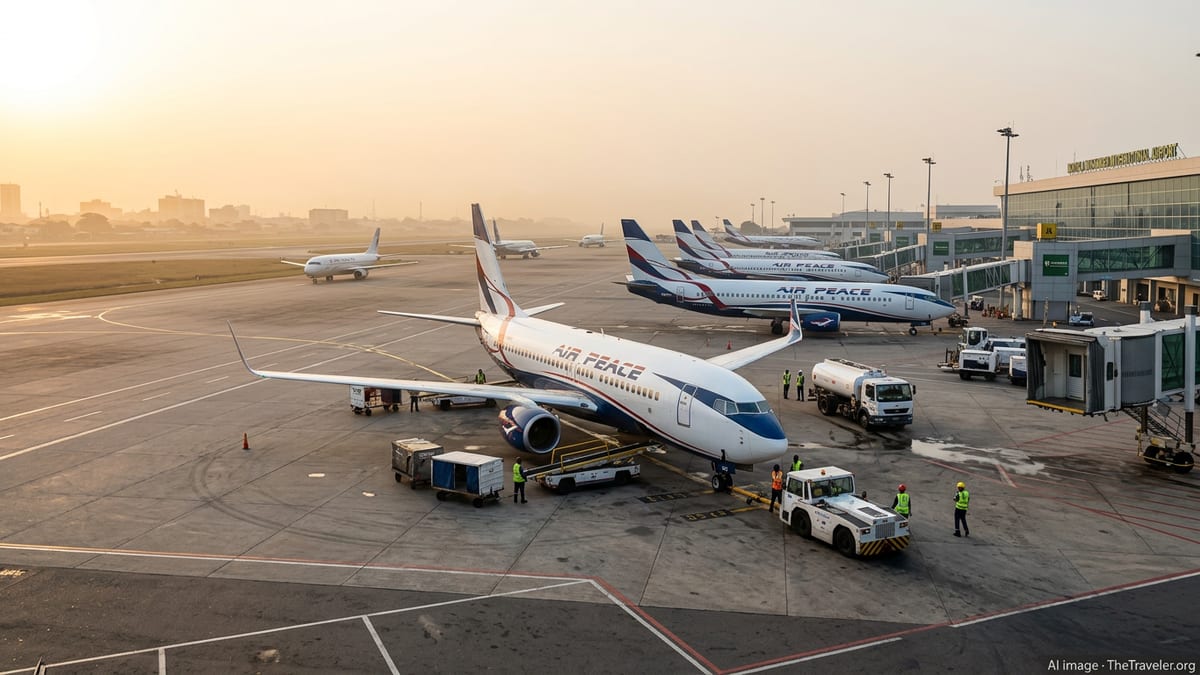
Regulator steps in after miscommunication on Monday flight
According to published coverage, the incident involved an early morning Lagos–Enugu service scheduled to depart Murtala Muhammed Airport at 6:45 a.m. on Monday, 21 September 2026. Reports indicate that the flight was later moved to a late-afternoon departure, leaving passengers waiting for hours at the terminal.
Publicly available information shows that the trigger for regulatory action was a complaint posted on social platform X by human rights lawyer Inibehe Effiong, a booked passenger on the flight. Effiong stated that he arrived at Terminal One around 5:50 a.m., having checked in the night before, only to discover that the departure had been pushed back by several hours.
Coverage from multiple Nigerian outlets indicates that the NCAA’s Consumer Protection Department contacted both the airline and the passenger and reviewed the notification messages the carrier had sent to travellers. The regulator found that, despite the rescheduling, passengers were still advised to arrive early for the original departure rather than being properly informed of the new timing.
Following this preliminary investigation, the NCAA directed Air Peace to develop a compensation package for all affected passengers on the disrupted Lagos–Enugu service. Reports indicate that the authority also reminded the airline of its obligations on communication and duty of care during operational disruptions.
What Nigerian rules say about compensation and duty of care
Nigeria’s air transport framework gives passengers explicit rights when flights are delayed or cancelled. Guidance published by the Nigerian Civil Aviation Authority notes that travellers are entitled to compensation for flight disruptions, in addition to assistance such as refreshments, communication and, in some cases, accommodation.
Consumer-rights information from the NCAA indicates that, for domestic services, passengers may be entitled to compensation of 25 per cent of the ticket price when a flight is cancelled without at least 24 hours’ notice, alongside the option of a refund of the full value of the ticket. Additional provisions set out when passengers should receive meals, the opportunity to reroute or reimbursement, and hotel and transport support when delays stretch late into the night or cross airport curfew windows.
Public guidance from the authority also explains that travellers who do not resolve issues directly with an airline can escalate complaints through NCAA consumer-protection desks at airports or via online channels. This mechanism was highlighted in the current case after the complaining passenger shared screenshots of the airline’s message with the regulator.
While the NCAA’s latest directive focuses on a single Lagos–Enugu flight, analysts note that it effectively reinforces existing rules on timely, accurate information and fair redress whenever schedule disruptions occur. The case serves as a reminder to domestic and regional carriers that passenger communication is central to regulatory compliance.
Delay highlights wider pattern in domestic operations
The dispute comes against a backdrop of frequent delays across Nigeria’s domestic market. A recent NCAA summary of disruption statistics for August 2026 reported that 15 domestic airlines operated just under 8,000 flights during the month, with more than half recorded as delayed and several dozen cancelled.
According to that report, Air Peace accounted for one of the largest shares of operations and delays, with over a thousand delayed flights in August alone. The figures were widely discussed in local media, with some commentators linking them to chronic congestion, weather disruption and infrastructure constraints at key airports such as Lagos and Abuja.
Air Peace has publicly challenged aspects of the disruption statistics, arguing through earlier statements that a significant portion of its delays stem from factors outside its control, including weather, bird strikes, airspace restrictions and airport congestion. The airline has maintained that only a fraction of its operations are delayed for reasons directly attributable to the carrier.
Travel-industry observers say the Lagos–Enugu case is different in that it centers on miscommunication rather than the initial cause of the delay. Even where external factors trigger schedule changes, airlines are expected to relay accurate information and provide care to passengers, and regulators are increasingly focusing on that aspect of service.
Implications for passengers on Nigerian routes
For travellers using Nigerian domestic routes, the NCAA’s order is likely to sharpen attention on what constitutes adequate redress when delays or cancellations disrupt itineraries. Consumer advocates note that, in many cases, passengers are not fully aware of the specific remedies available to them when flights are significantly delayed, including partial fare compensation, vouchers, refunds or rerouting options.
Air-travel specialists in Nigeria have long argued that consistent enforcement of existing rules, rather than new legislation, is key to improving the passenger experience. The high-profile nature of the complaint that triggered the Air Peace directive has drawn renewed public interest in how to document disruptions, preserve boarding passes and receipts, and lodge formal complaints when on-the-spot resolutions at the airport fall short.
For leisure and business travellers planning itineraries around tight schedules, the case underscores the importance of factoring in potential delays on busy domestic corridors such as Lagos–Abuja, Lagos–Port Harcourt and Lagos–Enugu. Observers point out that early-morning departures can be especially vulnerable to ripple effects from disruptions the previous evening, especially when aircraft and crew are rotated across multiple routes.
At the same time, the regulator’s intervention signals to airlines that repeated or poorly managed disruptions can bring not only reputational risks but also regulatory scrutiny and potential sanctions if compensation and duty-of-care obligations are not met.
How this fits into global trends on air passenger rights
The NCAA’s firm stance on the Lagos–Enugu delay aligns Nigeria with a broader international trend toward clearer air-passenger protections. In the European Union, long-established regulations set standardised compensation levels in cash for cancellations and lengthy delays, while in other markets such as North America, authorities have pushed airlines to publish their own delay and cancellation commitments in consumer-facing dashboards.
While Nigeria’s system is tailored to local conditions, both its statute and guidance materials echo the same principle: when flights are disrupted for reasons within an airline’s control, passengers should not bear the full financial and logistical burden. The focus on correct and timely notifications, as seen in the Air Peace case, mirrors global emphasis on transparency.
Industry commentators suggest that sustained enforcement of passenger-rights rules could gradually improve schedule reliability and service culture among Nigerian carriers. Clear expectations, they argue, encourage airlines to build more realistic timetables, maintain operational buffers and invest in customer-service channels capable of handling disruption at scale.
For international visitors connecting through Nigerian hubs onto domestic sectors, the recent directive provides a reference point on what kind of support to request if a local flight is significantly delayed or cancelled. As airlines and regulators respond to heightened scrutiny, travellers are likely to see more explicit explanations of their entitlements in booking confirmations, airport signage and digital channels.