


More news on this day
Near-record low water levels on the Danube River in mid-July 2026 are leaving cruise vessels stranded at Central European ports, disrupting peak-season itineraries and intensifying questions about the resilience of river tourism to recurring drought.
Get the latest news straight to your inbox!
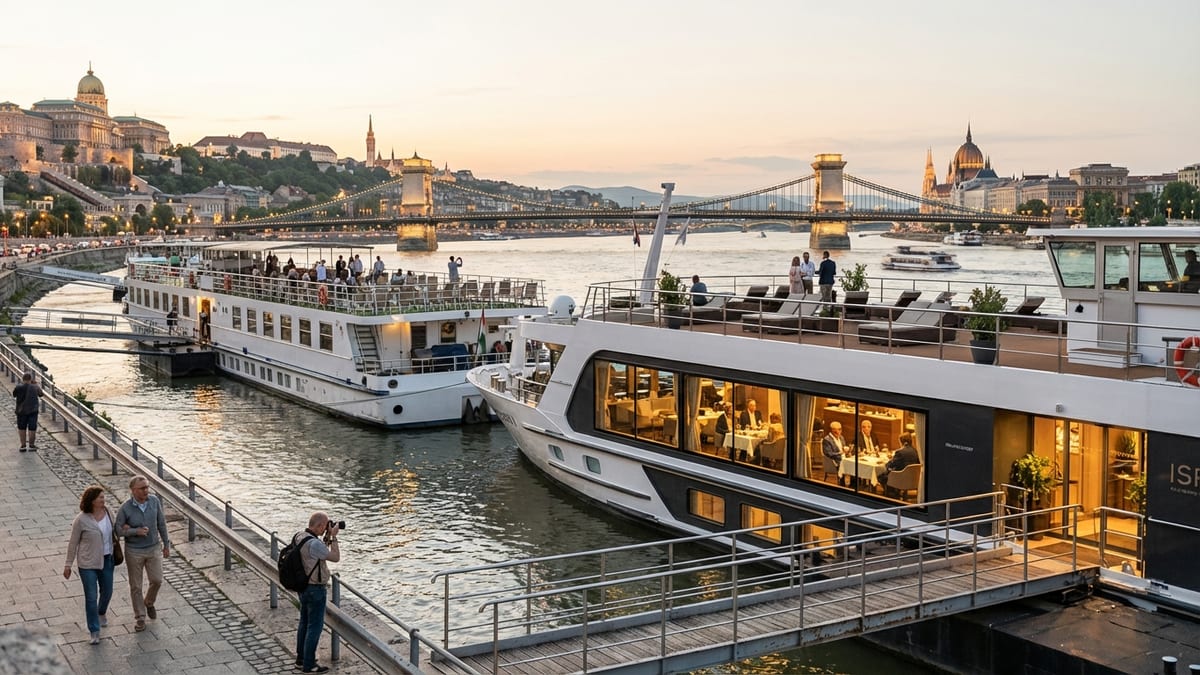
Danube Drops to Within Centimeters of Historic Lows
Hydrology data published in Hungary and Slovakia indicate that sections of the Danube have fallen to within just a few centimeters of their all-time low readings this week, following an extended stretch of hot, dry weather across Central Europe. In Budapest, publicly available river gauges show the water line hovering only narrowly above the record minimum set during a previous drought year.
Reports from Hungarian and international outlets describe clusters of river cruise ships sitting idle north of the capital, particularly around Komárom and other ports along the Hungary–Slovakia stretch of the river. Several sightseeing vessels that ordinarily shuttle visitors into Budapest’s city center have also been temporarily withdrawn from service, with operators citing insufficient depth to maneuver safely in shallower sections.
The timing has amplified the disruption. July is typically one of the busiest months for Danube cruising, with vessels operating near capacity on multi-country itineraries linking Germany, Austria, Slovakia, Hungary and the Balkans. Instead, images circulating in European media show moored, motionless ships and exposed sandbars where navigable channels would usually run.
Stranded Vessels, Ship Swaps and Bus Bridges
As navigation windows narrow, cruise companies are turning to familiar contingency measures. Public statements from several river lines note that low water has forced them to halt ships short of their scheduled turnaround ports, leaving vessels and crew stranded while guests are moved overland to continue their journeys on different ships stationed in deeper stretches.
Travel trade coverage describes a patchwork of “ship swaps,” in which passengers disembark on one side of a problematic reach, travel by bus around the low-water section, and board a sister vessel downstream. In other cases, guests are spending multiple nights in hotels instead of on board while operators work to reposition ships or await modest rises in water levels before attempting transits.
Where workarounds are not feasible, operators have begun cancelling entire departures. One major river cruise brand’s most recent travel update lists selected Danube sailings suspended after a flagship vessel was unable to reach its planned embarkation port. Others are shortening itineraries, omitting shallower segments altogether or rebooking affected travelers on later-season departures when conditions may improve.
Economic Jolt for River Tourism Hubs
The sudden immobilization of cruise vessels is reverberating through local economies that rely on river tourism. Published coverage from Hungarian travel and business outlets notes that popular Danube ports, including Budapest and smaller upstream towns, are seeing a sharp drop in day-tripper spending as scheduled calls are missed or shortened.
Tour guides, coach operators, restaurant owners and souvenir vendors are among those experiencing immediate impacts. Instead of groups stepping off ships for city tours and meals, buses are increasingly passing straight through en route to alternative boarding points, concentrating visitor spending in a narrower set of locations where vessels remain operational.
Industry analysts quoted in European media point out that river cruising has become a significant segment of the continent’s tourism mix, particularly for source markets in North America and Asia. Prolonged disruptions on marquee routes such as the Upper and Middle Danube risk dampening traveler confidence and complicating planning for seasons ahead, as guests weigh the likelihood of itinerary changes against the appeal of river-based travel.
Climate Signals and Recurring Low-Water Seasons
The current episode fits a broader pattern of increasingly volatile water levels on major inland waterways. Drought monitoring services in both Europe and the United States have documented repeated low-water events in recent years, affecting stretches of the Rhine, Danube and Mississippi and, at times, constraining both cargo and passenger traffic.
Scientific agencies and research centers studying Central European hydrology note that warmer temperatures and shifting precipitation patterns are contributing to more frequent and severe summer low-flow periods on rivers fed by snowmelt and rainfall. For cruise and freight operators, that means planning not only for occasional extreme years but for a future in which shallow summer channels could become a regular operational challenge.
Low water also carries environmental implications. Extended dry spells can stress river ecosystems, concentrate pollutants and expose riverbanks to accelerated erosion when traffic resumes. The sight of grounded or partially loaded vessels has become a visible symbol of how climate pressures are intersecting with long-established trade and tourism routes.
How Cruise Lines and Travelers Are Adapting
The present disruption on the Danube is prompting fresh discussion about adaptation strategies along Europe’s busiest cruise rivers. Publicly available company updates outline a mix of responses, including deploying vessels with shallower drafts on vulnerable stretches, fine-tuning route timing to avoid historically problematic weeks, and building more flexible itineraries that can incorporate overland segments at short notice.
Infrastructure-focused ideas have also re-emerged in policy debates, from targeted dredging of critical bottlenecks to enhanced water-storage and release schemes upstream. River management authorities in several countries are investing in more granular forecasting tools designed to give operators earlier warning of approaching low-water thresholds, helping cruise lines decide whether to reroute or cancel before guests arrive.
For travelers, the events of July 2026 serve as a reminder that river cruises depend on living waterways whose levels can swing with the weather. Consumer advocates and travel advisors are encouraging would-be guests to scrutinize contract terms, including how operators handle major itinerary changes, and to consider insurance products that account for disruptions linked to water levels. As near-record lows strand ships on the Danube this summer, both the industry and its customers are being forced to treat hydrology as a central factor in planning, rather than a background concern.