


More news on this day
The Netherlands has completed the rollout of Europe’s new digital Entry/Exit System at its air and sea borders, intensifying concern that long waits and early technical glitches across the Schengen area could put billions of dollars in tourism revenue and millions of long-haul visitors at risk.
Get the latest news straight to your inbox!
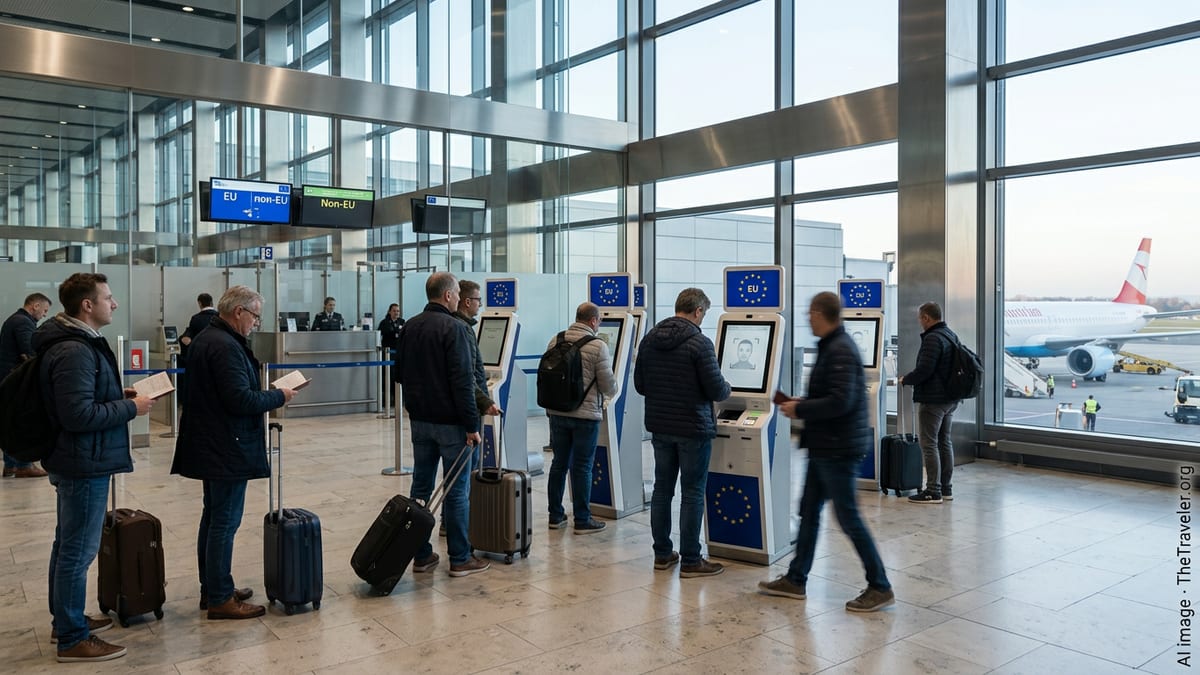
Netherlands Joins Full Schengen Rollout of EES
Publicly available Dutch government information shows that the Netherlands began phasing in the European Union’s Entry/Exit System, or EES, at maritime borders in October 2025 before extending it to Schiphol and other airports. By 10 April 2026 the system was operational at all Dutch external border crossing points, meaning non‑EU visitors arriving in the country are now enrolled digitally instead of having their passports stamped.
The EES records biographic and biometric data for short‑stay travelers from visa‑exempt countries such as the United Kingdom, United States, Canada, Australia, Japan and many others, as well as for those who require visas. The change is part of a wider security overhaul affecting 29 European countries that use the Schengen border regime, including France, Spain, Italy, Germany, Greece, Portugal, Belgium and Austria.
The Netherlands’ completion of the rollout places it firmly among the first wave of Schengen members moving from legacy passport stamping to a shared database that logs each entry and exit for third‑country nationals. For the millions of tourists who route European trips through major hubs such as Amsterdam Schiphol, Paris Charles de Gaulle, Frankfurt, Madrid, Rome and Athens, the Dutch switch is one more sign that the new system is no longer theoretical but a practical reality at the border.
Officials across Europe have framed EES as a tool to modernise border control and better detect overstays. However, the early Dutch experience has also exposed operational strains that industry groups warn could have a direct impact on visitor numbers and spending.
Queues, Staff Pressures and Early Disruption
Reports from Dutch and wider European media since April describe long lines at passport control in several major gateways as EES has gone live, particularly for non‑EU travellers being registered for the first time. At Schiphol, local coverage has highlighted occasions where queues for arriving passengers stretched well beyond normal peak‑season levels as officers captured fingerprints and facial images for the new database.
Schiphol’s operator has publicly acknowledged the challenge, stating that hundreds of additional staff have been hired to manage the transition and assist passengers at self‑service kiosks and manual booths. Similar measures are being reported at other hubs, with airports in France, Germany, Italy and Spain adjusting staffing patterns and passenger flows in anticipation of longer processing times while the system beds in.
Industry associations representing airports and airlines have warned that, at busy holiday weekends, the combination of biometric enrolment and existing infrastructure constraints could translate into waits of several hours at some European borders. Recent statements from air transport bodies have cited modelling and early field data suggesting that queues could stretch up to six hours in worst‑case scenarios during the first full summer of EES operations.
Travel forums and social media posts from passengers transiting through major Schengen airports in May and early June describe mixed experiences, ranging from near‑normal processing to prolonged delays, depending on time of day, staffing levels and how many first‑time EES registrations are taking place simultaneously.
Tourism Revenue at Stake Across Key Origin Markets
The operational issues come at a sensitive moment for European tourism, which has relied heavily on long‑haul markets to drive post‑pandemic recovery. Visitors from the UK, US, Canada, Australia, India, China and Japan collectively account for tens of millions of annual arrivals and many billions of euros in spending across France, Spain, Italy, Germany, Greece, Portugal, Belgium, Austria, the Netherlands and other Schengen destinations.
Analysts note that these travellers tend to stay longer and spend more per trip than regional visitors, making them especially valuable to urban hotels, coastal resorts and cultural attractions. A perception that Europe’s external borders are unpredictable or prone to very long waits may push some high‑value visitors to postpone trips or opt for alternative destinations in the Americas, Asia or the Middle East.
Tourism and aviation bodies have not yet put precise figures on potential revenue losses, but several have warned publicly that persistent bottlenecks at airports, ferry ports and rail terminals could translate into billions of euros in forgone spending if they discourage repeat visits. Industry commentary emphasises that the impact would be felt unevenly, with high‑volume leisure markets such as Spain, Italy and Greece, and gateway hubs like France, Germany and the Netherlands, particularly exposed.
Concerns are especially acute in countries where British holidaymakers and North American visitors make up a significant share of arrivals. UK travellers, now classed as third‑country nationals after Brexit, are among the first large cohorts to experience EES, and their accounts of delays are closely watched by tourism boards seeking to maintain competitiveness.
Balancing Security Goals with Seamless Travel
The European Commission and national governments describe EES as a cornerstone of a broader shift to data‑driven border management, arguing that accurate, real‑time records of entries and exits will enhance security and make it easier to detect overstayers. The system is also intended to support the forthcoming European Travel Information and Authorisation System, or ETIAS, which is scheduled to add a pre‑travel screening layer for visa‑exempt visitors.
For travellers, however, the most immediate concern is practical: how long it will take to clear border control this summer and next. Public information from EU institutions acknowledges that there will be a transitional period of adjustment in which processing times are likely to be longer, particularly for first‑time registrants. After initial enrolment, subsequent crossings should be faster, but that may be little comfort to occasional visitors arriving during the first months of operation.
Transport operators have repeatedly called for more detailed, coordinated planning between national authorities, border forces, airports, airlines, ferry companies and rail operators to mitigate the impact. Suggested measures include expanding pre‑registration options where permitted, deploying mobile teams to relieve pressure points, and redesigning terminal flows to separate first‑time EES users from returning visitors who are already in the system.
In the Netherlands, Schiphol’s phased approach and the decision to add staff and additional equipment are being watched closely by other hubs as a test case for how quickly border controls can stabilise. Experiences at Dutch ports serving the UK and Scandinavia are similarly seen as early indicators for how EES will function at busy maritime crossings in peak season.
Outlook for Summer Travel and Beyond
With EES now active across the Schengen area and the Netherlands fully on board, the coming northern summer is shaping up as a stress test for Europe’s borders. Travel demand from the UK, North America and other long‑haul markets remains robust, fuelling fears that any sustained disruption could reverberate across airlines, tour operators and local economies heavily dependent on foreign visitors.
Some tourism experts argue that, if managed effectively, EES could ultimately support smoother travel by reducing manual passport checks and enabling smarter staffing decisions once most regular visitors are enrolled. Others caution that underinvestment in infrastructure or inconsistent implementation between states could prolong teething problems and erode confidence in Europe as an easy, welcoming destination.
For now, guidance from European and national authorities advises travellers from third countries to allow more time at airports and ports, particularly during peak holiday periods, and to follow instructions from carriers and border staff about when and where EES registration will take place. As the Netherlands, France, Spain, Italy, Germany, Greece, Portugal, Belgium, Austria and their neighbours move through the first full season of the new regime, their ability to keep queues under control may prove as important to tourism performance as currency exchange rates or marketing campaigns.