


More news on this day
As the Iran war disrupts airspace, drives up fuel costs and forces airlines to cut routes, Middle East economies are increasingly relying on domestic tourism to steady growth, with Saudi Arabia joining a wider regional pivot that is insulating hotels, attractions and service jobs from the latest international travel shock.
Get the latest news straight to your inbox!
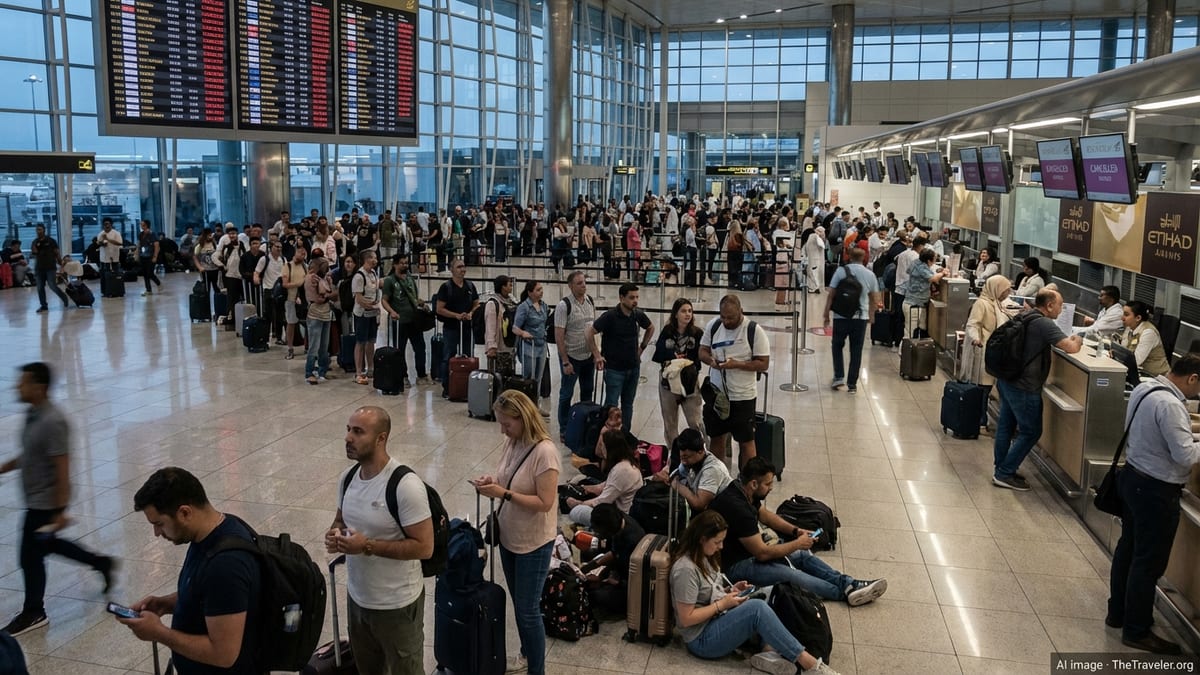
Regional skies in turmoil, but hotels stay busy
The latest conflict centered on Iran has turned large parts of Middle East airspace into a patchwork of closures and restrictions, prompting extensive rerouting of flights between Europe, Asia and Africa. Publicly available flight-tracking data and aviation reports show that airspace over Iran and several neighboring states has at times been closed or heavily curtailed, forcing airlines to fly longer routes that add hours to journeys and significantly increase fuel burn.
Industry analyses indicate that this airspace squeeze, layered on top of already elevated oil prices, has sharply raised operating costs and cut into profitability for carriers that depend on Gulf and Levant hubs. Assessments by aviation groups suggest that Middle East airlines, which before the conflict handled a sizeable share of global long-haul traffic, are now facing losses estimated in the billions as they grapple with grounded aircraft, damaged infrastructure and reduced transfer traffic.
The fallout extends beyond the region’s flagship carriers. European and Asian airlines that typically route passengers through Middle East hubs have been forced to cancel or reconfigure services, while some low cost operators have temporarily pulled back from affected routes. Despite this, hotel occupancy and tourism-related activity within countries such as Saudi Arabia, the United Arab Emirates, Qatar and Egypt have remained comparatively resilient, supported by strong domestic and regional demand.
Travel analysts note that this pattern contrasts with earlier crises, when dependence on long-haul international visitors amplified the shock to local tourism sectors. This time, a decade of investment in domestic leisure infrastructure, festivals and internal connectivity is helping to keep rooms filled and tourist spending circulating closer to home, even as transit passenger flows dwindle.
Saudi Arabia’s domestic tourism push gathers pace
Saudi Arabia has become one of the most closely watched examples of this domestic tourism strategy. Under its Vision 2030 reform agenda, the kingdom has poured resources into new attractions, transport links and regulatory changes intended to encourage residents to spend more of their holidays inside the country rather than abroad.
Data published through Saudi economic and tourism dashboards show that domestic trip volumes have climbed sharply in recent years, with leisure travel emerging as the leading purpose of internal journeys. Publicly available figures for 2024 indicate tens of millions of domestic leisure trips, highlighting how Saudis are increasingly choosing destinations such as the Red Sea coast, AlUla, Diriyah and the Asir highlands for short breaks and longer stays.
Complementary reporting on Vision 2030 progress indicates that tourism’s direct contribution to Saudi gross domestic product has expanded rapidly since the program was launched, rising from a low single digit share to around one tenth of the economy. Observers note that this growth has been driven not only by high profile giga-projects and religious tourism, but also by more routine, year round domestic travel supported by improved road networks, budget accommodation and a growing ecosystem of local tour operators.
In the current conflict environment, this broader base of domestic demand provides a buffer against the volatility of international arrivals. While inbound traffic faces headwinds from rerouted long haul flights and traveler caution about transiting the region, domestic travelers can often continue to move by car or on internal air routes that avoid contested skies, keeping cash registers ringing in hotels, restaurants and entertainment venues across the kingdom.
Gulf states turn inward as international flows falter
Across the wider Gulf, governments in the United Arab Emirates, Qatar, Bahrain, Kuwait and Oman have also spent the past decade laying the groundwork for stronger homegrown tourism markets. Policy papers and tourism strategies from these states emphasize diversifying away from an almost exclusive focus on international visitors toward a mix that includes residents and regional travelers.
In the UAE, for instance, tourism authorities report that hotel revenues and overall visitor spending reached record levels in 2024, supported by a blend of international arrivals and robust domestic activity. Industry analyses based on World Travel and Tourism Council data suggest that domestic tourism spending in the country has climbed into the tens of billions of dollars annually, accounting for a meaningful share of total visitor outlays.
Similar, if smaller scale, patterns are evident in Qatar, Bahrain, Kuwait and Oman. Publicly available statistics and investor presentations highlight growth in staycation offers, family entertainment centers, coastal resorts and heritage sites targeted at residents and neighboring Gulf citizens. These markets tend to be less exposed to the global shockwaves currently pulsing through long haul aviation, since many trips are made by car or on short regional flights that can be rerouted more easily when airspace corridors shift.
As a result, analysts say that while major Gulf hubs are suffering from the loss of transfer passengers who previously flowed through them on intercontinental journeys, domestic and near regional tourism has become an anchor of stability. Hotels in city centers and resort areas report that local and Gulf Cooperation Council guests are helping to offset the drop in far flung visitors, softening the immediate economic blow from the Iran war’s disruption of global air travel.
Egypt, Turkey and Jordan lean on home markets
Beyond the Gulf, countries such as Egypt, Turkey and Jordan are also finding that their large domestic populations and established internal tourism routes offer a partial shield against the current turbulence in international travel. These nations have long relied on a mix of foreign holidaymakers and local vacationers, a model that is proving valuable as airspace closures and higher fares weigh on inbound demand.
Tourism ministry data and central bank reports from Egypt show that while the country still counts on foreign currency earnings from Red Sea resorts and Nile cruises, domestic tourism has steadily expanded, particularly among a growing middle class. Weekend breaks to coastal cities, cultural trips to Luxor and Aswan, and pilgrimages to religious sites are sustaining activity even as some international tourists postpone or reroute their plans amid concerns about the broader regional security picture.
Turkey, which straddles Europe and the Middle East, is seeing a similar dynamic. While published coverage indicates that the country faces pressure on international arrivals from key markets affected by aviation disruptions, strong domestic travel during peak holiday periods is supporting occupancy in coastal resorts and major cities. Internal air routes and overland transport networks allow Turkish residents to sidestep some of the complexities facing foreign visitors who rely on disrupted long haul connections.
In Jordan, domestic tourism to attractions such as Petra, Wadi Rum and the Dead Sea has grown in recent years, helped by promotional campaigns aimed at residents and visitors from neighboring countries. These domestic and regional flows are now an important ballast, helping businesses stay open and retain staff as airlines reduce or adjust services through Amman and other gateways in response to changing airspace conditions.
Domestic demand as a structural “shock absorber”
The growing role of domestic tourism across the Middle East reflects lessons learned from earlier crises, including the COVID-19 pandemic and previous bouts of regional instability. Policymakers and industry stakeholders have increasingly viewed home markets as a structural shock absorber that can help sustain employment and investment when international travel is disrupted by geopolitics, health concerns or economic downturns.
Economic studies of tourism resilience in the region point to several advantages of cultivating strong domestic demand. Local travelers are often less sensitive to external perceptions of regional risk, more familiar with on the ground realities and able to adjust plans quickly in response to changing conditions. Their trips also keep spending within national borders, supporting small and medium sized enterprises in hospitality, transport, food services and entertainment.
The current Iran war has added a new layer of urgency to this agenda. With major air corridors constrained, fuel prices elevated and airline profitability under pressure, governments from Saudi Arabia to the UAE, Qatar, Bahrain, Kuwait, Oman, Egypt, Turkey and Jordan are doubling down on campaigns that encourage residents to explore their own countries. Marketing pushes, event calendars and targeted subsidies seek to convert potential outbound travelers into domestic tourists, reducing leakage of spending to overseas destinations.
Analysts caution that domestic tourism cannot fully replace international demand, particularly in destinations that have built large-scale infrastructure for global visitors. Nonetheless, the present crisis is reinforcing a strategic shift already underway. As long as skies remain uncertain and airlines count the cost of rerouted and canceled flights, the ability of Middle Eastern economies to mobilize their own citizens as travelers is emerging as a critical line of defense against the latest external shock.