


For many travelers, NetJets is the name that comes to mind when they picture private jets: sleek aircraft, flexible schedules, and VIP treatment. But when you move from daydreaming to actually requesting a quote, the first reaction is often sticker shock. NetJets pricing is layered, complex, and rarely presented in a single simple number. This guide breaks down how NetJets really charges for access to its fleet in 2026, using concrete examples and typical price ranges so you can decide whether the convenience is worth the cost.
Get the latest updates straight to your inbox!
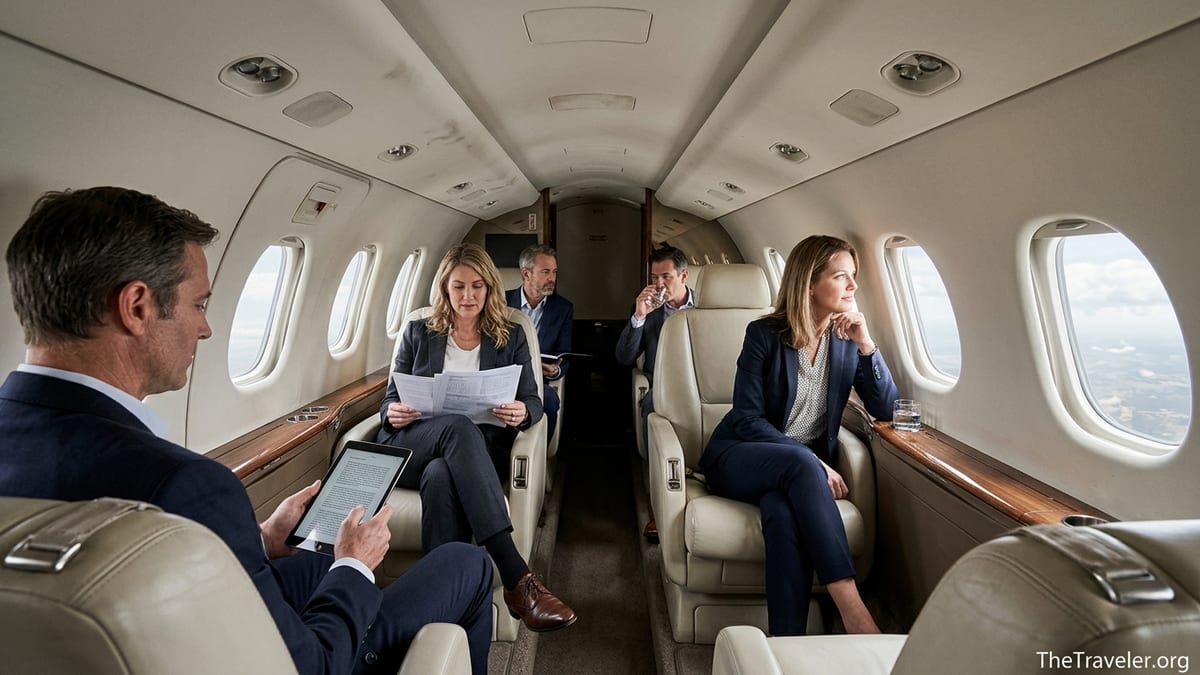
How NetJets Pricing Works in 2026
NetJets does not sell “one-off” flights the way on-demand charter brokers do. Instead, it sells access programs built around a few core models: fractional ownership, leasing, and prepaid jet cards. Each model combines three main cost elements: an upfront commitment (share purchase, lease, or card), fixed monthly or annual fees, and variable hourly charges when you actually fly. On top of that, travelers pay taxes and, in many cases, fuel surcharges and peak-day premiums.
On its own website, NetJets emphasizes that it aims to bundle much of the private jet cost into predictable structures rather than surprise invoices after every trip. In practice, though, these structures can still be difficult to decode if you are used to simply buying airline tickets. A traveler who flies 20 hours a year will encounter NetJets very differently from a family or business logging 150 or 200 hours per year, even on the same aircraft type.
Another important nuance is that NetJets tends to sit at the premium end of the market. Independent analyses of 2026 pricing suggest that the company often charges more per flight hour than some direct charter options or lower-touch jet cards, especially for smaller aircraft. That premium is tied to its large owned-and-managed fleet, high service standards, and strong brand reputation, but it means the “NetJets number” you hear will often be above the cheapest price you can find elsewhere.
Jet Cards: The Most Common Entry Point
For many travelers, the first meaningful step into NetJets is the jet card. These products essentially prepay for a block of flight hours, usually 25 hours, on a specific aircraft size. As of 2026, NetJets itself states that all-inclusive jet card costs begin at around 215,000 dollars for 275 days of annual access, which lines up with external estimates of its light-jet card pricing.
Industry comparisons suggest that a 25-hour NetJets card on a popular light jet such as the Embraer Phenom 300 is currently anchored around 215,000 dollars, which works out to about 8,600 dollars per hour all-in for U.S. travelers. That “all-in” figure usually covers crew, standard catering, positioning flights, and many fees that charter customers might see itemized. Taxes and fuel surcharges may still be added, depending on the specific contract language and any index-based fuel adjustments.
To understand what this looks like in practice, imagine a family based in New York using a 25-hour NetJets light-jet card for five long weekends per year. They might fly White Plains to West Palm Beach and back in about 5 hours of flight time, depending on winds and routing. Two such roundtrips would consume roughly 10 hours, at an implied cost near 86,000 dollars. After three or four similar trips, the 25-hour card is largely used up, and they either renew at current rates or step up to a larger commitment.
Compared with the broader market, NetJets card pricing is clearly at the high end. Industry data shows 25-hour light-jet cards elsewhere often fall in the 150,000 to 200,000 dollar range, but these competitors may have smaller fleets, tighter peak-day limits, or less generous service policies. For travelers who value the NetJets brand and its network depth, paying a premium for a card can feel justifiable; for purely cost-driven buyers, a lower-priced card or on-demand charter may be more attractive.
Fractional Ownership: Buying a Share of an Aircraft
Fractional ownership is NetJets’ flagship product and the option most closely associated with ultra-frequent travelers and corporate flight departments. In this model, you buy a share of a specific aircraft type that entitles you to a certain number of annual flight hours, typically over a multi-year contract. A 1/16 share usually corresponds to about 50 hours per year, while larger fractions unlock more hours.
Real-world 2026 data for NetJets’ light-jet flagship, the Embraer Phenom 300, shows that a 1/16 share commonly requires a one-time capital investment in the range of 500,000 to 850,000 dollars, depending on aircraft age and contract terms. On top of that, owners pay fixed monthly management fees often in the 12,000 to 15,000 dollars per month range, plus variable occupied hourly rates in the ballpark of 8,000 to 9,000 dollars or more per flight hour. These figures exclude taxes and any fuel or peak-day surcharges.
Put into a concrete first-year example, a business purchasing a 1/16 share of a Phenom 300 might spend 650,000 dollars as an upfront capital outlay. Over twelve months, it could pay about 156,000 dollars in management fees at 13,000 dollars per month. Then, if the company flies its full 50-hour allocation at an average 8,500 dollars per hour, it adds roughly 425,000 dollars in variable charges. Before tax, that first year could easily exceed 1.2 million dollars, even on a light jet, once incidental fees are added.
The upside of this structure is that owners receive high-priority access and can sometimes realize tax benefits tied to asset ownership or business use. The downside is capital risk: aircraft values can move, and the exit value of the share is not guaranteed. Prospective buyers should not assume that the share they buy for 650,000 dollars today will be worth a similar amount when they sell it back at the end of a five-year term.
Leasing and Other Access Options
For travelers who want many of the scheduling advantages of fractional ownership without writing a large upfront check, NetJets also offers leasing arrangements. These typically replace the capital purchase with a predictable lease payment over the term of the contract, while retaining monthly management fees and per-hour flight charges. In other words, you pay less up front but commit to a steady stream of payments for the duration of your lease.
In practice, the total economic cost of leasing versus owning a fractional share can be surprisingly similar, especially if you ignore potential tax effects and residual value. A traveler might sign a three- or five-year lease for a light jet that results in a fixed annual lease charge in the low to mid six-figure range, management fees comparable to owners, and similar per-hour rates. The key difference is that the lease holder does not have capital tied up in an aircraft share and has no share to sell at the end.
This structure can make sense for high-income individuals who prioritize cash flow flexibility or do not want the accounting and tax complexity of owning aviation assets. A medical practice that needs 75 to 100 flight hours per year to move partners between regional offices, for example, might find a NetJets lease more palatable than wiring hundreds of thousands of dollars into a fractional share on day one. Over a full term, though, they should expect effective hourly costs that still cluster in the high four to mid five figures, depending on aircraft size.
NetJets has also historically experimented with more targeted products, such as shorter-duration or regionally focused cards in Europe. While branding and details change over time, the core pattern remains: some form of pre-commitment buys you access and price predictability, while the company handles aircraft ownership, crew hiring, and operations behind the scenes.
What You Really Pay Per Hour
Travelers often ask a simple question: “How much per hour does it cost to fly NetJets?” The reality is that there is no single universal number. Instead, the effective hourly cost depends heavily on program type, aircraft size, how much you fly, and how you account for fixed fees and capital costs.
Consider again the 25-hour Phenom 300 jet card example at 215,000 dollars. A straightforward division shows about 8,600 dollars per flight hour before taxes. If that cardholder uses every hour efficiently on direct point-to-point trips without much time on peak days or last-minute bookings, the realized cost may stay close to that figure. If, however, the same traveler regularly flies on the busiest days of the year when surcharges apply, or requires special catering or ground arrangements, the true per-hour spend can creep higher.
On the fractional side, some owners and analysts estimate that once you factor in capital, monthly fees, and hourly rates, total costs for a light-jet share can land around 10,000 dollars per occupied hour for about 50 hours per year. For larger cabin aircraft, community reports and comparison tools suggest that effective costs can jump dramatically. Hourly figures for long-range jets such as the Bombardier Global 5500 or Global 7500 within NetJets and comparable programs can move into the low to upper 20,000 dollars per hour range, depending on configuration and utilization.
These numbers are noticeably above the least expensive on-demand charter quotes that affluent travelers sometimes see online for similar routes. A one-way charter flight between Los Angeles and Aspen, for example, might occasionally appear at 12,000 to 14,000 dollars on a midsize jet with a smaller provider. NetJets, aiming at consistency, high dispatch reliability, and a broad service network, is not trying to undercut these spot prices. Instead, it sells predictability: a corporate team knows roughly what its annual flight budget will be, even if they are flying last-minute or on busy days.
Hidden Costs, Surcharges, and Fine Print
One of the selling points of NetJets compared with ad hoc charter is the promise of fewer surprise charges. Still, travelers should be aware of several line items that can materially impact the real cost of flying, especially over a full year of use.
First are fuel surcharges. As with many fractional programs, fuel costs are often treated as a variable component indexed to an agreed benchmark. Industry sources note that these surcharges can add hundreds or even over 1,000 dollars per flight hour when fuel prices are high. A card or fractional agreement might specify a base fuel price, with the client paying the difference when market prices exceed that baseline.
Second are peak-day and short-notice surcharges. NetJets, like its peers, manages a finite fleet across many clients. To keep operations flowing smoothly, it may impose higher hourly rates, additional fees, or tighter booking restrictions on especially busy days such as major holidays and popular vacation weeks. A family that always flies the Wednesday before Thanksgiving and the Sunday after, for example, should expect limited flexibility and the possibility of premium pricing on those flights.
Finally, there are incidental operational charges that can be overlooked in sales conversations: de-icing fees during winter operations, special catering beyond standard offerings, ground transportation arranged through NetJets partners, and, in some cases, fees associated with using certain congested or slot-controlled airports. While none of these are unique to NetJets, they underline why experienced private flyers build a margin of error into any annual cost estimate.
Comparing NetJets to Alternatives
Understanding NetJets pricing in isolation is useful, but most travelers ultimately need to compare it with other ways of flying private or even with commercial premium cabins. For occasional flyers who log fewer than 25 hours per year, a traditional charter broker or digital marketplace often delivers lower per-trip costs without requiring a large upfront payment. A couple that charters a light jet two or three times a year to ski in Colorado, for instance, might find that ad hoc charter totals 40,000 to 70,000 dollars annually, significantly less than the cost of a NetJets card or share.
For frequent flyers, the comparison becomes more nuanced. Competing fractional and card providers such as Flexjet, Wheels Up, and various boutique card issuers sell programs that can undercut NetJets on headline hourly rates but may involve smaller fleets, different service standards, or less favorable terms on cancellations and peak days. Independent comparison tools frequently show NetJets pricing above the market median for a given aircraft size, but many long-time users accept the premium in exchange for perceived reliability and the backing of a large, established operator.
For some corporate travelers, the relevant benchmark is not another private aviation company at all, but commercial first or business class. A transcontinental roundtrip in lie-flat business class on a U.S. airline might cost 2,500 to 5,000 dollars per person. Put four executives on that flight and the total ticket cost can still be meaningfully lower than a single NetJets midsize-jet roundtrip priced in the tens of thousands of dollars. The principal advantage of NetJets in this scenario is time: executives can arrive closer to meetings, avoid overnight stays, and work in a private cabin.
Ultimately, travelers should approach NetJets quotes as one data point in a broader decision. Running side-by-side estimates for a year of flying with NetJets versus a competing card, a charter-focused strategy, or upgraded airline cabins can reveal whether the premium pricing fits your specific travel pattern and tolerance for risk and complexity.
The Takeaway
In 2026, NetJets pricing remains firmly in premium territory. Entry-level jet cards for light jets often start around 215,000 dollars for 25 hours, with effective hourly costs near or above 8,600 dollars once everything is factored in. Fractional ownership of popular aircraft such as the Phenom 300 can easily push first-year outlays over 1 million dollars for a 1/16 share when capital, management fees, and hourly charges are combined.
Those numbers are not designed to compete with the cheapest charter deals or with discounted business-class fares on airlines. Instead, they reflect a product that sells certainty and convenience: a large, professionally managed fleet, predictable service standards, strong support infrastructure, and the ability to treat private flying more like a utility than a series of one-off purchases. For travelers and companies that place a high value on time, privacy, and reliability, that premium can be acceptable.
For others, the same money might buy a generous mix of business-class commercial tickets, occasional ad hoc charters, and still leave a healthy surplus. The key is to match the product to the travel pattern. Before signing a NetJets contract, it is wise to map out a realistic 12- to 24-month flight plan, test a few trips via charter or a smaller card, and work through best- and worst-case cost scenarios.
Viewed with clear eyes, NetJets is neither a bargain nor a rip-off. It is a high-end transportation service with pricing to match, most compelling when used heavily and strategically. Travelers who understand the layers of cost, ask detailed questions about surcharges and peak days, and compare alternatives are best positioned to decide whether NetJets represents sensible value or simply aspirational luxury.
FAQ
Q1. How much does a 25-hour NetJets jet card cost in 2026?
Typical 2026 estimates place a 25-hour NetJets light-jet card, such as on a Phenom 300, at around 215,000 dollars, or roughly 8,600 dollars per hour before taxes.
Q2. What is the minimum NetJets fractional ownership level?
The common entry point is a 1/16 share, which usually corresponds to about 50 flight hours per year on a specific aircraft type under a multi-year contract.
Q3. How much does a 1/16 NetJets share really cost per year?
Including capital, monthly management fees, and hourly charges, a 1/16 share on a light jet can easily exceed 1 million dollars in total outlay in the first year.
Q4. Are jet cards cheaper than fractional ownership with NetJets?
On a strict per-hour basis, fractional can be more cost-effective for high usage, but jet cards typically require less upfront commitment and are better suited to occasional flyers.
Q5. Does NetJets charge extra on peak travel days?
Yes, NetJets, like many competitors, often applies surcharges or tighter terms on peak days such as major holidays and popular vacation periods, which can raise your effective hourly cost.
Q6. Are fuel surcharges included in NetJets pricing?
Fuel is often treated as a variable component tied to an index. Contracts may include a base fuel rate, with surcharges added when market prices exceed that baseline.
Q7. How do NetJets prices compare to on-demand charter?
NetJets typically sits above the lowest on-demand charter quotes for similar routes, trading a higher price for more predictable availability, standardized service, and fleet depth.
Q8. Can NetJets ever be cheaper than commercial business class?
On a per-seat basis, NetJets usually costs more than business class, but it can save time and hotel nights on complex itineraries, which some businesses find offsets the higher ticket price.
Q9. Is NetJets worth it for fewer than 25 hours of flying a year?
For under 25 hours per year, most travelers find that occasional charter flights or premium airline cabins offer better value than committing to a NetJets card or share.
Q10. Can I exit a NetJets fractional ownership and get my money back?
Yes, shares can usually be sold back under defined terms, but the repurchase price is not guaranteed and may be lower than your original capital investment, especially if market conditions change.