


Zurich Airport is one of Europe’s most efficient hubs, with fast rail links into the city and a compact terminal layout that makes connections easy. That combination makes it an excellent place for a layover, whether you want to squeeze in a quick stroll along the Limmat River or simply rest, shower and refuel before your next flight. The key is understanding how much time you really need, and what is realistically possible between flights.
Get the latest updates straight to your inbox!
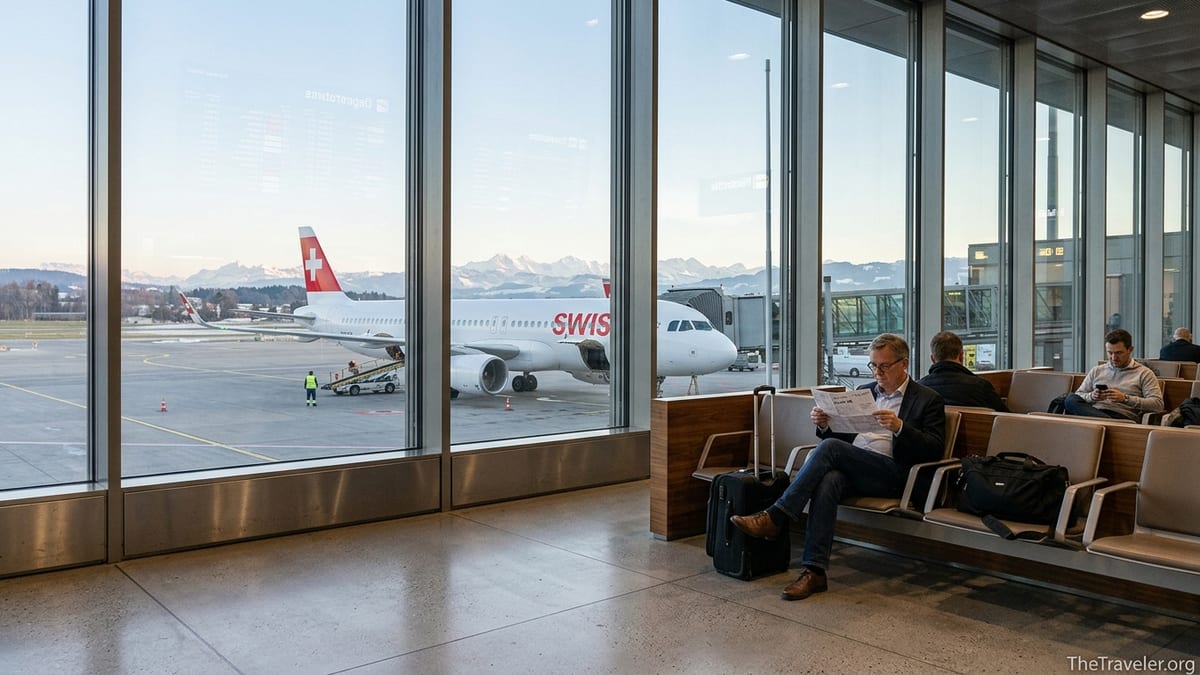
How Much Layover Time Do You Really Need at Zurich?
Before you decide whether to head into Zurich city centre or stay at the airport, you need to look at your total layover time, your passport and visa situation, and whether you are on a single ticket or separate bookings. Zurich Airport is efficient, but connections still take time. In typical conditions, arriving passengers on a single ticket with checked bags through-checked can make a Schengen to Schengen connection in about 45 to 60 minutes, and a non-Schengen to Schengen transfer in about 60 to 90 minutes. That assumes on-time arrival and no extra checks; if you are on separate tickets or need to claim luggage, you should add at least another hour.
A practical rule of thumb is that you need at least six hours of total layover time before it makes sense to consider going into the city. That gives around one hour to deplane, clear passport control if needed and walk to the train station, 30 minutes each way for train and station connections, and at least three hours actually in Zurich. Many experienced travellers are more comfortable with seven to eight hours, especially if they are connecting to a long-haul flight or during winter, when snow or de-icing can cause small delays.
If your layover is under four hours, it is almost always better to stay in the airport. By the time you reach the train platforms, ride to Zurich Hauptbahnhof, and get oriented in the city, you are already thinking about turning back. In these cases it is smarter to invest in a shower, a comfortable airport lounge or even a short-stay room at the airport’s transit hotel to arrive at your final destination rested.
Immigration and visa rules also matter. Some passport holders need a Schengen visa to enter Switzerland even for a few hours. If that is you, you must remain airside unless you already hold the appropriate visa. Airline staff and Swiss border officials do random checks at boarding, so it is not worth the risk of missing your connection because you left the transit area without the right documentation.
Getting Between Zurich Airport and the City Centre
One of Zurich Airport’s biggest advantages is its direct rail connection to Zurich Hauptbahnhof, the city’s main station. The airport railway station sits directly beneath the main terminal complex, reached by escalators and lifts from the arrivals level and the shopping mall. From there, frequent S-Bahn and mainline trains run to Zurich HB. In normal daytime hours there are roughly a dozen trains per hour, and the journey typically takes 9 to 13 minutes, making this one of the fastest airport-to-city links in Europe.
Tickets are sold by zone rather than distance. The airport and city centre both sit in the same wider fare area for the Zurich region, so a standard single adult ticket from Zurich Flughafen to Zurich HB is usually just a few Swiss francs. Many travellers opt for a 24-hour Zurich transport pass or the city’s tourist card, which covers the airport train plus trams, buses and local trains in the city. If you plan to spend a few hours exploring central Zurich, hopping on trams 4, 6 or 8 around Bahnhofstrasse and the old town, a day ticket is often more convenient than buying singles.
Trams and buses also connect the airport to the city, but they are slower and usually not ideal for a short layover. For instance, tram line 10 runs from the airport through suburban districts into the city, taking around 35 to 40 minutes to reach Zurich HB. It can be scenic and useful if you are staying in a neighbourhood along the route, but for a quick in-and-out layover trip the train is far more efficient.
Taxis and ride-hailing services are available outside arrivals, but they are significantly more expensive than public transport. A taxi into central Zurich can easily cost the equivalent of 60 to 80 US dollars, depending on traffic and the exact destination. Unless you are travelling in a group with heavy luggage or arriving very late at night when train frequency is reduced, the train remains the best balance of speed, cost and reliability for most layover visitors.
Should You Leave the Airport on Your Layover?
The decision to leave Zurich Airport during a layover comes down to time, energy and your appetite for risk. With six to eight hours and a reasonably early arrival, you can enjoy a meaningful taste of the city. A typical short layover itinerary might be to catch the airport train to Zurich HB, walk up the Bahnhofstrasse for some window shopping, cross the river into the cobbled streets of the Altstadt, then stroll along the Limmatquai or down to the lake before heading back. You can easily fit in a coffee at a historic café or a quick lunch on the riverfront without feeling rushed.
If your plane lands early in the morning, a city excursion can be a smart way to beat jet lag. Many travellers arriving on overnight flights from North America reach Zurich around 7:00 or 8:00 in the morning. After clearing formalities and stowing any extra luggage in lockers, they can be in the city centre by 9:00. A few hours walking in daylight, perhaps up to Lindenhof Hill for views over the old town and the river, followed by an early lunch, often helps reset your body clock before the next leg of your journey.
There are, however, situations when staying in the airport is the better choice. If your layover is in the late evening with a departure around midnight or very early morning, most city museums and many restaurants will be closed, and you may end up wandering dark, quiet streets with little open. Likewise, if the weather is poor, with winter sleet or heavy summer storms, the appeal of a city walk drops sharply. In those cases, spending the time in a comfortable lounge or a day room at the airport will usually feel more rewarding than rushing back and forth on the train.
Finally, think about how you personally handle travel stress. Zurich is efficient, but delays do happen, and trains, while frequent, can occasionally be crowded at rush hour. If you know that you will spend your entire time in the city watching the clock and worrying about getting back, you might enjoy your layover more by embracing what the airport itself has to offer, from shopping and dining to quiet corners for reading and rest.
Luggage Storage and Lockers at Zurich Airport
Zurich Airport makes it relatively easy to travel light into the city during a layover. On the landside level near the check-in areas and shopping mall, Swiss Federal Railways operates self-service lockers in several sizes, as well as a staffed left-luggage office. Standard lockers work well for cabin-sized suitcases and backpacks; larger lockers can accommodate big checked suitcases or sports equipment. Prices are charged per locker for a set number of hours, with smaller lockers costing in the low double-digit Swiss franc range for a day and larger ones somewhat more.
For travellers with oversized or unusual items, or those who prefer human assistance, the staffed baggage service can store individual bags for a few hours, a full day or, in some cases, several days. Fees are calculated per item and time period, and quickly add up for long-term storage but are reasonable for a short layover. As a rough example, leaving a medium suitcase for six hours typically costs around what you might pay for a light airport meal, while keeping it for a full 24 hours costs more, similar to a mid-range sit-down dinner in Zurich.
Most passengers arriving on through-tickets will not see their checked luggage at all during a layover, as it is transferred directly between flights. In that case you only need to think about what you are carrying in your hand luggage. Many travellers use a locker to store bulky items such as winter coats, laptops and camera bags before heading downtown. Doing so makes walking around the old town, climbing stairs and hopping on trams much easier, and it also helps avoid the awkwardness of showing up at a small café or boutique with a large rolling suitcase.
For those who plan to stay airside, note that there are no standard coin lockers in the secure transit area, but the airport’s baggage services can sometimes store items for passengers who remain landside between flights. If you are arriving late at night and leaving very early, when counters are closed, keeping your hand luggage with you may be the only realistic option, which is another argument in favour of packing light for itineraries with tight overnight connections.
Lounges, Showers and Transit Hotel Options Inside Zurich Airport
If you decide to stay inside Zurich Airport, you will find a wider range of comfort options than many travellers expect. The home carrier Swiss and its Star Alliance partners operate multiple lounges across the Schengen and non-Schengen departure areas. Business class passengers, Star Alliance Gold members and some premium economy travellers have access included with their ticket, while others can sometimes buy access depending on the lounge and time of day. Facilities usually include buffets with hot and cold food, self-service drinks and quiet seating areas.
Several lounges at Zurich offer shower cabins, a prized feature on long journeys. For example, the Swiss Business and Senator lounges typically provide modern showers that can be reserved at the front desk, with towels and toiletries included. This allows a traveller arriving from a long-haul flight at 7:00 in the morning to shower, change clothes and enjoy breakfast before boarding a mid-morning European connection. Priority Pass and other lounge membership programs also partner with independent lounges such as Aspire, which may offer showers depending on the location and current arrangements.
For those who want more privacy and rest than a lounge can provide, the airport operates a Transit Hotel and Dayrooms in the airside, non-Schengen area near the D gates. Rooms and reclining chairs can be booked for blocks of up to four hours or for longer day and overnight stays, with prices that start around the cost of a mid-range hotel night in the city for a longer booking, and somewhat less for short use. Travellers who do not need a full room can sometimes pay a reduced fee for just a shower in the same facility, which includes a private cabin, towel and basic amenities.
On the landside, the Radisson Blu Hotel is physically connected to the terminal complex, reachable via a short indoor walk from the check-in area. It operates like a standard full-service hotel, with the usual overnight stays, but it is also popular with passengers booking day rooms between flights. For example, someone with a 10-hour daytime layover might book from 9:00 to 17:00, gaining a quiet bed, blackout curtains, private bathroom and access to the hotel’s fitness facilities. While the cost of a day room is not trivial, for many long-haul travellers it is a worthwhile investment in rest and comfort.
Food, Shopping and Relaxing Inside Zurich Airport
Staying inside Zurich Airport does not mean resigning yourself to a dull wait. The terminals and the attached shopping areas function almost like a compact mall, with a mix of international brands and Swiss favourites. You will find everything from global coffee chains serving cappuccinos and pastries to local bakeries offering fresh pretzels and bircher muesli. For a more substantial meal, there are sit-down restaurants with views over the apron, where you can enjoy pasta, salads or grilled meats while watching aircraft movements.
Prices at the airport are typically higher than in the city, especially for full-service dining, so many budget-conscious travellers prefer quick-service options. A common strategy is to pick up a sandwich, bottled drink and piece of fruit from a supermarket-style convenience store in the airport shopping area, which costs significantly less than a restaurant meal. This works particularly well for families or those with long overnight waits, as you can stock up on snacks before some outlets close for the night.
Retail-wise, Zurich leans heavily into Swiss specialties. Duty-free shops stock well-known chocolate brands, while other boutiques sell Swiss watches, knives and outdoor clothing. Even if you are not planning a major purchase, browsing the watch counters or sampling chocolate can help pass an hour pleasantly. There are also bookstores and electronics shops where you can pick up a travel adapter or noise-cancelling headphones if you forgot your own.
For quiet time, look for designated rest zones with reclining chairs and softer lighting, usually located in less busy parts of the concourses. Families will appreciate small play areas where children can burn off energy before the next flight. There are also workspaces with power outlets and reasonably fast Wi-Fi for those who want to catch up on emails. With a bit of planning and a good book or downloaded series, even a five-hour layover spent entirely inside the airport can feel productive and relatively relaxed.
Sleeping at Zurich Airport on an Overnight Layover
Overnight layovers at Zurich require a bit more planning, as parts of the terminal close for cleaning and security procedures during the small hours. In practice, many passengers do sleep on benches or padded seats, particularly in the airside Schengen areas where late-night departures and early-morning departures overlap. However, comfortable spots such as padded bench seats without armrests are limited, and they tend to fill up quickly after midnight, especially near quieter gates.
Travellers who value rest often budget for a paid option on long overnight stops. The airside Transit Hotel is convenient if your connecting flight also departs from the non-Schengen area, allowing you to disembark, check into a room or reclining chair, shower, sleep for several hours and then walk directly to your gate in the morning. Pricing varies by room type and duration, but even a few hours in a reclining chair can make a big difference in how you feel on arrival at your final destination.
If you prefer to clear immigration and sleep landside, you can choose between the Radisson Blu attached to the terminals and several other hotels located within a short shuttle or tram ride of the airport. These range from upscale international chains to more budget-friendly options. A common scenario is a traveller arriving from North America around 22:30 and departing for another European city at 7:00. In that case, booking a nearby hotel with an early breakfast allows you to get six to seven hours of proper sleep and a meal before heading back into the terminal.
If cost is a concern and you are determined to sleep inside the terminal for free, pack accordingly. A light travel blanket or large scarf, inflatable pillow and eye mask can make a surprisingly big difference when you are trying to rest under bright lights with constant announcements. Keep valuables on your person, as you may fall asleep deeply after a long-haul flight. And always leave enough margin in the morning to pass security, as queues can build quickly at peak times around 6:00 to 8:00.
The Takeaway
Zurich Airport is one of the few European hubs where a layover can become a highlight rather than an inconvenience. With a fast rail link to the city centre, efficient formalities and well-organised terminals, you can realistically enjoy a stroll through Zurich’s old town or along the lake during a medium-length layover of six hours or more. In those cases, packing light, using airport lockers and keeping an eye on train times allows you to add a memorable Swiss interlude to your journey.
For shorter or overnight layovers, staying at the airport is often the smarter choice. Between multiple lounges with showers, an airside transit hotel, a connected full-service hotel and a good range of dining and shopping, you can rest, freshen up and refuel without the stress of leaving the terminal. Whether you choose city or airport, the key is to be realistic about timing, know your visa and baggage situation, and invest in comfort where it matters most. Do that, and your hours at Zurich Airport can leave you feeling more refreshed, not more exhausted, when you finally reach your destination.
FAQ
Q1. What is the minimum layover time to visit Zurich city centre from the airport?
For most travellers, a layover of at least six hours is recommended before heading into the city. That allows roughly one hour to deplane and clear formalities, 30 minutes each way for the train and station connections, and at least three hours to enjoy the city without rushing.
Q2. How long does the train from Zurich Airport to Zurich Hauptbahnhof take?
The direct train between Zurich Airport and Zurich Hauptbahnhof usually takes around 10 to 13 minutes in normal conditions. Trains are frequent during the day, with departures every few minutes at peak times.
Q3. Do I need a visa to leave Zurich Airport during my layover?
That depends on your nationality and whether Switzerland requires you to hold a Schengen visa. If your passport normally needs a Schengen visa to enter Switzerland, you must have a valid one in order to leave the transit area, even for a few hours. Without it, you will need to remain airside.
Q4. Is it easy to store luggage at Zurich Airport during a layover?
Yes, the airport has self-service lockers in various sizes and a staffed baggage service. You can store carry-on bags or larger suitcases for a few hours or longer, for a fee that varies with size and duration. This makes it simple to explore the city with just a small daypack.
Q5. Are there showers available inside Zurich Airport?
Several lounges at Zurich Airport offer shower cabins for their guests, and the airside Transit Hotel and Dayrooms also sells shower-only access with towels and toiletries. On the landside, connected hotels and some service areas provide additional pay-per-use showers.
Q6. Can I sleep overnight in Zurich Airport for free?
Many travellers do sleep on benches and seats in the terminal during overnight layovers, especially airside. However, comfortable spots are limited and can be noisy and bright. For better rest, consider the airside Transit Hotel, the Radisson Blu attached to the terminal, or nearby airport hotels that offer overnight or day-use rooms.
Q7. Is it safe to go into Zurich city during an evening layover?
Zurich is generally considered a safe city, including the central areas around the main station and old town. That said, if your layover is very late at night and short, you may find limited dining and sightseeing options, so the airport might still be a more practical and comfortable place to stay.
Q8. What should I do at Zurich Airport if my layover is only three or four hours?
With a layover of three to four hours, it is usually best to stay in the airport. You can have a proper meal, take a shower in a lounge or dayroom facility, browse the shops, and relax in a quiet zone without worrying about commuting to and from the city.
Q9. Are there family-friendly facilities at Zurich Airport for long layovers?
Yes, Zurich Airport has children’s play areas, baby changing rooms, family-friendly restaurants and plenty of space to walk around. Some lounges also welcome families and provide quieter corners where children can rest or watch a tablet while adults recharge.
Q10. Can I book a hotel room for just a few hours during my layover?
Yes, the airside Transit Hotel and Dayrooms offers short-stay options for a few hours, and the Radisson Blu and some nearby hotels often sell day rooms. These are ideal if you want a private space to sleep, shower and reset between long flights.