


More news on this day
Air travelers in the Washington region could soon see fewer last-minute schedule snarls as the Federal Aviation Administration begins testing a new artificial intelligence system designed to spot flight delays earlier and ease air traffic congestion at the area’s three major airports.
Get the latest news straight to your inbox!
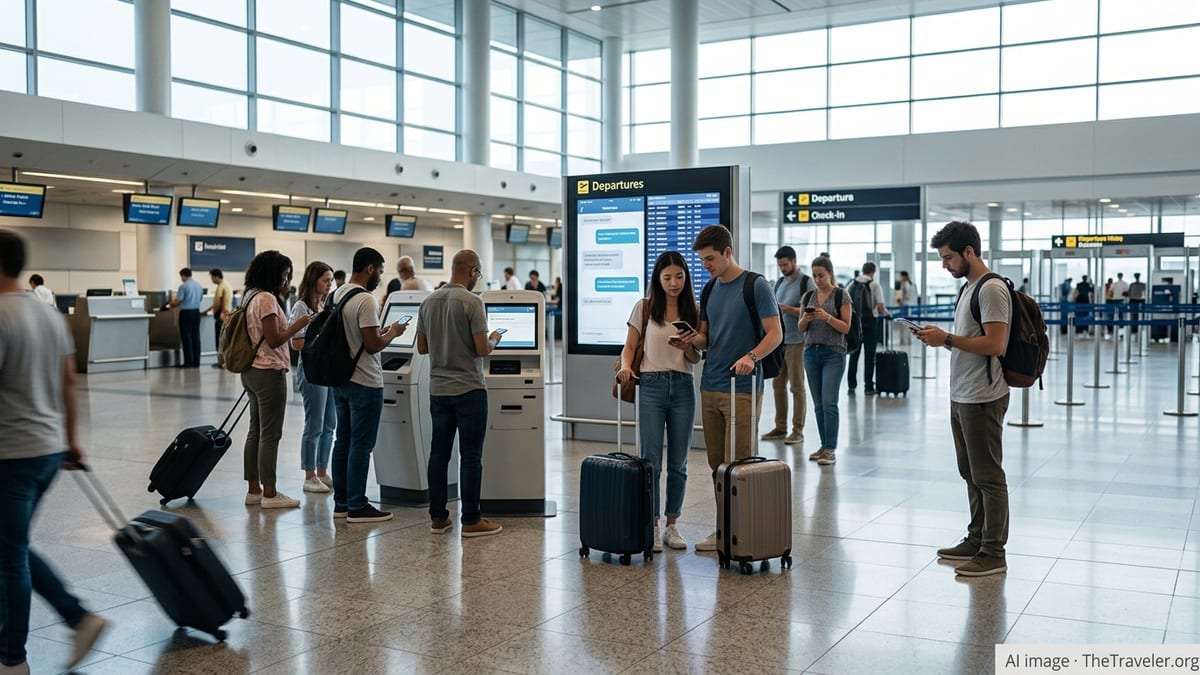
AI-backed traffic management debuts in Washington airspace
According to recent federal announcements and media coverage, the FAA is introducing a decision-support platform powered by artificial intelligence to help manage traffic at Ronald Reagan Washington National, Washington Dulles International and Baltimore/Washington International Thurgood Marshall airports. The system aggregates extensive operational data, including airline schedules, weather forecasts, airport capacity and existing traffic flow constraints, and then uses machine learning models to predict where and when bottlenecks are likely to emerge.
Publicly available descriptions indicate that the technology, part of a broader modernization push sometimes referenced in connection with the agency’s Strategic Management of Airspace, Routes and Trajectories efforts, is intended to give traffic managers earlier and more detailed insight into congestion patterns. Rather than replacing human controllers, the new software runs in the background as an advisory layer, flagging potential conflicts and delay hotspots before they cascade through the national system.
Federal planning documents on airspace modernization show that the Washington region has long been a priority test bed because of its dense, tightly constrained airspace, slot controls at Reagan National and the need to coordinate traffic across three closely linked commercial airports. With thousands of daily passengers moving through the region, even minor improvements in predicting and managing ground holds, reroutes or weather disruptions can have an outsized effect on on-time performance.
The new platform builds on years of joint NASA and FAA research into digital traffic management, including tools that have been tested in other metro areas to optimize flight trajectories and reduce time spent in holding patterns. Results from earlier demonstrations cited by NASA have shown that proactive rerouting supported by advanced automation can save significant amounts of delay and fuel when deployed during severe weather or peak traffic periods.
How the new system is expected to tackle delays
The AI system’s core function is to synthesize hundreds of data streams that traditionally have been monitored through separate tools and manual coordination. By pulling together updated airline schedules, filed flight plans, convective weather forecasts, runway and gate availability, airspace restrictions and staffing information, the platform generates a forward-looking picture of expected demand across the Washington airspace.
From there, its algorithms identify time periods and specific routes where demand is likely to exceed available capacity. When that occurs, the software suggests potential traffic-management actions, such as adjusted departure times, revised routings around storms or changes in how arrivals are sequenced between Dulles, Reagan National and BWI. The recommendations are meant to arrive earlier in the planning cycle, when modest adjustments can prevent later, more disruptive measures such as extended ground delay programs.
Reports on the rollout stress that the system does not independently clear aircraft or change flight paths. Air traffic managers at the FAA’s command center and regional facilities remain responsible for any operational decisions, using the AI-generated forecasts and visualizations as an added input. The intent is to move from a largely reactive posture, in which delays are often addressed only after lines of aircraft have formed, to a more strategic, hours-ahead approach.
In practice, this could mean that when forecasters highlight an afternoon line of thunderstorms moving toward the capital region, the AI platform would quickly evaluate how many flights are scheduled to traverse affected routes or arrive in narrow time bands, and then highlight targeted adjustments. If implemented effectively by managers and airline operations centers, those adjustments can be made before passengers are seated and taxiways are crowded, which in previous demonstrations has translated into meaningful reductions in overall delay.
Why the DC region was chosen as a proving ground
Public information on the project indicates that Washington’s airspace offers both a challenge and an opportunity for this type of technology. The capital region is categorized in federal planning as a complex “metroplex,” where multiple major airports sit within overlapping approach and departure corridors, and where geography, military airspace and security considerations leave little room for error.
Reagan National’s short runways and tight river visual procedures, Dulles’s role as a long-haul international hub and BWI’s mix of domestic and low-cost carriers together create a dense network of arrivals and departures that must be carefully sequenced. Weather systems that sweep across the Mid-Atlantic can quickly ripple through that network, and any disruption in Washington often affects traffic further up and down the East Coast.
Previous modernization initiatives in the region, including performance-based navigation procedures and time-based flow management, have already laid technical groundwork by improving the precision of flight paths and arrival spacing. The new AI-enabled system is designed to sit on top of these capabilities, enhancing how data is used rather than changing the way pilots fly individual procedures.
Federal research plans also describe Washington as a suitable location for close observation by national program managers, who are based in the area and can more easily evaluate how new decision-support tools behave in live operations. If the software performs as expected, Washington’s experience is expected to inform how and where similar systems are deployed next across the national airspace.
What passengers might notice during the trial phase
For travelers, the changes introduced by the AI system are likely to be indirect. Airlines do not expect the software to alter check-in procedures, security screening or boarding processes. Instead, its impact would be felt in the form of more predictable departure and arrival times, fewer last-minute gate changes related to traffic constraints and, in some cases, earlier notifications when a schedule adjustment is unavoidable.
Public coverage of the initiative notes that the FAA is treating the Washington deployment as a phased rollout. During initial stages, traffic managers will compare the AI-generated recommendations against existing practices, gradually integrating the tool into daily operations as they build confidence in its forecasts. That means benefits for passengers may appear gradually over weeks and months rather than overnight.
Travelers could also see subtle changes in how airlines communicate about disruptions. If the system enables earlier identification of a weather-related bottleneck, carriers may be able to rebook affected passengers before they arrive at the airport or to swap aircraft more efficiently. While the technology does not eliminate the underlying causes of delays, such as storms or national ground stops, it seeks to reduce the secondary effects, like missed connections and long periods spent waiting on taxiways.
Because the platform is advisory and subject to human oversight, it also provides a controlled environment for assessing how AI-based tools can be incorporated into safety-critical domains. Researchers and regulators have highlighted the importance of verifying model performance, understanding its limitations and ensuring transparent decision trails whenever AI is used to support air traffic decisions that touch the traveling public.
Next steps for AI in US air traffic management
The Washington deployment is part of a broader, multiyear modernization strategy that includes upgraded communications, satellite-based navigation and digital flight data systems. Planning documents from the FAA and NASA describe an eventual vision in which AI and advanced automation help coordinate traffic across the entire National Airspace System, not only at major hubs but also at regional airports and even in emerging areas such as drone and advanced air mobility operations.
In that context, the new AI decision-support tool in the DC area is viewed as an early step toward a more data-rich, predictive traffic management approach. Analysts following the aviation sector note that lessons learned in Washington, including how controllers and traffic managers interact with the system, will likely shape technical standards and training requirements for any nationwide expansion.
Publicly released research highlights both the promise and the caution surrounding this shift. Studies of AI-assisted flight planning emphasize the need for robust “decision assurance” layers that monitor algorithmic suggestions, detect anomalies and present information in a way that supports, rather than overwhelms, human experts. Aviation agencies have stressed that human responsibility for safety will remain central even as more sophisticated software is introduced.
As testing continues at Washington’s airports, travelers can expect occasional attention on how well the technology performs during peak travel periods and disruptive weather events. The outcome of this real-world trial will help determine whether AI becomes a quiet but central player in keeping flights running on time across the United States.