


More news on this day
A new artificial intelligence system is now guiding how flights move into and out of the Washington region’s three major airports, in a high-profile test of whether advanced software can meaningfully reduce the delays that routinely snarl air travel along the busy Northeast corridor.
Get the latest news straight to your inbox!
Testbed for a Nationwide Air Traffic Overhaul
According to recent announcements and published coverage, the Federal Aviation Administration has begun operating an artificial intelligence powered tool at Ronald Reagan Washington National, Washington Dulles International, and Baltimore/Washington International Thurgood Marshall airports. The system, known as Strategic Management of Airspace, Routing and Trajectories, or SMART, is part of a broader modernization effort intended to improve how air traffic is managed across the national airspace.
Reports indicate that the Washington deployment, launched on September 21, is the first real world test of the full SMART platform. Federal transportation officials have described the 875 million dollar program as a new digital backbone for traffic flow management, with the Washington region chosen because of its heavy traffic, complex airspace, and mix of short haul and long haul routes.
Publicly available FAA planning documents show that the agency has been researching AI supported traffic flow tools for several years as part of its National Aviation Research Plan. The Washington rollout marks a shift from research to operational use, with the region serving as a proving ground before a planned nationwide expansion by 2028 if performance targets are met.
How the SMART System Works
Fact sheets and agency briefings describe SMART as a cloud based platform that ingests data from multiple sources, including airline schedules, filed flight plans, real time radar positions, high resolution weather forecasts, and airport capacity constraints such as runway configurations and staffing levels. The software uses artificial intelligence techniques to identify where demand for airspace and airport slots is likely to exceed capacity hours in advance.
Instead of waiting for delays to materialize, the system generates recommended traffic management initiatives. These can include modest adjustments to departure times, changes to routings that bypass congested airspace, and revised arrival sequences that smooth surges of inbound aircraft. The goal is to prevent so called cascading delays, in which a disruption at one hub ripples through airline networks for the rest of the day.
According to publicly available FAA materials, SMART does not issue clearances or control individual aircraft. Human air traffic controllers at facilities serving the DC area still direct traffic tactically. The AI system functions as a strategic planning layer, supplying consolidated information and suggested courses of action that can be accepted, modified, or rejected by human decision makers.
Targeting Chronic Delays in the DC Corridor
The three major Washington area airports handle a large share of short haul flights along the East Coast, a region that is vulnerable to delays from summer thunderstorms, winter storms, and congestion at New York and Philadelphia area airports. Transportation statistics have repeatedly shown that weather and traffic bottlenecks in this corridor can quickly disrupt itineraries nationwide.
By centralizing data on weather patterns, airspace restrictions, and expected traffic flows over the capital region, SMART is intended to give planners earlier warning of when the system is approaching a tipping point. For example, if thunderstorms are forecast to slow departures from Washington Dulles at the same time New York area airports are already running behind schedule, the AI tool can flag the likely knock on effect and recommend specific adjustments before long lines of aircraft build up on taxiways.
Washington also presents unusual operational constraints, including long standing security related restrictions on airspace and flight patterns near central Washington. Public documentation on the program indicates that those constraints are part of the data the system incorporates when projecting capacity, which may help avoid last minute reroutes that add flight time and fuel burn.
Safety, Oversight and Early Reactions
Both the FAA and outside observers have emphasized that any new AI based system must support, not replace, the judgment of experienced controllers. Statements from the agency about SMART stress that controllers remain responsible for safety decisions and that recommendations from the software are advisory. The tool is being introduced in phases, with performance and safety metrics tracked closely before it is expanded to additional regions.
The Washington launch has already drawn interest on Capitol Hill. A recent statement from Representative Don Beyer of Virginia, who represents communities near Reagan National and serves as co chair of the Congressional Artificial Intelligence Caucus, welcomed efforts to improve safety and reliability but urged careful oversight of AI tools. Public comments from lawmakers highlight both optimism about potential efficiency gains and concern about overreliance on automated systems.
Aviation labor groups have also weighed in through public statements, noting that any changes affecting controller workload and procedures should be evaluated in collaboration with frontline personnel. Information available from these organizations indicates that they are watching how the Washington deployment affects day to day operations, particularly during peak travel periods and severe weather events.
What Travelers in the DC Area May Notice
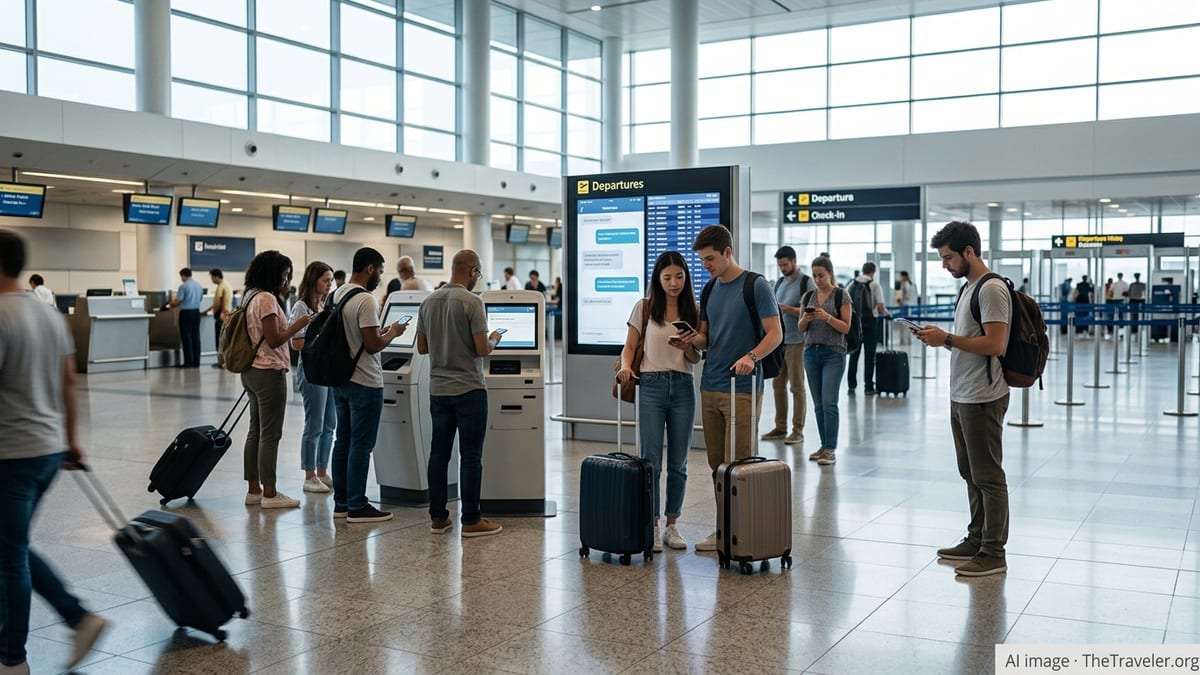
For passengers using Reagan National, Dulles, or BWI, the rollout of SMART will not involve visible new hardware or check in procedures. The system operates in the background within air traffic management centers. Any impact will be reflected in more subtle changes, such as fewer last minute ground holds, shorter stretches waiting on the tarmac for a departure slot, or more predictable arrival times on days when weather or congestion would otherwise have caused major disruptions.
Transportation officials and airlines will be watching closely how the tool performs during upcoming busy travel periods. If the system succeeds in reducing average delay minutes at the three Washington area airports without creating new bottlenecks elsewhere, it could bolster the case for accelerating deployment to other high traffic regions, including New York, Chicago, and Atlanta.
Publicly available materials on the program note that the FAA plans to refine SMART based on the Washington experience, adjusting its predictive models and decision logic using operational data. That means the first months of use in the DC area will function not only as a service for current travelers, but also as a live laboratory for how artificial intelligence can be integrated into one of the most complex transportation systems in the world.