


More news on this day
A new federally backed artificial intelligence system designed to predict and manage air traffic bottlenecks has begun live testing at Washington DC area airports, positioning the nation’s capital as the proving ground for a major overhaul of how flight delays are handled in the United States.
Get the latest news straight to your inbox!
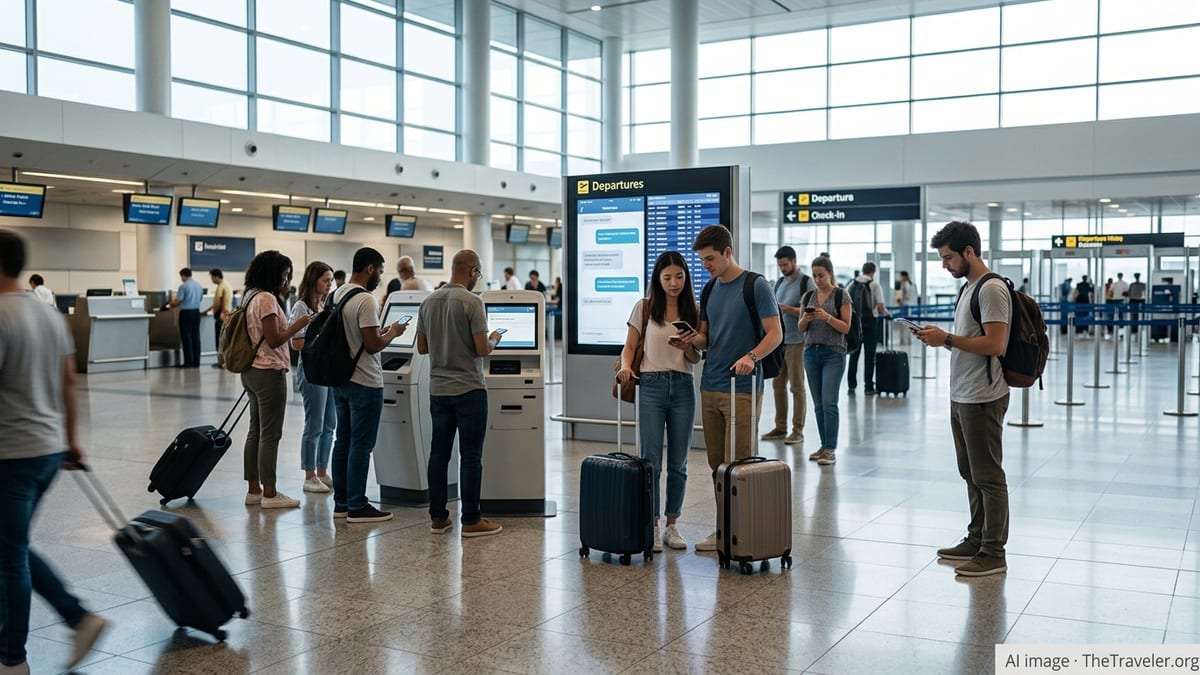
DC Airports Become Testbed for SMART Delay-Reduction System
According to recent announcements and published coverage, the Federal Aviation Administration has started using an AI-supported tool known as SMART, short for Strategic Management of Airspace, Routing and Trajectories, at three major airports that serve the Washington region: Ronald Reagan Washington National Airport, Washington Dulles International Airport and Baltimore/Washington International Thurgood Marshall Airport. The pilot began on Monday, September 21, 2026, marking the first operational deployment of the technology in the national airspace system.
Publicly available FAA materials describe SMART as part of a broader modernization of traffic flow management infrastructure. The software is being layered onto new backbone systems that replace older command-center technology and is expected to feed into a suite of tools used to anticipate congestion before it cascades into long ground holds and rolling delays.
Transportation Department summaries indicate that the D.C. trial is intended to run for several months, with performance closely tracked during high-volume periods, including fall travel peaks and early winter weather events. Findings from the capital-region rollout are expected to guide how and when the system is expanded to other major hubs across the country.
Regional airport operators have already been experimenting with analytics and artificial intelligence for passenger flow inside terminals. The new SMART deployment shifts that focus to the airspace itself, where minute-by-minute decisions around routing and departure timing can translate directly into missed connections or smoother itineraries for travelers.
How the AI System Is Designed to Manage Delays
FAA fact sheets and Transportation Department briefings indicate that SMART continuously ingests data from airline schedules, filed flight plans, real-time weather feeds, runway and gate availability, and high-level staffing information from air traffic facilities. The tool then generates forecasts of traffic demand along key routes and into busy arrival corridors around Washington.
Using these forecasts, the system flags potential imbalances between demand and capacity hours in advance, such as storms tracking toward the mid-Atlantic, temporary runway closures or surges of arrivals at similar times. Instead of relying primarily on manual spreadsheets and separate legacy tools, traffic managers can view a consolidated picture and explore alternative scenarios in one interface.
Public descriptions of the program stress that SMART provides recommendations rather than issuing automated commands. Air traffic managers at the FAA’s command center and at local facilities remain responsible for applying or discarding its advisory reroutes, speed adjustments and metering programs. The goal is to help human decision-makers implement more targeted interventions earlier so that a handful of schedule adjustments can prevent wider disruption later in the day.
Related NASA research on digital trajectory management, referenced in federal technical documents, suggests that AI-supported tools can improve the accuracy of departure and arrival time predictions and increase airline acceptance of reroute proposals. Those earlier projects, which tested automation concepts in other regions of the country, helped lay the groundwork for the SMART architecture now being trialed in the capital area.
What Travelers in the Capital Region Can Expect
For passengers using DCA, IAD or BWI this fall, the launch of SMART is unlikely to produce an immediate, dramatic shift in day-to-day operations, but it may influence how delays unfold during busy or stormy periods. Instead of broad, last-minute ground-delay programs that affect large numbers of flights, the system is intended to support more precise adjustments scattered across the schedule.
According to summaries of the initiative, one anticipated benefit is a reduction in knock-on delays that propagate across the network when early-morning disruptions are handled imprecisely. By spotting route and timing conflicts earlier around the D.C. airspace, traffic managers may be able to keep more flights operating within planned departure and arrival windows, even when weather or congestion requires changes.
Travelers are not expected to interact directly with SMART, and there is no separate app or booking feature tied to the tool. Any improvements will appear indirectly, such as shorter holds on taxiways, fewer mid-journey diversions to avoid overcrowded arrival paths and more consistent departure flows in marginal weather. Airlines operating through Washington may also adjust schedules over time if data from the pilot shows persistent bottlenecks at specific hours or on particular routes.
Airlines and passenger-rights commentators are likely to watch closely to see whether published performance data shows changes in delay statistics at the three airports during the evaluation period. The FAA already tracks causes of delays and cancellations in detailed categories, and future reports are expected to include the effect of traffic management initiatives such as SMART alongside weather and carrier-controlled disruptions.
Safety Assurances and Debate Around AI in the Skies
The rollout of an AI-enabled system in the high-stakes environment of air traffic management has prompted debate in policy circles and among travelers. Advocacy groups, commentators and some elected representatives have questioned whether it is appropriate for the Washington region to serve as the first live test environment, citing the area’s already busy and complex airspace.
FAA communications and related public documents emphasize that SMART does not control aircraft directly and is not responsible for separation between planes. That role remains with licensed air traffic controllers, who are trained and certified under longstanding safety rules. The AI tool is framed as an advisory system intended to help reduce workload and improve consistency in how delay-management programs are designed and implemented.
The agency and its research partners have been working in recent years on human factors guidance and assurance processes for using AI and machine learning in safety-related contexts. Planning documents describe efforts to ensure that new automation is transparent enough for operators to understand its recommendations and that there are clear procedures for updating models as conditions and traffic patterns evolve.
Observers note that Washington’s experience with the system may influence public confidence in AI-supported aviation technologies more broadly. If SMART’s trial period coincides with fewer severe delay days around the capital, it could strengthen arguments for accelerating deployments elsewhere. Conversely, any major disruption during the pilot is likely to intensify scrutiny of how much decision-making is being shifted toward automated systems.
Next Steps Toward a Nationwide Rollout
According to Transportation Department timelines, the D.C. region pilot is one piece of a multiyear modernization program intended to overhaul key elements of the United States air traffic infrastructure by the end of 2028. Alongside SMART, the initiative includes upgrades to communications networks, radar coverage, surface surveillance, and the transition from paper flight strips to fully electronic systems at many facilities.
Officials have previously outlined a funding package in the tens of billions of dollars for this broader effort, with a portion earmarked for advanced traffic flow management tools. Washington’s early implementation is expected to inform how those resources are prioritized, including which airports and regions receive the next wave of AI-assisted capabilities.
Public briefings indicate that, if performance targets are met in the D.C. area, SMART will be gradually extended to other major hubs and eventually to a wider set of commercial airports. The department has signaled that the national rollout will be paced to allow for adjustments based on lessons learned in Washington, including how well the tool integrates with existing procedures and how controllers and airline operations centers adapt to its recommendations.
For travelers planning flights into or out of the capital in the coming months, the practical advice remains familiar: monitor itineraries closely, especially during peak travel periods or adverse weather, and build in enough connection time at busy hubs. Behind the scenes, however, a substantial technological experiment is underway in the Washington skies, one that could shape how delays are managed across the country for years to come.