


More news on this day
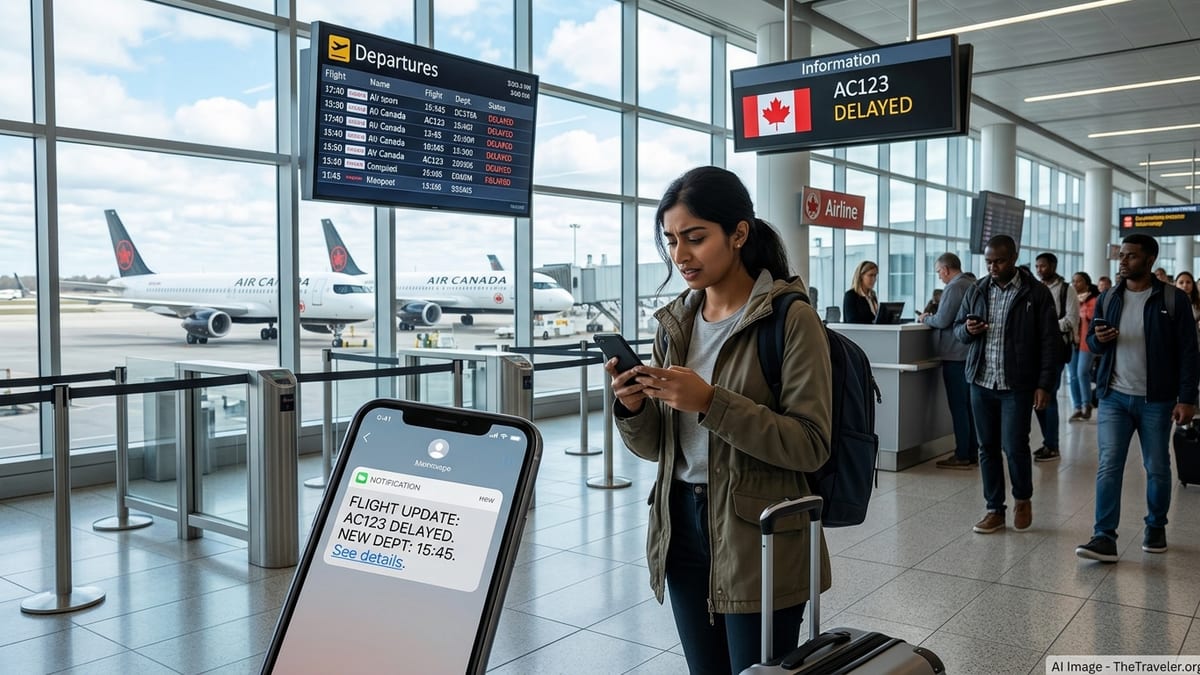
Canada’s national transport regulator has released new survey findings showing that a strong majority of Canadian air travelers want clearer, faster explanations and direct digital alerts during flight delays and cancellations, bolstering pressure on airlines and airports to improve how they communicate disruptions.
Get the latest news straight to your inbox!
What the new Canadian survey actually found
The Canadian Transportation Agency (CTA) published its Air Passenger Satisfaction Survey final report in 2024, based on an online poll of more than 2,000 Canadians who had taken at least one flight since 2019. The survey period ran from 25 January to 6 February 2024 and the results were weighted using official Statistics Canada demographics to reflect the wider flying public.
While the report covers the whole travel journey, questions around delays and cancellations highlight a clear frustration with how information is shared when trips go wrong. The CTA’s summary of stakeholder feedback, combined with the new survey, points to a recurring theme: travelers say the biggest problem in many disruption scenarios is not only the delay itself but the lack of timely, consistent and accurate updates about what is happening and what they are entitled to receive.
The CTA has not released a single headline percentage for how many passengers are satisfied with delay communication, but its 2023–24 annual report notes that complaints about flight disruptions, including communication failures, have reached unprecedented levels as air travel volumes approach pre pandemic norms. This combination of formal complaints and structured survey data is now feeding directly into the next round of passenger protection rules.
How Ottawa plans to tighten delay communication rules
The most concrete policy development tied to the survey is the federal plan to strengthen the Air Passenger Protection Regulations, Canada’s main rulebook for airline obligations. Draft amendments, published for consultation through the Canada Gazette process, would require carriers to confirm or request each passenger’s preferred electronic contact method at check in, whether in person, at a kiosk or online. The goal is to ensure that disruption updates can be pushed directly to travelers without delay.
Under the proposed changes, airlines would also need to provide detailed information about flight disruptions proactively and in a timely manner on their digital channels and directly to affected passengers. That information would include the reason for the delay or cancellation, the expected duration, and a plain language explanation of assistance, rebooking and refund options, as well as potential compensation where applicable under Canadian rules.
These communication duties build on existing provisions that already require carriers to share key information during irregular operations but are widely seen as too general and inconsistently applied. By spelling out how and where updates must be delivered, the revised regulations are intended to respond to what the regulator describes as one of Canadian travelers’ main concerns during disruptions: the absence of clear, prompt communication when plans unravel.
Global flyers are also demanding real time information
Canada’s move comes as international research points to similar expectations worldwide. Technology provider SITA’s 2026 Passenger IT Insights survey, based on nearly 8,000 travelers in 24 countries, reports that about four in ten respondents have skipped at least one trip because they expected the airport and flying experience to be too stressful. The company highlights a lack of timely, reliable information about queues and disruptions as a major driver of that stress.
SITA’s findings indicate that many passengers are willing to receive real time updates through digital channels, including from AI driven systems, provided they get clear, actionable information such as new departure times, gate changes and baggage status when a flight is rescheduled. This aligns with the CTA’s Canadian findings, which show that travelers increasingly expect airlines and airports to coordinate information and keep them informed without having to queue at a counter.
Industry surveys from the International Air Transport Association and Airports Council International also show that most passengers now plan, book and check in online, and that confidence increases when travelers can track elements of their journey, such as baggage, in real time. Together, these studies suggest Canada’s planned rules are not an isolated response but part of a broader shift toward standardized, data driven disruption communication rather than sporadic public address announcements at the gate.
What the changes could mean for travelers using Canadian airports
If the draft rules are finalized in their current form, passengers departing from or arriving in Canada could see more consistent disruption messaging within the next regulatory cycle. At check in, travelers can expect airlines to explicitly ask for or confirm a mobile number or email address for service notifications, rather than treating such contact details as optional marketing fields. That would increase the chances of receiving direct alerts about delays, cancellations or gate changes without having to monitor departure boards constantly.
During a disruption, carriers would be expected to send updated explanations and revised timings through those contact channels and keep their websites and apps synchronized, reducing situations where the information at the gate screen, on the airline app and from call centers do not match. For international visitors connecting through Canadian hubs, this could make long connections more manageable by clarifying earlier whether a missed onward flight is likely and what rebooking options are available.
In practice, the improvements may be gradual and uneven. The regulatory process is still underway, detailed technical guidance has not yet been finalized, and some airlines have already warned that constantly updating compensation information in real time can be difficult because the final cause of a delay is sometimes only confirmed after arrival. Travelers should therefore expect better basic information flow, but not instant decisions on complex compensation claims during every disruption.
Next steps: timelines, limits and what passengers should watch for
The draft amendments to the Air Passenger Protection Regulations are currently moving through Canada’s regulatory process, which includes further consultation and formal publication before they can take legal effect. No firm enforcement date has been set, and the final version could still adjust the scope or timing of the new communication duties. Travelers should expect more detail from Transport Canada and the CTA when the regulations are formally registered and an implementation window is announced.
Until then, existing rules remain in place. Airlines operating flights to, from or within Canada must already provide regular updates during long delays, including the reason for the disruption where known, and must explain passengers’ options for assistance, rerouting or refunds under current Canadian law. However, the method and frequency of those updates can still vary significantly between carriers and airports.
For now, the most practical step for travelers is to make sure their contact details are up to date in airline profiles and at check in, to use official airline apps where available, and to keep records of any notifications received during major delays or cancellations. As Canada converts the new survey insights into binding communication rules, those prepared passengers are likely to be the first to benefit when carriers upgrade their disruption alert systems to meet the higher expectations that Canadian and global flyers are now clearly expressing.