


More news on this day
Air travelers in the United States will soon gain clearer rights to cash refunds when flights are significantly delayed or canceled, but new federal rules stop short of requiring airlines to provide hotel rooms and meal vouchers, leaving those popular benefits tied to each carrier’s own policies for disruptions within its control.
Get the latest news straight to your inbox!
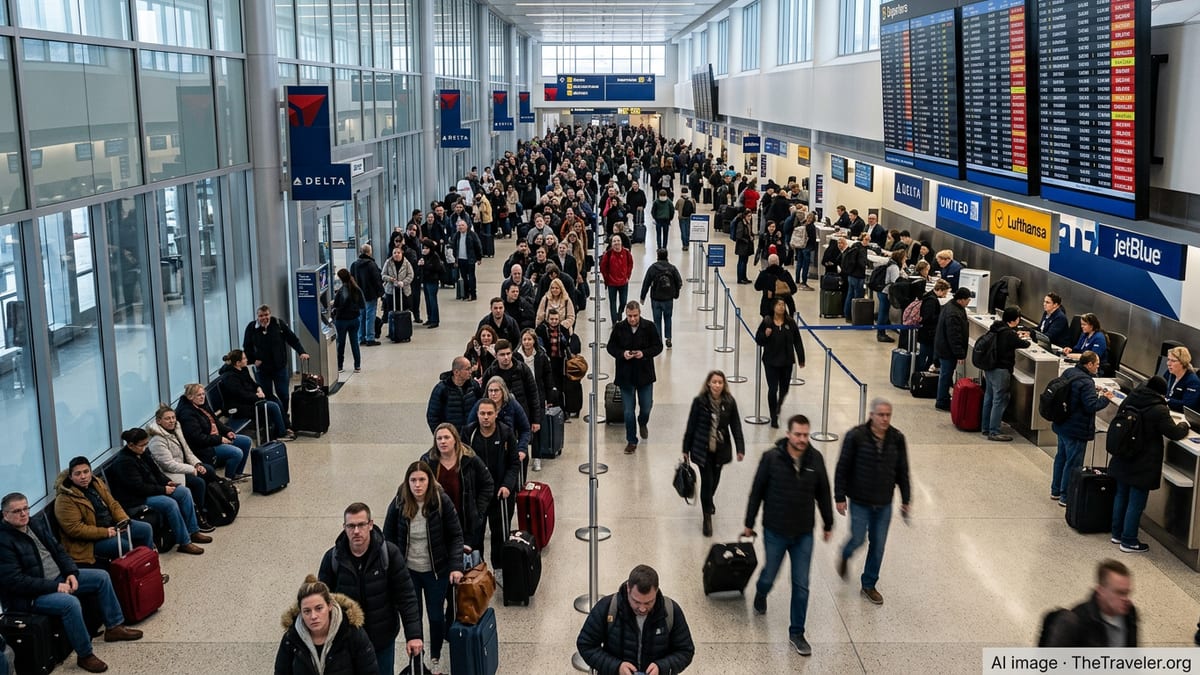
Refund Rules Tighten, but Comfort Perks Remain Voluntary
A final rule issued by the U.S. Department of Transportation in April 2024, with key provisions taking effect October 28, 2024, sets nationwide standards for when passengers are entitled to automatic cash refunds after airline-initiated cancellations or long delays. Publicly available rule text shows that travelers must receive a refund if a domestic flight is delayed by at least three hours, or an international flight by at least six hours, and the passenger chooses not to travel on the changed itinerary.
The same rule standardizes timelines for returning money. Refunds must generally be processed within seven business days for credit card purchases and 20 calendar days for other forms of payment once eligibility is established, according to federal regulatory notices. The change is intended to curb earlier practices in which travelers faced multiple steps, long waits, or were steered toward credits instead of cash.
Despite the stronger refund framework, the regulation does not convert hotel rooms, meal vouchers, or ground transportation during delays into nationwide legal entitlements. Instead, the Department of Transportation directs passengers to carrier customer service plans and to its Airline Cancellation and Delay Dashboard, where each major U.S. airline lists what it voluntarily provides to customers during disruptions that are within the airline’s control.
As a result, the new rule changes when cash comes back to passengers more than it alters when airlines must hand out food or hotel keys. Those comfort benefits remain largely a function of individual airline commitments and the nature of the disruption.
Defining When a Delay Triggers a Cash Refund
Under the 2024 rule, the key concept for refunds is a “significant delay” or “significant change” in the itinerary caused by the airline. Regulatory materials describe specific thresholds that now apply across the industry. For domestic flights, a departure delay of at least three hours from the originally scheduled time qualifies. For international itineraries, the trigger is a delay of at least six hours from the original departure.
Other changes can also qualify a passenger for a refund if the traveler chooses not to accept the revised trip. These include routing changes that add connections, shifts to a different airport in the same metropolitan area, or substantial changes in the time of departure or arrival beyond the specified thresholds. The rule also covers circumstances such as downgrading a customer from a higher cabin class to a lower one, which must now be refunded in the price difference.
Published guidance from the Transportation Department makes clear that these refund rights apply regardless of the reason for the disruption, including weather, air traffic control constraints, or airline staffing challenges. The distinction is that refunds deal with passengers who opt not to travel, while separate questions about compensation or amenities for those who continue with their journey are left to airline policies.
For travelers, the practical effect is that when a delay crosses the three hour domestic or six hour international threshold, or the flight is canceled outright, they can ask for their money back instead of accepting a later flight, credit, or voucher. Airlines remain free to offer alternative transportation or travel credits, but they must clearly disclose that a refund is available and cannot make refunds more difficult to obtain than those other options.
How Airlines Decide When to Offer Hotels and Meals
Hotel and meal benefits are not fixed by the new rule, but they are more visible than before. Following a separate Department of Transportation initiative, the Airline Cancellation and Delay Dashboard shows which U.S. carriers commit to covering meals during long delays and hotel rooms when passengers are stranded overnight because of issues within the airline’s control, such as mechanical problems or crew scheduling.
According to current dashboard data, most large U.S. airlines state that they will provide complimentary hotel accommodations for passengers facing overnight stays after controllable cancellations. Several also indicate that they will offer ground transportation between the airport and hotel in those circumstances, along with meal vouchers once delays stretch to several hours. At the same time, some low cost carriers list more limited benefits or no guaranteed hotel coverage, highlighting significant differences across the industry.
The dashboard materials also emphasize the importance of whether a disruption is considered controllable or not. Mechanical issues and certain staffing shortfalls generally fall into the airline-controlled category, while severe weather, air traffic control restrictions, or security events are usually listed as outside the airline’s control. For events considered uncontrollable, the same carriers that offer hotels and meals for controllable disruptions may only provide rebooking on the next available flight without additional compensation.
Even where hotel or meal benefits are promised, passengers typically must request them from airport staff during the disruption. Public guidance notes that frontline workers sometimes face voucher shortages or may not initially classify an event as airline-controlled, which can affect whether and when amenities are extended during a chaotic travel day.
Interaction With Existing Consumer Tools and State Efforts
The 2024 refund rule builds on earlier steps the federal government has taken to clarify airline responsibilities during disruptions. The customer service dashboard, first launched before the 2022 Labor Day travel period, remains the main public tool for comparing how each major airline handles rebooking, meals, hotel stays, and ground transportation when disruptions are within its control.
In addition, the Aviation Consumer Protection office maintains an online refund page explaining when federal rules require airlines to return money for cancellations or significant schedule changes. That resource has been updated to reflect the new automatic refund standards, including definitions of significant delay and information on how to file a refund request or complaint if a carrier does not comply.
Regulatory documents show that state officials have pressed for stronger protections that would go beyond refunds. A joint filing by multiple state attorneys general urged the Transportation Department to impose penalties for airline-caused cancellations or lengthy delays and to require compensation for expenses such as hotels, meals, and alternative transportation. The final federal rule did not adopt those proposals, leaving compensation for out of pocket costs largely to airline policies and market pressure rather than to federal mandates.
Travelers therefore face a mixed landscape: clear nationwide standards on when fares must be refunded, particularly for long delays and cancellations, but no uniform requirement that airlines reimburse related expenses for food or lodging. Those costs are more likely to be addressed through goodwill policies, travel insurance, or, in some cases, credit card protections.
What the Changes Mean for U.S. Travelers
For passengers, the most immediate effect of the new rule is clarity. When a domestic flight is pushed back at least three hours, or an international journey is delayed at least six hours, travelers may opt out and receive cash back instead of a later departure or travel credit. That right applies whether the ticket was purchased from the airline or through a ticket agent, as long as the disruption is airline initiated.
At the same time, travelers who choose to continue their trip must still look closely at their airline’s customer service plan to understand when they might receive a hotel room or meals. The Transportation Department’s dashboard consolidates those policies, but the underlying promises remain voluntary and vary widely. A passenger flying with a large network carrier may be offered a hotel and meal voucher during a controllable overnight delay, while someone on a budget airline on the same route may receive rebooking assistance but no lodging.
The timing of the rule also matters. Federal notices indicate that many of the refund provisions do not become enforceable until late October 2024, giving airlines time to adjust systems for automatic refunds, notification practices, and coordination with ticket agents. Until then, passengers continue to rely on a mix of existing federal guidance, airline specific policies, and individual advocacy when disruption strikes.
As the rule takes effect, advocates and regulators are expected to monitor how consistently airlines deliver the required automatic refunds and how clearly they communicate passengers’ choices in the moment. Any future moves to standardize hotel and meal benefits would likely require additional rulemaking beyond the current focus on refunds, leaving those perks for now in the realm of competitive differentiation rather than legal entitlement.