


More news on this day
A little‑noticed change in how U.S. air traffic controllers may use the “line up and wait” instruction on runways is drawing attention this Thanksgiving week, as a record number of flights are scheduled and some towers warn that tighter staffing rules could mean more waiting on the ground before takeoff.
Get the latest news straight to your inbox!
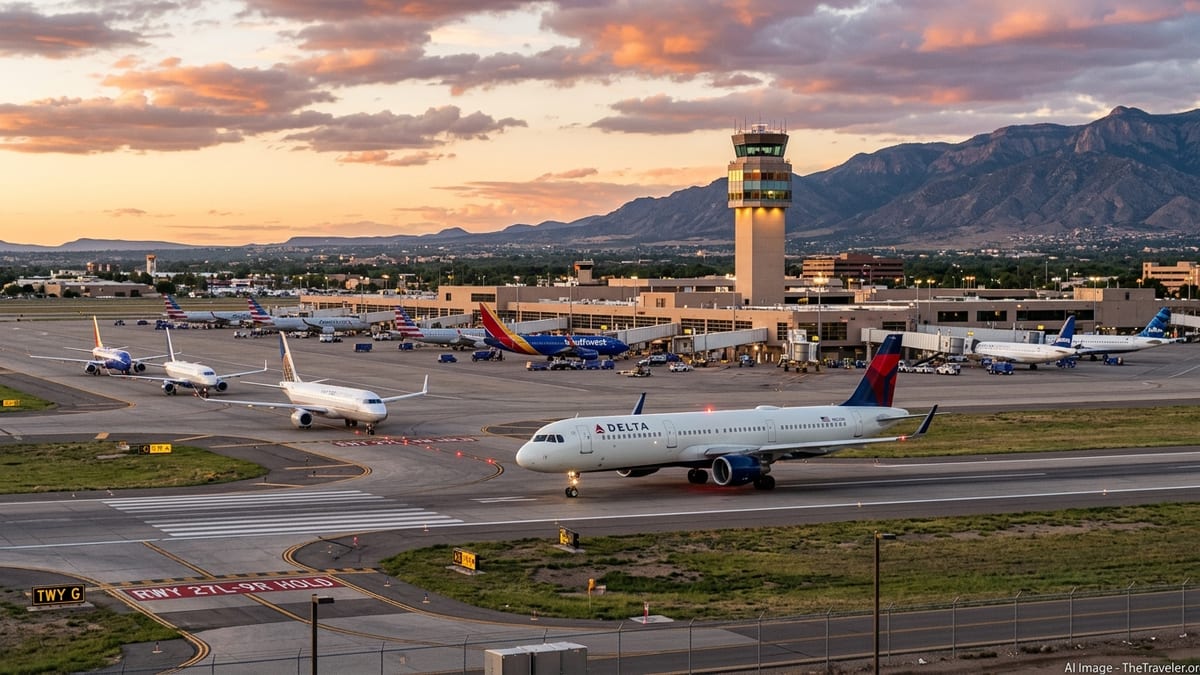
What “line up and wait” means and what is changing
“Line up and wait” is the phrase U.S. tower controllers use to instruct an aircraft to taxi onto the runway and hold in position while awaiting a separate takeoff clearance. It allows controllers to position a departure so it can launch as soon as the runway is confirmed clear, which helps keep traffic flowing during busy periods. The instruction is standard in the Federal Aviation Administration’s controller handbook, FAA Order JO 7110.65, and is aligned with International Civil Aviation Organization phraseology.
The controller handbook already sets safety limits on this practice. Guidance in the FAA’s Aeronautical Information Manual and related material notes that accidents and serious incidents have typically involved aircraft left holding in position for two minutes or more after a “line up and wait” clearance with no further communication. Controllers are therefore expected to either issue a takeoff clearance or provide new instructions within about 90 seconds of telling a flight to line up and wait, or else advise the pilot of the reason for a longer hold.
What is new this Thanksgiving period is not the phrase itself, but how widely and how often towers can use the procedure when staffing is tight. Recordings from Albuquerque International Sunport highlight one example: a controller advised pilots that, starting November 24, “we’re going to lose ‘line up and wait’ unless we have adequate staffing,” warning that this could slow departures. That local briefing reflects a broader internal notice that ties use of the procedure more explicitly to real-time staffing and supervisory coverage, with the aim of reducing the risk of runway incursions at busier or more complex airfields.
Runway safety concerns behind the tighter limits
The FAA has spent the past several years scrutinizing runway operations after a series of high-profile near collisions, several of which involved aircraft that had been instructed to line up and wait. Safety briefings in 2023 and 2024 highlighted events at large and mid-sized airports where aircraft began takeoff rolls without a formal takeoff clearance or where landing traffic came uncomfortably close to traffic waiting in position. In each case, investigators identified breakdowns in situational awareness during periods of high workload in tower cabs.
In response, the FAA’s Runway Safety Call to Action and subsequent bulletins have emphasized strict adherence to phraseology, limits on the number of aircraft allowed to line up and wait on the same runway, and the need for controllers to restate aircraft locations if multiple departures are queued at different intersections. The January 2025 Air Traffic Procedures Bulletin, for example, describes “line up and wait” as one of the most important tools for runway capacity but stresses that it must be used with sharpened vigilance rather than as a routine buffer for congestion.
The updated guidance linking use of line up and wait to staffing levels fits this pattern. When a tower is operating with reduced staff or without a dedicated supervisor in the cab, the new rule encourages or requires controllers to rely more on traditional sequencing methods in which aircraft remain at the hold short line until a takeoff clearance is available. That can marginally reduce throughput on very busy runways but adds a further layer of protection against controller overload and communication errors at times when oversight is thinner.
How the policy could influence Thanksgiving departure delays
The timing of the staffing-linked limits on line up and wait coincides with one of the busiest air travel periods of the year. FAA planning figures reported this week point to roughly 417,000 flights scheduled nationwide over the nine-day Thanksgiving period from November 23 through December 1, the highest level in more than a decade and a half. TSA and AAA projections similarly indicate that passenger volumes will meet or exceed recent records, with nearly six million people expected to fly domestically over the core holiday stretch.
Against that backdrop, any adjustment that slightly reduces runway throughput attracts close attention from airlines and travelers. In practice, however, the effect of the line up and wait change is expected to be uneven. Major hubs that are fully staffed and have supervisors on duty throughout the busy banks of departures are likely to continue using the procedure much as they have in recent years. Where towers meet the new staffing thresholds, controllers can still pre-position one or more aircraft on the runway and clear them for takeoff in rapid succession, maximizing runway occupancy time and minimizing the need for extended queues at the hold short line.
At smaller or more constrained airports, or at bigger fields during overnight or shoulder periods when staffing levels are lower, the impact could be more noticeable. If a tower temporarily suspends routine use of line up and wait under the new rules, each aircraft may have to remain short of the runway until a takeoff clearance can be issued, adding a small increment of time to each departure. Over a sustained rush of departures, those increments can compound into longer taxi-out times and, in some cases, missed connection risks. That said, the FAA continues to emphasize that the primary drivers of holiday delays remain weather and sheer traffic volume rather than a single procedural change.
Interaction with recent system outages and controller staffing pressures
The renewed scrutiny of departure procedures comes shortly after a rare nationwide ground stop ordered earlier this month following a telecommunications failure that disrupted communications between air traffic controllers and pilots. That event, which drew comparisons to a 2023 outage involving the NOTAM system, forced a temporary suspension of departures across the United States and created a multi-day backlog of delayed and repositioning flights as airlines worked to reset their schedules.
Separately, airlines and travelers have also contended with airline-specific technology issues in the run-up to Thanksgiving, including an automated weight-and-balance system malfunction at Delta that delayed more than a thousand flights. Although those glitches were not directly related to FAA air traffic systems, they contribute to overall congestion as aircraft and crews fall out of position, which in turn can increase pressure on towers during peak periods when departure queues are already long.
Layered on top of system and airline disruptions is a longer-running challenge: staffing in key air traffic control facilities. The FAA reports employing more than 14,000 controllers and has pointed to recent hiring classes that brought in roughly 1,800 trainees in 2024 with plans for thousands more. Nonetheless, some critical facilities, particularly in the busy Northeast corridor, continue to operate below target staffing levels. During last year’s Thanksgiving period, the agency publicly warned that shortages in the region could produce additional delays, and similar dynamics are expected this year if severe weather overlaps with peak travel days.
What travelers can realistically expect and how to prepare
For passengers, the practical question is whether the refined line up and wait policy will make a noticeable difference to their Thanksgiving trips. Based on current information, the answer is that it may be a contributing factor at certain airports and times of day, but it is unlikely to be the dominant source of delay for most travelers. Weather, airline scheduling choices, aircraft maintenance and ground handling bottlenecks remain more common causes of late departures and missed connections, and they frequently interact with air traffic control constraints that have nothing to do with a single runway instruction.
Where the policy could matter most is at airports that are already operating near their runway capacity at peak times and that are also contending with lean staffing in the tower. In those situations, passengers might see longer lines of aircraft waiting short of the runway instead of a steady flow of jets lining up and holding in position. From a traveler’s perspective, that may feel like additional waiting on the taxiway rather than on the runway itself. For those with tight connections or evening arrivals into congested hubs, even a modest increase in average taxi-out time can be significant.
Travelers have limited influence over the operational choices made by towers and airlines, but they can take a few practical steps in light of the current environment. Booking earlier departures where possible reduces exposure to knock-on delays that tend to accumulate through the day. Allowing extra connection time, especially when connecting through chronically congested hubs, provides more breathing room if departure queues lengthen. Keeping close track of weather forecasts and airline notifications in the 24 to 48 hours before departure can also help passengers anticipate disruptions linked to traffic management initiatives that the FAA may introduce to cope with staffing or weather challenges.
What to watch after the holiday period
The Thanksgiving travel rush often serves as an informal stress test for new aviation policies, and the adjusted approach to line up and wait is no exception. In the weeks after the holiday, regulators and industry groups will be watching for any signs that the change has measurably reduced runway-incursion risks or, conversely, introduced inefficiencies that outweigh its safety benefits. Data on taxi-out times, on-time performance and reported surface events will help inform whether the staffing-linked restrictions stay in place as written, are refined, or are selectively relaxed at airports that demonstrate strong safety performance.
Airlines and pilot organizations are also likely to provide feedback on how the change plays out in daily operations, particularly at fields where high departure demand intersects with constrained tower staffing. If the new limits prove manageable during the busiest travel week of the year, that will strengthen the case for keeping them in place more permanently as part of the FAA’s broader runway safety strategy. If, however, the data show substantial efficiency losses with limited safety gains, further adjustments or alternative mitigations, such as additional technology aids in towers, could be considered.
For future trips, travelers should continue to verify schedules close to departure, monitor for weather-related traffic management programs and be prepared for occasional ground delays whether or not they see aircraft lining up and waiting on the runway. The underlying dynamics of holiday air travel in the United States remain the same: high demand compressed into a few days, aging infrastructure and facilities working close to capacity, and a safety culture that places a premium on reducing risk, even when that means a longer wait before takeoff.