


More news on this day
New York’s major airports are restoring normal operations after a cascading technical failure at a regional air traffic facility brought flights across the U.S. Northeast to a standstill, stranding thousands of travelers and disrupting global connections into the city.
Get the latest news straight to your inbox!
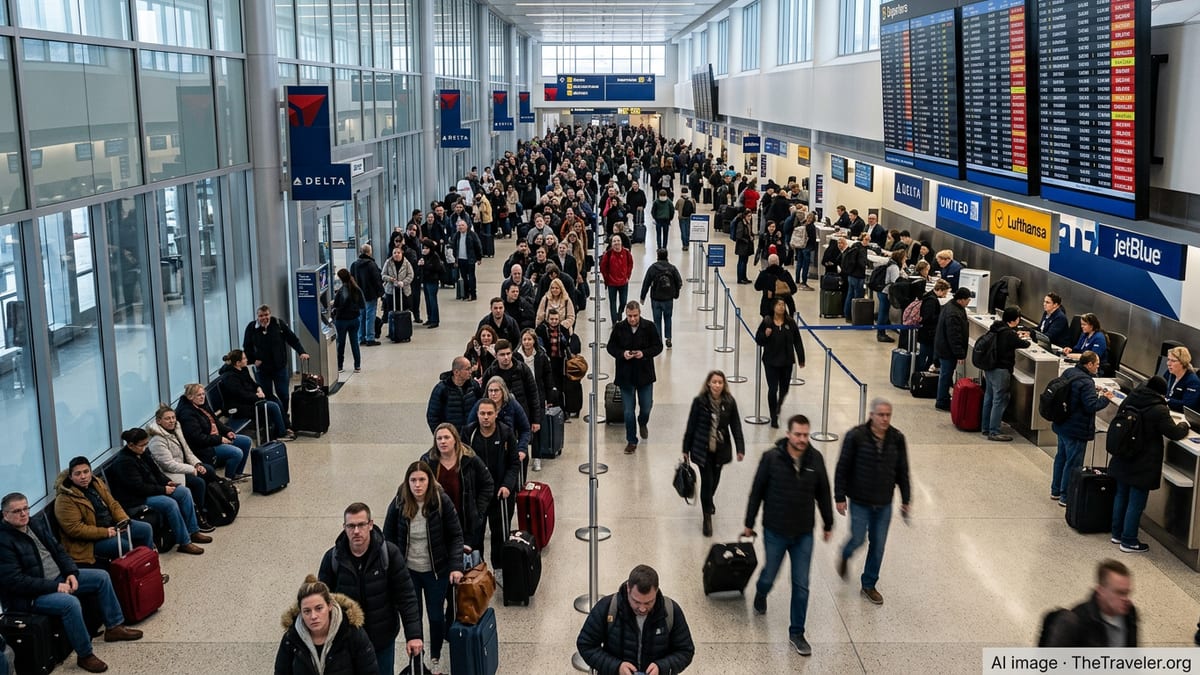
Ground stops lifted after fiber line is cut
According to published coverage, the disruption began on Monday, September 21, when telecom lines serving a Federal Aviation Administration facility in the Philadelphia area were severed during construction in New Jersey. The facility handles key radio and data links for traffic into the New York region and several other Northeast hubs.
Reports indicate that backup systems also failed, prompting ground stops at five of the region’s busiest airports: John F. Kennedy International, LaGuardia, Newark Liberty, Philadelphia International and Teterboro. Flights bound for these airports were held at origin or diverted, while departures were paused for several hours.
By Monday evening, transportation officials stated that repairs to the damaged lines were complete and that airport operations across the Northeast could resume. However, schedules remained badly out of sync into Tuesday as airlines repositioned aircraft and crews.
Publicly available flight-tracking data shows that delays and cancellations peaked on Monday afternoon and evening, with ripple effects visible across the national network as connections through New York and Philadelphia backed up.
New York travelers face prolonged knock-on delays
Even as ground stops were lifted, passengers at New York’s three main commercial airports continued to face long waits on September 22. Departure boards at JFK and LaGuardia showed significant residual delays, while Newark Liberty recorded ongoing cancellations as airlines reset operations.
Travel industry reports describe aircraft held on taxiways awaiting new departure slots, with some flights returning to gates for refueling or crew changes. At the same time, inbound long haul services from Europe and other international markets were delayed or diverted, complicating connections for travelers headed to onward U.S. destinations.
Published accounts indicate that the incident coincided with heavy demand tied to the United Nations General Assembly in Manhattan, further tightening available capacity into New York. Some visiting delegations, including senior government figures, arrived late or missed scheduled events as a result of the disruption.
For travelers still due to pass through New York this week, airlines are advising extra time at the airport and close monitoring of booking apps and departure boards, as isolated delays continue while schedules stabilize.
Technical fault exposes infrastructure vulnerabilities
Initial public explanations attribute the outage to a damaged telecom circuit supporting the Philadelphia-area air traffic facility, combined with a failure of the designated backup system. Aviation analysts note that the episode highlights how a single point of failure in communications infrastructure can have regionwide consequences.
Regulatory documents published in recent months describe ongoing efforts to modernize radar, communications and controller workstations at the New York and Philadelphia terminal radar approach control centers. However, those same documents acknowledge long-running staffing pressures and the complexity of transitioning busy airspace to new systems without reducing capacity.
According to coverage from multiple outlets, Monday’s disruption has renewed scrutiny of whether redundancies around critical links into major hubs are sufficient, particularly in congested corridors such as the Northeast. The incident follows prior issues tied to the same Philadelphia facility that affected Newark Liberty in earlier seasons.
Travel commentators suggest that, while outages of this scale remain rare, the combination of aging infrastructure and intense traffic volumes can magnify the impact when failures occur, especially on peak travel days.
Impact spreads beyond aviation to rail and regional travel
The telecom cut that triggered the aviation problems also affected other transportation services in the corridor between New York and Philadelphia. Local coverage from Boston and other cities in the Northeast notes delays and cancellations on some rail services using the same telecommunications backbone, compounding challenges for travelers seeking alternatives.
At Boston Logan International Airport, for example, publicly available information shows a spike in delays and cancellations on Monday as New York-bound flights were halted and aircraft could not depart into the constrained airspace. Similar patterns were reported at smaller regional airports that rely on connections through New York or Philadelphia.
The knock-on effect extended to rental car counters, hotels near major hubs and rideshare services, which experienced surges in demand as stranded passengers sought last-minute options. While these conditions began to ease as flights resumed, some travelers remained displaced well into Tuesday as they waited for open seats on rebooked services.
Given the scale of the disruption, analysts expect that the full operational impact and cost to carriers, airports and travelers will take several days to quantify, even as the immediate crisis has passed.
What travelers should expect in the coming days
Although New York area airports have largely restored normal operations, airline advisories indicate that some residual disruptions are likely through the middle of the week. Aircraft and crews remain out of position after Monday’s cancellations and diversions, which can lead to unexpected schedule changes even on routes far from the Northeast.
For passengers holding tickets into or out of JFK, LaGuardia or Newark, carriers are encouraging the use of mobile apps and text alerts to track gate changes and new departure times. In some cases, flexible travel policies and change-fee waivers have been introduced for itineraries touching affected airports during the disruption window, according to airline statements summarized in news reports.
Travel planners note that early-morning and late-evening flights may be more vulnerable to continuing irregular operations while airlines work to restore aircraft rotations. Connections with short layovers at New York or Philadelphia could also remain risky until on-time performance has fully recovered.
For now, aviation officials and policymakers face renewed pressure to accelerate infrastructure upgrades in the Northeast corridor, with advocates pointing to this latest outage as further evidence that modernized, resilient systems are essential to keep New York’s role as a global air gateway running reliably.