


More news on this day
Travelers at Lexington’s Blue Grass Airport faced unexpected waits on Monday, September 21, 2026, after an equipment outage connected to Newark Liberty International Airport triggered a cascade of delays on flights linking Kentucky to the busy Northeast corridor.
Get the latest news straight to your inbox!
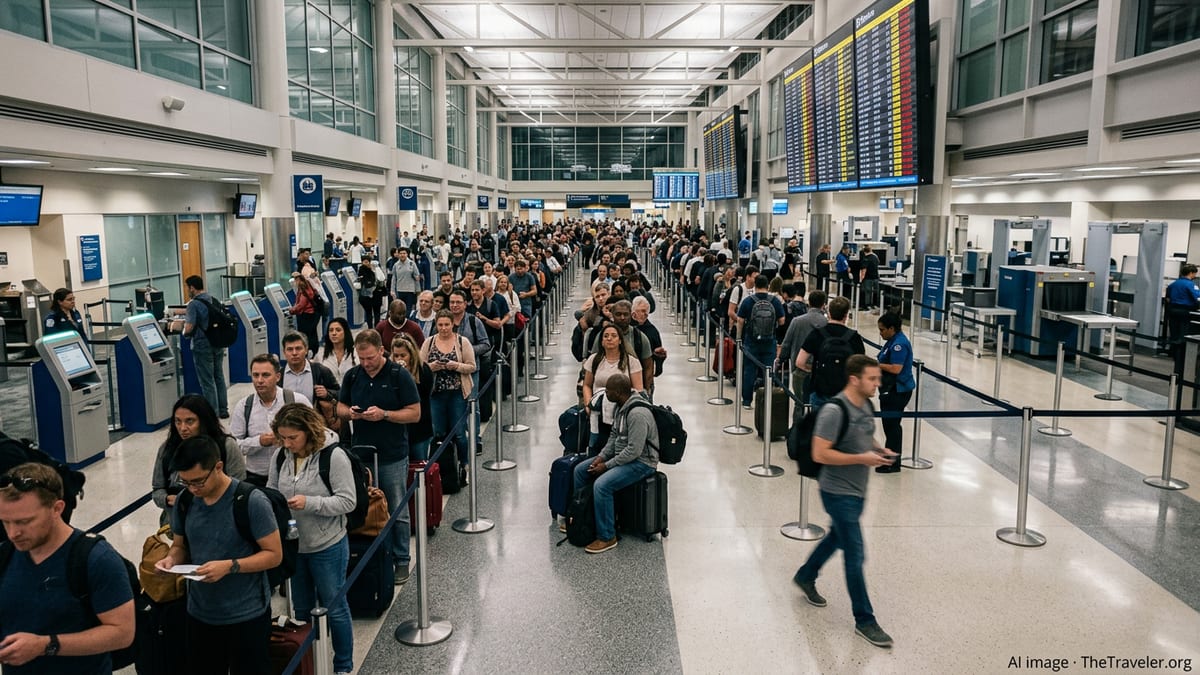
Outage at Newark ripples into Central Kentucky
Regional television coverage from Lexington indicates that an equipment outage associated with Newark Liberty International Airport led to schedule disruptions for several flights operating through Blue Grass Airport, including a departure that was held on the ground for roughly four and a half hours before continuing to Philadelphia. The disruption unfolded as part of a broader slowdown tied to a telecommunications failure affecting air traffic facilities serving Newark and other major Northeast hubs.
According to published coverage from national outlets, the outage on September 21 originated when fiber lines used to carry critical radar and communications data for the Federal Aviation Administration were severed during construction in New Jersey. The resulting loss of connectivity triggered ground stops at Newark Liberty International Airport, Philadelphia International Airport, and Teterboro Airport, and contributed to restrictions at John F. Kennedy International Airport and LaGuardia Airport. Airlines then began holding or rerouting flights across the country, including services that touch Lexington.
Publicly available flight-tracking data for Monday show hundreds of delays into and out of Newark, with some arrivals facing holds of several hours during the peak of the outage. As capacity into the New York and Philadelphia areas tightened, smaller airports such as Lexington experienced knock-on effects: aircraft and crews scheduled to pass through congested hubs arrived late, and departures from Kentucky to the Northeast were pushed back while air traffic managers gradually restored normal flow.
By Tuesday, federal status pages listed only minor gate and taxi delays of around 15 minutes or less at Newark, indicating that the immediate technical issue had been resolved. However, residual disruption for passengers with multi-leg itineraries, including those who started or ended their journeys in Lexington, continued into the next operating day as airlines repositioned aircraft and crews.
How a Northeast bottleneck reaches Lexington
Newark Liberty International Airport functions as a major connecting point for both domestic and international travel, particularly for carriers that link the New York metropolitan region with smaller cities in the Midwest and South. When operations at Newark slow sharply, flights that depend on that hub for connections, aircraft rotations, or crew scheduling can be affected even at airports hundreds of miles away that are experiencing good local weather and normal runway conditions.
Public information about air traffic management practices shows that during ground stops and related control measures, the FAA limits the number of takeoffs allowed from other cities bound for an affected airport. In this case, flights with destinations such as Newark and Philadelphia faced holds at origin airports while the Northeast system worked through its backlog. Aircraft and crews that were supposed to move on to additional routes, including services through Lexington’s Blue Grass Airport, became delayed in turn, creating a chain reaction for travelers who never set foot in the New York area.
Separate reporting on Monday’s disruption describes how managers used a combination of miles-in-trail spacing, reroutes, and ground delay programs to meter the flow of traffic into constrained airspace. Those tools are designed to maintain safety margins when radar feeds, communications links, or related technology are degraded. For passengers, the result is often a patchwork of rolling delays, with departure times repeatedly adjusted as the system regains capacity.
In Lexington, that translated into extended gate waits and reworked connection plans, particularly for passengers heading to or from the East Coast. The four-and-a-half-hour delay highlighted in local coverage is consistent with figures cited for average holds at Newark during the height of the outage, when some flights were experiencing delays of several hours as technicians worked to restore severed fiber connections.
Traveler impact at Blue Grass Airport
Blue Grass Airport, located west of downtown Lexington, typically handles a mix of regional and mainline jet service that connects Central Kentucky to larger hubs such as Charlotte, Atlanta, Chicago, Dallas, and the New York–Philadelphia region. When a major hub like Newark experiences a system issue, flights on that network can back up quickly, even if only a small number of daily departures at Lexington are directly tied to the affected airports.
On Monday, passengers booked on Northeast-bound flights from Lexington encountered extended waits in the terminal and at the gate as departure times were pushed back. Some travelers with onward connections through Newark or Philadelphia faced missed connections and rebooking, while others saw their arrival times into East Coast destinations shift into late evening. For those whose itineraries included tight layovers, the disruption meant unplanned overnight stays or significant changes to routing.
Publicly available information from airline advisory pages and social media posts shows that major carriers responded by issuing systemwide or region-specific travel waivers for customers holding tickets to or through the impacted Northeast airports on September 21. These waivers typically allow travelers to change flights within a defined date range and fare class without additional change fees, provided they keep the same origin and destination. For passengers originating in Lexington, such flexibility can make the difference between salvaging a trip with a same-day reroute and waiting out a long delay.
The operational stress also tests the capacity of smaller airports to manage surges at gates and ticket counters when disruptions originate elsewhere. Staff at Blue Grass Airport and airline ground crews had to balance assisting delayed passengers, rebooking itineraries, and maintaining service for flights that were operating close to schedule and not directly tied to the outage.
What is known about the Newark-area equipment failure
National transportation coverage following Monday’s outage links the disruption to a cut fiber line in New Jersey, which interrupted the flow of data between radar processing systems and the regional traffic control facilities that handle approaches and departures for Newark and other nearby airports. Telecommunications infrastructure of this type carries critical radar and communication information that controllers rely on to safely space aircraft in busy airspace.
The Federal Aviation Administration has previously outlined the configuration of this network in public documents, describing how radar data for Newark is processed through systems that rely on multiple telecommunications links for redundancy. Earlier statements from the agency about similar incidents indicated that work was already under way to add additional high-bandwidth connections, replace aging lines with upgraded fiber, and establish local hubs designed to reduce the risk of a single point of failure.
Reports indicate that on September 21 the outage was significant enough to force a near standstill in commercial air traffic at Newark for several hours, with flight-tracking services showing minimal movement in and out of the airport during the late morning and much of the afternoon. As the cut fiber was repaired and connectivity restored, ground stops were gradually lifted at Newark, Philadelphia, and other affected airports, though residual airborne holding and taxi delays persisted into the evening.
By late Monday night, coverage from multiple outlets reported that operations had broadly resumed across the Northeast, but with warnings that the ripple effects would extend into Tuesday as airlines and passengers worked through backlogs. For travelers passing through Lexington on Northeast itineraries, that meant ongoing schedule adjustments, altered connection plans, and continued emphasis on checking flight status before heading to the airport.
Guidance for travelers connecting through Lexington and the Northeast
While Monday’s outage was triggered by a specific telecommunications issue, publicly available information on federal air traffic procedures and past incidents shows that technology-related disruptions can occur with little warning and can spread quickly through the national airspace system. For passengers in markets like Lexington, which depend on reliable connections through large hubs, events in distant states can have immediate local consequences.
Travel organizations and airline advisories consistently encourage passengers connecting through high-volume airports such as Newark, Philadelphia, and the New York City hubs to monitor flight status regularly, especially during periods of construction, stormy weather, or known infrastructure work. In practice, that often means checking airline apps or departure boards several times on the day of travel, allowing extra time at the airport, and being prepared for rebooking options if a major outage or ground stop arises.
Consumer guidance published after past disruptions also highlights the value of understanding airline waiver policies when major events are announced. During widespread outages, carriers frequently expand change options across multiple airports and dates. Travelers from Lexington who are flexible on timing or routing may be able to shift to earlier or later departures, or connect through alternate hubs such as Chicago or Atlanta, to avoid the most congested corridors.
For now, real-time FAA status pages list normal conditions at Blue Grass Airport and improving metrics at Newark and other Northeast gateways, suggesting that the immediate phase of the September 21 outage has passed. Even so, Monday’s experience at Lexington serves as a reminder that infrastructure issues hundreds of miles away can quickly reshape the day’s departures board for travelers in Central Kentucky.