


Mention North Jersey to someone who has only glimpsed it from the highway and you will hear the same clichés: a blur of toll booths, warehouses, and the Manhattan skyline in the distance. Spend even a weekend off the interstates, however, and a different picture comes into focus. From Portuguese bakeries in Newark’s Ironbound to Peruvian cafes in Paterson’s Little Lima and art-house cinemas in Montclair, North Jersey is one of the most ethnically varied and culturally dense corners of the United States, hiding in plain sight across the Hudson River.
Get the latest updates straight to your inbox!
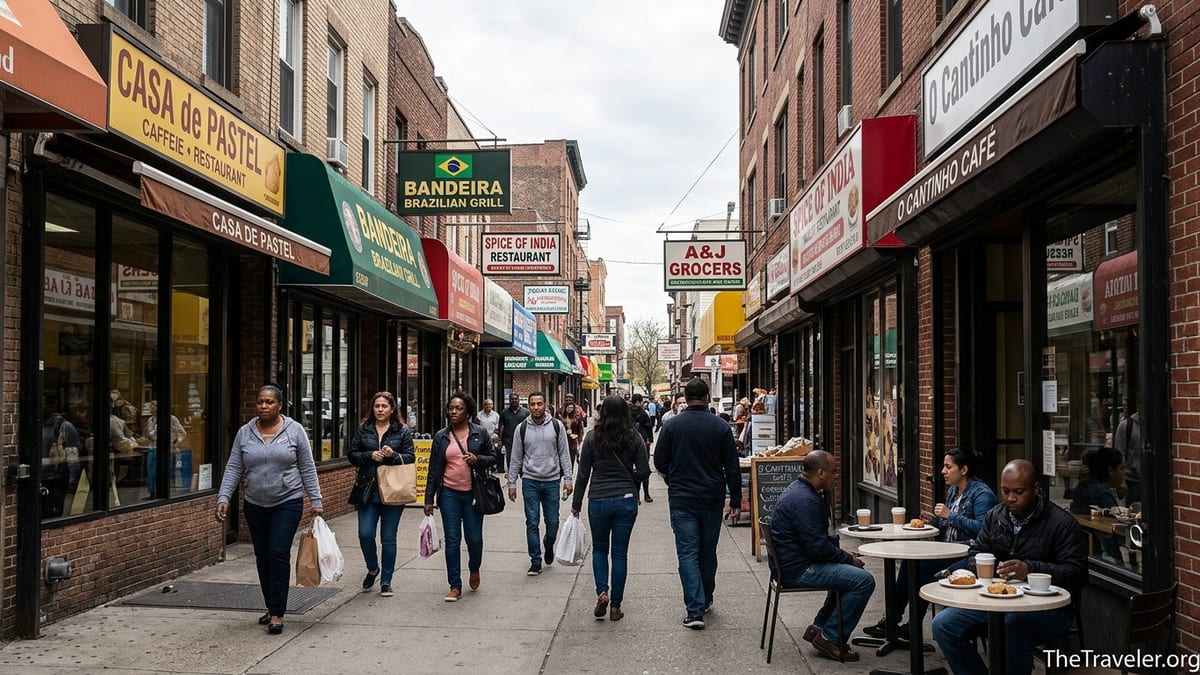
Beyond the Turnpike: A Region Defined by Diversity
For many outsiders, North Jersey is little more than an extension of New York City: bedroom suburbs on one side, gritty post-industrial cities on the other. That impression usually comes from seeing the region at 65 miles an hour, skimming past Newark Liberty International Airport or crossing the Pulaski Skyway without ever turning onto local streets. Slow down and you discover that this compact patchwork of cities and towns holds more cultural diversity than many entire states.
Jersey City, for instance, is regularly ranked among the most ethnically diverse cities in the United States, with residents tracing roots to India, the Philippines, Latin America, the Middle East, the Caribbean, and beyond. A walk up Newark Avenue in the Journal Square area might take you past sari shops, South Indian vegetarian restaurants, Filipino bakeries, and halal butchers within a few blocks. A ten-minute train ride away, downtown Newark’s Ironbound neighborhood is dominated by Portuguese and Brazilian flags, bakeries, and restaurants, while nearby neighborhoods reflect long-standing Black and Latin American communities.
Even the smaller towns often surprise first-time visitors. Suburbs like Montclair and Maplewood have reputations as intentional magnets for diverse families who want good schools and easy New York access without sacrificing a sense of community. Paterson, historically an industrial powerhouse, now includes large Peruvian, Turkish, Bangladeshi, Arab, and Dominican populations. The result is a region where a short drive can take you from Colombian arepas to Korean barbecue, from Syrian sweets to West African jollof rice, often at locally owned places that are as rooted in their streets as any corner diner.
For travelers, this diversity is not an abstract statistic. It shapes where you eat, the music you hear in neighborhood parks, the languages on shop signs, and the festivals that fill summer weekends. The North Jersey many outsiders imagine still exists in fragments. But alongside it is a living, changing region that can feel like a global survey compressed into a few square miles.
Newark’s Ironbound: Portugal, Brazil and Spain on Ferry Street
Few places overturn expectations of North Jersey as quickly as Newark’s Ironbound, a neighborhood wedged between the Passaic River and rail lines just east of Newark Penn Station. Step out of the station and walk down Ferry Street and you are more likely to hear Portuguese than English. Shop windows are filled with pastel de nata custard tarts, codfish croquettes, and Brazilian brigadeiros, while restaurant awnings advertise rodizio barbecue, seafood stews, and grilled sardines.
Travelers flock here from New York and beyond for food alone. Classic Portuguese and Spanish restaurants line the main drag, serving whole grilled fish, paella-like rice dishes, and enormous platters of piri-piri chicken and steak with garlic shrimp. Brazilian spots specialize in feijoada, a slow-cooked black bean and pork stew often served on weekends, or rodizio service where skewers of beef, sausage, and lamb circulate until you surrender. At more casual places, you can grab a galao (a milky Portuguese coffee), a warm pastel, and a custard tart for a few dollars and linger at the counter with locals watching a soccer match on TV.
The Ironbound’s diversity extends beyond Iberia and Brazil. You will find Ecuadorian bakeries selling guava-filled pastries, cafes offering Galician-style octopus next to Brazilian pão de queijo, and small groceries stocked with everything from Portuguese olive oil to Brazilian soft drinks. Prices are generally approachable: a hearty lunchtime prato feito (a Brazilian plate with rice, beans, salad, and grilled meat) often costs roughly what a single cocktail might in Manhattan. For a visitor staying near Newark Airport or coming in on an Amtrak or NJ Transit train, it is an easy, walkable way to sample a slice of Europe and South America without leaving North Jersey.
Time your visit for evenings or weekends and the neighborhood’s social life comes to the foreground. Sidewalk tables fill with multigenerational families, couples on date nights, and groups of friends sharing pitchers of sangria. In summer, local cultural organizations host street fairs and events that blend Portuguese folklore, Brazilian music, and the energy of a city that has reinvented itself more than once.
Paterson: Waterfalls, Little Lima and Industrial History
Paterson rarely shows up on tourist itineraries, yet it offers one of North Jersey’s most surprising combinations: a dramatic natural landmark, rich immigrant neighborhoods, and deep industrial history. The centerpiece is the Great Falls of the Passaic River, a 77-foot-high waterfall designated as Paterson Great Falls National Historical Park. The falls powered mills that helped launch the American Industrial Revolution, and today visitors can stroll elevated walkways for close-up views and explore interpretive exhibits about the city’s role in textile, locomotive, and later aircraft production.
Steps from the park is a different kind of attraction: Little Lima, considered one of the largest Peruvian enclaves in the United States. Here, Peruvian bakeries sell alfajores and paneton, while restaurants offer ceviche, lomo saltado, and tallarines verdes. Weekend mornings, you might see families lining up for pollo a la brasa, rotisserie chicken marinated with spices and served with fries and sauces, at prices that make feeding a group affordable even by local standards. Outdoor vendors sell Peruvian sweets, Inca Kola, and sometimes regional specialties from the highlands and coast.
Paterson’s diversity does not end with Peru. Nearby corridors have strong Dominican, Puerto Rican, Turkish, Arab, and Bangladeshi presences. On the same afternoon you can sip Turkish tea and share baklava in a café on Main Street, then walk a few blocks to a Dominican spot for mofongo and passion fruit juice. Halal butchers sit next to bodegas, and storefronts carry signs in Spanish, Arabic, and English. While some blocks show the wear of post-industrial decline, others buzz with shoppers and families in a way that feels both urban and small-town.
For travelers, Paterson rewards curiosity. Combine a visit to the falls with a self-guided food tour, starting with Peruvian pastries near the park and working your way up Main Street toward Middle Eastern groceries and cafes. Add in a stop at Hinchliffe Stadium, a recently restored ballpark tied to Negro Leagues history, and you have a day that traces threads of American industry, civil rights, and immigration in one compact city.
Jersey City: A Global City in Miniature
On the Hudson River waterfront, Jersey City has transformed from a largely industrial port into one of the region’s major residential and cultural hubs. Luxury towers now share space with historic brownstones and long-standing immigrant neighborhoods. What has remained constant is diversity. Walking from the sleek waterfront near Exchange Place up to Journal Square and on into the Heights, you pass through communities shaped by Indian, Filipino, Latin American, Middle Eastern, and African diasporas, among many others.
Journal Square and the surrounding area are especially rich in South Asian culture. Newark Avenue west of the PATH station often feels like a slice of the subcontinent, with vegetarian Gujarati thali restaurants, dosa spots, and sweet shops specializing in jalebi and rasgulla. Sari boutiques display embroidered fabrics in bright colors, and gold jewelry shops stay busy ahead of weddings and festivals. It is easy to put together an informal food crawl here, nibbling on chaat, grabbing a paper-thin dosa with chutneys, and finishing with kulfi or masala chai, often for less than the cost of dinner in Manhattan.
Head further into the city and the layers continue. In the Heights, Dominican and other Latin American restaurants share blocks with taco trucks, Colombian bakeries, and increasingly, newer cafes and brunch spots. Greenville and West Side neighborhoods reflect long-standing Black communities, with soul food, Caribbean takeout, and churches that double as cultural anchors. Downtown, you will find modern cocktail bars and design-focused coffee shops next to long-running bodegas and family-owned diners. Street festivals, from Holi celebrations to Latin music events and Pride marches, fill the calendar, especially from late spring to early fall.
For visitors, Jersey City works both as a base for exploring the wider region and as a destination in its own right. You can stay near the waterfront, commute into Manhattan by PATH in minutes, and still spend evenings eating Indo-Chinese street food, Filipino barbecue, or Dominican rotisserie chicken without leaving New Jersey. It is this ability to be both deeply local and broadly global that makes the city emblematic of North Jersey’s quiet complexity.
Montclair and the Suburban Arts Corridor
Drive a short distance inland and the landscape shifts from dense urban blocks to leafy streets lined with Victorian homes and brick apartment buildings. Towns like Montclair show another, less expected side of North Jersey: suburban communities that foreground the arts and diversity as deliberate choices. With just over 40,000 residents in about 6 square miles, Montclair combines walkable business districts, train stations into New York, and a concentration of creative professionals that punches far above its size.
Montclair’s downtown and Walnut Street areas are packed with independent restaurants serving cuisines from Ethiopia to Italy to the American South. You might have injera and spicy lentils one night, handmade pasta the next, and then brunch at a neighborhood café that roasts its own coffee. The Montclair Film festival, art galleries such as Studio Montclair and smaller independent spaces, and a well-regarded art museum give the town a cultural calendar that rivals much larger cities. On a typical weekend you might find a gallery opening at DiRasa House of Diversified Arts, a jazz performance at a local club, and a family-friendly event at the museum all within walking distance.
What surprises many visitors is how openly the town leans into its diversity. Residents often cite it as a selling point when moving in, and the local school system draws families who value classrooms that mix cultures and backgrounds. Houses of worship representing multiple faiths dot the streets, and civic groups organize everything from Juneteenth celebrations to multicultural food fairs. For a traveler, this translates into a sense that the town’s variety is not a marketing slogan but something lived out in daily life, from mixed crowds at playgrounds to multilingual conversations on the sidewalks.
Montclair is not unique in this respect. Neighboring towns such as Bloomfield and Maplewood offer similar combinations of walkable downtowns, small theaters, and diverse food scenes. Taken together, they form a kind of suburban arts corridor that challenges stereotypes of New Jersey suburbs as culturally homogenous. Stay at a small inn or short-term rental here, and your days might revolve around local coffee shops, bookstore browsing, and evenings at independent cinemas or live music venues, with New York City only a train ride away if you want it.
Hidden Corners: Small Towns, Big Stories
Beyond the better-known cities and cultural hubs, much of North Jersey’s character hides in smaller municipalities that rarely make travel lists. In Passaic County, for example, towns like Little Falls carry traces of early Dutch farming communities alongside later waves of Italian, Eastern European, and more recent arrivals. Old mill buildings along the river might now house small businesses or lofts, while main streets support pizzerias, Colombian bakeries, and diners that serve as informal gathering spots.
Further west, communities in Morris and western Essex counties blend traditional suburban layouts with unexpected pockets of diversity. A strip mall might hold a Korean supermarket next to a halal butcher and an Indian sweets shop, while the town center features a classic American bar and grill. Many of these places cater primarily to locals, which means prices are often lower and experiences more relaxed than in trendier neighborhoods closer to Manhattan.
Travelers willing to explore beyond the obvious will find stories embedded in local landmarks. A small Orthodox church that serves a Slavic community that arrived decades ago, a Mexican grocery that doubles as a lunch counter for construction workers, or a West African hair-braiding salon on an otherwise quiet residential street all speak to the region’s layered history. Stop in, ask questions respectfully, and you may find yourself pointed to home-style dishes or community festivals that never show up in glossy brochures.
Because public transit thins out as you move away from the main rail lines, a car or rideshare budget makes exploring these hidden corners easier. Plan days that combine a hike in a nearby reservation or state park with a detour into a neighboring town for a late lunch, and you will begin to see how varied North Jersey becomes once you step off the commuter corridors.
Planning a Trip: How to Experience North Jersey Like a Local
Understanding North Jersey’s diversity is one thing. Experiencing it as a traveler requires a bit of planning and a willingness to roam. The region’s public transit, anchored by NJ Transit rail lines, the PATH system, and buses, allows you to visit several distinct communities without a car, especially if you base yourself near Newark, Jersey City, or along one of the main rail corridors.
One option is to treat Newark as your starting point. From a hotel near Newark Penn Station or even an airport hotel connected by train or shuttle, you can walk into the Ironbound for dinner, then take day trips by rail to Hoboken, Jersey City, or Montclair. A typical day might start with espresso and a custard tart at a Portuguese bakery, continue with a PATH ride to Jersey City for a South Asian lunch and a stroll along the waterfront, and finish back in Newark with Brazilian barbecue and live music.
Another approach is to stay in a suburban arts town like Montclair or Maplewood. Both offer direct trains into Manhattan while anchoring their own small-scale restaurant and gallery scenes. From Montclair, for example, you can take NJ Transit to Newark to connect onward to Paterson Great Falls, or use rideshares for a quick link to neighboring towns. Evenings can be spent at local theaters, wine bars, or outdoor concerts in warmer months, giving you a sense of North Jersey as a destination, not just a commuter belt.
Whichever base you choose, budget time for at least one day that strings together multiple communities. It is only by eating Peruvian lunch in Paterson, sipping masala chai in Jersey City in the afternoon, and sharing tapas in Newark at night that the full breadth of North Jersey’s diversity comes into view. Build in space for serendipity: stop when you see a crowded bakery, follow the sound of music in a park, or wander into a community festival you stumble across. In this region, the unplanned moments often become the most memorable.
The Takeaway
North Jersey is easy to overlook if you view it only through the window of a train or from a departure gate at Newark Liberty. Yet for travelers willing to explore beyond the obvious, it offers a rare combination: dense layers of global culture, historic cities, arts-driven suburbs, and small towns that still feel distinct, all packed into a relatively small area. It is a place where a single day can carry you from roaring waterfalls to Peruvian bakeries, from South Asian markets to Portuguese seafood feasts.
Outsiders may expect little more than industrial vistas and commuter traffic. What they find instead is a region that tells a modern American story in concentrated form, shaped by immigration, reinvention, and communities that embrace difference as part of everyday life. Come with an open schedule and an even more open appetite, and North Jersey will quickly prove more diverse and interesting than its reputation suggests.
FAQ
Q1. Is North Jersey safe for visitors who want to explore beyond the typical tourist spots?
Overall, most parts of North Jersey that travelers visit are reasonably safe, especially during the day, but it is smart to stay aware of your surroundings, avoid flashing valuables, and follow local advice about which areas to avoid late at night, just as you would in any urban region.
Q2. Do I need a car to experience North Jersey’s diversity, or can I rely on public transit?
You can see a great deal by using NJ Transit trains, the PATH system, and local buses, particularly if you focus on Newark, Jersey City, Hoboken, Montclair, and Paterson, though a car or rideshares make reaching smaller towns and less transit-served neighborhoods much easier.
Q3. What are some good neighborhoods to stay in if I want a local feel but easy access to New York City?
Areas around downtown Jersey City, Hoboken, Montclair, and Maplewood balance a neighborhood atmosphere with direct rail or PATH connections into Manhattan, giving you a mix of local restaurants and straightforward commuting options.
Q4. How expensive is food in North Jersey’s diverse neighborhoods compared with New York City?
In many immigrant-heavy areas such as Newark’s Ironbound, Paterson, and parts of Jersey City, you can find generous meals at locally owned restaurants for noticeably less than comparable dishes in Manhattan, making it a good value for food-focused travelers.
Q5. Are there any must-see cultural events or festivals that highlight North Jersey’s diversity?
Throughout the year, you can find Portuguese and Brazilian celebrations in Newark’s Ironbound, Peruvian and Latin American festivals in Paterson, South Asian events in Jersey City, and arts and film festivals in towns like Montclair, especially from late spring through early fall.
Q6. Can I visit Paterson Great Falls and nearby cultural neighborhoods in a single day?
Yes, many visitors combine a morning or early afternoon at Paterson Great Falls National Historical Park with exploring nearby Little Lima or other food corridors in the city the same day, often using rideshares or local buses to move between sites.
Q7. Is North Jersey a good base for travelers who are mainly visiting New York City?
Staying in parts of North Jersey such as Jersey City, Hoboken, or Montclair can give you faster or comparable transit times into Manhattan while offering lower hotel rates in some cases and access to less touristy, more local neighborhoods.
Q8. What should I know about language when visiting immigrant neighborhoods in North Jersey?
English is widely spoken, but you will hear Portuguese, Spanish, Arabic, Hindi, Urdu, and many other languages; learning a few basic phrases or greetings can be a friendly gesture, though you can usually get by comfortably in English.
Q9. Are there family-friendly activities in North Jersey beyond shopping malls?
Yes, families can visit Paterson Great Falls, waterfront parks in Jersey City and Hoboken, local museums and zoos, and community festivals, many of which include food, music, and kid-focused programming.
Q10. How many days should I plan to appreciate North Jersey’s variety without feeling rushed?
If you dedicate at least three to four days, you can sample different cities and towns, try a range of cuisines, and visit key sites like the Ironbound, Jersey City, Montclair, and Paterson Great Falls at a comfortable pace.