


More news on this day
Airports across the U.S. Northeast are restoring normal schedules after a telecom failure at a key air traffic facility triggered cascading ground stops, cancellations and delays from New York to Boston and Philadelphia at the start of the busy travel week.
Get the latest news straight to your inbox!
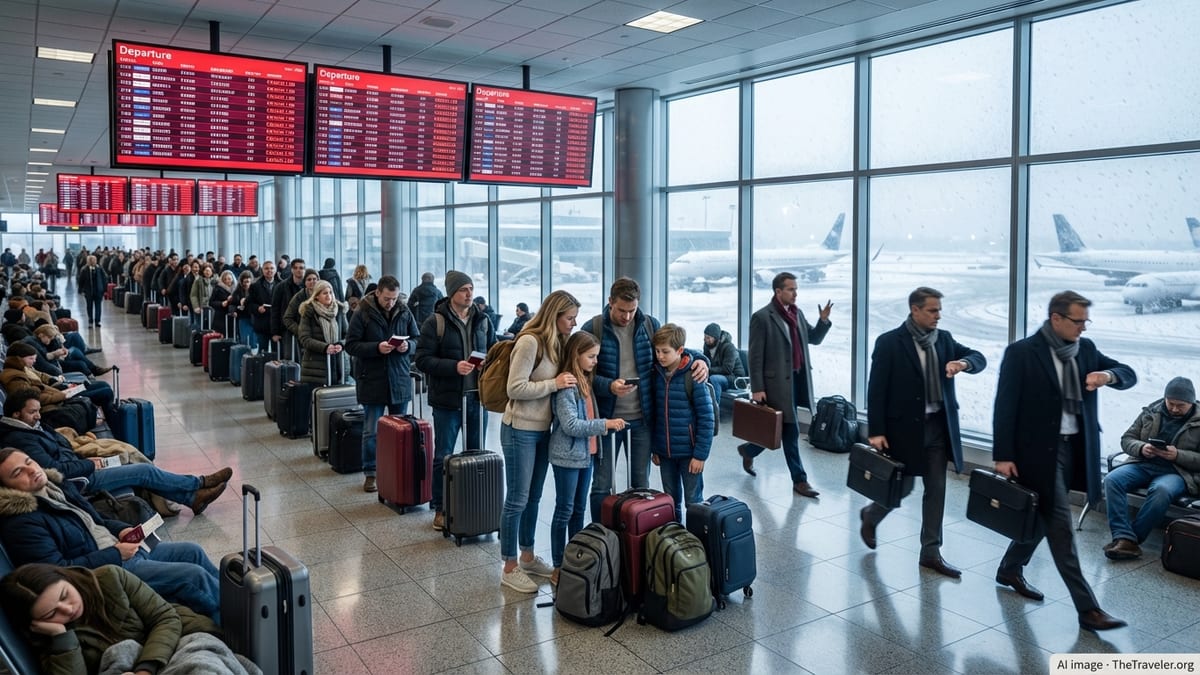
Operations resume after widespread ground stops
Flight operations at major Northeast hubs have largely restarted following a technical failure on Monday, September 21, that disrupted air traffic control communications and halted arrivals into several of the region’s busiest airports. Publicly available information from the Federal Aviation Administration shows that incoming flights to Newark Liberty International, Philadelphia International and Teterboro were temporarily paused as technicians worked to restore communications at a regional control facility serving the corridor. Reports from multiple outlets indicate that New York’s John F. Kennedy, LaGuardia and Boston Logan airports also experienced ground stops and heavy delays as the disruption spread.
According to published coverage summarizing transportation department updates, the underlying problem involved a cut in fiber-optic lines that support air traffic control circuits serving the New York and Philadelphia area. The outage forced controllers to sharply restrict traffic flows, triggering ground stops and delays that rippled outward through the Northeast and into connecting hubs nationwide. By Monday evening, transportation officials stated on social media that the damaged telecom lines had been repaired and that airport operations in the region were resuming, although airlines warned that schedules would remain constrained while crews and aircraft were repositioned.
Data from flight tracking providers cited in regional coverage shows that Newark, Philadelphia and Boston each recorded hundreds of delayed flights and dozens of cancellations as the outage unfolded. At Boston Logan alone, local reports drawing on FlightAware figures noted more than 400 delays and around 70 cancellations by late afternoon on September 21, illustrating how quickly a localized equipment failure can cascade across the network.
What caused the disruption in the Northeast corridor
According to national and regional news reports, the disruption was traced to telecommunications infrastructure supporting a Federal Aviation Administration facility responsible for managing arrivals and departures at several major Northeast airports. A primary communications circuit failed on Monday morning, and subsequent reporting indicates that a construction-related incident in New Jersey severed fiber lines carrying critical data between facilities. Transportation department summaries referenced by outlets including CNN-affiliated stations and Axios described the episode as a failure involving both an aging circuit and its backup, leaving controllers with reduced capacity to manage dense air traffic in and out of the New York and Philadelphia areas.
Coverage summarizing remarks from federal transportation leaders noted that the outage impacted operations at at least five major airports: Newark Liberty, John F. Kennedy, LaGuardia, Philadelphia International and Teterboro, with knock-on effects in Boston as that airport absorbed diversions and adjusted to its own ground delay program. The situation did not require a nationwide shutdown, but the concentration of affected facilities in one of the country’s most complex airspace regions magnified the impact on passengers.
Analysis pieces published in the wake of the outage highlight longstanding concerns about the resilience of U.S. air traffic control infrastructure. Commentaries referencing the incident point to the reliance on older circuits and the vulnerability of shared telecom routes to construction mishaps or equipment failures. Transportation officials used public statements around the event to renew calls for sustained investment in modernization, arguing that redundancy and upgraded systems are essential to reduce the risk of similar disruptions.
Current conditions for travelers as schedules stabilize
By Tuesday, September 22, publicly available FAA status information no longer showed active ground stops tied to the equipment outage, indicating that traffic management was being handled through routine delay programs rather than emergency restrictions. An FAA daily air traffic report for Tuesday highlighted the potential for weather-related delays at New York area airports and Washington, reflecting a return to more typical operational challenges rather than systemwide technical constraints.
Nevertheless, airlines and airport status boards across the Northeast continued to show residual delays as carriers worked through aircraft and crew imbalances created by the previous day’s ground stops. Coverage focused on Boston Logan reported that nearly 500 flights there were affected across Monday, with local officials cautioning that disruptions would continue into Tuesday as diverted aircraft returned to their normal routes. Similar ripple effects were visible at New York and Philadelphia, where passengers reported rebookings extending into September 23 on some heavily impacted routes.
Travel-industry reporting, including coverage on TheTraveler.org, stresses that the most accurate picture for passengers now comes from cross-checking airline notifications with FAA traffic management updates. Airlines are continuing to issue limited change-fee waivers on select Northeast routes covering travel dates from September 21 through September 23, allowing some flexibility for travelers willing to shift flights by a day or adjust their departure times.
How the outage affected key airports and routes
Newark Liberty International and Philadelphia International airports were at the center of the disruption, as both rely heavily on the affected control facility. According to summaries of FAA advisories and airline communications, arriving flights into Newark and Philadelphia faced holds and diversions during the height of the outage, with some long-haul services temporarily routed to alternate airports in Boston, Hartford and other regional fields until capacity improved. Smaller but strategically important airports such as Teterboro, which handles significant business aviation traffic, were also subject to restrictions while communications were restored.
In the New York market, public reports indicate that John F. Kennedy International and LaGuardia experienced several hours of limited arrivals and departures, causing crowded gate areas and long lines at rebooking counters. Reagan National Airport near Washington was placed under a separate ground stop tied to airport volume, but reporting from national outlets notes that this restriction overlapped with the broader Northeast constraints, adding to congestion along the Washington to New York corridor.
Boston Logan, while not directly controlled by the same facility that experienced the initial communications failure, nonetheless saw a sharp increase in diversions from New York area airports and implemented its own ground delay program. Local coverage cites runway construction and low cloud cover as additional constraints, creating a convergence of factors that left many Boston-bound travelers facing extended waits on taxiways or in terminals.
What travelers should know for upcoming Northeast flights
With airports now out of emergency mode and working through recovery operations, travelers planning to fly into or out of the Northeast over the next several days can expect more predictable conditions, but should still allow extra time and closely monitor flight status. Publicly available FAA guidance emphasizes that while technical issues have been resolved, normal traffic management programs and seasonal weather patterns can continue to cause delays at high-volume hubs such as Newark, JFK, LaGuardia, Boston Logan and Philadelphia.
Airline travel waivers referenced in carrier advisories typically cover tickets issued for the disruption window and require rebooked travel within a short time frame, sometimes through September 23. Travelers holding flexible tickets may find it easier to shift to early morning or late evening departures, which can be less susceptible to knock-on delays from earlier bank disruptions. Those with tight connections through the Northeast are being encouraged in public-facing travel guidance to build in longer layovers or consider alternative routings through Midwest or Southern hubs where feasible.
For passengers already in transit, airport information screens and airline mobile applications remain the primary tools for real-time updates. Industry coverage recommends verifying any rebooking options directly with the operating carrier rather than relying solely on third-party travel agents or online travel agencies, particularly in the immediate aftermath of large-scale disruptions. While the worst of this week’s outage has passed, the episode has renewed attention on the fragility of critical aviation infrastructure and the importance for travelers of staying informed when flying through one of the country’s most congested air corridors.