


More news on this day
Months of regional conflict involving Iran, the United States and several Gulf states have left many would-be visitors asking whether it is still safe to travel to Dubai and Abu Dhabi. While the United Arab Emirates remains open for tourism and its major airports and hotels continue to operate, government travel advisories and recent missile incidents highlight a higher level of risk than in previous years and a need for careful planning.
Get the latest news straight to your inbox!
What the latest government travel advisories say
As of late August 2026, the United States classifies the United Arab Emirates as a Level 3 destination, advising travelers to reconsider travel because of terrorism and armed conflict. The advisory notes an ongoing threat of drone and missile attacks linked to the regional confrontation with Iran, as well as the potential targeting of locations in the UAE associated with the United States. The guidance, updated on August 29, emphasizes heightened vigilance for U.S. citizens but does not instruct all travelers to leave.
Publicly available information shows that family members of U.S. government staff are once again permitted to live in the UAE, which suggests that while risks are elevated, the situation is not regarded as an active war zone for day-to-day civilian life. At the same time, U.S. government personnel face restrictions on travel to military facilities and critical energy infrastructure inside the country, reflecting concern about those locations being at greater risk in the event of further strikes.
The United Kingdom’s Foreign, Commonwealth and Development Office continues to advise its citizens to follow safety and security guidance for the UAE and to sign up for alerts, having previously moved away from blanket guidance to avoid all but essential travel. British advice points to the risk of terrorism, the history of missile and drone launches against Gulf states and the broader regional tensions, but it also acknowledges that commercial activity and tourism in Dubai and Abu Dhabi are continuing.
Other Western governments have issued similar notices urging close monitoring of developments in the Iran conflict, with several referencing the missile and drone attacks that struck or targeted Gulf countries earlier in 2026. Travelers are encouraged to check the latest advisory for their own nationality just before departure, as ratings and wording can change quickly in response to new incidents.
Security situation in Dubai and Abu Dhabi
Dubai and Abu Dhabi remain highly securitized cities with extensive surveillance, a visible police presence and a track record over the past decade of relatively low violent crime against visitors. The main concern in 2026 is not street crime but the possibility of being caught up in a regional military incident. In February and March, Iranian missile and drone strikes reached the UAE, with at least one fatality in Abu Dhabi and debris reported at Jebel Ali port following air interceptions, according to international and local coverage.
Reports indicate that since those strikes, the UAE has reinforced its air defenses and worked with partners to intercept further threats aimed at the Gulf. Daily life in Dubai and Abu Dhabi has broadly continued, with malls, beaches, business districts and major attractions open, but residents and visitors have become used to monitoring news alerts about airspace restrictions and regional escalations.
Local media and regional analysis describe the current environment as one of operational normality overlaid with strategic risk. That means travelers are unlikely to experience visible signs of conflict during a short stay, but the possibility of sudden disruption, such as a temporary airport closure, flight diversions or air raid sirens, cannot be ruled out. This contrasts with the pre-2026 period, when the main security considerations for tourists were terrorism in the abstract and strict local laws, rather than active missile threats.
Travelers should also remember that UAE law remains strict on issues such as public behavior, alcohol, drugs and online speech. While these legal questions are separate from regional conflict, they continue to affect visitor safety in the sense that an arrest or legal dispute can become significantly more complicated during a fast-moving security crisis.
Air travel, flight disruptions and transit safety
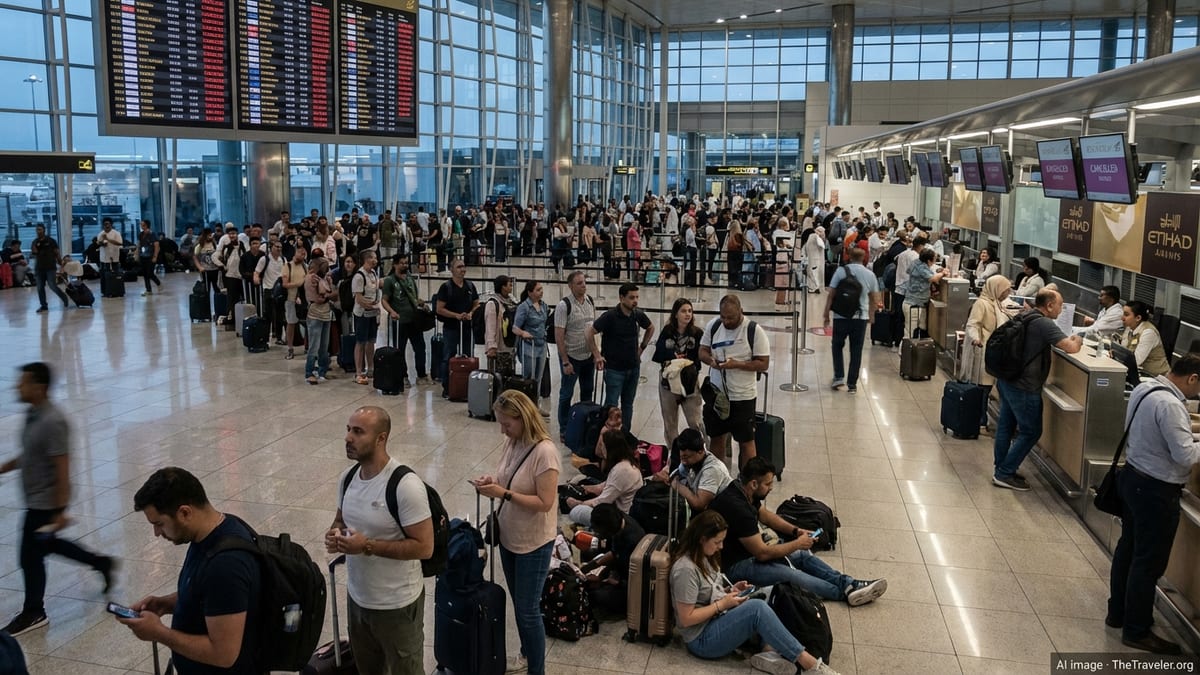
Dubai International Airport and Abu Dhabi’s Zayed International Airport remain key global hubs and, according to recent aviation reports, continue to handle high passenger volumes despite the conflict. Coverage of airport operations in September 2026 indicates that flights are largely running, with some delays and schedule adjustments linked to changing airspace restrictions over the Gulf and surrounding states.
Earlier in the year, missile activity in the region led to a brief suspension of operations at Dubai International after an aerial interception near the airport, as documented in regional news summaries. Since then, airlines and air traffic controllers have adjusted routings to minimize exposure to areas assessed as higher risk. Carriers based in the UAE continue to operate long-haul services to Europe, Asia, Africa and the Americas, while closely tracking security notices from aviation authorities.
For travelers, this means that flying into or transiting through Dubai and Abu Dhabi is still possible, but there is a higher chance of last-minute schedule changes than in calmer periods. Travel industry reporting from mid-September noted instances of more than 100 flights being delayed in a single day at the two main UAE airports as airlines adapted to evolving restrictions in neighboring airspace.
Transit passengers who remain airside within the terminal buildings are generally considered at lower risk than those spending extended time in the country, but they are still dependent on regional airspace remaining open. Travelers planning tight connections, multi-country itineraries or onward trips to nearby conflict-affected states are being advised in public guidance to build in generous buffers and to keep accommodation bookings and tours as flexible and refundable as possible.
Practical risk management for visitors
Given the Level 3 advisory from the United States and the documented history of Iranian missile activity against the UAE earlier in 2026, trips to Dubai and Abu Dhabi now require a more deliberate approach to risk than in previous years. Prospective visitors are encouraged by official information portals to assess whether their travel is discretionary, business-critical or linked to family obligations, and to consider postponing purely leisure trips if they are uncomfortable with the elevated threat level.
For those who choose to proceed, specialist security assessments recommend avoiding locations viewed as higher value targets, including areas close to military bases, oil and gas facilities, large diplomatic compounds and critical infrastructure. Staying in central urban districts, using reputable hotels and established transport providers, and limiting time near major government buildings can all reduce exposure to the types of sites mentioned in recent threat reporting.
Travelers are also urged to register with their embassy or consular service, enable emergency alerts on their phones and ensure they have comprehensive travel insurance that explicitly covers disruption caused by conflict, airspace closures and missile or drone incidents. Policy wording varies, and some standard leisure policies may exclude losses linked to war or terrorism, so checking the fine print before departure is important.
Basic preparedness steps, such as knowing the location of shelter areas in hotels, carrying identification at all times, and keeping copies of travel documents in secure cloud storage, can make a significant difference if the situation deteriorates while you are in the country. Publicly available security briefings stress that while the probability of an individual traveler being directly affected remains relatively low, the impact of a major incident could be severe.
Balancing popular tourism with evolving risks
Despite the conflict, Dubai and Abu Dhabi continue to market themselves as tourism and business hubs. Recent travel features highlight that attractions such as the Burj Khalifa, the Louvre Abu Dhabi, theme parks on Yas Island and luxury beach resorts remain open and are receiving visitors. Industry commentary notes that conference and events calendars for late 2026 are still active, reflecting the UAE’s role as a regional meeting point even during periods of tension.
At the same time, security analysts and government advisories frame the emirates as destinations that now sit closer to the front line of a volatile regional confrontation. The missile and drone incidents of early 2026, and subsequent warnings that locations in the UAE associated with Western interests could be targeted, have shifted international perceptions of risk, even if the streets of Dubai and Abu Dhabi appear calm.
For many travelers, the decision to visit has become a personal calculation that weighs the appeal of the UAE’s infrastructure, climate and attractions against the possibility of sudden disruption or escalation. Those who know the country well, have strong reasons to travel and are comfortable with real-time monitoring and contingency planning are more likely to proceed. Others may opt to delay until the conflict shows clearer signs of de-escalation.
Ultimately, the latest publicly available information suggests that travel to Dubai and Abu Dhabi is still possible but can no longer be considered routine in the way it was before February 2026. Anyone planning a trip in the coming weeks should follow developments in the Iran conflict closely, consult their own government’s advice shortly before departure and be prepared to change plans at short notice if the security picture worsens.