


More news on this day
Flights are moving again at some of the busiest airports in the northeastern United States after a damaged fiber line triggered widespread ground stops, but the U.S. transportation secretary is warning that delays and cancellations could continue rippling through airline networks for at least another day.
Get the latest news straight to your inbox!
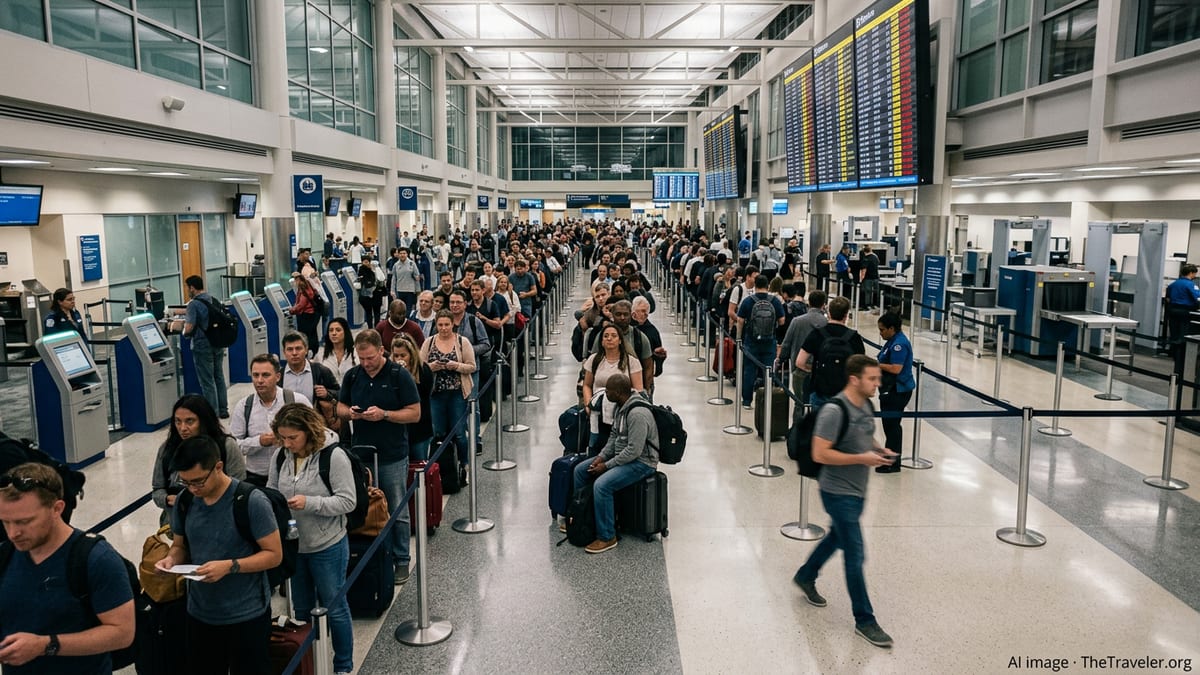
Outage linked to damaged fiber line in New Jersey
Reports from multiple outlets indicate that Monday’s disruption was traced to a severed telecommunications line in New Jersey, which interrupted key communications used by air traffic facilities managing the dense Northeast corridor. Publicly available information from the transportation secretary’s social media accounts stated that fiber infrastructure had been restored by Monday evening and that airport operations across the region were cleared to resume.
Flight tracking data summarized in news coverage showed that Newark Liberty International Airport saw commercial arrivals effectively halted from about mid morning until early evening, with no inbound commercial flights for several hours. Philadelphia International Airport and other hubs, including airports serving New York City, operated under ground stops and ground delay programs for large parts of the day as technicians worked to stabilize the system.
Local coverage in Boston and Philadelphia described the cascading effect of the outage, with airports outside New Jersey experiencing major knock on disruption despite having no direct equipment fault on site. Airlines struggled to reposition aircraft and crews once the telecom line failed, a reminder of how dependent modern air travel is on a small number of critical infrastructure nodes.
Transportation secretary cautions that recovery will take time
According to published coverage summarizing public posts from the U.S. transportation secretary, the damaged telecom lines were repaired by Monday evening and all airport operations in the Northeast were authorized to resume. The same updates stressed, however, that it would take time to clear an extensive backlog of delayed flights and displaced crews.
In those posts, the secretary urged travelers flying on Tuesday to check directly with their airlines before leaving for the airport, noting that residual delays from Monday’s outage had not yet been resolved. Regional media reports on Tuesday morning showed elevated delay rates at several Northeast hubs compared with typical late September days, even though cancellations had fallen sharply from Monday’s peak.
Industry analysts quoted in national and local outlets observed that major domestic carriers often need 24 to 48 hours to fully recover from a disruption that grounds traffic for much of a day. When aircraft and crew rotations are interrupted across a high density region such as the Northeast corridor, misaligned schedules can continue to produce isolated delays and missed connections long after the underlying technical fault has been fixed.
Impact felt from Newark and Philadelphia to Boston and beyond
Operational data cited in news reports indicated that the outage hit at least five major airports along the East Coast, including Newark Liberty International Airport, Philadelphia International Airport, and facilities serving New York City and northern New Jersey. A ground stop at Philadelphia expired by late afternoon, while Newark and other airports moved to ground delay programs that strictly metered arrivals and departures into the evening.
By Monday night, flight tracking services were reporting hundreds of cancellations and thousands of delays across the United States connected to the outage, with ripple effects spreading far beyond the Northeast. Some long haul flights bound for the region diverted to alternate airports, while late day departures from non affected cities were held for extended periods awaiting landing slots.
Coverage focused on Boston described nearly 500 delayed flights and dozens of cancellations at Logan International Airport on Monday, even though the technical issue was concentrated further south. With airspace capacity constrained at key New York area and Philadelphia facilities during the outage, flights along the busy Boston to Washington axis faced knock on disruption as carriers attempted to preserve at least part of their schedules.
The impact was not limited to aviation. Reports from travel outlets noted that some Amtrak services and regional rail operators in the Northeast Corridor experienced a surge in demand, as travelers opted to switch from air to rail rather than wait out lengthy delays at airports. Seats on popular routes between Boston, New York, Philadelphia, and Washington were reported to be in high demand into Tuesday.
What travelers can expect in the coming days
Travel focused publications and mainstream outlets alike indicate that, although the most acute phase of the outage has passed, passengers with upcoming flights into or out of the Northeast should remain prepared for schedule changes. Even modest residual delays at key connecting hubs can cause missed connections, last minute gate changes, and aircraft swaps that ripple through airline networks for several rotations.
Analysts cited in aviation coverage suggest that most airlines operating in the region aim to restore near normal schedules within one to two days after a disruption of this scale, assuming no additional weather or technical problems. However, localized pockets of congestion are likely, particularly at times of day when schedules are already dense, such as early morning departures and late afternoon banked connections.
Consumer advocates quoted in travel industry reports recommend that affected passengers closely monitor their airline’s mobile applications and sign up for text or email alerts, which are often updated more quickly than airport display boards. Travelers are also encouraged to keep boarding passes and screenshots of delay notifications, in case they later need to pursue compensation or refunds under airline specific customer service policies.
Questions over infrastructure resilience and passenger protections
The disruption has renewed attention on the resilience of the United States air traffic system and its supporting telecom networks. Commentaries in aviation and policy outlets note that a single damaged fiber line and a failed backup circuit were sufficient to stall operations at some of the country’s most important airports, raising questions about redundancy, maintenance, and oversight.
Publicly available information shows that the transportation secretary has previously called for expanded investment in modernizing air traffic control infrastructure, citing a need to replace aging systems and improve backup capabilities. The latest outage, centered on a fiber cut in New Jersey, is being viewed by many observers as a real world example of the vulnerabilities those proposals are intended to address.
The incident is also prompting fresh scrutiny of passenger protections when disruptions originate outside an airline’s direct control. Federal rules currently do not require airlines to provide hotel rooms or meal vouchers when delays result from infrastructure failures affecting air traffic control or telecommunications, although some carriers choose to do so voluntarily under their own customer commitments.
Travel law specialists quoted in news reports emphasize that passengers still retain certain rights, including refunds when a flight is canceled and the traveler chooses not to be rebooked. However, advocates note that benefits such as accommodations, ground transportation, and meal credits vary widely between airlines, leaving many passengers to navigate complex policies even as they work to salvage disrupted trips.