


More news on this day
Travellers heading to the United States from Montreal’s Trudeau International Airport experienced unexpected delays when a strong odour near the preclearance area disrupted U.S. customs processing and prompted temporary line closures.
Get the latest news straight to your inbox!
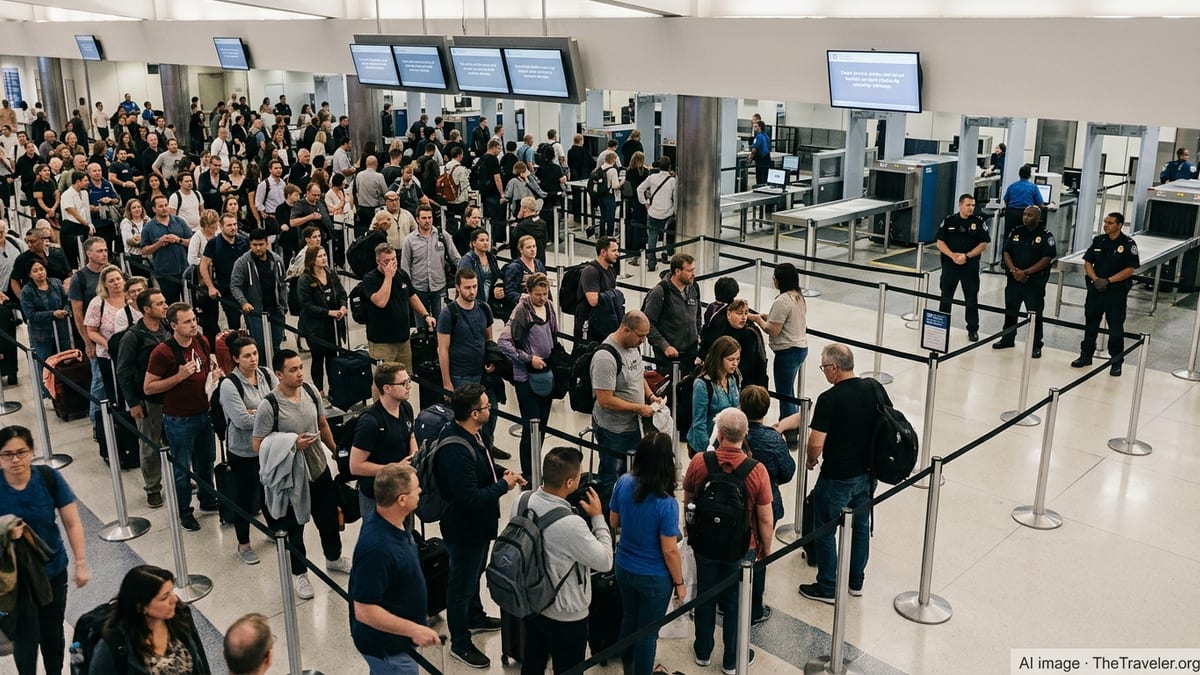
Incident prompts precautionary disruption at preclearance zone
According to early local coverage and social media reports from passengers, the disruption occurred in the U.S. preclearance section used by travellers departing Montreal for American destinations. The odour was reported in the vicinity of the customs inspection lines, prompting staff to divert passengers and restrict access to part of the area while the source was assessed.
Publicly available information indicates that screening continued on a reduced basis, but the combination of partial closures and security checks led to a rapid buildup of lines. Travellers described waiting in queues that moved significantly more slowly than usual, with some flights reportedly held at the gate to accommodate delayed passengers.
The episode highlights how sensitive preclearance facilities can be to unexpected environmental issues. Even when an odour turns out not to be linked to a hazardous substance, standard safety protocols can require temporary disruption of normal processing to protect travellers and staff.
Delays ripple through U.S.-bound flight schedule
Operational data and traveller accounts suggest that the disruption translated into knock-on delays across several U.S.-bound departures. In an airport where flights to major American hubs are often timed closely together, any slowdown at preclearance can quickly cascade through the schedule.
Reports indicate that some airlines opted to delay boarding or hold aircraft at the gate to allow more passengers to clear customs, while others rebooked affected travellers on later flights when connection times became too tight. For passengers with onward connections in the United States, the impact was particularly acute, as even modest delays at preclearance can lead to missed links at busy hubs.
Historic traffic patterns at Montreal Trudeau show that cross border routes to cities such as New York, Boston, Chicago and various Florida destinations are among the airport’s most popular. When U.S. preclearance experiences a bottleneck, airlines have limited flexibility to reroute passengers because alternative same day options can already be heavily booked, especially during peak travel periods.
Safety protocols guide response to unexplained odours
While detailed technical information on the odour has not been made public, industry practice in North American airports offers context for the response. When an unexplained smell is detected in a sensitive area such as a customs hall, airport and preclearance personnel typically follow pre established procedures that prioritize health and safety.
These procedures can include restricting access, increasing ventilation, calling in specialized teams to check for potential chemical or fuel related causes, and monitoring staff and passengers who may have been exposed. Even if the odour dissipates quickly or is ultimately linked to a benign source, operations may only resume at full capacity once relevant checks are completed.
Travel operations research has repeatedly shown that such localised incidents, when layered on top of regular peak time traffic, can trigger wider delays throughout an interconnected network. In the case of Montreal Trudeau, the presence of U.S. preclearance means that any slowdown at customs occurs before departure rather than on arrival, shifting the burden of disruption to passengers’ time at the gate and in the terminal.
Travellers report crowded lines and missed connections
Accounts shared on social platforms by passengers who were at Montreal Trudeau during the disruption describe long queues forming quickly in the U.S. departures area. Some travellers reported being held in line with limited information about the cause of the slowdown, while others said they were pulled aside for alternative routing through still operational lanes.
Several posts mention missed or narrowly made connections in American hub airports, with travellers expressing frustration at the lack of buffer time once flights finally departed Montreal. Others noted that airline staff attempted to triage passengers by departure time, moving those on imminent flights closer to the front when possible.
The experience echoes previous congestion episodes at the airport, when technical issues, staffing constraints or weather related disruptions have generated extended wait times at security and border checkpoints. For passengers, the specific cause of any given disruption often matters less than its practical effect on travel plans, including the risk of missed family events, work commitments or vacation time at their destination.
What the incident means for future cross border travel
The odour related disruption underscores the importance of contingency planning for travellers using airports with preclearance facilities. Travel guidance from airlines and tourism bodies routinely encourages passengers departing for the United States from Canadian airports to arrive earlier than the minimum check in time, precisely because border processing can be vulnerable to sudden slowdowns.
Industry observers note that the incident is part of a broader pattern in which operational reliability at major hubs is shaped by multiple factors, including aging infrastructure, high traffic volumes and the need to respond quickly to any perceived safety risk. While such disruptions are relatively rare on any given day, their impact is magnified when they occur in a tightly scheduled system with high passenger demand.
For Montreal Trudeau, the episode is likely to renew discussion among travellers about optimal arrival times, use of trusted traveller programs where available, and the value of longer connection windows on itineraries involving U.S. hubs. For airport and border personnel, it serves as another reminder that even something as intangible as an unexplained odour can become a significant operational event in the modern air travel environment.