


More news on this day
Ground stops affecting Newark Liberty, John F. Kennedy, and LaGuardia airports at various points in 2026 have triggered waves of flight cancellations and delays, exposing how quickly disruptions at the New York region’s three major hubs can ripple across the national air network.
Get the latest news straight to your inbox!
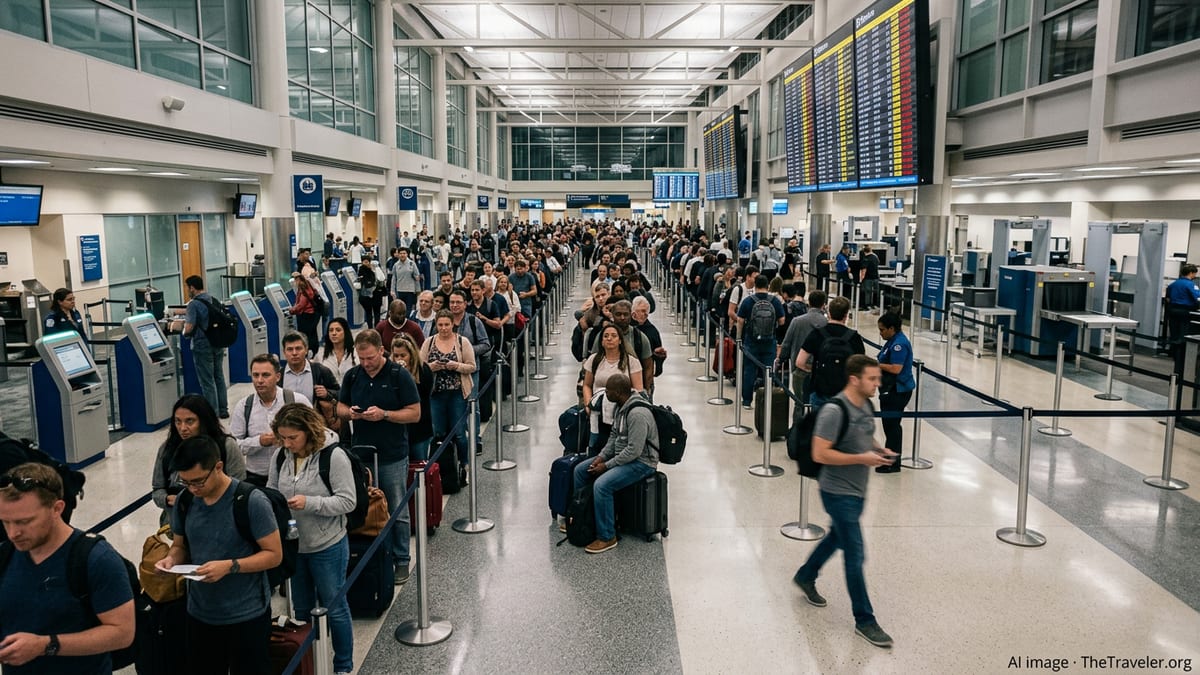
Multiple Ground Stops Converge in a Turbulent Year
New York’s 2026 travel season has been defined by repeated ground stops and capacity constraints at Newark Liberty International Airport, John F. Kennedy International Airport, and LaGuardia Airport. Operational advisories from federal air traffic centers show multiple instances in which JFK and LaGuardia were placed under ground stops or closely managed delay programs during the spring and early summer, while Newark has faced separate interruptions linked to weather, tower evacuations, and equipment issues.
Advisory records indicate that in May and July 2026, JFK was repeatedly subject to coordinated ground stops tied to air traffic flow management, with LaGuardia flagged for similar programs during peak periods. Earlier in the year, Newark experienced a full halt to operations after smoke prompted controllers to relocate from the main tower, overlapping with a closure at LaGuardia after a high-profile collision between an arriving regional jet and an airport vehicle. Publicly available coverage of those events described passengers diverted across the region and an abrupt spike in cancellations.
The ground stops came on top of significant weather-driven disruption. A major winter storm in February 2026 alone led to hundreds of cancellations at the three airports, underscoring the vulnerability of the region’s tightly scheduled operations to snow, low visibility, and high winds. When combined with subsequent operational pauses, the pattern created a stop-and-start environment for travelers, with even minor schedule changes cascading across already strained networks.
Although each ground stop was limited in duration, the cumulative effect across months has been substantial. Flight-tracking analyses and airline advisories throughout 2026 point to thousands of passengers facing missed connections, unexpected diversions, and overnight delays as carriers struggled to reposition aircraft and crews after each disruption.
Why Ground Stops Hit New York’s Airports So Hard
Newark, JFK, and LaGuardia form one of the world’s most complex and congested aviation systems. All three operate in shared airspace with intersecting arrival and departure paths, and each relies on carefully timed traffic management to squeeze maximum capacity out of limited runway and taxiway infrastructure. When a ground stop is issued for any one of these airports, flights bound for that facility are temporarily held at their origin, preventing new departures until conditions improve.
In practice, that pause often ripples beyond its immediate time window. Aircraft held on the ground at distant airports may arrive late into New York, which then delays their subsequent departures to other cities. Flight crews can time out under duty rules, forcing cancellations even after a ground stop is lifted. Reports indicate that on several 2026 ground stop days, carriers preemptively canceled later flights at all three airports, anticipating that schedules would be impossible to recover by evening.
LaGuardia’s limited runway system and slot controls, JFK’s heavy long-haul schedule, and Newark’s intense domestic and international bank operations all magnify those consequences. Airline and government documents released in recent months highlight how tightly scheduled the New York area has become, with regulators extending orders that cap operations at Newark and maintain slot controls at JFK and LaGuardia through October 2026. These constraints are designed to improve reliability, but they also limit flexibility when major disruptions occur.
Compounding the challenge, 2026 has also brought parallel infrastructure pressures. The ongoing phased replacement of Newark’s AirTrain has introduced a series of daytime closures, requiring shuttle buses and complicating passenger flows on days when airside operations are already strained. While these rail outages do not directly trigger ground stops, they have contributed to longer connection times and heavier pressure on ground transportation during irregular operations.
From Tower Evacuations to Thunderstorms: Triggers Behind the Chaos
The specific triggers for 2026’s most disruptive events vary, but they share a common result: constrained runway capacity and heightened safety margins that reduce the number of flights the airports can safely handle. At Newark, a tower smoke incident in March led to a temporary evacuation and relocation of controllers, resulting in a ground stop that halted arrivals and departures for hours. Public reports describe long lines, diversions to alternate airports, and significant delays as operations gradually resumed under reduced capacity.
At LaGuardia, a March runway collision between an Air Canada Express regional jet and an airport fire vehicle prompted an extended airport closure while investigators documented the scene and assessed damage. According to published accounts and airline travel waivers, all operations at LaGuardia were suspended for a period, forcing carriers to route flights through Newark and JFK and leading to a spike in cancellations and rebookings across the region.
Weather has added another layer of disruption, particularly during summer thunderstorms. In July 2026, airline advisories and passenger reports referenced simultaneous ground stops affecting New York’s major airports as intense convective storms swept through the metropolitan area. Even when full ground stops were lifted, continued departure metering, gate holds, and en route flow restrictions limited throughput, producing rolling delays into the night.
These events have unfolded against a backdrop of heightened scrutiny on air traffic staffing and technology. Federal planning documents and academic studies focused on New York’s airspace emphasize efforts to use advanced forecasting and machine learning to better anticipate when capacity must be reduced. However, 2026’s experience suggests that sudden incidents, from localized smoke to runway incursions, still require rapid, conservative decisions that can upend schedules even in an era of more sophisticated modeling.
Impact on Airlines and Travelers Across the Network
The disruptions at Newark, JFK, and LaGuardia have been felt far beyond the New York metropolitan area. When ground stops are declared, carriers often respond by issuing travel waivers, allowing passengers to change itineraries without standard fees. In March and July 2026, major airlines publicized waivers tied to LaGuardia closures and broader New York weather events, encouraging travelers to rebook through alternate dates or airports as schedules deteriorated.
Even with those options, many passengers have found themselves facing same-day cancellations, missed connections, or extended diversions. Social media accounts and firsthand postings from 2026 describe travelers bound for New York landing unexpectedly in cities such as Chicago or Boston when their destination airport went into a ground stop or ran out of available gates. Others report consecutive days of cancellations from smaller markets whose limited service to New York made recovery especially difficult once aircraft and crews were out of position.
Airlines have attempted to mitigate the impact by thinning schedules in advance, particularly during forecasted storms, and by relying on larger aircraft to consolidate disrupted flights. Industry statements and financial filings from the Port Authority highlight ongoing efforts to balance capacity with reliability, including encouragement for carriers to reduce peak-hour operations at Newark and to better coordinate schedules across the three airports. Even so, the sheer scale of New York’s demand has meant that any significant disruption quickly overwhelms available slack.
For business and leisure travelers, the practical effect in 2026 has been a need for greater flexibility and contingency planning. Travel experts and frequent flier communities increasingly recommend leaving wider buffers for connections involving New York airports, particularly during peak storm seasons, and monitoring airline apps closely on days when operational advisories hint at possible ground stops.
What 2026 Reveals About New York’s Aviation Future
The wave of ground stops and cancellations in 2026 has reinforced long-standing concerns about the resiliency of New York’s aviation infrastructure. Federal notices extending slot and scheduling constraints at Newark, JFK, and LaGuardia through late 2026 emphasize that existing runways and taxiways are operating near their practical limits. While terminal redevelopments and rail improvements are reshaping the passenger experience, they do not immediately expand the fundamental capacity of the airfield or the airspace.
Policy discussions and planning documents point toward a mix of operational reforms and technological upgrades to manage future demand. These include continued use of schedule caps, improvements in air traffic surveillance and decision-support tools, and closer coordination between airports, airlines, and regulators on how to respond to major incidents. Several research efforts centered on New York’s airports are exploring ways to better predict congestion, optimize ground delay programs, and reduce the need for blunt, systemwide ground stops.
For now, 2026 serves as a case study in how multiple, unrelated incidents can combine to push a complex air travel system to its limits. From winter storms and summer thunderstorms to infrastructure work and safety events, each disruption has highlighted how dependent national air travel remains on the smooth functioning of a few key hubs. As construction projects continue and new scheduling rules take full effect through the rest of the year, travelers will be watching closely to see whether reliability at Newark, JFK, and LaGuardia improves or whether more days of widespread ground stops lie ahead.