


The Osum River’s water level dictates almost everything a visitor can do in Osum Canyon. Spring rafting, so often featured in brochures and social media, is not a year-round experience. In most years the main rafting season runs only from roughly late February or March to early or mid-June, and even within that window departures are confirmed or cancelled day by day according to snowmelt, rainfall and river conditions rather than fixed dates on a calendar. For the rest of the year, the canyon becomes a place for roadside viewpoints, guided tubing or low-water canyon walks, and independent sightseeing from above rather than a continuous river trip.
Get the latest updates straight to your inbox!
Understanding Osum Canyon and its Water-dependent Seasons
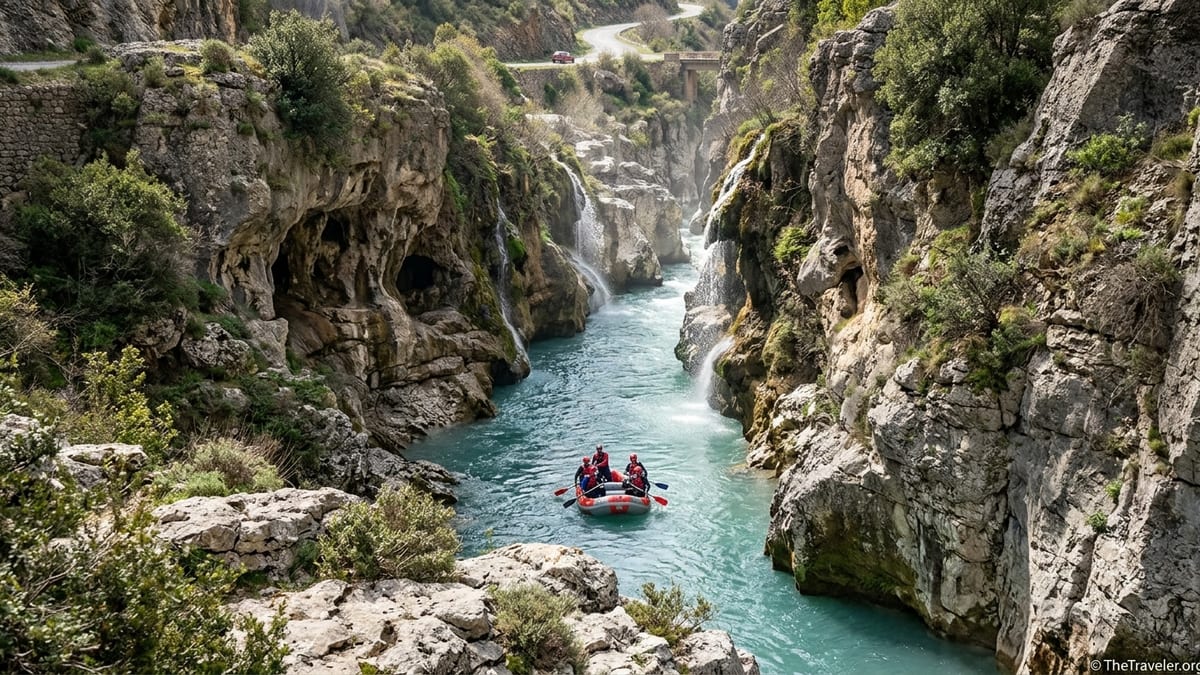
Osum Canyon cuts through the limestone hills of Skrapar, south of Berat, forming a gorge around 13 kilometres long with cliffs in places tens of metres high. The Osum River, which flows right through the centre of Berat, narrows dramatically near Çorovodë, creating tight passages, caves and waterfalls that drop into the river from side gorges. It is this confined section that rafting photos usually show, but what you can actually do here depends heavily on how much water is in the river at the time of your visit.
Local rafting companies describe the practical rafting window as running from roughly February or March until early or mid-June, powered by snowmelt from the mountains and spring rain. Some operators still advertise broad seasons such as “January to June” or “April to November,” but in practice they switch products as the water drops, moving from full-raft descents in spring to tubing and guided walking in summer. When the level is too low, rafts would scrape the bottom or get stuck in shallow rock gardens; when it is too high, the same narrows can become dangerously fast, with powerful hydraulics and very limited options for bankside rescue.
For visitors, the key point is that rafting is never guaranteed just because you arrive in what a brochure labels as “spring.” On a dry winter, it may not be possible at all by April, while after a wet, cold season guides might still be running controlled trips into June. Sensible operators confirm the exact activity only a day or two in advance, once they have checked the river, and reputable tour descriptions increasingly spell out that snowpack and recent rainfall, not marketing copy, determine what is possible.
In low water, the canyon does not close. Instead, the character of a visit shifts. With less current and more exposed rock, local companies organise river-tubing floats through sections of the gorge and half-day or full-day canyon walks in which you wade and swim through pools under guide supervision. Roadside viewpoints high above the gorge remain accessible and can be enjoyed year-round, except for short closures after winter storms or heavy snow on the access roads.
Geography, Access and the Difference Between Rim and River
Most visitors base themselves in Berat, around 50 kilometres north of Çorovodë along the national road SH72. The route climbs from the Osum valley up into hill country, passes near the small town of Poliçan and continues into the Skrapar highlands. Journey time is usually quoted as about one to one and a half hours each way by car from Berat to Çorovodë, depending on traffic, weather and how much road maintenance has been done recently on this hilly stretch. Buses and furgon minibuses exist but are not aligned with rafting departures, so almost all organised canyon trips include transport.
From Çorovodë the Osum River turns into the canyon and a paved road follows close to the rim for several kilometres before degenerating into rougher surfaces in places. It is important to distinguish between reaching viewpoints along this upper road and actually entering the canyon at river level. Viewpoints might be just a few minutes’ walk from pull-offs on the rim road, looking straight down into the gorge, whereas access points used by rafting companies involve tracks down to the river and put-in or take-out spots that are chosen according to water level and the day’s plan.
Self-drivers with regular rental cars generally stick to the main SH72 road and its better-quality side sections, stopping where the rim road is paved or hard-packed, for example near well-known outlooks south of Çorovodë. Deeper into the canyon area, spur roads to specific viewpoints can become narrow, steep or potholed, and some are recommended only with higher-clearance vehicles or 4x4s, which is why a number of local agencies offer 4x4 jeep tours from Berat that combine the drive with guided walks to several rims.
Because the canyon stretches over a considerable distance, there is no single “Osum Canyon car park.” Instead, there is a patchwork of lay-bys, bridge crossings and farmer tracks to fields or river terraces. This can be confusing when relying on a map alone. Joining a guided trip, even one focused only on viewpoints, removes the guesswork about where to stop, where it is safe to walk to the edge and how to descend to the river without inadvertently entering unsafe terrain.
Rafting Season, Operators and What the Trips Include
Current rafting offers are concentrated among specialist outfits based in Berat and Çorovodë that market Osum Canyon as one of Albania’s classic river trips alongside the Vjosa. These companies typically advertise full-day rafting from Berat in the February or March to early or mid-June window, with prices commonly in the range of about 45 to 55 euros per person for a shared-group departure. That price usually includes minibus or jeep transfers from Berat, all technical rafting equipment, guiding services and in many cases a simple lunch or picnic by the river.
Standard rafting kit provided on these spring trips generally covers neoprene wetsuits, helmets, buoyancy aids or lifejackets, paddles and the raft itself. In colder months, some companies add neoprene socks or gloves. Clients are asked to bring swimwear to wear under the wetsuit, a towel and dry clothes for the return to Berat. Most operators require only basic comfort in water with a buoyancy aid, not strong swimming skills, and they reserve the right to turn away participants if river conditions are judged too high for beginners.
Minimum ages vary slightly between companies and according to water level, but a common policy is to accept children around 10 to 12 years old during moderate flows, while setting a higher limit or restricting seats to adults on days when the river runs higher and faster. Guides usually brief participants at the base in Berat or Çorovodë, explaining paddling commands, what to do if someone falls in, and how the group will move through the narrowest passages. Trips marketed as full-day experiences often involve two to three hours on the river itself, plus transfers, outfitting, safety briefings, roadside stops and lunch, so a departure from Berat in mid-morning can translate to a return in the late afternoon.
Decisions on whether it is safe to raft on a given day are generally taken that morning, after guides visually check the river near Çorovodë and sometimes contact colleagues upstream. Experienced local operators have run Osum for many seasons and tend to cancel or modify sections when heavy rain or sudden snowmelt raises the water quickly. It is sensible for visitors to maintain flexible plans and expect possible last-minute switches from rafting to tubing or canyon walking, particularly near the edges of the main season in February and June.
Tubing, Summer Canyon Walking and the Hazards of Independent Entry
Once the Osum’s spring surge subsides, rafts become less practical, but the canyon environment remains compelling. To extend their operating season into summer, several Berat-based companies offer guided tubing trips, in which visitors float through quieter sections of the gorge on large inflatable tubes. Prices here are often a little lower than for spring rafting, usually in the broad range of around 35 to 45 euros per person, and include helmet, lifejacket, tube and transfers from Berat, along with guide supervision.
Alongside tubing, summer canyon walking tours use the low water level as an opportunity to explore on foot. Under guide direction, small groups walk, wade and sometimes swim through shallow pools and along stretches of exposed riverbed, occasionally using short scrambles where rock shelves interrupt the flow. Equipment provided typically includes helmets and buoyancy aids, and in some cases neoprene socks or light wetsuits, depending on water temperature. Tour descriptions often stress that participants must be comfortable in cold water and able to manage uneven, slippery terrain for several hours.
Despite the gentler appearance of a low river, entering a narrow limestone gorge independently is hazardous. Flash floods can occur when storms upstream send sudden surges down the river, even if skies above the canyon are still blue. Limestone bedrock and algae growth make submerged rock extremely slippery, and what looks like a shallow pool can conceal a sudden step into deep water or a siphon where current pushes under boulders. Falling stones from the high, fractured cliffs are another real risk near the narrowest parts, particularly after freeze-thaw cycles or heavy rain.
Guides mitigate these hazards by assessing conditions on the day, choosing routes with known exits and escape routes, monitoring weather forecasts and carrying basic rescue equipment and communication devices. Independent walkers, particularly visitors with no local knowledge, are far more exposed. If you do not join a guided trip, the safest way to experience Osum in summer is from the rim viewpoints, from wide, shallow riverbanks well away from constricted narrows, or at designated picnic and swimming areas recommended locally, rather than attempting to penetrate deep into the canyon on your own.
Viewpoints, Bridges and Driving the Canyon Rim
For many travellers, the visual highlight of Osum Canyon comes from above. The rim road south of Çorovodë, partly paved and partly on older surfaces, offers a series of stopping places from which short paths lead to balconies over the void, with the green-blue thread of the Osum far below. Local guides and tour descriptions mention several specific spots, including viewpoints near stone bridges and roadside chapels and the photogenic narrows sometimes framed in marketing images as “Bride’s Hole,” where the river cuts through a particularly tight bend.
Representative driving times from Berat to the main viewpoints are around one and a half hours each way without long stops, but few visitors resist pulling over to absorb the views. Simple cafes and small farmsteads along the route sometimes welcome passing travellers, selling coffee or homemade raki and pointing out the nearest safe lookout. Because the road can be narrow with blind corners, parking well off the carriageway and walking a short distance to the rim is advisable, both for personal safety and to avoid blocking local traffic.
Bridges across the Osum and its tributaries, both modern and historic, act as natural orientation points. Near Çorovodë, newer bridges carry the main road, while upstream and in adjacent valleys older stone spans survive, often in scenic spots against the limestone walls. Some guided tours combine rim viewpoints with short detours to these bridges and to nearby attractions such as Bogova Waterfall, which lies along the wider Berat to Skrapar road and is commonly paired with canyon visits on day trips from Berat.
Self-driving visitors should be realistic about vehicle and road standards. The SH72 between Berat and Çorovodë has improved over time but still traverses mountainous terrain and can suffer from potholes, rockfall and winter damage. Deeper side tracks along the rim can deteriorate after rain or snow. For most visitors, a standard rental car driven cautiously is adequate for the main road and the better-marked viewpoints, but attempting off-piste shortcuts along the canyon edge is best left to experienced local drivers with suitable vehicles.
Costs, Equipment and Accessibility for Different Travellers
From Berat, a typical shared-group spring rafting trip to Osum Canyon priced around 45 to 55 euros per person usually includes round-trip transfers, professional guides, rafting and safety equipment and often a simple picnic or lunch, such as grilled meat or vegetarian alternatives at a local eatery. For a solo traveller, that means a full day out for somewhere near 50 euros plus any extra drinks or gratuities. For a couple booking together, the canyon activities might come to roughly 90 to 110 euros, which can be offset by sharing additional expenses like taxis in Berat or accommodation.
Summer tubing or canyon walking products, where available, tend to cost a little less per person, reflecting simpler logistics and shorter on-river distances. Advertised prices around 35 to 45 euros per person are common for half-day tubing from Berat, again including the transfer, guide, helmet, buoyancy aid and tube, with optional extras such as photos or a snack. In all cases, travellers should confirm in writing what is included: whether lunch is part of the price, whether the operator holds liability insurance, and whether there are extra charges for hotel pick-up or drop-off in Berat’s old town.
Accessibility is limited by both the terrain and the nature of the activities. Rafting, tubing and canyon walking all require participants to climb in and out of vehicles on uneven ground, move over slippery rocks and, in many cases, cope with cold water. These are not suitable trips for visitors with significantly reduced mobility, serious heart or respiratory conditions, or those who cannot tolerate exposure to cold. Guides frequently ask about medical histories and reserve the right to refuse participation in the interests of safety.
On the other hand, canyon viewpoints along the rim road open Osum’s landscapes to a wider range of visitors. While not fully adapted for wheelchair users and lacking formal infrastructure in many places, some lookouts are reachable with only a short, modestly graded walk from the roadside, allowing older visitors or those not interested in water activities to appreciate the gorge. Travellers should wear sturdy shoes, avoid getting too close to unfenced edges and keep children under close supervision near drops.
Sample Day Itineraries from Berat
A classic full-day guided rafting itinerary from Berat starts with an early to mid-morning pick-up, often around 8:30 to 9:30. After meeting the group at a central point or hotel, the minibus or jeep heads out along the SH72 towards Çorovodë, with a short coffee stop on the way in a roadside cafe. Total driving time to the rafting put-in is roughly one and a half to two hours, depending on where the guides choose to launch that day. On arrival, clients are issued wetsuits, helmets and buoyancy aids, receive a safety briefing and practice paddling commands before launching into the canyon.
Time on the water is generally two to three hours, long enough to pass through several narrows, under waterfalls and beneath high limestone walls. Guides may pause at wider sections for swimming breaks or short walks into side gorges. At the take-out, the group changes into dry clothes, then either returns directly to Berat or stops for a simple lunch in the Skrapar area, arriving back in town by late afternoon or early evening. For solo travellers, this structure removes logistical hassles and provides company; for couples, it concentrates costs into one organised day while leaving other days free for independent exploration of Berat’s castle, museums and vineyards.
An alternative self-drive sightseeing itinerary for those visiting outside rafting season, or who prefer to stay dry, starts from Berat after breakfast. Driving south on the SH72, you could plan for around one and a half hours to reach the main canyon viewpoints, allowing extra time for photo stops in the rolling countryside. Near Çorovodë, branch onto the rim road where conditions allow and visit two or three of the more accessible overlooks, parking well off the road and walking short paths to the edge. Midday can be spent with a picnic at a marked rest area or in a small local restaurant in or near Çorovodë.
In the afternoon, turn back towards Berat, stopping at Bogova Waterfall if daylight and energy permit. The walk to the falls, often described as a pleasant forest path rather than a strenuous hike, offers a contrast to the open canyon views and is a popular pairing with Osum on self-drive days. This independent day will cost mainly fuel, food and any drinks or small parking fees, making it relatively economical for couples or small groups sharing a vehicle while still delivering substantial scenery.
For visitors without a rental car, a jeep or minibus sightseeing tour from Berat that visits canyon rims and nearby villages provides another non-rafting alternative. Prices publicly advertised vary, but example day tours can run in the range of perhaps 40 to 60 euros per person including transport and guide, sometimes with a simple lunch, bringing costs into a similar bracket as rafting while eliminating the need to navigate mountain roads independently.
Safety, Emergency Precautions and When to Choose a Guided Tour
In any season, the combination of steep limestone walls, cold water and relatively remote roads means that safety planning is essential. Reputable operators carry throw-ropes, first-aid kits and communication devices, and their guides are trained to recognised standards in swiftwater rescue and outdoor first aid. Vehicles should be in good mechanical condition, carry spare tyres and basic tools, and be driven conservatively on narrow mountain roads where goats, fallen rocks or slow agricultural traffic can appear without warning.
Visitors should approach Osum Canyon with the same respect they would give to a serious mountain hike. Tell your accommodation or a friend what your plans are, carry drinking water and sun protection even on cool days, and dress in layers to cope with rapidly changing conditions at altitude. When walking to rim viewpoints, stay back from unfenced cliff edges, particularly in windy or wet weather, and avoid standing on unstable overhangs or loose scree. In the canyon itself, follow guide instructions closely, keep helmets fastened and do not swim away from the group.
For anyone unfamiliar with whitewater or canyon environments, a guided trip is strongly recommended for any activity that involves being on or in the river. Guides not only manage the technical aspects but also provide local knowledge about folk names for features, seasonal wildlife, and the history of villages like Çorovodë and the wider Skrapar region. Self-guided sightseeing is entirely reasonable for the road-accessible viewpoints and for combining Osum with other attractions such as Bogova or local wineries, but attempting to improvise your own rafting, tubing or deep canyon walk is both risky and, in practice, unnecessary given the range of organised options.
In emergencies, response times can be longer than in more densely populated parts of Europe. Mobile coverage is uneven along the canyon and its side roads, and formal rescue services are limited. A further argument in favour of going with established operators is their experience in self-rescue, established protocols for contacting local authorities when needed, and practical knowledge of where vehicles and people can most easily be evacuated from the gorge.
Choosing the Best Season and What to Do if Rafting Is Unavailable
For travellers who specifically want to raft Osum Canyon, the most reliable months are often March, April and early May, with a shoulder period in February and June that may or may not deliver raftable levels depending on the year. Booking during these months gives you a better chance of catching the river at an enjoyable height, though never an absolute guarantee. Water will be colder early in the season but flows more exciting; by late spring the air warms up while the river level begins to drop.
If you plan to visit in July, August or September, set your expectations around canyon scenery rather than big-water rafting. This is the time for rim-road drives, cooling swims in safe wider sections of the river under local advice, guided tubing in deeper low-water channels and canyon walks that focus on geology, flora and the play of light in the narrows rather than on powerful rapids. Daytime temperatures can be hot, which makes the cold river an appealing contrast, but also increases the importance of sun protection and hydration.
Outside the core rafting season, a guided tour is still often worth the cost. In summer, guides know which pools remain deep enough for immersive tubing, which stretches of the riverbed can be comfortably walked in sandals or water shoes, and which access tracks are currently passable for vehicles. In winter, when snow and ice can affect the SH72, a local driver accustomed to the road conditions is a considerable asset. Even when you choose not to enter the river, jeep tours that string together viewpoints and short walks can offer a full, satisfying day in the Skrapar landscapes.
When rafting is unavailable during your stay, you can still safely enjoy Osum by treating it as a scenic valley and a cultural side trip from Berat. Spend one day on a guided or self-drive loop through the canyon viewpoints and nearby villages, perhaps combining it with Bogova Waterfall, and another exploring Berat’s castle, museums and wine estates. This way, you leave Albania with a sense of both the country’s highland rivers and its Ottoman-era urban heritage, while respecting the river’s natural rhythms rather than forcing a fixed idea of what your visit “should” include.