


Hidden upriver from Iquitos in the Peruvian Amazon, Paojilhuasca Amazonian Medicine Center has quietly built a reputation as a serious, small-group Ayahuasca Retreat Peru Iquitos focused less on tourism and more on long-term transformation. Travelers who make the journey find a stripped-back jungle camp, an Indigenous-led ceremonial space, and a program that begins well before you drink the brew and continues for more than two months after you return home. This guide walks you through what to expect from a six-night stay at Paojilhuasca, from boats and bungalows to medical screening, ceremonies, and the 77-day integration program that sets this center apart.
Get the latest updates straight to your inbox!
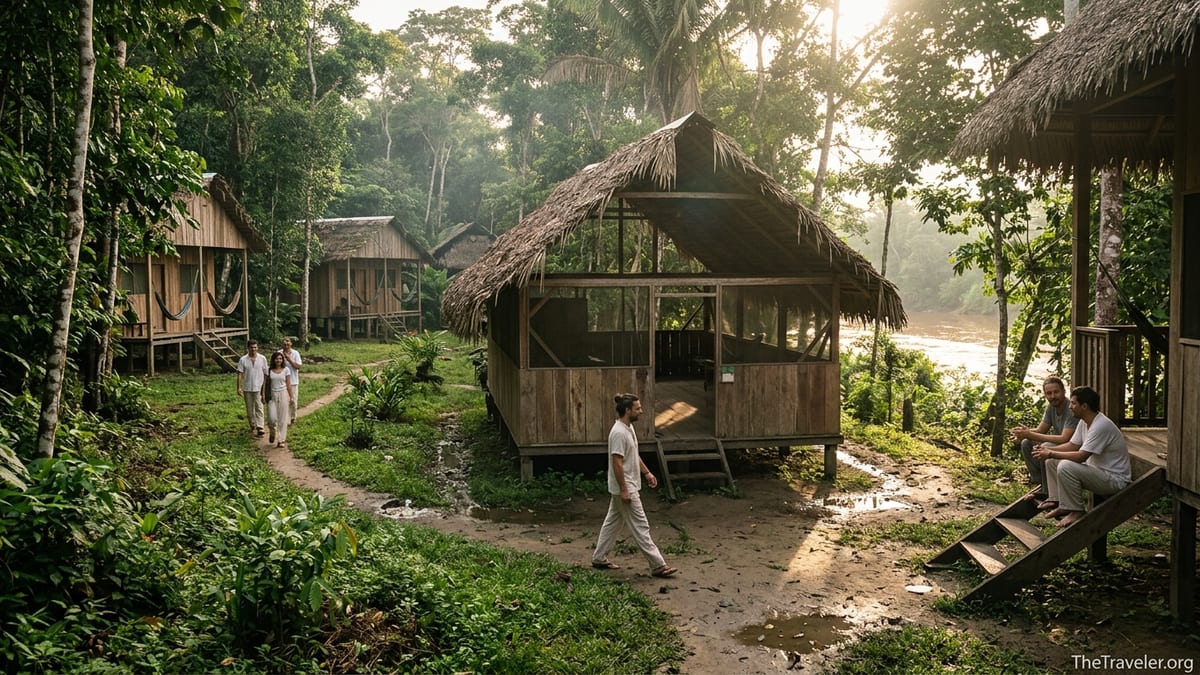
Location: From Iquitos to a Riverside Jungle Camp
Paojilhuasca sits upriver from Iquitos, the largest city in Peru’s northern Amazon and the primary gateway for ayahuasca retreats in the region. Guests typically fly into Iquitos from Lima, then are collected in town by the retreat team. From there, transport usually involves a drive to a river port followed by a boat journey along one of the Amazon tributaries. Past visitors describe the center as being around 30 miles upriver from the city, close to a small village and deep into secondary rainforest, far from road noise, nightlife, or casual visitors.
The final stretch is often what makes the place feel real. After the city’s mototaxis and market chaos, the boat ride shifts the mood: brown water, tangled tree lines, fishing canoes, and simple wooden houses on stilts sliding by. It is worth planning your arrival so you land in Iquitos by midday, allowing time to meet staff, pick up any last-minute supplies in town, and make the daylight boat transfer to the retreat. Late arrivals may need to overnight in the city and transfer the following morning, which many travelers do at modest guesthouses near the main square or the riverfront promenade.
On arrival at Paojilhuasca, you step directly into a compact jungle compound. Paths are usually simple packed earth or wooden walkways, with basic but functional buildings spread out around a central communal area and maloca, the round ceremonial hut. Expect a practical, rustic setting rather than a polished eco-resort: more hammocks and mosquito nets than infinity pools. What the site lacks in luxury it tends to make up for in quiet, privacy, and the feeling of being firmly within the forest.
Because of the river access, the retreat is naturally secluded and there is essentially no independent coming and going during the program. Once you are there, you are there, which many guests find supportive. Still, it is wise to pack as if you will not be able to buy anything extra: sturdy sandals, a lightweight rain jacket, long-sleeved shirts for evenings, a headlamp, and any specific toiletries you prefer.
Retreat Structure: A Six-Night Immersion
Paojilhuasca’s most common format for international visitors is a six-night, all-inclusive retreat that revolves around a series of ayahuasca ceremonies and structured daytime practices. While dates and details can change, a typical weeklong stay includes multiple night ceremonies in the maloca, breathwork, movement sessions such as Chi Gong, and integration circles. The small-group model keeps the number of participants low, often under a dozen guests and in some cases as intimate as four to six.
On arrival day, the team usually holds an opening circle to set common agreements and introduce the staff, including the Indigenous maestra or maestro leading the ceremonies, Western-trained facilitators, and support staff from the local community. You can expect a medical and psychological intake review, even if you have already filled out forms in advance. This is where last-minute questions about medications, anxiety, or expectations are addressed and where the team decides on appropriate dosages or whether any additional safety measures are needed.
The following days tend to follow a calm rhythm: light breakfast, late-morning practices like breathwork or gentle exercise, quiet afternoons for rest or optional therapies, an early dinner on non-ceremony days, and pre-ceremony preparation on nights when ayahuasca is served. Some retreats also weave in adjunct Amazonian medicines such as rapé (a tobacco-based snuff), Sananga eye drops, or other traditional plant supports, always under guidance. The flow is intentionally repetitive and simple, allowing your nervous system to settle and the focus to shift toward internal work.
Unlike some commercial centers that can feel like wellness resorts with occasional ceremonies, Paojilhuasca presents itself more as a training camp or medicine school atmosphere. Guests are encouraged to treat the six-night stay as one coherent process rather than a collection of standout experiences. Daily discussions emphasize how what happens in the maloca translates into concrete changes in behavior, relationships, and mental health once you are back home.
Small-Group Model and Support Team
One of Paojilhuasca’s defining characteristics is its small-group ethos. Instead of groups of 20 to 40 participants, which are not unusual at larger Iquitos-area centers, retreats here typically cap numbers at a level where facilitators can know each person’s story and track them through the week. Travelers routinely single out this intimacy as the reason they chose the center. For example, it is common for guests to mention that they could easily find a facilitator during challenging moments, including in the middle of ceremony nights.
The support team generally combines Indigenous plant-medicine expertise with Western-trained medical and therapeutic staff. Past guests refer to an Italian physician and a European scientist involved in running or overseeing the camp, alongside Shipibo or other Amazonian healers leading the ceremonies. In practice, this means you might speak English or Spanish with one facilitator about panic attacks or a history of depression, then work with the maestra through icaros, smoke, and plant baths during ceremony. Many travelers appreciate this dual-lens approach, particularly if they are coming from clinical backgrounds or have already tried conventional psychotherapy.
During the day, facilitators are present in the dining area and common spaces. It is normal to see one of them doing informal one-on-one check‑ins after breakfast, walking the paths with a guest, or sitting on the sidelines during movement practice in case someone is processing strong emotions. You are encouraged to raise seemingly small issues early, such as feeling unusually anxious, dissociated, or physically unwell. The center’s model treats these not as side notes but as part of the core work, to be addressed in integration circles and potentially in how the medicine is approached in subsequent ceremonies.
For solo travelers, especially women, the small-group atmosphere and visible presence of female facilitators can be particularly reassuring. Several first-hand accounts from women traveling alone note that they felt safe in the maloca, that boundaries were clear, and that there were always staff members of both genders nearby during and after ceremonies. While experiences can vary, this consistency is one reason Paojilhuasca tends to be recommended in word-of-mouth networks for people prioritizing safety and containment over spectacle.
Ceremonies: Indigenous-Led Nights in the Maloca
Ayahuasca ceremonies at Paojilhuasca are held at night in a dedicated maloca, a large, round, wooden structure that functions as the spiritual and communal heart of the center. The space is typically lit only by candles or dim lamps at the start and end of the ceremony, with darkness in the middle to allow the icaros, or medicine songs, and the forest itself to shape the experience. Mats or thin mattresses are laid out in a circle or horseshoe, each with a bucket, water, and sometimes a blanket or pillow.
Before the first ceremony of the retreat, facilitators walk participants through what to expect: the sequence of events, how to signal for help, and the range of possible physical and emotional reactions, from shaking and tears to visions and silence. Paojilhuasca emphasizes preparation practices such as breathwork and Chi Gong in the hours leading up to the ceremony, teaching guests how to ground their bodies and regulate their nervous systems as the medicine comes on. For those new to plant medicine, these tools can be crucial when the experience becomes overwhelming.
Ceremonies are usually led by a Shipibo or other Amazonian maestra or maestro, sometimes assisted by apprentices or co-facilitators. They serve the brew individually, often adjusting the quantity across the night rather than offering a single fixed dose. The icaros are used actively, with healers moving around the circle to sing to each person, apply tobacco smoke, or perform energetic extractions and cleansings. While some centers have adopted more Westernized formats, Paojilhuasca leans into a traditional style, framed by clear safety protocols and modern medical screening.
Most six-night retreats include several ceremonies, although exact numbers and scheduling can vary. Between ceremonies, the group meets for integration circles where participants are invited, but not pressured, to share. Facilitators often help translate symbolic or confusing visions into practical reflections: how a vision of a broken bridge might relate to a specific relationship at home, for example, or how revisiting a childhood memory in ceremony might inform setting boundaries with family. These conversations are where the retreat’s therapeutic focus becomes clearest and where the groundwork for the 77-day post-retreat integration is laid.
Accommodation, Meals, and Daily Life in the Jungle
Accommodation at Paojilhuasca is typically in simple wooden cabins or shared bungalows set back from the central maloca and dining area. Rooms are functional rather than decorative: raised wooden floors, mosquito nets around the beds, basic shelving or hooks, and screened windows to allow airflow while limiting insects. Some guests stay in single cabins; others share with one or two fellow participants, especially during busier weeks. There is usually running water, but it may be cold or lukewarm, and electricity can be limited to certain hours of the day, often powered by solar systems or a small generator.
The absence of air conditioning and strong Wi‑Fi is deliberate. Heat, humidity, and jungle sounds are part of the container, shaping sleep patterns and encouraging early nights. You will hear rain on the roof, frogs and insects at dusk, and distant howler monkeys before dawn. Many guests report initial discomfort with the environment, followed by a sense of peace as they settle into a slower rhythm. Earplugs can help if you are a light sleeper, but many find that ceremony nights and emotional processing are far more impactful on sleep than wildlife noises.
Meals follow a version of the traditional ayahuasca dieta: simple, low in salt, sugar, oil, and strong spices, with no alcohol, caffeine, or red meat. Breakfast might be oatmeal with fresh fruit and boiled eggs; lunch rice, lentils, and salad; dinner baked fish or grilled plantains with vegetables. Guests often mention the retreat’s comfort foods that still fit within the dieta, such as warm breads, fried bananas, or homemade soups. Portions are generally generous, but you are encouraged to eat lightly on ceremony days so as not to overload the stomach or dull sensitivity to the medicine.
Daily life outside ceremonies is intentionally spacious. Between meals and scheduled practices, there is ample time for journaling, quiet walks under the trees, reading in hammocks, or informal conversations with staff. Some days include gentle physical activity, such as group stretching, breath-led exercise, or short high-intensity sessions for those who want to discharge nervous energy. Others may feature optional plant baths or time with adjunct medicines, always under supervision. The overall effect is one of structured retreat rather than rigid schedule, allowing each guest to calibrate solitude and connection as needed.
Jungle Activities and Local Community Connection
While Paojilhuasca is first and foremost a medicine camp, most six-night retreats offer at least a taste of the surrounding rainforest beyond the main compound. Depending on weather and group energy, this can include short boat excursions to nearby villages, swims in safe sections of the river, or guided walks to learn about medicinal plants and local ecology. The idea is not to run a packed tour agenda but to give context: to show where the plants come from, how local families live, and what it means for the community to host an international retreat center.
One common outing might be a visit to the neighboring village, where guests see the school, meet families, or observe daily activities like fishing, farming, or craftmaking. These visits are usually low-key and mutually respectful rather than staged performances. Some participants choose to bring small, culturally appropriate donations such as school supplies, though it is wise to coordinate with the retreat beforehand to avoid creating dependency or awkward expectations.
On-site, there may be opportunities for simple jungle experiences: watching sunset over the river, listening for birds at dawn, or joining a staff member to check fishing nets. The focus is more on integrating with the environment than on adrenaline activities. Unlike commercial jungle lodges near Iquitos that offer piranha fishing, canopy walks, or pink river dolphin tours as daily highlights, Paojilhuasca keeps external stimulation minimal so the bulk of your attention remains on the internal work.
When weather disrupts plans, staff typically prioritize rest and integration over squeezing in excursions. Heavy Amazonian downpours can make trails muddy or rivers difficult to navigate, and safety takes precedence. Guests are encouraged to treat the changing conditions as part of the medicine: an invitation to let go of rigid expectations and meet what is present, whether that is a quiet afternoon writing in a hammock or a spontaneous group conversation in the dining hut.
Medical Screening, Safety Practices, and the 77-Day Integration Program
Paojilhuasca places notable emphasis on medical screening before confirming a booking. Prospective guests are typically asked to complete a detailed intake form that covers psychological history, cardiovascular conditions, current medications, and previous psychedelic or ayahuasca experience. Certain medications, especially SSRIs and other psychiatric drugs, can interact dangerously with ayahuasca’s MAOI components, so the team may request a supervised taper in collaboration with a personal physician or, in some cases, decline participation altogether. This cautious approach is increasingly standard at serious retreats and reduces the risk of adverse events.
On-site, safety measures include accessible staff during ceremonies, clear communication about when and how to call for help, and practical infrastructure such as nearby bathrooms, clean water, and basic medical supplies. While the center is remote, it maintains boat access back to Iquitos in case of emergencies, and several facilitators have first-aid training. Guests are generally advised to purchase travel insurance that covers medical evacuation and to inform trusted contacts at home of their itinerary and the center’s contact details.
Where Paojilhuasca distinguishes itself is in its long-tail support. The retreat is connected with a structured 77-day integration program that extends well beyond the six-night stay. After returning home, guests are invited into a series of online group calls, guided practices, and self-reflection exercises designed to help them implement insights from the ceremonies. While specifics can evolve, these programs often include weekly or bi-weekly video calls, voice-note support via encrypted messaging, and suggested daily practices ranging from breathwork and meditation to journaling prompts and lifestyle experiments around sleep, nutrition, or relationships.
In practical terms, this means that if you have a breakthrough around, say, alcohol use or an entrenched relationship pattern during ceremony, you are not left alone to figure out what that means once you are back at work or with your family. Instead, the integration team helps you translate that realization into concrete commitments and small, repeatable actions over weeks and months. Many guests who review Paojilhuasca later point to this ongoing structure, rather than a single visionary night, as the true driver of change.
The Takeaway
Paojilhuasca is not the most polished, Instagram-friendly ayahuasca destination in the Peruvian Amazon, nor does it try to be. Its strengths lie elsewhere: a quiet jungle setting accessible only by river, a small-group model that prioritizes individual attention, Indigenous-led ceremonies framed by Western medical oversight, and a serious approach to post-retreat integration that extends for 77 days after you leave the forest.
For travelers who want a week of spa comforts with optional plant ceremonies, this may not be the ideal fit. But if you are willing to accept rustic cabins, river humidity, and long nights in a dark maloca in exchange for deep work, consistent support, and a community that continues to hold you accountable once you are home, Paojilhuasca is worth strong consideration. As with any plant-medicine retreat, thorough medical consultation, realistic expectations, and personal responsibility are essential. Approached in that spirit, a six-night stay here can be the beginning of a longer, carefully guided journey that continues long after the boat back to Iquitos.
FAQ
Q1. Where exactly is Paojilhuasca located and how do I get there?
Paojilhuasca is located upriver from Iquitos in the Peruvian Amazon, accessible only by boat. Most guests fly to Iquitos from Lima, are met by retreat staff in the city, and then travel by road and river to the camp in a journey that usually takes a few hours door to door.
Q2. How long is the standard retreat at Paojilhuasca?
The most common format for international visitors is a six-night retreat. During that time you typically participate in several ayahuasca ceremonies, integration circles, movement or breathwork sessions, and optional jungle activities, all within a small, contained group setting.
Q3. What is the group size and who will be on the support team?
Groups are intentionally small, often under a dozen participants. The support team usually includes Indigenous healers leading ceremonies, Western-trained facilitators, and at least one medically trained professional, giving you access to both traditional and modern perspectives throughout the week.
Q4. What are the cabins and facilities like?
Accommodation is simple and rustic: wooden cabins or shared bungalows with mosquito nets, basic furnishings, and limited electricity. Expect fans or natural ventilation rather than air conditioning, cold or lukewarm showers, and jungle sounds at night, with shared communal spaces for dining and gathering.
Q5. What kind of food is served and can dietary needs be accommodated?
Meals follow a light, ayahuasca-friendly dieta with simple foods such as rice, fish, vegetables, fruit, and plantains, with minimal salt, sugar, and oil. You should inform the center of any allergies or dietary restrictions in advance; within the limits of local ingredients, they usually try to accommodate needs such as vegetarian or gluten-sensitive diets.
Q6. How does the medical screening process work?
Before confirming a booking, you complete a detailed intake form covering physical and mental health history and current medications. The team reviews your information, may request further clarification or medical documents, and will advise whether you are a good candidate for ayahuasca at the retreat or if adjustments and additional precautions are needed.
Q7. How many ayahuasca ceremonies are included in a six-night stay?
The exact number can vary by program, but most six-night retreats include several ceremonies spaced across the week, with rest days in between. These non-ceremony days are used for integration circles, movement or breathwork practice, and simple jungle or community activities.
Q8. What is the 77-day integration program and how does it work?
The 77-day integration program begins after you leave the jungle and return home. It generally consists of scheduled online group sessions, optional one-on-one support, and structured practices and reflections designed to help you apply insights from the retreat into everyday life over approximately two and a half months.
Q9. Is Paojilhuasca suitable for solo travelers, including solo women?
Yes, many guests come alone, and solo travelers, including women, frequently report feeling safe and supported due to the small group size, clear boundaries, and visible presence of both male and female staff. As with any remote retreat, it remains important to do your own due diligence and feel personally comfortable with the center’s communication and policies before booking.
Q10. What should I pack for a stay at Paojilhuasca?
Plan for hot, humid jungle conditions and simple facilities. Most guests bring lightweight long-sleeved clothing, a rain jacket, sturdy sandals, a headlamp, insect repellent, personal medications, a notebook for journaling, basic toiletries, and any comfort items that help them feel grounded, bearing in mind that you will be in a remote setting with limited access to shops.