


Pigeon Island National Landmark is one of Saint Lucia’s most rewarding half-day trips, combining easy hiking, calm beaches and 18th-century ruins facing the blue sweep of Rodney Bay. For first-time visitors, it is also one of the simplest places on the island to explore independently, with clear trails, basic facilities and great views back toward Gros Islet and across to Martinique on clear days. This guide walks you through what to expect, how to get there, what it costs, and how to make the most of your time on the island.
Get the latest updates straight to your inbox!
Where Pigeon Island Is and Why It Matters
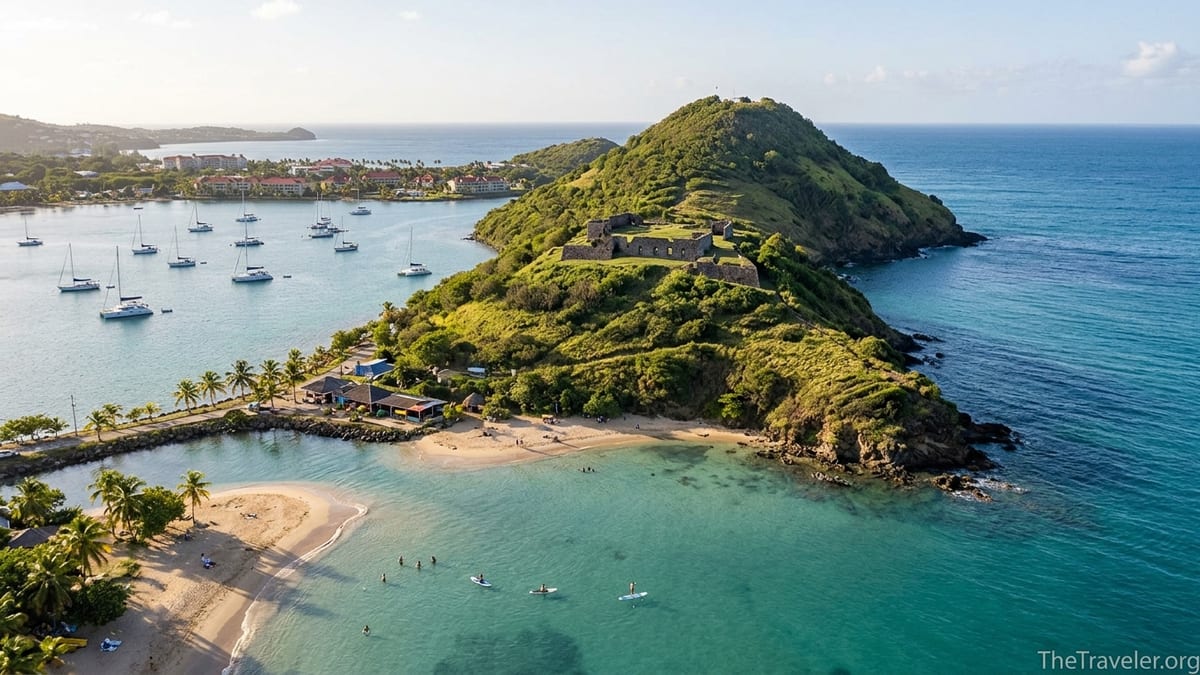
Pigeon Island sits at the northern tip of Saint Lucia, forming the natural end of Rodney Bay. What used to be a small offshore island was joined to the mainland in the late 20th century by a man-made causeway, so visitors now simply drive or walk across from the Gros Islet side. From the popular resort area of Rodney Bay Village, most hotels are a 5 to 10 minute taxi ride away, which makes Pigeon Island an easy outing even if you are only in the north for a couple of days.
Today the site is managed by the Saint Lucia National Trust as Pigeon Island National Landmark, a protected area that combines coastal forest, historic military ruins and two small beaches. The landmark status, first as a national park in 1979 and then as a national landmark in 1992, reflects how important this headland was to colonial-era naval battles and later to World War II communications.
For visitors, the island’s scale is part of its appeal. This is not an all-day, strenuous trek. Most people spend two to four hours here, strolling along shady paths, climbing to the two hilltops, swimming or snorkeling in the bay and stopping for a drink at the beach bar. Cruise passengers often pair a morning at Pigeon Island with lunch around Rodney Bay Marina, while resort guests nearby sometimes walk over just for sunset from the ramparts of Fort Rodney.
Entrance, Opening Hours and What It Costs
Pigeon Island has a controlled main gate where you pay entry to the National Trust. Exact prices change periodically, but recent visitor reports indicate adults pay the local equivalent of roughly 10 to 15 US dollars, with reduced rates for children and residents. Payment is usually taken in Eastern Caribbean dollars, and some visitors mention being able to pay in US dollars in cash. Credit cards may not always be accepted, so bringing cash is sensible.
The site generally opens in the morning and closes by late afternoon or early evening, with last entry before sunset. Many travelers arrive around 9 or 10 a.m. to avoid the midday heat on the hill trails and to enjoy quieter beaches before afternoon crowds arrive from nearby resorts. If you want to catch golden-hour light from Signal Peak, check current closing times locally, as these can vary slightly with the season and with special events.
There is a small ticket office just inside the gate, where staff can provide a basic map or point out the main routes to Fort Rodney and Signal Peak. You are largely free to explore at your own pace, but the by-laws posted at the entrance outline rules such as no camping, limits on fishing and prohibitions on removing plants or artifacts. These rules are enforced lightly but are important for protecting both the ecosystem and the fragile ruins.
Exploring Fort Rodney and Signal Peak
The heart of the historical experience on Pigeon Island is the climb up to Fort Rodney, named for British Admiral George Rodney, who used the island as a lookout during conflicts with the French in the late 18th century. From the main lawn area inside the park, a clear path and stone steps lead up past old barracks foundations and gun batteries. The walk from the base to the fort typically takes 10 to 20 minutes at a relaxed pace, with a few short, steep sections but no technical difficulty.
At Fort Rodney itself, you can walk around the grassy top of the ridge, inspect the old cannon positions and look across to the long curve of Reduit Beach and the modern marina of Rodney Bay. On a clear day, it is easy to imagine ships sailing in the same waters that made this hill such a coveted vantage point in the 1700s. The fort is mostly ruins and earthworks rather than a restored building, but interpretation signs usually give some context on the British and French naval rivalry.
From Fort Rodney, a further trail continues up to the higher of the two summits, known as Signal Peak or Signal Hill. This section is steeper and more exposed, and it can feel hot in the midday sun, but fit visitors often complete the extra climb in another 10 to 15 minutes. The reward is one of the best panoramic views in northern Saint Lucia, taking in Martinique to the north on clear days, the open Caribbean to the west and the rolling green hills inland. Many visitors bring a simple picnic, sit by the old signal station remains and allow half an hour just to enjoy the breeze and the view.
Beaches, Swimming and Snorkeling
Back down at sea level, Pigeon Island offers two sheltered beaches that feel noticeably quieter and more natural than the busier strip of Reduit Beach across the bay. On the western side, facing the open Caribbean, the main sandy cove has calm, usually clear water and a gentle entrance that suits families with children. Shade is limited on the sand itself, so many people spread towels under trees at the back of the beach or rent loungers when available from local vendors or the nearby beach bar.
The smaller beach closer to the causeway faces more directly into Rodney Bay and tends to be even calmer. Kayaks and stand-up paddleboards from outside operators sometimes appear here, and the water is usually shallow for some distance, which suits less confident swimmers. The sand on both beaches is light-gold rather than blinding white, and the backdrop of low hills and scattered ruins gives the area a more low-key, historic atmosphere than many resort beaches.
Snorkeling conditions around Pigeon Island can vary. This is not a classic coral reef site like some southern parts of Saint Lucia, but visitors often report seeing small tropical fish, sea grass beds and occasional rays around the rocky edges of the headland. The best snorkeling is usually near the corners where the beach meets the rock, especially early in the day before the water is stirred up. Bringing your own mask and fins is recommended, as rental options on-site are limited or inconsistent. Visibility is often good enough for casual snorkeling rather than serious underwater photography.
Hiking Routes and How Strenuous They Are
Despite the dramatic views from the top, hiking on Pigeon Island is relatively gentle by Saint Lucia standards. The core network consists of a short ascent to Fort Rodney, the steeper but brief continuation to Signal Peak, and a handful of connecting footpaths around the lower slopes and along the shoreline. Most first-time visitors who are moderately fit complete the round trip from the entrance to both peaks and back in under two hours, including photo stops.
The terrain is a mix of packed dirt trails, stone steps and grassy slopes. After rain, certain sections can become slippery, and the sun on dry days can be intense, especially where the trail crosses exposed ridges. Closed shoes or sturdy sandals with good grip are preferable to flip-flops if you plan to climb all the way to Signal Peak. A small daypack with water, sunscreen and a light shirt for sun protection will make the walk more comfortable.
Families with young children often hike just as far as Fort Rodney and then return to the beaches. The fort is achievable for most children who are comfortable with stairs, and there are enough natural stopping points to rest in patchy shade. Older children and active adults usually tackle Signal Peak without difficulty. Those with limited mobility or who prefer not to climb hills can still enjoy the lower lawns, coastal paths and beach areas, where benches and shaded spots under trees provide a gentler experience.
Getting to Pigeon Island and Getting Around
Most visitors reach Pigeon Island from the north of Saint Lucia, particularly the Rodney Bay and Gros Islet area. From hotels around Rodney Bay Marina and the main resort strip near Reduit Beach, taxis are the simplest option. Recent travelers often report paying the equivalent of 10 to 20 US dollars for a one-way taxi ride for two to four people, depending on negotiation and exact distance. Drivers are used to dropping guests at the park entrance and many will agree a pick-up time for the return journey.
For those already staying at one of the large all-inclusive resorts nearby, such as the resorts clustered around Gros Islet, a walk along the causeway to the park entrance can take 15 to 25 minutes. In the midday sun this can feel longer, but it is flat and straightforward. Local minibus services run along the main highway near Gros Islet, and budget travelers sometimes combine a short bus ride with a walk to the gate, although this is more common among long-stay or independent travelers than short-term visitors.
Car rental is an option if you are touring the island independently, but for a single visit to Pigeon Island a taxi usually makes more sense. Parking is available near the causeway and outside the entrance gate. Inside the landmark, all movement is on foot. Paths are generally well defined, and the small scale of the site means it is difficult to get lost. Many visitors simply follow the crowds up to Fort Rodney first, then decide on the spot whether to continue to Signal Peak before coming down to the beach for a swim.
Facilities, Food and What to Bring
Pigeon Island offers more facilities than a remote hiking trail but fewer than a full resort, so planning ahead makes the experience smoother. Near the main entrance and lawns there are public restrooms managed by the National Trust. These are basic but functional, and for many visitors they are an important reason to base themselves on the lower grassy area between walks.
Along the western beach you will usually find a casual beach bar and small restaurant, sometimes run in concert with nearby resorts. Menus tend to feature simple Caribbean dishes such as grilled fish, burgers and local sides, as well as cold beers, rum punches and soft drinks. Prices are in line with other north-island beach spots, so expect to pay similar amounts to what you would on Reduit Beach or around Rodney Bay Marina for a light lunch and drinks. Service can be relaxed in pace, especially when a cruise excursion arrives, so do not leave ordering until the last minute before you plan to hike back.
Shade structures, picnic tables and grassy lawns near the lower ruins are popular with both locals and visitors, particularly at weekends when families may set up for the day. Bringing a beach towel, reef-safe sunscreen, a refillable water bottle and insect repellent is sensible. There are very few shops inside the landmark itself, so if you need specific snacks, baby supplies or particular drinks, it is wise to buy them beforehand at a supermarket or convenience store in Rodney Bay.
If you plan to snorkel or spend more time in the water, packing your own mask, snorkel and perhaps a light rash guard will improve your experience. There is generally good mobile phone reception on the island thanks to its proximity to the main resort areas, and some visitors use this to coordinate taxi pick-ups or to share photos in real time from the viewpoints on Signal Peak.
A Short History of Pigeon Island
Long before it became a leisure spot, Pigeon Island was a strategic outpost in the long contest between European powers for control of the Caribbean. In the late 18th century the British navy, led locally by Admiral George Rodney, established fortifications on the island to watch the French fleet based on nearby Martinique. From Fort Rodney and the higher Signal Peak, lookouts could signal the movements of ships and prepare defenses for what became significant battles in the region.
Over time, Pigeon Island saw various military uses, including during World War II when the United States reportedly used the high ground as part of communications and observation networks. After the war, the island’s military significance declined, and its small fishing and local communities gave way gradually to its new role as a protected heritage and recreation area.
In 1979 Pigeon Island was formally designated a national park, and in 1992 it became Pigeon Island National Landmark under the care of the Saint Lucia National Trust. The current park balances preservation of ruins, native vegetation and wildlife with its popularity as an accessible beach and hiking destination. For many visitors, learning these layers of history while standing among the old stone walls, with modern yachts in Rodney Bay below, provides one of the most memorable contrasts of a trip to Saint Lucia.
Planning Your First Visit: Timing, Weather and Safety
For a first visit, planning around Saint Lucia’s climate can make a big difference to your comfort. The island has a warm, tropical climate year-round, with a drier period roughly from December to April and a wetter, more humid period from June to November. Even in the wetter months, most days still offer long sunny periods, but showers can come quickly. Wearing light, breathable clothing and packing a compact rain jacket or poncho is a good idea, particularly if you are visiting during the Atlantic hurricane season.
The most pleasant time of day at Pigeon Island for hiking is usually early morning or late afternoon, when temperatures are slightly lower and the light is softer. Many visitors aim to arrive around opening time, walk up to Fort Rodney and Signal Peak before 11 a.m., then swim and relax on the beach into the early afternoon. If you prefer sunset views, check locally whether the park will still be open when the sun sets during your visit, as closing times can be earlier in some months.
In terms of safety, Pigeon Island is generally considered a low-risk, family-friendly attraction. Standard common sense for Caribbean travel still applies. Keep valuables to a minimum or carry them in a small daypack you can keep within sight, especially when swimming. The trails have some uneven surfaces, so walking carefully and wearing appropriate footwear reduces the risk of slips. Lifeguard presence is not guaranteed on the beaches, so weak swimmers should stay close to shore and parents should supervise children in the water.
Travel insurance that covers medical treatment and outdoor activities is advisable for any trip to Saint Lucia. While Pigeon Island’s trails are modest, heat exhaustion, slips or minor cuts on rocks are possible, and having coverage for clinic visits provides peace of mind. If you have specific mobility or health issues, discussing them with your hotel concierge or a local guide in advance can help you decide how much of the park’s higher ground is realistic for you.
The Takeaway
For a first-time visitor to Saint Lucia, Pigeon Island offers a compact snapshot of what makes the island so appealing: accessible history, manageable outdoor activity and calm, scenic beaches all within a short drive of the main resort area. It requires very little advance planning, yet rewards even a modest effort with sweeping views, atmospheric ruins and relaxed swimming in Rodney Bay.
Whether you are staying in Rodney Bay for a week, stopping on a cruise for the day or looking to break up a longer island itinerary, setting aside a morning or afternoon for Pigeon Island is time well spent. Arrive early, bring water, sun protection and simple beach gear, and give yourself enough time to both climb to Signal Peak and linger on the sand below. The experience is straightforward yet memorable, and many visitors rank it among the highlights of their time in northern Saint Lucia.
FAQ
Q1. How long do I need to visit Pigeon Island for the first time?
Most first-time visitors spend two to four hours at Pigeon Island, which is enough to walk up to Fort Rodney and Signal Peak, explore some ruins and enjoy a swim or short beach break. If you plan a relaxed lunch at the beach bar and more time in the water, consider allowing a half day.
Q2. Is Pigeon Island suitable for children and older travelers?
Yes. Families with children and older travelers regularly visit. The climb to Fort Rodney involves steps and some slopes but can be done slowly with rests, while the lower lawns and beaches are flat and accessible. Those uncomfortable with steep paths can skip Signal Peak and still enjoy the scenery and history at lower levels.
Q3. What should I wear and bring for hiking up to Fort Rodney and Signal Peak?
Wear light, breathable clothing, a hat, and closed shoes or sturdy sandals with good grip. Bring sunscreen, a refillable water bottle, insect repellent and a small daypack. If you want to swim or snorkel afterward, pack a swimsuit, towel and your own mask and snorkel, as rental options on site can be limited.
Q4. Can I visit Pigeon Island on my own or do I need a guide?
Most visitors explore Pigeon Island independently. Trails are short and well defined, and signs usually point toward Fort Rodney and Signal Peak. However, local guides can sometimes be arranged through hotels or tour companies if you prefer more detailed historical context or if you are traveling with a group and would like additional support.
Q5. Are there food and drink options inside Pigeon Island?
Yes. A casual beach bar and small restaurant typically operate near the main western beach, serving simple meals, snacks, soft drinks and alcoholic beverages. Choice can be limited compared with Rodney Bay restaurants, so if you have specific dietary needs or are visiting with children, it can be helpful to bring extra snacks or buy them beforehand in town.
Q6. Is snorkeling at Pigeon Island worth it?
Snorkeling at Pigeon Island is generally pleasant but not world-class. You will likely see small reef fish and some sea grass or rocky habitats near the headland, but coral formations are modest compared with some of Saint Lucia’s southern sites. If you already own basic gear, it is worth bringing for a casual snorkel along the rocky edges of the beaches.
Q7. How do I get to Pigeon Island from Rodney Bay or Gros Islet?
From Rodney Bay and Gros Islet, taxis are the most straightforward option, with recent visitors reporting reasonable fares for the short drive to the park gate. Some resorts are close enough for guests to walk along the causeway in 15 to 25 minutes. Budget travelers may combine a local minibus ride toward Gros Islet with a walk, but most first-time visitors opt for taxis or resort shuttles.
Q8. What are the opening hours and is there an entrance fee?
Pigeon Island is usually open daily during daylight hours, with closing times around late afternoon or early evening. An entrance fee is charged at the main gate, with recent visitor reports suggesting a cost in the range of roughly 10 to 15 US dollars for adults, with lower prices for children and residents. Exact prices and hours can change, so confirm details locally when you arrive in Saint Lucia.
Q9. Are there restrooms, changing areas and other facilities?
Yes. Basic restrooms are available near the main entrance and lawn area. There are shaded picnic spots, grassy areas, and occasionally beach chairs or umbrellas for hire near the main beach. Facilities are simpler than at a large resort, so it is best to arrive prepared with your own towel, sun protection and any personal items you may need.
Q10. Is Pigeon Island safe to visit, and are there any risks I should know about?
Pigeon Island is generally regarded as a safe, family-friendly attraction. The main risks are environmental: strong sun, heat, and the possibility of slips on uneven or wet trails. Keeping valuables to a minimum, staying hydrated, using sunscreen and watching your footing on the climbs will address most concerns. As with any coastal area, always supervise children near the water and avoid swimming in rough or stormy conditions.