


For many frequent flyers, Plaza Premium is often the first name that comes to mind when thinking about independent airport lounges. With more than 70 locations worldwide and partnerships with major credit cards and membership programs, Plaza Premium Lounges can be an attractive way to escape crowded departure halls. Yet experiences can vary significantly by airport and time of day. This review looks at what Plaza Premium actually offers, how to access its lounges without guesswork, and when it is genuinely worth paying to get in.
Get the latest updates straight to your inbox!
What Is Plaza Premium Lounge and Where You’ll Find It
Plaza Premium is one of the largest independent airport lounge networks, operating branded lounges in major hubs across Asia, Europe, the Middle East and the Americas. Unlike airline lounges, access is not tied to a specific carrier or cabin class. Instead, Plaza Premium mainly sells day passes, partners with banks and card issuers, and participates in some membership programs. In practice, that means a leisure traveler flying economy on a low cost carrier from London Heathrow or Kuala Lumpur can still pay to walk into a Plaza Premium Lounge and enjoy hot food, drinks and a quieter space to work or rest.
Major examples include the Plaza Premium Lounge in Heathrow Terminal 2, which serves a wide mix of Star Alliance and non-alliance passengers; large lounges at Hong Kong International and Kuala Lumpur; and newer outposts in North America such as Orlando International Airport’s Terminal C. At Heathrow T2, the departures lounge sits airside on Level 4 near the terminal transfer area and is open from early morning to late evening, typically around 05:00 to 21:30 depending on the season. At Orlando Terminal C, the Plaza Premium Lounge is located airside near Gate 241 and serves airlines such as JetBlue, British Airways and Emirates.
Because Plaza Premium is independent, it frequently acts as a “catch all” option when airline-operated lounges are full. At Heathrow T2, for example, some Star Alliance carriers may send overflow business class passengers to Plaza Premium if their own branded lounges reach capacity. That means the mix of guests can range from economy passengers who purchased a day pass to elite frequent flyers who simply need somewhere to sit when other lounges are turning people away.
The network is still expanding and changing. Some locations focus on departures, others on arrivals with showers and breakfast options for passengers landing after long overnight flights. At Heathrow, Plaza Premium operates both a departures lounge in Terminal 2 and an arrivals lounge that caters to early-morning long haul passengers looking for a shower and coffee before heading into London.
How to Access Plaza Premium Lounges and Typical Pricing
There are three main ways most travelers gain Plaza Premium Lounge access: day passes bought directly, membership programs like Priority Pass where eligible, and premium credit cards that bundle access. Each route has its own quirks and limitations, so it pays to check your specific lounge and card rather than assume a universal rule.
Walk-in or pre-booked day passes are straightforward but can be costly. At Heathrow Terminal 2, guide prices for a three-hour stay typically start around 35 to 40 pounds per adult when booked through third-party lounge sellers or directly through the airport. In North America, pricing can be higher. At Orlando’s Terminal C Plaza Premium Lounge, recent reviews report day passes fluctuating with demand, often in the 60 to 70 dollar range for a three-hour visit. These prices usually include buffet food, soft drinks, basic alcoholic beverages and Wi-Fi, but premium items such as à la carte dishes, certain top-shelf spirits, or private nap rooms, if available, may incur extra charges.
Membership access has become more complex in recent years. Plaza Premium left the Priority Pass network in mid 2021 at most locations, then gradually rejoined. As of mid 2026, Priority Pass Select members again have access to more than 60 Plaza Premium Lounges worldwide, but not every location participates. For example, some lounges in the Middle East and selected North American airports may be excluded or have separate agreements. Travelers should always check the Priority Pass app or website for their specific departure airport and terminal rather than assuming blanket coverage based on past experience.
For U.S. travelers, premium credit cards remain one of the easiest ways to enter. Cards such as The Platinum Card from American Express and some higher-end Visa or Mastercard products issued in Asia often include Plaza Premium access through the card’s own airport benefit program. In Malaysia, for instance, certain local credit cards advertise complimentary Plaza Premium visits provided the cardholder meets a minimum monthly spend in the 30 days before or after lounge entry. These arrangements are highly card-specific, so reading the terms for your exact card is essential.
Design, Seating and Overall Comfort
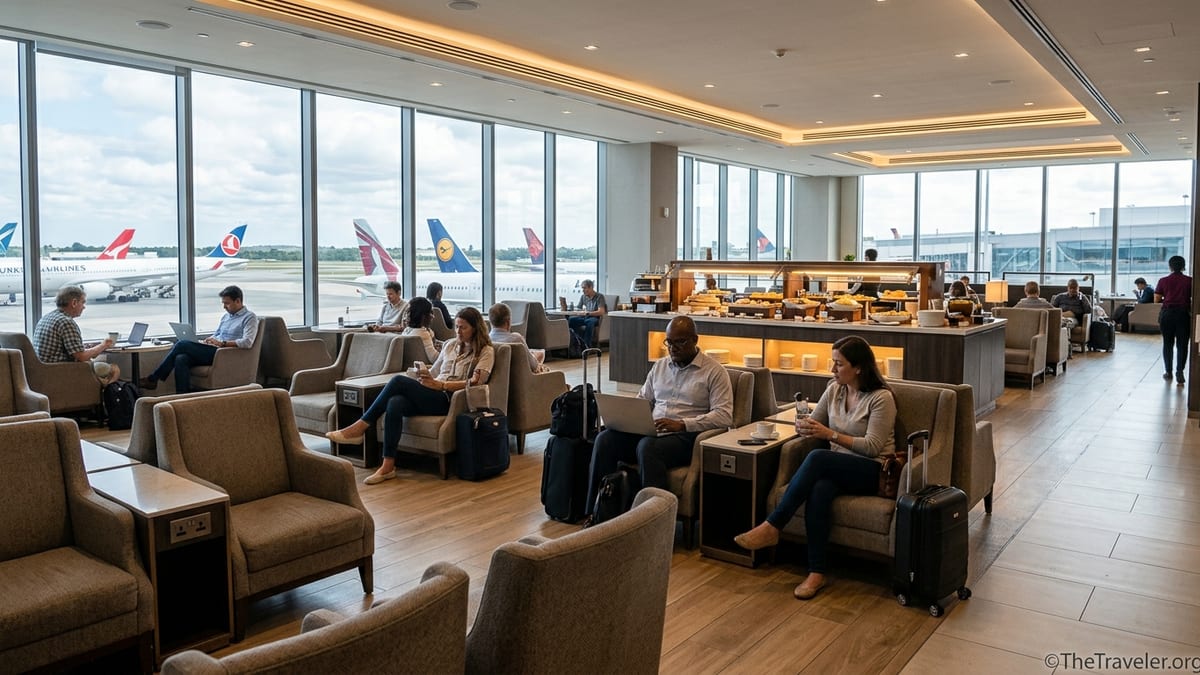
While each Plaza Premium Lounge is tailored to its airport, there are recurring design themes. Expect warm lighting, neutral color palettes with wood or stone finishes, and a mixture of lounge chairs, small café-style tables and bar seating. The layout is usually split between a dining area near the buffet and quieter zones further inside. At Heathrow Terminal 2, the 8,000-plus square foot lounge is divided into two broad sections: one side houses the showers, spa and nap rooms, while the other opens out into the main seating and dining area. This helps separate guests who want to eat and socialize from those looking for a more restful corner.
In practice, comfort is heavily tied to crowd levels. In quieter periods, such as mid-morning on a midweek non-peak travel day, travelers often report that Plaza Premium lounges feel spacious and calm, with plenty of window-side seating and power outlets. At Orlando’s Terminal C Plaza Premium Lounge, for example, early-morning flights to Europe can see the space feel bright and airy, with guests able to claim entire seating clusters near floor-to-ceiling windows overlooking the apron.
During peak departure banks it can be a different story. Some reviews of the Orlando lounge describe situations where nearly every seat was occupied before evening transatlantic departures, to the point where guests were turned away or placed on a waitlist at reception. At Heathrow T2, the lounge can also feel crowded when several Star Alliance long-haul flights depart close together and overflow premium passengers are directed in. In these moments, noise levels rise, families spread across armchairs with carry-on bags, and the once-quiet workspace nooks lose their intended focus.
Accessibility is generally considered in the design. At Heathrow Terminal 2, for instance, the lounge is step-free and fully accessible to wheelchair users, and at least one shower room is fitted with accessible features. That said, the internal layout can still involve some tight spaces between seating clusters when the lounge is full, so those with mobility aids may want to arrive early to secure a convenient spot near the entrance or restrooms.
Food, Drinks and Showers: What You Actually Get
Food and beverage offerings are a core part of the Plaza Premium value proposition, but quality and variety vary by location and time of day. In well-regarded lounges like Heathrow Terminal 2, travelers can expect a rotating buffet with hot mains, sides and salads. Typical lunchtime choices might include pasta dishes, chicken curry or stew, steamed rice, roasted vegetables and a build-your-own salad bar with fresh greens, cold cuts and cheeses. Desserts are often simple but adequate, such as small cakes, mousse pots or fresh fruit.
Breakfast service tends to focus on hot items like scrambled eggs, breakfast potatoes, grilled tomatoes, sausages and pastries. At Heathrow, some travelers mention that while the hot food is not restaurant quality, it is noticeably better than many generic contract lounges in Europe. At other locations, such as certain smaller Asian airports, the buffet might lean more heavily toward regional flavors, with noodle dishes, congee and local snacks alongside Western staples.
Drinks are usually split between self-service soft drinks and an attended bar. Complimentary alcoholic options are often limited to a basic selection such as house red and white wine, a mainstream lager and a handful of standard spirits. At Heathrow T2, for example, recent reports note that the included alcohol list covers a simple red and white wine, a mass-market beer like Carling, and four core spirits such as gin, vodka, whisky and rum. Anything more premium, including sparkling wine, craft beers or higher-end spirits, may carry an additional charge. Coffee is typically dispensed via machines rather than a barista-operated espresso bar, with varying quality.
Showers are a key differentiator at many Plaza Premium lounges, particularly at long-haul hubs. Heathrow Terminal 2 offers several shower rooms that can be booked at reception, which is valuable for travelers connecting after overnight flights. However, usage policies differ. In some locations, showers are included for guests staying a certain minimum time, while in others a small additional fee applies even for lounge guests. Nap rooms or private resting suites, when present, are almost always chargeable extras. At some Asian airports, Plaza Premium also operates paid massage and spa services within or adjacent to the lounge, which can be handy for travelers on long layovers who prefer a massage and a shower as part of their airport routine.
Service, Crowding and Real-World Traveler Experiences
Service levels at Plaza Premium are generally competent but can range from polished to stretched thin depending on staffing and demand. At Heathrow Terminal 2, many travelers report efficient check-in even during busy morning periods, with staff scanning boarding passes and membership cards quickly, explaining time limits and pointing out the main zones of the lounge. Buffet stations are usually replenished regularly, though peak rushes may temporarily empty popular dishes.
In contrast, some North American travelers describe more inconsistent experiences. At Orlando’s Terminal C lounge, for instance, reviewers have praised the design and facilities but criticized overcrowding, with comments noting that it sometimes feels more packed than the public gate areas. In these cases, staff are often caught in a reactive mode: cleaning tables and managing guest lists rather than proactively engaging with passengers. The result is that what should feel like an escape can instead feel like a slightly more comfortable holding pen.
Independent review sites and customer feedback platforms reflect this mixed picture. Some Plaza Premium locations score highly thanks to a combination of good food, showers and quiet seating relative to the main terminal. Others see more negative reviews focusing on limited seating, long waits for access and lackluster cleaning during rush periods. One pattern that emerges is that lounges at very large hubs with heavy airline partnerships tend to feel busier, while smaller regional airports with lighter schedules offer a more relaxed experience.
For travelers trying to decide in real time whether to enter, a practical approach is to quickly look at the entrance queue and ask staff about current capacity. If there is already a line of guests waiting to be admitted and your time before boarding is short, using your credit card or membership visit might not be worthwhile. Conversely, if the desk is quiet and staff indicate the lounge is well below capacity, a Plaza Premium visit can be a smart way to grab a hot meal and a shower before a long flight.
Is Plaza Premium Lounge Access Worth It?
Whether Plaza Premium is worth paying for depends on your travel pattern, how much time you have before departure and what alternative options exist at that airport. At a pricey hub like Heathrow, spending around 35 to 40 pounds for a three-hour Plaza Premium stay can make sense if you would otherwise buy two meals and drinks in the terminal. An economy passenger with a long connection, for example, might easily spend 25 to 30 pounds on a main course and drink at a sit-down restaurant, then another 10 pounds on coffee or snacks. In that context, paying a similar amount for unlimited buffet access, drinks and a reasonably quiet workspace can be good value.
In North America, day pass prices approaching 70 dollars demand closer scrutiny. At Orlando Terminal C, if the lounge is full and seats are hard to find, that same 70 dollars might be better spent on a proper restaurant meal in the terminal plus a small purchase at a quieter café with power outlets. On the other hand, if you hold a Priority Pass membership or premium credit card that already includes Plaza Premium access at no incremental cost, the trade-off looks very different. In that case, the main question is not price but opportunity cost: is Plaza Premium the best lounge available to you in that terminal, or would you be better off in an airline-run club or another contract lounge?
Another factor is your specific need on that trip. Plaza Premium shines for travelers who value showers, decent hot food and a mix of work and rest spaces. An economy passenger arriving early for an overnight flight to Asia might choose Plaza Premium chiefly to shower, change clothes and eat before boarding, so they can sleep through the first meal service. At Heathrow, where security and boarding can be unpredictable, having a base in Plaza Premium with clear departure boards and staff announcements can also reduce stress compared with waiting by the gate.
Families and groups should weigh different priorities. For parents with young children, Plaza Premium’s buffet and soft seating can be a relief compared to cramped gate areas, but the lack of specialized kids’ areas in many locations and the risk of overcrowding may make the experience less relaxing than expected. For solo business travelers who simply want a reliable workspace, good Wi-Fi and coffee, Plaza Premium can be a more predictable choice than noisy public seating, especially during off-peak hours.
The Takeaway
Plaza Premium sits in an interesting space between no-frills contract lounges and top-tier airline clubs. At its best, it offers a comfortable, well-designed environment with solid food, showers and enough quiet corners to recharge before a long flight. Locations such as Heathrow Terminal 2 demonstrate how an independent lounge can successfully cater to a broad mix of travelers without feeling impersonal.
At its worst, however, Plaza Premium can feel crowded, short-staffed and underwhelming, particularly in newer, heavily marketed locations where demand outpaces capacity. Reports from lounges like Orlando’s Terminal C show that design alone cannot overcome the frustration of hunting for an empty seat or queuing to get in when time is short.
For travelers with bundled access through a card or membership, Plaza Premium lounges are usually worth trying, especially when you need a shower or substantial meal. For those considering a paid visit, the value calculation hinges on current crowd levels, the quality of alternatives in your terminal, and your own priorities that day. Checking recent reviews, asking at reception about capacity and walking past the entrance to gauge how busy it feels can help you decide whether Plaza Premium will meaningfully improve your airport experience or simply add another line to your travel budget.
FAQ
Q1. How much does Plaza Premium Lounge access usually cost?
Pricing varies by airport, but a three-hour day pass in major hubs such as London Heathrow often starts around 35 to 40 pounds, while some North American locations can charge roughly 60 to 70 U.S. dollars for similar access. Exact prices fluctuate with demand and may differ if you book through the airport, the lounge’s own site or a third-party reseller.
Q2. Can I access Plaza Premium Lounges with Priority Pass?
As of mid 2026, Priority Pass members can access many, but not all, Plaza Premium Lounges. Plaza Premium left the network in 2021 and later rejoined for a substantial number of locations. Travelers should always check the Priority Pass app or website for their specific airport and terminal, as eligibility can change and some lounges remain excluded.
Q3. Which credit cards include Plaza Premium Lounge access?
Access depends on your country and issuer, but many premium travel cards offer Plaza Premium visits either directly or through broader lounge collections. For example, some versions of The Platinum Card from American Express include Plaza Premium as part of a larger lounge network, and several Asian and Middle Eastern bank cards bundle a fixed number of complimentary Plaza Premium visits per year subject to minimum spending requirements.
Q4. Are food and drinks free inside Plaza Premium Lounges?
Buffet food, soft drinks and a basic selection of alcoholic beverages are typically included in the entry fee or membership visit. However, higher-end alcoholic drinks, à la carte dishes, premium coffee and services such as massages or private nap rooms may incur additional charges depending on the location.
Q5. Do Plaza Premium Lounges have showers?
Many, but not all, Plaza Premium Lounges offer shower facilities. Hubs such as London Heathrow Terminal 2 and certain large Asian airports usually have multiple shower rooms that can be booked through reception. Policies vary: in some lounges, showers are included for guests, while in others a small extra fee applies even if you already have lounge access.
Q6. How early should I arrive to make Plaza Premium worthwhile?
Most travelers find that a stay of at least 1.5 to 2 hours is needed to justify entering, especially if you have paid for a day pass. This allows enough time to check in, find seating, eat a meal, use the Wi-Fi and possibly take a shower. If you have less than an hour before boarding, the benefits may not outweigh the hassle of getting in and settled.
Q7. Are Plaza Premium Lounges suitable for families with children?
Families are welcome and many lounges allow children of all ages, often at reduced prices or free below a certain age. The buffet and soft seating can be convenient for feeding and entertaining kids away from busy gate areas. However, most locations do not have dedicated playrooms, and at peak times the lounges can be crowded and noisy, which may reduce the comfort advantage for families.
Q8. How crowded do Plaza Premium Lounges get?
Crowding varies widely by time and airport. At busy hubs and during peak departure waves, Plaza Premium Lounges can reach capacity, leading to waiting lists or temporary entry restrictions. At other times, particularly midday or on less busy travel days, the lounges can feel spacious and calm. Observing the entrance area and asking staff about current capacity is a practical way to gauge what to expect.
Q9. Is the Wi-Fi and workspace setup good for remote work?
Most Plaza Premium Lounges provide complimentary Wi-Fi and a mix of seating suitable for working, including café tables, bar counters and some dedicated workstations. Power outlets are usually available near many seats, though they can be in high demand during busy periods. For travelers needing a stable connection to answer emails or join calls, Plaza Premium is often a better choice than public gate seating, provided the lounge is not overly crowded.
Q10. How can I check if a specific Plaza Premium Lounge is worth visiting?
The best approach is to combine official information with recent traveler feedback. Before your trip, confirm access rules and location details via your membership provider or the airport’s own lounge pages, then read up-to-date reviews to see what guests are saying about crowd levels, food quality and cleanliness. On the day of travel, take a quick look at the entrance queue and ask staff about capacity before deciding whether to use a visit or buy a day pass.