


More news on this day
Qatar Airways is accelerating its post-crisis recovery in the Middle East, restoring daily flights to the United Arab Emirates and Syria in a move that reinforces Doha’s role as a key regional hub and signals renewed confidence in demand across Gulf and Levant markets.
Get the latest news straight to your inbox!
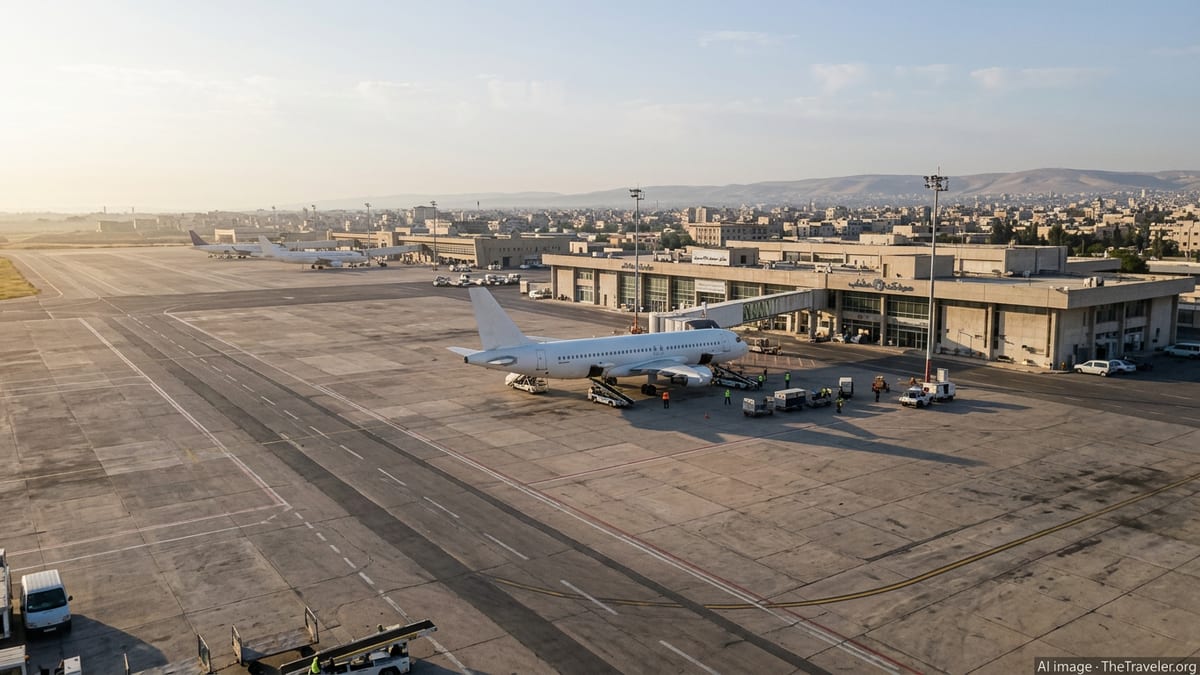
Daily Services Resume to Dubai, Sharjah and Damascus
Recent schedule updates and local media coverage indicate that Qatar Airways has reinstated daily flights from Doha to Dubai International and Sharjah, alongside the launch of a daily service to Damascus. The Damascus route, which had been operating at lower frequencies since its resumption, is being upgraded to daily service as part of a broader rebuild of the carrier’s Middle East network.
The restored pattern of daily flights effectively reconnects three of the region’s most strategically important gateways with Qatar Airways’ long-haul services. Dubai and Sharjah remain among the busiest origin and destination points for Gulf travelers, while Damascus is regaining relevance as Syria’s main international access point following a gradual reopening of its airspace and infrastructure.
Publicly available timetable data shows the flights are being slotted to optimize connections over Doha, giving passengers in the UAE and Syria same-day access to a wide range of onward destinations in Europe, Asia, Africa and the Americas. Industry observers view the move as a sign that load factors on regional routes have strengthened enough to support pre-disruption frequencies.
The decision to run all three routes on a daily basis also reflects Qatar Airways’ confidence in operational stability after a period marked by temporary airspace closures and constrained schedules for many Middle East carriers.
Rebuilding a Disrupted Middle East Network
The return of daily services to the UAE and Syria comes against the backdrop of a gradual rebuilding of Qatar Airways’ global network. During earlier phases of the current regional disruption, the airline cut frequencies, consolidated routes and focused on limited services while Qatari airspace and several neighboring airspaces operated under tighter restrictions.
Since early 2026, publicly available updates have pointed to a phased restoration strategy, with routes in Europe and Asia ramping up first, followed by incremental increases within the Middle East. The renewed daily links to Dubai, Sharjah and Damascus form part of this second wave of expansion, aimed at re-establishing dense regional feeder traffic into Doha.
Analysts note that Qatar Airways has historically relied on short- to medium-haul flows from Gulf and Levant markets to sustain its long-haul operations. As daily frequencies return, the carrier can again rely on multiple daily banks of connecting passengers, reducing reliance on point-to-point demand and restoring a more typical hub-and-spoke pattern.
The move also aligns with a wider regional trend. Major Gulf carriers have been steadily restoring capacity following the steep cuts triggered by the latest security crisis, with schedules increasingly resembling pre-crisis patterns on core trunk routes between the Gulf, Europe and South Asia.
Strategic Importance of UAE and Syria Links
Connectivity with the United Arab Emirates is especially critical for Qatar Airways. Even after the diplomatic rift of 2017 and subsequent reconciliation, the UAE remains one of the most important source markets for travelers connecting through Doha to long-haul destinations. Dubai and Sharjah provide access not only to residents of the emirates but also to large expatriate communities from South Asia, Africa and Europe.
Syria represents a different but strategically notable dimension. Damascus International Airport has been working to restore scheduled international services following years of conflict and limited operations. The re-establishment and now daily upgrade of Qatar Airways flights to Damascus underlines improving confidence in using Syrian airspace and infrastructure for commercial operations, following a period in which many carriers avoided the country entirely.
For travelers, daily connectivity means greater flexibility in planning trips, shorter layovers and more options to secure competitive fares. For the airline, higher frequency yields better aircraft utilization and a more resilient network that can adapt to fluctuations in demand by spreading passengers across multiple daily departures.
Regional tourism stakeholders are also expected to benefit. Easier access from the UAE to Doha enables short leisure breaks and event-driven trips, while enhanced links with Syria support family visits, medical travel and a slow revival of business-related traffic.
Passenger Policies and Booking Trends
As Qatar Airways scales up operations, the carrier has been promoting flexible booking policies to encourage travelers to commit to future itineraries despite lingering uncertainty. Public communications from the airline outline options such as complimentary date changes within specified travel windows, enabling passengers to shift trips if circumstances change.
Travel industry reports suggest that demand is rebounding fastest among passengers visiting friends and relatives, followed by leisure travelers taking advantage of competitive fares on reinstated routes. Corporate travel is returning more gradually, in line with broader global patterns of delayed business-trip recovery.
Online discussion among travelers indicates that many have been monitoring Qatar Airways’ schedule changes closely, watching for the restoration of daily flights to key Middle East destinations as a barometer of wider network normalization. The return of consistent daily service to the UAE and Syria is widely interpreted as a positive signal that the most acute phase of disruption for the carrier is easing.
However, commentators also point out that schedules remain subject to change if regional security conditions shift again. Passengers are being advised, in public travel advisories and media coverage, to keep a close eye on booking platforms and airline notifications in the weeks ahead.
Implications for Doha’s Role as a Global Hub
The restoration of daily Middle East flights strengthens Doha’s position as a competitive transfer hub at a time when airlines across the Gulf are racing to rebuild capacity. With daily services to Dubai, Sharjah and Damascus back in place, Qatar Airways gains additional feed into its long-haul network, improving the viability of routes that depend heavily on connecting traffic.
Industry analysts highlight that even modest frequency increases on short regional sectors can have an outsized impact on overall network performance. Each daily rotation from the UAE or Syria can funnel passengers into multiple long-haul departures, lifting load factors and potentially supporting the reintroduction of larger aircraft types on some intercontinental routes.
The strengthened regional schedule may also influence competitive dynamics among Gulf carriers. With Doha offering more daily options again, passengers comparing routings through Abu Dhabi, Dubai or other hubs will weigh factors such as total travel time, connection quality and fare levels. Qatar Airways’ renewed focus on dense regional connectivity suggests it is positioning aggressively for that competition.
For now, the airline’s restoration of daily services to the UAE and Syria stands as one of the clearest signs yet that its Middle East network is entering a new phase of recovery, with Doha once again functioning as a central crossroads for travelers moving between the region and the wider world.