


More news on this day
U.S. airlines are bracing for nearly 29 million passengers over the 2026 Thanksgiving travel period while contending with record high jet fuel prices that are rising far faster than airfares, setting up a costly holiday season for both carriers and many travelers.
Get the latest news straight to your inbox!
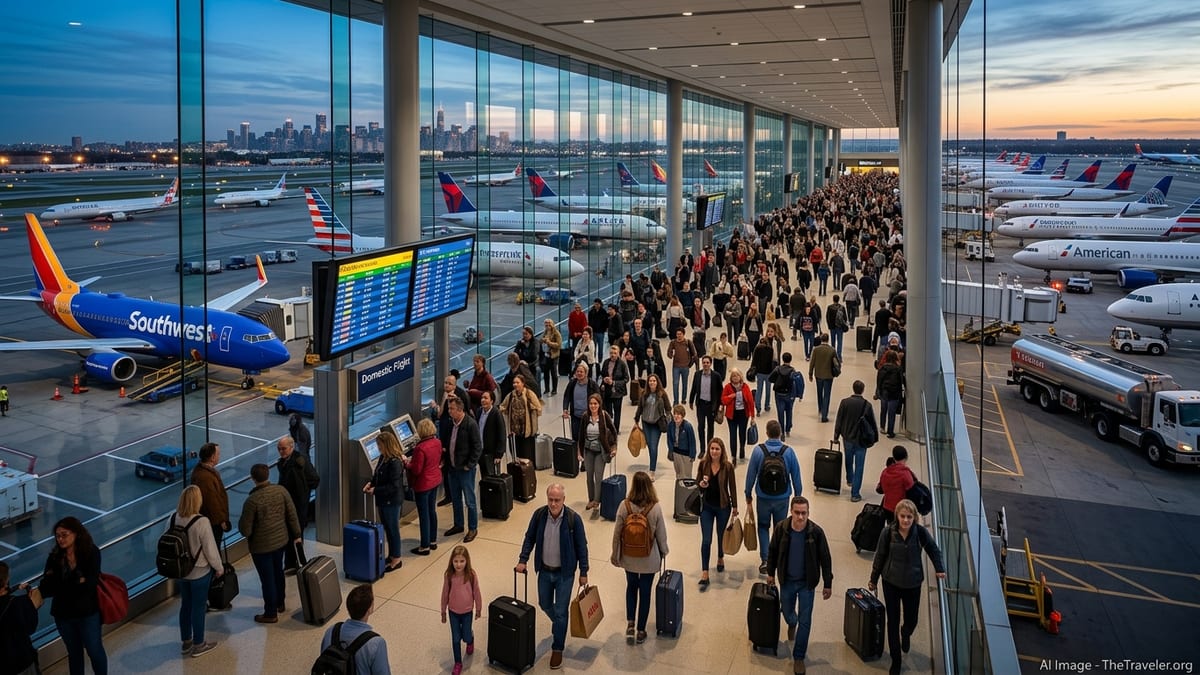
Nearly 29 million flyers expected on U.S. carriers
In a Thanksgiving outlook issued on November 10, trade group Airlines for America said U.S. carriers expect to carry “nearly 29 million” passengers between November 20 and November 30, 2026. The projection covers U.S. airlines only and includes both domestic routes and international trips operated by those carriers. A4A describes the period as one of the busiest travel stretches of the year, with traffic spread over an 11-day window rather than concentrated on just two or three peak days.
The group also highlighted that fuel and labor together now account for about 55% of airline operating expenses, leaving carriers highly exposed when energy costs spike. That cost structure is central to how airlines price seats heading into major holidays, with base fares and ancillary fees typically adjusted over months based on expected demand and input costs.
At the same time, A4A noted that U.S. jet fuel prices in late 2026 are at record levels in nominal terms and have increased more than six times faster than average airfares since January 2026. While fares are significantly higher than a year ago, fuel has moved much more sharply, compressing profit margins even as cabins are expected to be full.
Jet fuel prices climb sharply heading into the holidays
U.S. Energy Information Administration data show kerosene-type jet fuel spot prices on the Gulf Coast in October and early November 2026 well above year-earlier levels. Weekly spot prices around mid-October were roughly in the mid four dollars per gallon range, compared with the mid two dollar range a year before, implying an increase of around 70% year over year.
More recent daily and weekly readings for early November 2026 indicate some easing from the October peak but still point to jet fuel that is substantially more expensive than last autumn on a per-gallon basis. For airlines, those elevated spot prices feed directly into quarterly fuel bills, especially for carriers with little or no hedging in place.
The jump in fuel costs is one of several pressures on airline finances this holiday season, alongside higher labor expenses and ongoing investment in fleets and technology. Airlines for America has characterized the current jet fuel environment as a “record high” in terms of nominal spot prices, underscoring why carriers are focused on passing at least part of those costs through to fares where competitive conditions allow.
Southwest faces full exposure after ending fuel hedging
Southwest Airlines, long known for an extensive fuel hedging program, is entering the 2026 holiday period without any such protection. In its 2025 annual report and reiterated in its October 22, 2026 Form 10-Q filing, the airline confirmed that it terminated remaining fuel hedge positions in the second quarter of 2025 and does not intend to add new fuel derivatives.
That leaves the Dallas-based carrier fully exposed to spot jet fuel prices. In its latest quarterly filing, Southwest quantified that a one cent per gallon change in jet fuel prices is expected to change its aircraft fuel and related taxes expense for the fourth quarter of 2026 by approximately 5.7 million dollars. The company also reported that its third-quarter 2026 fuel cost reached about 3.92 dollars per gallon, above its prior planning range, with fuel expense up more than 800 million dollars year over year.
Southwest has not broken out specific Thanksgiving period fare changes tied directly to fuel. However, its greater sensitivity to spot prices illustrates how sustained high jet fuel costs can tighten margins and influence overall pricing strategies across the quarter, even as competition on key domestic routes and capacity decisions also shape what travelers ultimately pay.
Thanksgiving fares hit decade highs, with fewer last-minute deals
For travelers, the combined effect of strong demand and higher input costs is showing up in significantly pricier tickets rather than explicit fuel surcharges. Hopper’s 2026 Holiday Travel Index puts average domestic round-trip airfare for Thanksgiving at about 402 dollars, roughly 31% or 95 dollars higher than in 2025 and the highest in a decade for the period. Broadcast and local news outlets citing the same data have reported that domestic Thanksgiving tickets are at or near 10-year highs across the U.S. market.
Those figures refer to nationwide averages; individual routes can diverge based on competition and capacity. Some airport-level analyses suggest especially sharp increases from certain hubs, while others with more low-cost competition have seen comparatively smaller jumps. Across the system, though, passengers are more likely to encounter elevated base fares and fewer last-minute bargains on peak days than discrete fuel surcharges itemized on receipts.
Analysts and fare-tracking services generally attribute this year’s Thanksgiving pricing to a mix of robust demand, limited slack in seat capacity and higher operating costs, including fuel and labor. Fuel is a major contributor but not the sole driver, and airlines are constrained by competitive dynamics on many routes even as they seek to recover costs.
What Thanksgiving flyers should expect in 2026
Travelers heading out between November 20 and 30, 2026, should be prepared for crowded flights and above-average fares, especially on the busiest outbound and return days. Booking data and industry guidance suggest that Sunday and Monday after Thanksgiving remain among the most expensive days to fly, with only modest relief on off-peak dates for those with flexible schedules.
Because airlines typically adjust prices continuously in response to demand and competitive moves, some last-minute discounts may still appear on less popular departure times or connecting itineraries. However, given record high jet fuel costs and strong expected load factors, many carriers have less incentive to release large numbers of cut-price seats close to departure when they reasonably expect to sell remaining inventory at higher yields.
Passengers who have not yet booked Thanksgiving travel for 2026 may want to compare nearby dates and airports and factor in the potential for higher ancillary charges for bags and seat selection, which add to already elevated base fares. With energy markets still volatile and airlines closely watching costs, travelers can expect pricing to remain sensitive to any further swings in jet fuel, even though the exact path of fares beyond this holiday period remains uncertain.