


More news on this day
Rail traffic through part of Laurens County is moving through a period of disruption as repair crews work to restore service along a freight corridor serving Greenwood County after a recent train derailment near Laurens.
Get the latest news straight to your inbox!
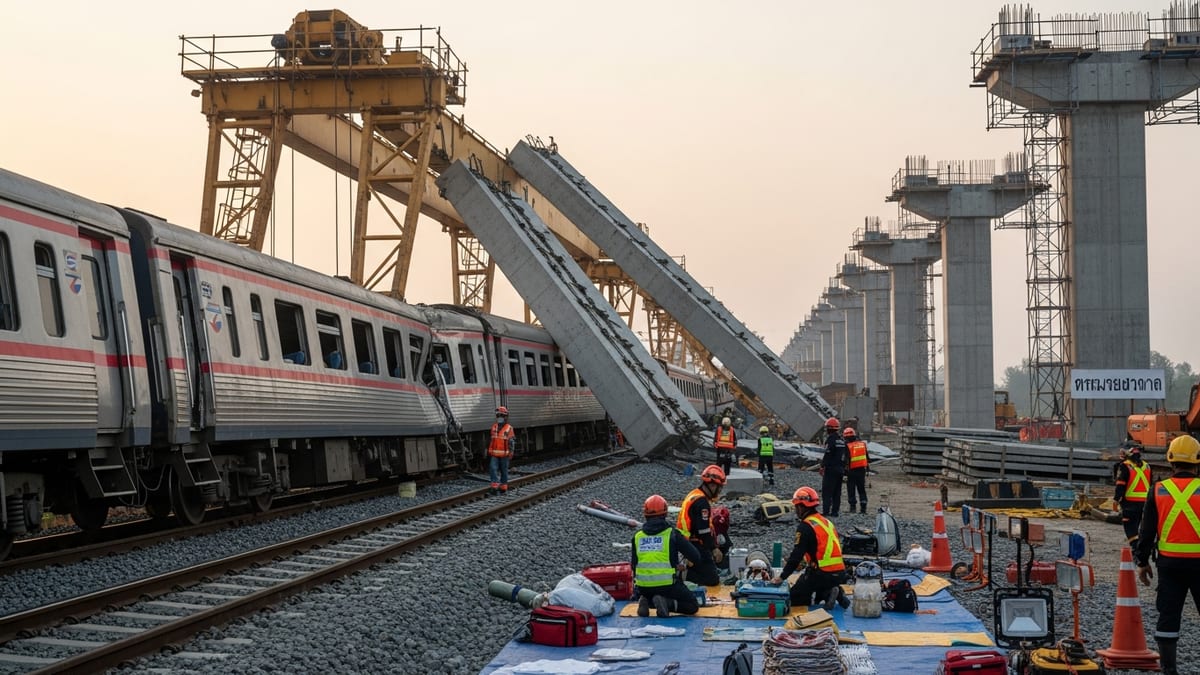
Derailment Disrupts Key Freight Link in the Upstate
Recent coverage from regional outlets and video shared by national news aggregators indicate that a freight train derailed along a line in Laurens County, affecting rail movements that typically connect toward Greenwood County and other Upstate destinations. Early information points to several cars leaving the tracks near an established freight route, interrupting a corridor used to move goods across this part of South Carolina.
Reports suggest that the derailment occurred on a section of line that threads through communities which often serve as gateways for travelers heading toward Greenwood, Lake Greenwood and surrounding rural attractions. While the route primarily carries freight, any prolonged disruption can have knock-on effects for road congestion, logistics traffic and overall mobility in the region.
Initial visual accounts show freight cars askew along the right of way and maintenance equipment staged nearby. Publicly available information so far does not indicate widespread structural damage to bridges or major road overpasses, but full inspections are continuing as rail operators and contractors work through standard post-incident procedures.
Travelers passing through Laurens County in the coming days are being advised by local coverage to expect an unusually heavy presence of rail and utility vehicles near the affected segment, as well as intermittent traffic holds where roads cross the line.
Repair Crews Focus on Track, Ballast and Signaling
According to published coverage of similar recent derailments along CSX and connecting short line routes in the Southeast, the first priority after equipment is stabilized typically involves clearing damaged cars and assessing underlying track and ballast. Visual evidence from the Laurens County site suggests that this familiar sequence is underway, with cranes, hi-rail trucks and ballast equipment deployed around the scene.
Engineering teams generally begin by checking rail alignment, ties and the stone ballast bed, followed by detailed inspections of switches and signaling infrastructure. Any indication of broken rail, damaged fasteners or misaligned track usually results in sections being removed and relaid before trains are allowed to return at normal speeds. Temporary slow orders are common as traffic resumes, which can lengthen transit times for freight moving toward Greenwood County and beyond.
Signaling and communications equipment bordering the damaged area are also likely receiving close attention. Modern freight operations depend heavily on trackside signals and remote monitoring systems; verifying their integrity helps reduce the risk of secondary disruptions once traffic restarts. Where components require replacement, contractors often work around the clock to compress repair timelines.
Noise, work lights and short-term lane restrictions near grade crossings are typical side effects of this phase, something road travelers should anticipate if driving between Laurens and Greenwood while the response continues.
Impact on Travel, Tourism and Local Commerce
Although the affected line primarily serves freight rather than passenger services, rail interruptions can indirectly influence travel patterns across Laurens and Greenwood counties. Freight trains that are rerouted or held can lead to rescheduled deliveries for area manufacturers, agricultural shippers and retailers that depend on consistent rail connections to ports and distribution centers.
For visitors, the most immediate impact is likely to be on-road conditions rather than booked rail journeys. Detours around work zones, temporary closures at smaller crossings and the circulation of heavy trucks and crane convoys can add time to drives toward Lake Greenwood, historic downtown squares or regional festivals. Travelers planning tight same-day itineraries between the Greenville area, Laurens and Greenwood may wish to build in additional time and remain alert for changing traffic controls near the rail line.
Local tourism boards have historically emphasized the ease of reaching Upstate lakes, trails and small-town attractions by highway, and current reporting suggests that major interstates and primary state routes remain open. However, experience from comparable incidents elsewhere in the Southeast shows that secondary roads near derailment repairs can become localized bottlenecks, particularly during weekday commuting hours.
Businesses positioned near crossings or sidings may also experience short-term changes in noise and access patterns. Travelers staying in roadside accommodations in the affected area might notice overnight activity as crews take advantage of cooler temperatures and lighter car traffic to advance repairs.
Safety Reviews and Longer-Term Rail Reliability
The Laurens County derailment arrives at a time when rail safety is under sustained scrutiny in the United States. Investigations into other recent incidents, including derailments in Pennsylvania and the Mid-Atlantic region, have prompted renewed discussion of track monitoring, freight car inspection regimes and the resilience of older rail corridors that run through growing communities.
While specific causes for the Laurens County incident have not yet been detailed in widely available public reports, past federal investigations into derailments across the Southeast highlight a recurring set of factors. These include issues such as track geometry defects, rail wear, equipment failures and occasional human error in train handling or dispatching. The current response near Laurens is expected to include a full technical review before normal operations resume at prior speeds.
Advances in rail inspection technology, including trackside sensors and data-driven maintenance planning, are increasingly being discussed as tools to help reduce future derailment risks on busy freight corridors. For routes that intersect with visitor gateways into Greenwood County and other Upstate destinations, such improvements can support both commercial reliability and traveler confidence.
Travelers who pass frequently along this corridor, whether for business or leisure, may see additional inspection trains or trackside equipment in the months ahead, even after visible repair work wraps up. These activities are typically part of longer-term safety efforts that extend well beyond the immediate cleanup.
What Travelers Should Watch in the Coming Days
In the short term, the most practical step for road travelers is to monitor regional traffic and news updates for references to rail work zones in Laurens County and along connecting routes toward Greenwood. Local media and transportation advisories remain the primary sources for information on any new detours, extended lane closures or overnight work periods near the affected line.
Those planning multi-county itineraries that combine stops in Laurens, Greenwood and Lake Greenwood State Park may benefit from flexible scheduling, particularly if their routes rely on smaller rural roads that intersect the freight corridor at grade. Adjusting departure times to avoid peak commuter periods and giving extra space to slow-moving construction or rail vehicles can help reduce delays.
For travelers who depend on freight-linked services, such as time-sensitive deliveries or equipment shipments routed through this part of South Carolina, publicly shared advisories from rail carriers may indicate temporary changes in transit times while slow orders remain in place. As repairs progress and inspections are completed, those updates generally shift from day-to-day disruption details to confirmations that service has stabilized.
As of late July 2026, reports indicate that cleanup and infrastructure work near the Laurens and Greenwood County lines is advancing, with the goal of restoring the corridor to full operating capacity. For the wider traveling public, the incident serves as a reminder of the hidden role freight rail plays in supporting tourism, road travel and local economies across the Upstate.