


More news on this day
A confirmed Houthi drone attack that injured 11 people in Riyadh’s King Abdullah Financial District on 24 November 2026, along with an earlier strike on the nearby Public Investment Fund tower, has intensified security concerns in Saudi Arabia and prompted continued disruption to international flights into the kingdom’s capital and eastern cities, leaving travelers facing tighter government warnings and unstable air links.
Get the latest news straight to your inbox!
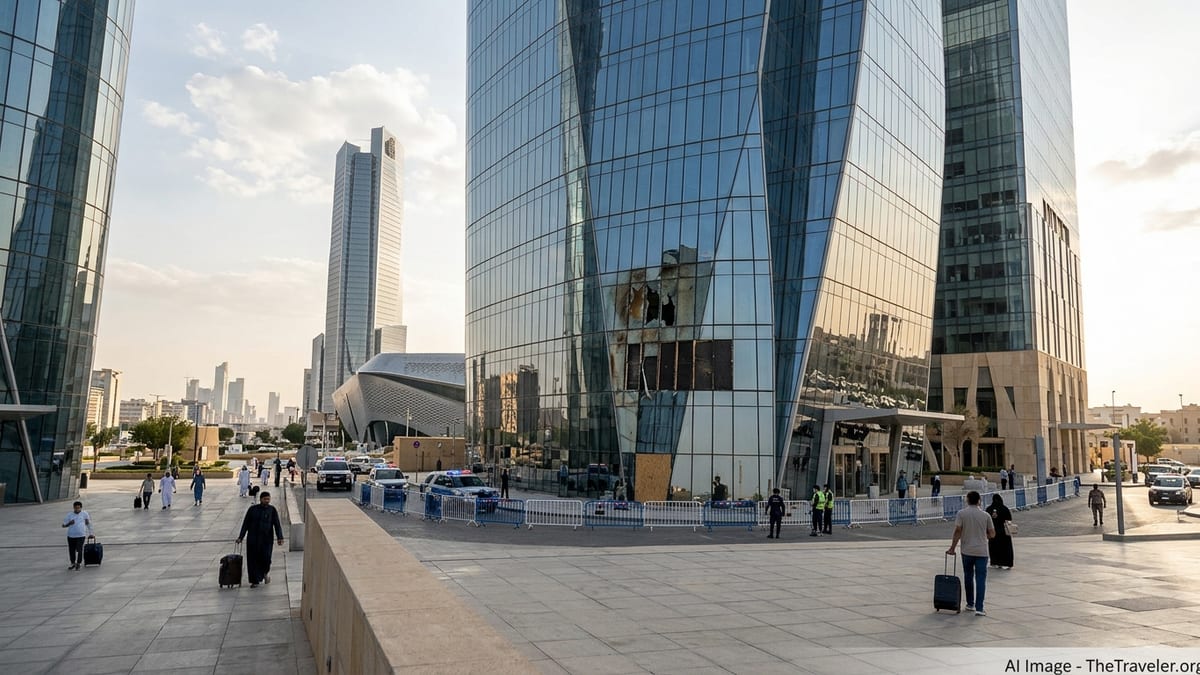
What is confirmed about the Riyadh financial district attacks?
Saudi Arabia’s Civil Defense has confirmed that on 24 November 2026 a drone launched by Yemen’s Houthi movement hit a tower in Riyadh’s King Abdullah Financial District, injuring 11 people and damaging part of the high-rise. Officials described the incident as a terrorist attack that deliberately targeted civilians and civilian infrastructure. The strike produced visible damage to the façade and windows and led to a localized emergency response in one of the capital’s flagship business zones.
The 24 November incident followed an earlier attack on 19 November 2026 that damaged the Public Investment Fund tower, also in the King Abdullah Financial District. Local and international reporting indicate that windows were shattered across several floors of the PIF building but no casualties were recorded in that first strike. Together, the two attacks mark the first time in 2026 that Riyadh’s showcase financial hub has sustained clearly documented physical damage from Houthi projectiles, after a year in which most incoming missiles and drones aimed at the capital were intercepted or caused only debris-related impacts in other neighborhoods.
The Riyadh incidents have come amid a broader spike in cross-border attacks from Yemen. Coalition and independent reporting through November describe repeated interceptions of missiles and drones over Riyadh and other cities, including Jeddah and Yanbu on the Red Sea coast, as well as over southern provinces such as Abha, Jazan and Najran. In several cases, debris has fallen on urban areas when projectiles were destroyed in the air, sometimes damaging property on the ground. The latest successful strike on a central business tower has pushed the risk to civilian areas and high-profile economic sites back to the forefront for both authorities and travelers.
How are airports, airlines and Saudi airspace being affected?
While Saudi Arabia’s main airports remain open, international air links are still uneven, especially to Riyadh and to airports serving the Eastern Province. King Khalid International Airport in Riyadh has experienced rolling disruption since October 2026, with temporary closures and reduced schedules when airspace restrictions are tightened or when missile and drone activity spikes near the capital. Official aviation notices and airline statements emphasize that safety assessments are being updated frequently, which means flight plans can change at short notice even on routes that had appeared to stabilize.
A number of foreign carriers are keeping their services to Riyadh and Dammam limited or suspended. Etihad Airways currently states that all passenger and cargo flights between Abu Dhabi and Riyadh and between Abu Dhabi and Dammam are cancelled through Monday 30 November 2026, while other Etihad routes into Saudi Arabia, including to Jeddah and Medina, are operating on adjusted schedules. Notices from the airline specify that affected passengers with tickets issued before late November may rebook without additional charges or request refunds, subject to the fare conditions attached to their original bookings.
Several European and Asian airlines that halted Riyadh operations earlier in the year have yet to return to the market. Publicly available schedules and route updates indicate that carriers such as Air France, British Airways and Cathay Pacific are still not operating their Riyadh services, with most current planning data pointing to no restart before early 2027. For Dammam, the pattern is similar: some European and Asian airlines have extended pauses on flights into late December 2026 or beyond, in line with internal risk assessments and home-state regulatory guidance.
By contrast, several Gulf and regional airlines continue to operate at least some routes into Saudi Arabia. Qatar Airways has restored daily flights to both Riyadh and Dammam after earlier suspensions, and Emirates, flydubai and other regional carriers list services to Jeddah, Medina and select additional destinations, although frequencies are lower than before the current crisis and subject to late changes. Aviation tracking data and traveler reports from recent days highlight same-day delays, diversions and cancellations on some of these flights when defense activity increases or when authorities temporarily adjust airspace management around sensitive locations.
Regulators have also updated their guidance on using Saudi airspace. The European Union Aviation Safety Agency has extended its conflict-zone recommendations covering parts of the Jeddah Flight Information Region into early 2027, advising airlines under its remit to avoid designated areas and conduct thorough risk assessments for operations elsewhere in Saudi-controlled airspace. National civil aviation authorities in Europe, North America and parts of Asia have echoed the need for caution, and in some cases have issued or renewed advisories that affect how their airlines route flights across or into Saudi Arabia. For passengers, this may translate into longer routings or changed connection patterns even on itineraries that still operate.
What are governments currently advising about travel to Saudi Arabia?
The escalation in missile and drone activity, combined with the concrete damage in Riyadh’s financial district, has led several governments to tighten their official travel advice in the closing weeks of 2026. The United States maintains a travel advisory that warns of the risk from attacks by Iran and Iran-backed groups on civilian targets and critical infrastructure in Saudi Arabia, and on 23 October 2026 the Department of State ordered the departure of non-emergency U.S. government employees and their family members from the country. U.S. guidance stresses the possibility of sudden flight restrictions, airspace closures and disruptions to commercial aviation, and continues to prohibit U.S. government personnel from traveling within a defined distance of the Yemeni border.
Following the 24 November drone strike on the King Abdullah Financial District, U.S. diplomatic missions have reiterated that private citizens in Saudi Arabia should be prepared for unannounced changes to airport operations and airline schedules. Official messaging encourages travelers to maintain contingency plans in case departure is delayed and to ensure that travel documents, including exit permits where relevant, remain valid and accessible in the event of a rapid change in the security situation.
The United Kingdom’s Foreign, Commonwealth & Development Office currently advises against all travel to specified areas near the Yemeni frontier and continues to warn against all but essential travel to much of the rest of Saudi Arabia. Its latest update, issued in late November 2026, notes a heightened threat to airports, military facilities, ports and energy infrastructure in cities including Riyadh, Jeddah, Dammam, Abha, Jizan, Najran and Yanbu. The FCDO warns that missile and drone attacks could reach airports and other populated areas and that new flight restrictions may be imposed without warning if the situation deteriorates.
Other governments have taken similar positions. Australia’s current advice is that travelers should not go to Saudi Arabia because of the risk posed by cross-border attacks and potential impacts on aviation and energy sites. Several European countries instruct citizens to reconsider non-essential trips and to avoid military installations, oil and gas facilities and other critical infrastructure. Many foreign ministries recommend that nationals already in Saudi Arabia register with their consular services so they can be contacted quickly if there is a major incident or if evacuation or shelter-in-place advice is issued.
What is open on the ground and how are internal journeys working?
Despite the elevated alert level and disrupted international air links, most daily life and commercial activity inside Saudi Arabia is continuing. Hotels, serviced apartments and many cultural and entertainment venues in major cities such as Riyadh, Jeddah and AlUla remain open, and there is currently no nationwide order closing tourism or hospitality businesses. Visitors and residents report that restaurants, shopping malls and museums are largely operating as normal, although some high-profile sites, particularly in Riyadh, have introduced more visible security measures and, in some cases, extra screening at entrances.
However, the security situation has affected the country’s events calendar. Several large international gatherings scheduled for late 2026 in Riyadh, including fashion, entertainment and investor-focused conferences, have been postponed to 2027 or cancelled. Organizers have cited both safety considerations and the difficulty of guaranteeing that large numbers of overseas participants will be able to travel in and out on fixed dates given the volatile flight environment. Smaller meetings and domestic events have generally been less affected, though participants are still advised to monitor travel plans closely.
Within Saudi Arabia, public transportation in major cities is operating, but with occasional localized disruption. Riyadh’s developing metro system and bus services continue to run, though some routes have faced temporary closures or diversions when roads near sensitive locations are sealed off for security operations. In Jeddah and Dammam, urban transport networks are functioning, with adjustments when authorities respond to specific incidents or tighten security around ports and industrial facilities.
Domestic aviation remains an important part of internal travel. Saudia and other Saudi carriers continue to link major urban centers, and schedules for routes such as Riyadh to Jeddah or Riyadh to Medina currently appear more robust than many international links into the country. Nonetheless, airports in southern and southwestern regions, particularly Abha, Jazan and Najran, have periodically reduced or suspended operations in response to nearby cross-border fire or heightened threat levels. Travelers planning internal itineraries that involve these areas may need to allow additional time, consider backup routing via other cities, or be prepared to shift to road transport if flights are cancelled.
How should travelers assess risk and plan upcoming trips?
Whether to travel to Saudi Arabia in the weeks following the 24 November 2026 Riyadh attack is a decision that depends heavily on individual risk tolerance, the purpose of the trip, the specific itinerary and the traveler’s nationality. There is no global ban on travel to the kingdom, and many foreign residents and business visitors remain in Riyadh, Jeddah and other cities without having been directly affected by recent attacks. At the same time, the demonstrated ability of Houthi forces to strike a prominent tower in the capital’s main financial district, the continuing pattern of missile and drone launches and the firm tone of many government advisories mean that journeys require more preparation and a greater acceptance of potential disruption than in calmer periods.
Before booking, travelers should check their own government’s latest advisory for Saudi Arabia, including any region-specific restrictions, and confirm whether employers, universities or insurers impose additional limitations on travel to the kingdom. Airline travel alerts and current timetables should be reviewed for the precise route and dates in question. It is common for airlines to sell tickets for travel after the end-date of currently announced suspensions, but these future services are often explicitly described as contingent on security conditions and regulatory guidance, and may be adjusted or withdrawn if the situation does not improve.
For those who decide to proceed with travel, building flexibility into arrangements can reduce the impact of possible changes. Many airlines serving Saudi Arabia state that passengers whose flights are cancelled for security reasons can rebook onto later dates or alternative routes, or may be eligible for travel credits or refunds. The exact options typically depend on when the ticket was issued, the original travel period and the fare rules. Accommodation, ground transport and tour bookings that allow changes or cancellations with modest penalties can offer similar protection if arrival or departure plans have to shift at short notice.
Authorities and foreign ministries advise travelers already in Saudi Arabia to keep mobile phones charged, maintain access to both local and international news, and enroll in consular alert systems where available so they can receive rapid updates on significant security developments or policy changes. Visitors may wish to minimize time spent near military facilities, government compounds, power stations, refineries and other sites that are frequently mentioned in risk assessments, and to follow the instructions of local security personnel if an alert is issued or if sirens or public announcements signal incoming fire.
Looking ahead, both the security environment and associated travel disruption will depend on the trajectory of the conflict involving the Houthi movement and regional actors over the coming weeks and months. Airlines, regulators and foreign governments are reviewing the situation on a rolling basis rather than setting firm long-term positions, and advisories, suspensions and route plans are being updated frequently. Anyone considering a trip to Saudi Arabia should therefore recheck their government’s travel advice, airline notifications and airport status repeatedly in the days leading up to departure, rather than relying on information gathered even a short time earlier, and be ready to adapt itineraries quickly if there are further changes following the November attacks in Riyadh’s financial district.