


More news on this day
Royal Caribbean’s newest Icon Class cruise ship, Legend of the Seas, has departed the Meyer Turku shipyard in Turku, Finland following a formal delivery ceremony, marking a key milestone on the vessel’s path toward a high‑profile debut in 2026.
Get the latest news straight to your inbox!
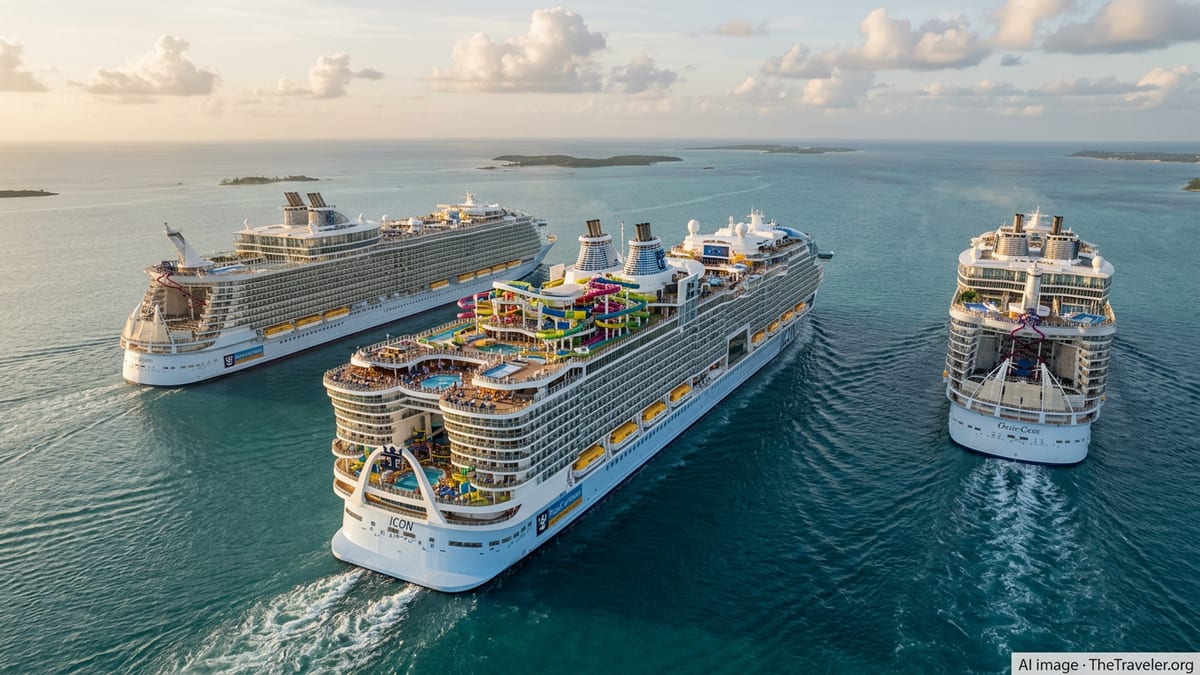
Delivery Marks Third Icon Class Ship for Royal Caribbean
The handover of Legend of the Seas at Meyer Turku adds a 2026‑built flagship to Royal Caribbean’s rapidly expanding Icon Class, following earlier deliveries of Icon of the Seas and Star of the Seas. Reports from cruise industry outlets indicate that the transfer of ownership was completed in Turku in mid‑June, with the vessel now officially part of the company’s fleet.
Publicly available information from Meyer Turku and Royal Caribbean shows that Legend of the Seas is the third in a planned series of four Icon Class ships, conceived as large‑scale family vacation destinations at sea. The ship’s departure from the Finnish yard follows nearly two years of construction, including steel cutting, assembly in dry dock and extensive outfitting ahead of recent sea trials in the Baltic.
The delivery also underscores the long‑standing collaboration between Royal Caribbean and Finnish shipbuilders. Industry coverage notes that the Icon program has been used within Meyer Turku as a reference project for refining production methods, with each successive ship introducing incremental design and efficiency improvements.
Technical Profile of a Mega Family Resort at Sea
According to technical data released by the yard, Legend of the Seas comes in at around 250,800 gross tons and stretches roughly 365 meters in length, placing it among the largest cruise ships currently afloat. The ship is designed to accommodate more than 5,600 guests at double occupancy, with capacity rising further when all berths are filled, supported by a multinational crew numbering in the thousands.
The vessel is powered primarily by liquefied natural gas, in line with Royal Caribbean Group’s broader shift toward lower‑emission propulsion. Public specifications indicate that the LNG‑ready power plant is supplemented by advanced energy‑saving systems, including heat‑recovery installations and optimized hull forms intended to cut fuel consumption over the ship’s operating life.
Onboard, Legend of the Seas continues the Icon Class emphasis on water‑centric recreation. Yard materials and cruise industry reports describe a large open‑air water park featuring multiple pools and waterslides, along with dedicated family zones intended to keep different age groups engaged during sea days. The layout closely follows the template introduced on Icon of the Seas while incorporating new venues and attractions unique to this third ship.
From Turku to Sea Trials and Inaugural Season
The departure from Turku follows a sequence of milestones that began with the ship’s float‑out from dry dock in August 2025, when Meyer Turku first moved the hull into the outfitting basin. At that stage, the shipyard focused on interior installation, technical systems, and exterior finishing, gradually transforming the hull into a fully fitted cruise vessel.
Sea trials in the Baltic, conducted earlier in 2026 according to published coverage, allowed shipbuilder and cruise line teams to verify performance, maneuverability and safety systems. These multi‑day trials typically involve speed runs, turning circles and equipment tests, providing final data that support the formal handover.
With delivery now complete and the ship having left the Finnish yard, industry reports indicate that Legend of the Seas will reposition to prepare for her inaugural program. Schedules published by cruise analysts show the ship set to enter service in the northern summer of 2026, beginning with week‑long Western Mediterranean itineraries.
Mediterranean Debut Followed by Caribbean Deployment
Initial deployment plans, as reflected in booking platforms and cruise media summaries, place Legend of the Seas in the Western Mediterranean for her first season. The ship is expected to homeport in major hubs such as Barcelona and Civitavecchia, offering seven‑night sailings that combine marquee ports with resort‑style sea days designed to showcase the new vessel.
After the European summer and early autumn, publicly available itineraries indicate that Legend of the Seas is due to cross the Atlantic and base in Fort Lauderdale for the 2026 to 2027 winter. From there, the ship is set to focus on Caribbean routes that mirror the high‑demand patterns of her Icon Class sisters, including family‑oriented voyages that feature Royal Caribbean’s private island destinations.
This deployment strategy mirrors the pattern used for earlier Icon Class entries, where a debut in Europe is followed by a long‑term presence in the Caribbean. Cruise market observers note that such positioning allows the line to capitalize on strong demand in both regions while introducing a new flagship to North American travelers ahead of peak holiday periods.
Symbolic Moment for Finnish Shipbuilding and Future Icon Projects
Legend of the Seas departing the Meyer Turku yard carries symbolic weight for Finland’s maritime cluster. The Icon Class, including this third vessel, has been cited in local industry commentary as an important reference order that sustains shipyard employment, supports specialized subcontractors and reinforces Turku’s position as a leading builder of large cruise ships.
The delivery also clears the way for work on the next Icon Class vessel, currently known under the project name Hero of the Seas and slated for delivery later in the decade. Information shared by Royal Caribbean Group highlights a wider strategy that targets a net‑zero cruise ship by 2035, with each successive newbuild acting as a step toward that goal.
For Royal Caribbean, Legend of the Seas represents both continuity and evolution: a ship that extends the now‑familiar Icon Class concept while adding capacity, fresh venues and updated technical systems. For Meyer Turku and the Finnish shipbuilding sector, the ship’s smooth delivery and departure from the yard reinforce the country’s role at the center of the global large‑cruise‑ship market.