


More news on this day
Russia is promising to prevent major disruption to civil aviation in its skies after Ukraine warned that expanding long-range drone operations would make Russian airspace increasingly unsafe, sharpening concerns for international carriers that still route flights over the country.
Get the latest news straight to your inbox!
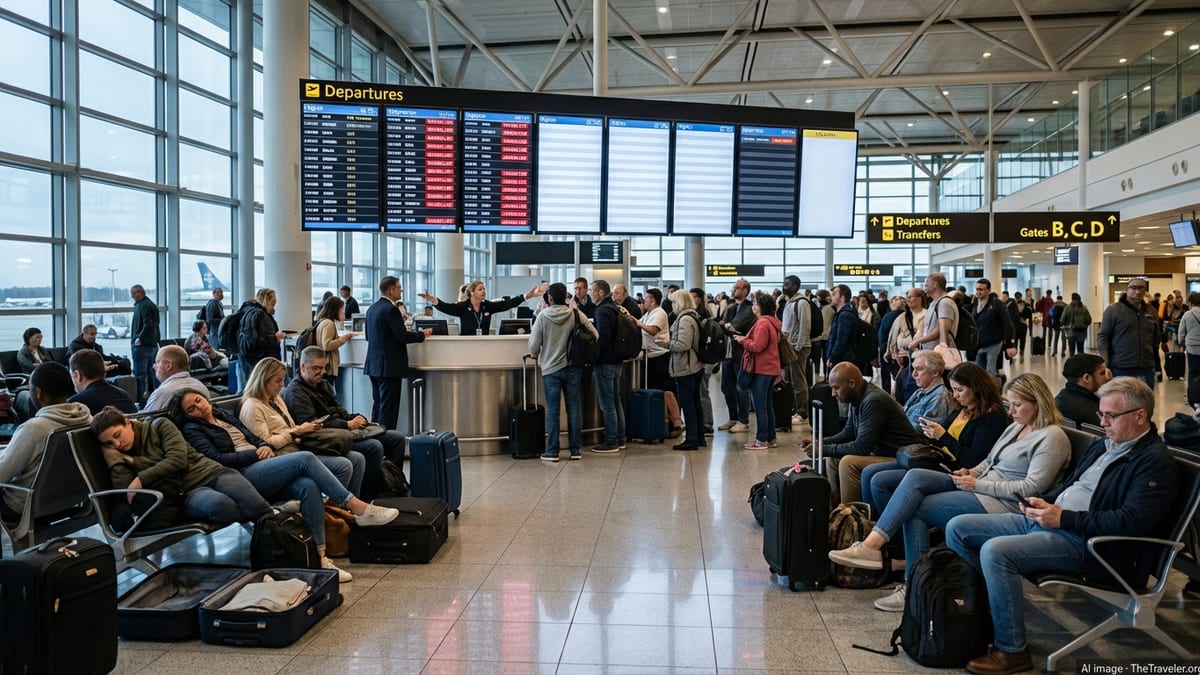
Competing messages over the safety of Russian skies
The latest tensions began to sharpen on 1 September 2026, when Ukrainian President Volodymyr Zelenskyy publicly cautioned that “Russian airspace will effectively be closing” as Kyiv steps up drone strikes against military and economic targets inside Russia. In an evening address, he urged airlines, insurers and governments to reassess the risks of using Russian routes, stressing that Ukraine does not target civilian aircraft but that the sheer density of unmanned systems would make the skies hazardous for commercial traffic.
Coverage of the speech highlights Kyiv’s argument that the air war Moscow has waged over Ukraine for more than four years can no longer be contained to Ukrainian territory. Ukraine’s leadership frames long-range drone operations as a response to Russia’s persistent missile and drone attacks on Ukrainian cities and infrastructure, which have forced Ukraine’s own airspace to remain closed to civil aviation since February 2022.
On 2 September, Russia issued a contrasting message, with publicly available reporting in Europe indicating that the government has vowed to safeguard civil aviation in its airspace despite the threat of further Ukrainian drone raids. Russian officials, as cited in regional media, contend that internal security measures and air defenses are sufficient to prevent broad, long-lasting shutdowns of domestic traffic or international routes.
This rhetorical clash leaves airlines and passengers facing conflicting assessments: Ukraine describes Russian skies as increasingly “drone infested,” while Moscow insists that it can contain the threat and keep routes open.
Drone warfare reaches deeper into Russia
The exchange comes after months of expanding Ukrainian drone activity directed at targets far from the front line. Reports from Russian and international outlets point to repeated strikes and attempted strikes on oil refineries, logistics hubs and even regions close to major population centers such as Moscow and St Petersburg. In some cases, airports serving these cities have temporarily halted operations during large-scale drone alerts, with aviation authorities imposing short-lived restrictions on arrivals and departures.
According to public coverage, Ukrainian officials argue that such operations are aimed at undermining Russia’s ability to sustain its war effort by striking fuel facilities, depots and other military-linked infrastructure. Russian commentary, by contrast, characterizes them as terrorist tactics that endanger civilians and create economic disruption.
Earlier statements from the Kremlin signaled that Moscow is investing heavily in layered air defenses and electronic warfare to intercept drones before they threaten critical nodes, including airports. Public remarks in June 2026 suggested that Russia viewed the growing number of unmanned incursions as a strategic challenge that needed to be addressed with more advanced detection and interception capabilities around major cities and transport corridors.
Despite these efforts, recent drone waves have still forced unscheduled pauses at Moscow-area airports and prompted flight diversions, underlining the difficulty of guaranteeing seamless air operations under persistent low-cost, long-range drone pressure.
International regulators drawn into the dispute
Ukraine’s warning campaign has moved beyond televised addresses and into formal channels. On 2 September, the country’s Foreign Ministry announced that Kyiv had officially notified the International Civil Aviation Organization (ICAO) that Russian airspace is becoming unsafe. Public statements from Ukrainian diplomats emphasize that the goal is to prevent unintended incidents involving civilian aircraft that might transit areas where drones and air defenses are active.
Ukraine’s communication follows months of rising concern in Europe about the spillover of aerial warfare into neighboring states. Western governments have documented multiple episodes in which Russian missiles or drones have strayed into or over the territory of NATO and EU members, including Romania and Moldova, prompting calls for stronger regional air and missile defenses.
European institutions have issued their own warnings about airspace violations and the risk of miscalculation. Statements from EU and NATO forums underline that each new incident involving drones or missiles near international borders heightens the possibility of an accident affecting civil aviation, or of an escalation between Russia and neighboring countries.
For travel stakeholders, Ukraine’s decision to formally raise the issue with ICAO is significant. While national authorities and carriers ultimately decide on routings, ICAO advisories can shape industry risk assessments and insurance terms, potentially accelerating a shift away from Russian overflights if the perceived danger grows.
Impact on airlines and global flight paths
International carriers sharply reduced their use of Russian airspace after the full-scale invasion of Ukraine in 2022, driven by sanctions, reciprocal overflight bans and early security concerns. However, a number of airlines from countries that have maintained economic ties with Moscow continue to operate routes across Russian territory, attracted by shorter flight times and fuel savings on some Asia-Europe and Asia-Middle East services.
Industry reporting shows that each major Ukrainian drone campaign inside Russia has led to at least localized disruption at airports and on key corridors, with flights temporarily rerouted or delayed during peak alert periods. Even relatively brief closures can have knock-on effects for crews, connections and cargo schedules, particularly when they occur unexpectedly at night or early morning.
Ukraine’s latest warnings and Russia’s pledge to avoid widespread flight interruptions now raise new questions for carriers. Airlines must weigh the financial benefits of overflying Russia against the possibility of sudden diversions, changing insurance conditions and reputational risk if passengers perceive that safety is being traded for efficiency.
Some aviation analysts note that alternative routings across Central Asia, the Middle East or the Arctic have become more common during the war, despite higher operating costs. If perceptions of Russian airspace risk continue to rise, the trend could accelerate, gradually reconfiguring global traffic flows even without a formal closure of Russia’s skies.
Travel uncertainty in a protracted air war
For travelers, the renewed focus on Russian airspace underscores how the air war over and around Ukraine remains a central factor in global aviation planning more than four years after the invasion began. Even passengers on flights that do not pass near the front lines can experience the indirect effects in the form of longer routes, schedule changes or higher fares linked to fuel and insurance costs.
Published analyses from European and transatlantic institutions stress that as long as high-intensity drone and missile campaigns continue, the risk of unplanned airspace closures or diversions in the region will remain elevated. That applies not only to Russia and Ukraine but also to parts of Eastern Europe and the Black Sea basin, where both sides’ long-range systems operate near busy civilian corridors.
Russia’s vow to prevent significant disruption to civil aviation, combined with Ukraine’s promise to coordinate limited pauses in drone operations during sensitive diplomatic events, suggests that both sides are aware of the potential consequences of a major aviation incident. Publicly available information, however, indicates that neither is prepared to scale back its broader air campaigns, meaning that the strategic contest over the skies is likely to persist.
As a result, airlines, regulators and passengers are entering a period in which airspace risk assessments around Russia will need continual revision. Routes that appear viable today may become less attractive if drone activity intensifies, or if further international guidance urges added caution. For now, the message to the travel sector is clear: the conflict’s aerial dimension is moving closer to Russia’s own heartland, and decisions about whether to cross its skies are becoming more complicated and consequential.
Official address by the President of Ukraine on Russian airspace
Interfax Ukraine coverage of ICAO notification on Russian airspace
Euronews report on warnings over Russian skies and civil aviation
Europa Press report on Russia’s pledge to protect civil aviation