


More news on this day
The United States has issued a fresh security alert for citizens in and traveling through the Middle East, warning that heightened tensions have created a complex environment with the potential for rapid and unforeseen escalation across the region.
Get the latest news straight to your inbox!
Region-wide alert highlights risk of sudden escalation
In late July 2026, the U.S. Department of State updated its worldwide caution notice and linked regional guidance, citing heightened tensions in the Middle East and warning that conditions could deteriorate with little warning. The alert notes that the security environment remains complex, with the potential for unforeseen escalation affecting a broad swath of destinations frequently used by international travelers.
According to the published security alert and related regional pages on the State Department’s travel website, the message is aimed both at U.S. citizens already present in the region and those considering transit through major air and land hubs. The advisory urges travelers to maintain a high level of situational awareness and to be prepared for rapid changes to security measures, checkpoints, and public transportation schedules.
Publicly available reporting indicates that the advisory follows renewed exchanges of fire and other hostilities involving U.S. forces and Iran-linked groups, which have raised concerns about a wider conflict. Recent coverage from international news agencies notes that several U.S. embassies in the region have amplified the alert language in country-specific messages directed at their local American communities.
While the security alert stops short of banning travel across the entire Middle East, it underscores that conditions in and around ongoing conflict zones can shift quickly. Travelers are encouraged to review destination-specific advisories before departure and to understand that local security responses, including curfews or temporary closures, may be imposed at short notice.
Level 4 “Do Not Travel” countries remain a focal point
Alongside the broader regional warning, the State Department continues to classify several Middle Eastern destinations at its highest advisory tier, Level 4: Do Not Travel. The latest country pages for Syria, Iraq, Yemen, Lebanon, Gaza and Iran-linked areas stress that terrorism, armed conflict, kidnapping, and civil unrest pose severe threats, and that U.S. government assistance on the ground may be extremely limited or unavailable.
In Syria, for example, the advisory reiterates that there is no functioning U.S. embassy or consulate in the country and that security conditions remain highly volatile. Similar language appears in the advisory for Afghanistan, which, while technically outside the core Middle East council of states, is often included in regional risk assessments due to overlapping militant networks and cross-border instability.
Travel guidance for these destinations emphasizes that U.S. citizens who nevertheless choose to enter high-risk areas should have an independent evacuation plan that does not rely on U.S. government transportation. The documentation explains that deteriorating security can make it unsafe or impossible to reach any diplomatic facility, even in neighboring countries, and that commercial options may be suspended without warning if fighting intensifies.
Regional summary pages on the State Department site compile links to these country advisories and to recent security alerts, underscoring that the potential for escalation is not limited to one border or front line. Instead, officials frame the risk as a fluid, theater-wide concern that may spill over into countries where day-to-day life has otherwise appeared relatively stable.
Practical implications for flights, borders and itineraries
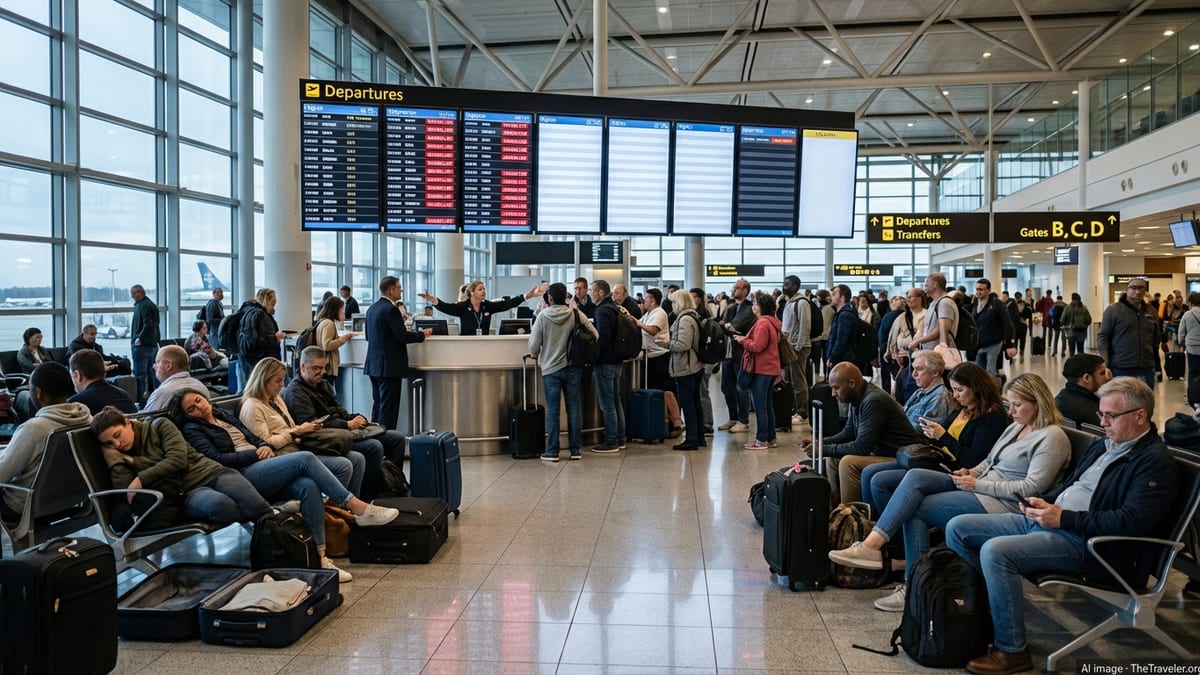
The latest alert encourages travelers to pay close attention to airport and airline notices, as any escalation could disrupt normal flight operations to, from, or through Middle Eastern hubs. The worldwide caution notice specifically advises those who continue to travel in the region to monitor airline and airport information for schedule changes, cancellations, or diversions linked to security events.
Past security alerts published by U.S. embassies in Mexico, Sudan and other high-risk locations illustrate how quickly consular posts can move from standard operations to warning citizens about restricted movement, localized fighting, or the need to avoid specific routes. These examples, collected in congressional and consular affairs documentation, show that embassy messages often shift within hours from simple caution to clear recommendations to depart while commercial transportation remains available.
Travelers relying on multi-leg itineraries that transit Middle Eastern hubs, even without entering the country, may face indirect impacts if tensions escalate. Carriers could reroute flights to avoid contested airspace, reduce frequencies into conflict-adjacent airports, or temporarily suspend operations. Land borders and major highways may also see tighter controls, including checkpoints and intermittent closures, as local authorities respond to perceived threats.
For leisure travelers, this environment introduces a layer of uncertainty around popular stopover cities and regional touring routes. For business travelers and aid workers, the possibility of rapid changes to security posture means that contingency planning, including alternative routing and remote-working options, has become a critical part of trip preparation.
How U.S. citizens can track risks and receive alerts
The State Department continues to highlight the Smart Traveler Enrollment Program (STEP) as the primary channel for delivering embassy security alerts directly to U.S. citizens abroad. USAGov’s official guidance explains that enrolling a trip in STEP enables travelers to receive destination-specific emails and notifications about demonstrations, terrorism concerns, criminal activity, and other emerging threats in their area.
Travel and consular affairs pages recommend that citizens planning travel in or near high-risk regions save the contact details of the nearest U.S. embassy or consulate, review the latest country-level travel advisory, and consult thematic pages on issues such as terrorism and crime. These resources outline common risk scenarios, from attacks on public venues and transportation to opportunistic crime during periods of unrest, and offer general advice on how to lower exposure.
Security information documents made available by the State Department describe a tiered advisory system, ranging from Level 1 (exercise normal precautions) to Level 4 (do not travel). They note that embassies use a menu of pre-approved alert language to quickly notify citizens of specific threats, including terrorism, civil unrest, or natural disasters, which can be layered on top of the broader travel advisory level.
Experts who track diplomatic security policy point out that these tools function less as predictions than as frameworks for managing uncertainty. In practice, U.S. travelers who follow official guidance, stay informed about local developments, and maintain flexible plans may be better positioned to adapt if tensions in the Middle East intensify further.
What the latest alert means for would-be Middle East visitors
For most travelers contemplating new trips that include the Middle East, the latest security alert signals the need for closer planning rather than an automatic cancellation of all itineraries. The language used in the worldwide caution and regional summaries focuses on the potential for rapid escalation and the complexity of the security environment, rather than declaring a blanket halt to all tourism and business travel across the region.
Nonetheless, the persistence of Level 4 advisories for several countries and the emphasis on theater-wide risks mean that decisions about routing, trip timing, and on-the-ground movements require more scrutiny than in calmer periods. Publicly available risk guidance encourages travelers to weigh factors such as proximity to active conflict zones, local political dynamics, and the resilience of transportation and communications infrastructure.
International carriers, tour operators, and corporate travel managers are closely monitoring the situation and adjusting policies as needed. While many services continue to operate normally, recent history in other regions shows that contingency plans can activate quickly in response to sudden escalations, leaving unprepared travelers with limited options.
For now, U.S. citizens considering journeys through the Middle East are being urged to stay informed, register their plans where possible, and approach itineraries with a degree of flexibility that reflects the elevated risk backdrop described in the latest U.S. government alerts.
U.S. Department of State – Worldwide Caution
U.S. Department of State – Travel Advisories by Country
Travel.State.gov – Consular Information for Americans in the Middle East
USAGov – About U.S. Travel Advisories and STEP
Associated Press – U.S. issues regionwide Mideast travel alert