


Spain has a reputation for complex and slow bureaucracy, a factor that can significantly shape the relocation experience. For prospective movers, the key question is not whether bureaucracy exists, but how slow and unpredictable it is in practice, how it compares with other European countries, and what that means for day-to-day life when dealing with public administration.
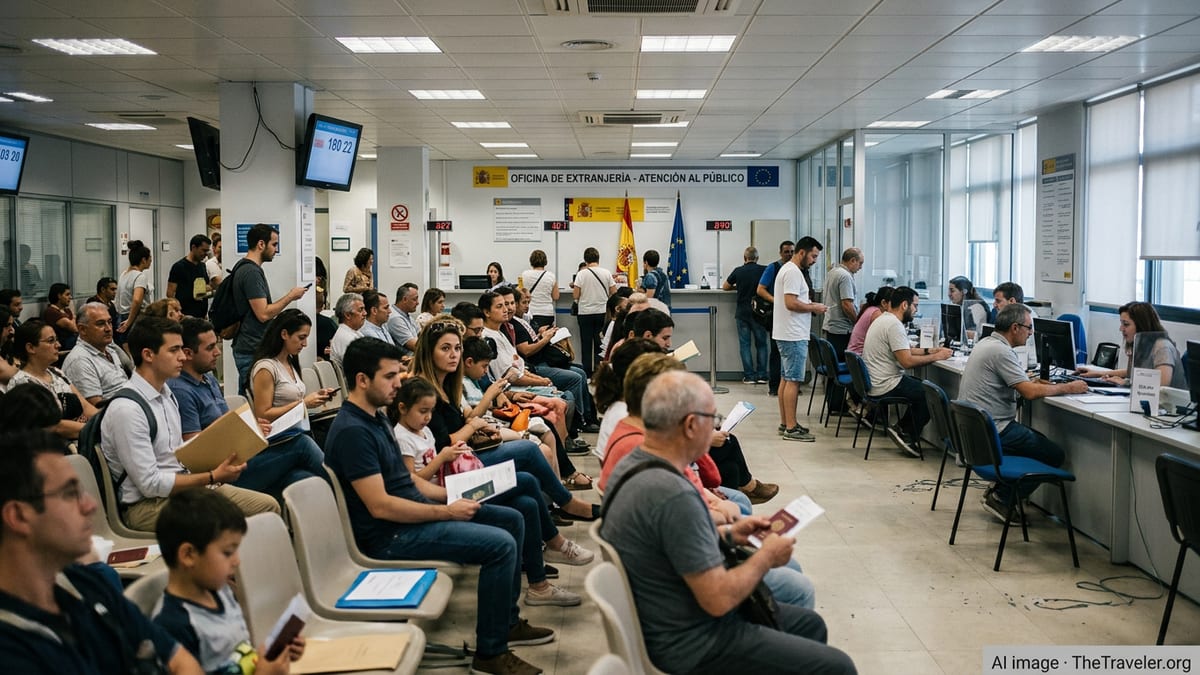
Overall Pace of Spanish Bureaucracy in an International Context
International indicators portray Spanish bureaucracy as middling rather than extreme by European standards, but with notable friction points. The World Bank’s former Doing Business index placed Spain around 30th out of 190 economies on overall ease of doing business in its 2020 report, well ahead of many non-EU countries but behind the fastest EU performers. This suggests that while the regulatory framework is not the most burdensome globally, the practical experience often includes delays and procedural complexity.
On broader governance metrics, Spain scores around the OECD and EU average on government effectiveness and administrative quality. These composite indicators capture the capacity of public institutions to deliver services, enforce regulations and implement policies. They indicate that Spain is not a failed bureaucracy, but users often experience inefficiencies, uneven implementation across regions, and inconsistent service quality between offices.
At the same time, Spain ranks relatively well in digital public services within the EU’s Digital Economy and Society framework. The country sits above the EU average for online interaction between citizens and administration, reflecting high availability of e-government portals and electronic certificates. This highlights a central paradox: formal digitalization is advanced, yet users still report long waits, appointment shortages and case backlogs in high-pressure areas such as immigration and civil registries.
For relocation decisions, this means that Spanish bureaucracy should be viewed as structurally comparable to an average Western European country but with specific “bottleneck” domains where delays can be severe and unpredictable, particularly for foreigners who depend on immigration, registration and documentation processes to stabilize their status.
Processing Times for Key Procedures Affecting Newcomers
The most salient measure of bureaucratic speed for relocating individuals is the time required for concrete procedures such as residence permits, identification cards and registrations. Spanish immigration law usually sets a three-month legal maximum for resolving many types of residence and work permit applications, but practice routinely diverges from this target.
Recent reporting from specialized immigration law firms and employer advisory services in Spain indicates that, in major hubs such as Madrid and Barcelona, typical resolution times for many residence and work authorizations range from approximately four to eight months in 2024 and early 2025, with some files taking longer. In Catalonia, an official review of 2023 cases showed that initial residence and paid employment authorizations could take up to seven months in some instances, more than double the statutory limit. These delays are attributed to a combination of higher application volumes, staffing constraints and uneven access to case management systems between central and regional authorities.
The delays extend beyond initial approvals to subsequent identity and residence card issuance. Foreign residents and advocacy bodies report that securing an appointment for fingerprinting and collecting the physical residence card (TIE) can add several weeks or months to the effective timeline before a newcomer holds a usable document. In some provinces, it is common for the entire path from application submission to card in hand to stretch to six to ten months.
It is important to note that processing times vary widely by region and office. Smaller cities or less pressured provinces may deliver closer to the three-month legal standard, while large metropolitan areas and regions with high immigration demand face chronic overload. For decision making, relocating individuals and employers should assume that published legal deadlines are best treated as minimum expectations rather than reliable forecasts.
Appointment Systems and Structural Bottlenecks
Beyond formal processing times, one of the defining features of Spanish bureaucracy is the heavy reliance on online appointment systems, commonly referred to as “cita previa.” For many procedures, including obtaining a foreigner identification number (NIE), registering residence, renewing permits or collecting biometric cards, an appointment is mandatory and walk-ins are not accepted.
In practice, the appointment layer introduces a separate source of delay before any file can even enter the official processing queue. Reports from foreign residents, legal professionals and employers in 2024 and early 2026 describe chronic difficulty in securing appointments in high-demand provinces, with online calendars often showing no slots available for weeks. In some areas, the system is described as effectively blocked, leading applicants to constantly refresh appointment portals or rely on intermediaries.
National and regional consultative bodies on migration have repeatedly highlighted that in certain asylum and regularization procedures, the wait from expressing intent to apply to the first formal interview can extend for months. These pre-processing queues are particularly problematic because they may leave individuals without clear documentation or with expiring permissions while they wait for access to the system itself.
The dependence on cita previa also contributes to perceived opacity and inequality. Applicants with strong digital skills, time flexibility or professional assistance are better positioned to secure scarce slots. Others report resorting to informal or black-market appointment booking services, a symptom of administrative scarcity rather than official policy. For relocation planning, the key implication is that time estimates must include both the appointment acquisition phase and the formal processing window.
Recent Disruptions, Backlogs and Systemic Stress
Spanish bureaucracy is not static; it has been under particular strain from several recent developments. First, immigration volumes and complexity have increased in the past few years, including work permits, humanitarian protection, student mobility and special regularization channels. Public reports for 2023 note that applications for certain types of permits in regions like Catalonia have roughly tripled since the mid-2010s, while staffing levels have not kept pace, contributing to unresolved case backlogs numbering in the thousands.
Second, targeted policy initiatives can temporarily overload the system. As of January 2026, a new extraordinary regularization plan for undocumented individuals has come into force. Media reports and trade union statements ahead of its launch indicated that the national network of immigration offices employed fewer than 2,000 staff to manage both existing workloads and new regularization applications. Officials themselves warned that without additional resources, there would be significant risk of long waits, processing errors and exclusion of eligible applicants simply because files could not be handled in time.
Third, technical incidents periodically disrupt digital systems that underpin immigration and security checks. In early March 2026, international advisory firms reported a technical failure in a central immigration database used for police background checks, leading to widespread delays in residence, work and family-based applications nationwide. Because these checks are mandatory in the workflow, such outages instantly slow processing, and applicants and employers have no ability to accelerate cases until systems are restored.
These factors combine to create a bureaucratic environment where formal rules and deadlines exist, but real-world performance is volatile. For relocation assessments, this volatility means that past averages are only partially predictive; major policy initiatives, staffing changes or IT incidents can rapidly lengthen or shorten timelines in specific segments of the system.
Digitalization: Strengths, Gaps and Uneven User Experience
Spain publicly positions itself as a leader in digital administration. According to European digital economy and society indicators, the country scores above the EU average for connectivity and for the availability of online public services, reflecting investments in broadband, 5G and digital portals for tax, social security and general administration. The creation of a dedicated Ministry of Digital Transformation and a state agency for digital administration further underlines this policy priority.
For many everyday interactions, such as filing taxes, accessing social security information or submitting standard forms, this digital infrastructure works relatively efficiently once users have obtained the necessary electronic certificates or digital IDs. Businesses and residents can carry out a wide range of procedures entirely online, and the proportion of interactions handled electronically continues to rise.
However, several structural gaps remain, especially in areas crucial to newcomers. First, some key steps still require in-person attendance for identity verification, biometrics or document presentation, which reintroduces appointment bottlenecks even when forms are submitted online. Second, internal workflows within and between agencies can remain partly manual, so that digital front ends mask slow back-office processing.
Third, digital access is uneven across territories and user groups. Smaller municipalities and certain regional offices may lack fully integrated systems, and non-Spanish speakers can struggle with interfaces and documentation that are primarily in Spanish or co-official regional languages. Academic research on migrant experiences in Spain describes administrative processes as complex and outdated in some segments, with limited online options historically and inconsistent implementation of new tools. This mixed picture means that while digitalization has reduced bureaucracy in some domains, it has not yet eliminated the systemic delays most relevant to relocation-critical procedures.
Regional Variation and Inconsistency Between Offices
Spain’s decentralized administrative structure leads to diverse bureaucratic experiences depending on location. While core immigration and nationality laws are national, responsibilities for implementation, appointments and some processing functions are distributed across provincial immigration offices, police directorates and, in certain domains, regional governments.
Consequently, processing times, appointment availability and even document checklists can vary significantly between provinces. Practitioners report that some less populated provinces handle registrations and card renewals within a few weeks, while certain large-city offices are chronically overloaded. For example, Madrid is frequently cited as one of the slowest offices for registering, processing and resolving immigration cases, due to its high caseload and limited capacity relative to demand.
In addition to speed differences, there can be interpretive variation in how rules are applied. Applicants sometimes receive conflicting guidance from different offices about which documents are required, how to demonstrate economic means, or how to correct minor errors. This inconsistency forces individuals and companies to over-prepare documentation, adding to the time and effort needed to complete each procedure.
For relocation planning, the critical insight is that “Spanish bureaucracy” is not a single homogeneous system. Outcomes depend heavily on the specific province, office and type of file. Relocating individuals who have flexibility in location may experience substantially easier or harder bureaucratic journeys depending on the region they select.
Impact on Relocation Feasibility and Risk Management
From a relocation feasibility perspective, the absolute level of bureaucratic delay in Spain is less extreme than in some countries with very low administrative capacity, but it is material enough to affect project timelines, personal planning and risk management for foreign workers and their families. Months-long waits for residence permits or cards can delay employment start dates, restrict international travel and complicate access to services that depend on formal documentation.
For employers moving staff into Spain, these delays create compliance and operational risks. Advisory firms highlight that appointment and processing bottlenecks in 2025 and early 2026 have resulted in delayed onboarding, uncertainty around the legal right to work while renewals are pending, and increased difficulty keeping employee documentation current. Even where legal mechanisms allow work continuation during renewal processing, HR departments must track expiry dates and proof of submission carefully.
At the household level, individuals may need to plan for periods in which they cannot easily change jobs, move region or leave the Schengen area while their status is unresolved. The psychological impact of prolonged uncertainty is frequently reported in migrant surveys, with respondents describing the process as stressful and opaque.
Nevertheless, Spanish bureaucracy is navigable with preparation and realistic expectations. Using checklists aligned with the specific province, ensuring completeness of documentation at first submission, and allowing generous time buffers before critical dates can substantially reduce the risk of severe disruption, even if they cannot eliminate systemic delays. For decision makers, the key question becomes whether the expected benefits of relocation outweigh the administrative time and uncertainty cost implied by these patterns.
The Takeaway
Spanish bureaucracy is neither the fastest nor the slowest in Europe, but for relocation-relevant procedures it is meaningfully slow, often unpredictably so, and subject to periodic stress from policy changes and technical failures. Legal time limits, such as the three-month standard for many residence decisions, are best regarded as aspirational in several major provinces, where six to eight months for end-to-end processing is not unusual.
Digitalization has improved access and efficiency in many routine interactions, yet it has not fully resolved chronic bottlenecks in appointments, immigration case handling and civil status documentation. Regional variation means that some newcomers will encounter manageable timelines, while others, especially in large metropolitan areas, may face prolonged waits and multiple rounds of documentation.
For individuals and organizations evaluating a move, the operational conclusion is that Spanish bureaucracy adds a tangible time and complexity cost to relocation. It rarely makes relocation impossible on its own, but it can significantly influence schedules, legal certainty and early quality of life. Incorporating conservative administrative timelines into planning and maintaining flexibility around start dates and travel is essential for a realistic relocation strategy to Spain.
FAQ
Q1. Is Spanish bureaucracy slower than in most other EU countries?
In international comparisons Spain tends to sit around the EU average for overall administrative performance, but it is notably slower than leading countries for certain procedures, particularly immigration and identity documentation in large cities.
Q2. How long does it typically take to get a residence or work permit approved?
While the legal target is around three months for many permits, recent practice in major hubs often ranges from four to eight months from submission to decision, and full completion including card issuance can be longer.
Q3. Are delays mainly due to complicated laws or lack of staff?
Delays reflect a combination of factors: complex regulations, high demand in major regions, limited staffing, appointment shortages, and periodic technical problems in central databases and IT systems.
Q4. Do smaller cities have faster bureaucracy than Madrid or Barcelona?
In many cases yes. Less pressured provinces often report shorter appointment waits and closer adherence to legal processing deadlines, although exact timelines still vary by office and file type.
Q5. Has digitalization actually made Spanish bureaucracy faster?
Digitalization has streamlined many routine interactions and expanded online services, but key relocation processes still involve in-person steps and backlogs, so overall speed gains for newcomers remain partial rather than transformative.
Q6. How predictable are processing times for foreign residents?
Predictability is limited. Times can change significantly between years, regions and even months, influenced by policy initiatives, staffing changes and technical disruptions, so estimates should be treated as approximate.
Q7. Does Spanish bureaucracy affect daily life after initial registration?
Once basic documents are obtained, many everyday interactions with tax, health or social services are relatively manageable, but renewals, status changes and family reunification applications can reintroduce long procedural cycles.
Q8. Are there major regional differences in how rules are applied?
Yes. Applicants frequently encounter different document requirements, interpretations and practices between provinces and even between offices within the same region, which contributes to perceived inconsistency and added preparation time.
Q9. How do bureaucratic delays impact employers relocating staff to Spain?
Employers face onboarding delays, uncertainty around work authorization while renewals are pending, and increased compliance workload to track expiring permits and support employees through extended procedures.
Q10. Should bureaucracy alone discourage relocating to Spain?
For most people bureaucracy is an inconvenience rather than a complete barrier. However, it should be factored as a real cost in time, planning effort and temporary uncertainty when evaluating Spain against alternative destinations.