


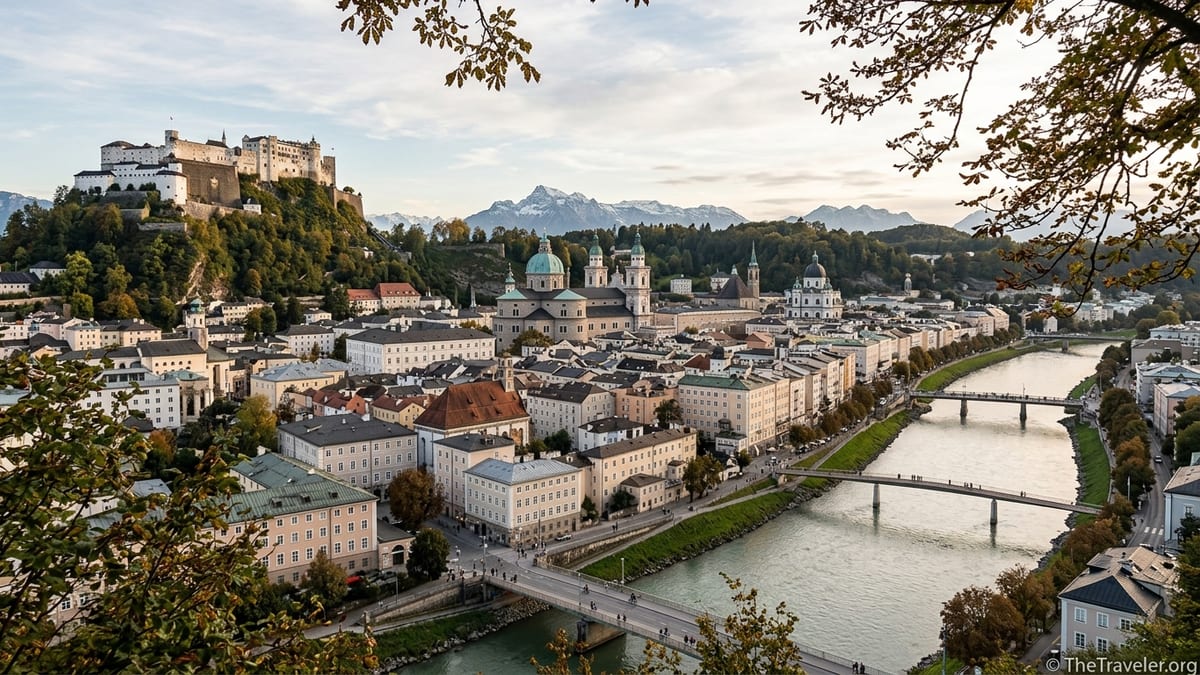
Salzburg is one of Europe’s most compact and atmospheric cities: baroque domes framed by snow-capped Alps, Mozart’s legacy around every corner, and café terraces perfuming the streets with coffee and cake. Despite its postcard looks, it is a very livable, walkable place with reliable public transport and a food scene that ranges from rustic beer halls to refined hotel dining rooms. This guide focuses on practical, up to date advice on what to do, see, and eat in Salzburg today, with concrete examples of prices, neighborhoods, and experiences so you can plan a realistic itinerary rather than an idealized fantasy.
Get the latest updates straight to your inbox!
Getting Oriented in Salzburg
Salzburg is split between its UNESCO listed Altstadt on the left bank of the Salzach River and the slightly newer Neustadt on the right bank. Most visitors sleep and spend the bulk of their time in or near the Altstadt, where you can walk between the cathedral, Mozart’s Birthplace on Getreidegasse, and Mirabell Gardens in around 15 minutes. The main train station, Salzburg Hauptbahnhof, sits a little north of the river; walking from the station to the heart of the Old Town takes about 20 to 25 minutes at an easy pace, or a 10 minute trolleybus ride.
For a short city break of two to three days, it makes sense to stay either in the Altstadt itself, in the lanes around Getreidegasse and the cathedral, or on the right bank near Linzergasse and the Mirabell area. These districts keep you within walking distance of the Hohensalzburg Fortress funicular, major museums, and many of the classic coffee houses. If you are arriving by train and have luggage, note that several city buses and trolleybuses run directly from the station forecourt to stops like Makartplatz and Ferdinand-Hanusch-Platz that drop you just a few minutes’ walk from most central hotels and guesthouses.
English is widely spoken in hotels, restaurants that serve visitors, and at major cultural attractions, but you will still hear plenty of Austrian German on the streets and in supermarkets. Picking up a few basics like “Danke” (thank you) and “Bitte” (please/you are welcome) goes a long way, especially in smaller family run places. In terms of budget, Salzburg is not cheap. A typical main course in an ordinary sit down restaurant often falls in the 17 to 25 euro range for something like schnitzel or roast pork, and even a quick fast food style meal can run around 12 to 15 euros. Planning to mix restaurant meals with bakery lunches or supermarket picnics is a sensible way to keep costs under control.
Seasonality shapes the feel of the city almost more than the weather. July and August are dominated by the prestigious Salzburg Festival, when hotel prices spike, restaurants book out weeks in advance, and evening dress becomes more formal around the Festspielhaus. December and early January bring Advent markets and Christmas lights in Residenzplatz and Domplatz, while shoulder seasons in April, May, late September and October give a calmer atmosphere, cooler temperatures, and better value, especially on accommodation.
Practical Transport & Money Tips
Salzburg’s public transport is built around an integrated system of trolleybuses and buses that are clean, frequent, and fairly easy to navigate. If you are only riding occasionally, a single ticket in the city zone costs a little over 2 euros when bought from a machine or tobacconist, with a day ticket for unlimited travel around the core starting just under 5 euros. For many visitors, however, the Salzburg Card becomes the simplest solution: valid for 24, 48, or 72 hours, it includes unlimited travel on city public transport plus free entry to most key sights. As of the 2025 and 2026 tariffs, summer prices for adults start just above 30 euros for 24 hours and increase for longer durations, with slightly lower winter rates.
If you are staying mainly in the Old Town and enjoy walking, you may only need a ticket to and from the station, or for a trip out to the Schloss Hellbrunn trick fountains or the cable car at Untersberg. In that case, you can buy a single or 24 hour ticket from the blue ticket machines at major stops like the Hauptbahnhof or Mirabellplatz, from the “Trafik” kiosks, or directly from many drivers for a small surcharge. The local transport authority also offers useful regional options, such as a Freizeit Ticket Salzburg day pass that covers two adults and up to four children under 15 on most regional lines for under 20 euros, which can make an excursion day to the lakes or mountains more affordable than separate tickets.
Within the city, cash and cards are both widely accepted. Supermarkets, hotels, and almost all sit down restaurants will take major credit cards, though some traditional Gasthäuser still prefer Austrian bank cards and cash, particularly for smaller amounts under 15 euros. Carrying 40 to 60 euros in small notes and coins is wise for paying at farmers’ market stalls, tipping, or buying a quick coffee and pastry at a neighborhood bakery where card minimums may apply. ATMs are easy to find around the main squares, but you should avoid independent machines with high markups and instead use those attached to established banks.
Salzburg uses the euro, and advertised prices in restaurants are generally final, with service included. Tipping is customary but modest: rounding up to the nearest whole euro at cafés, or adding around 5 to 10 percent in restaurants when you are happy with the service. When paying, it is normal to tell the server the total you would like to pay, including tip, rather than leaving money on the table. For example, if your bill is 22 euros, you might say “Machen wir 24” to round up to 24 euros.
Essential Sights & Classic Salzburg Experiences
Hohensalzburg Fortress dominates almost every postcard view of Salzburg, and visiting it provides more than just a panoramic outlook over the city. You ride the FestungsBahn funicular from the base near Kapitelplatz and emerge inside one of Europe’s largest preserved medieval fortresses, with courtyards, museums, and ramparts to explore. In practice most travelers spend between two and three hours here, especially if they linger over the audio guide or a coffee at the terrace café. Entrance tickets can be bundled with a funicular ride and optional “princely rooms” tour; if you hold a valid Salzburg Card, basic entrance and funicular rides are included, which can save a family a noticeable amount.
Another cornerstone of a first visit is Mirabell Palace and its formal gardens. The gardens are free to enter and open daily, with flower beds aligned perfectly to frame the cathedral and fortress in the distance. Fans of “The Sound of Music” will immediately recognize the Pegasus fountain and steps used in the “Do-Re-Mi” sequence. Even if you have never seen the film, walking through the dwarf garden, rose arches, and manicured parterres is a calming counterpoint to the narrow lanes of the Altstadt. Many travelers stop at a bakery on nearby Rainerstrasse or a café along Mirabellplatz to pick up a takeaway coffee and pastry to enjoy on one of the benches overlooking the flower beds.
To understand Salzburg’s musical heritage, it is worth visiting at least one of the Mozart museums. Mozart’s Geburtshaus, his yellow painted birthplace on Getreidegasse, is generally more crowded but offers a compact introduction, with manuscripts and instruments displayed on several floors. Mozart Wohnhaus, his later family residence across the river on Makartplatz, tends to feel quieter and more spacious. Entry to each is priced similarly to other European city museums, though if you have the Salzburg Card you can walk in without extra payment. If your budget allows, consider buying a ticket to a small scale classical performance in the Marble Hall of Mirabell Palace or in one of the churches; prices vary, but simple evening concerts can sometimes be found from around 30 to 40 euros if you book ahead.
For a taste of Salzburg’s natural setting without leaving town, walk or take the Mönchsberg lift up to the wooded ridge overlooking the city. From there, an easy path follows the edge of the cliff, giving changing perspectives over church towers, the Salzach, and the Alps beyond. You can finish near the Museum der Moderne terrace café for a drink with a view, then descend by path or elevator back into the bustle. In summer, locals also head to the city’s outdoor pools and riverbanks, while even in winter, a stroll along the river promenade at sunset can be as rewarding as any museum visit.
Beyond the Old Town: Easy Day Trips and Local Life
One of Salzburg’s biggest advantages is how quickly you can reach countryside from the city center. A classic half day excursion involves catching a city bus toward Schloss Hellbrunn, the early 17th century pleasure palace best known for its trick fountains. Entry includes a guided tour where water suddenly spurts from statues and stone benches, amusing children and adults in equal measure. Direct buses from central stops reach Hellbrunn in about 20 minutes, and the attraction is again covered by the Salzburg Card. Pairing Hellbrunn with a visit to the nearby zoo or a walk along the Hellbrunner Allee tree lined avenue back toward the city makes for a full, satisfying day.
Lakelands are another draw. The Salzkammergut region, with its clear lakes and mountain scenery, starts within an hour of Salzburg by regional train or bus. Independent travelers often choose easy connections to places like St. Gilgen on Lake Wolfgang or Mondsee, where you can rent a small pedal boat, swim in summer, or simply sit at a lakeside café with a coffee that costs only slightly more than in the city. Organized day tours, sold through hotel desks and visitor centers, also run to Hallstatt and other postcard villages. These packages typically cost significantly more than public transport but bundle multiple stops and commentary, which some people find worthwhile for a once in a lifetime visit.
If you want a more everyday glimpse of Salzburg beyond the museum circuit, dedicate a morning to exploring neighborhoods north of the train station or across the river from the Altstadt. The area around Andräviertel, for example, mixes small galleries and shops with residential streets. On a weekday, you might see schoolchildren heading home past apartment blocks, office workers grabbing lunch at a Billa supermarket deli counter, or retirees sharing coffee at an unpretentious Konditorei where a slice of cake still costs noticeably less than in the touristy core. Dropping into a branch of a local supermarket chain such as Spar, Billa, or Hofer for picnic supplies can be an eye opener: a fresh bakery roll, cheese, and fruit lunch might total under 7 or 8 euros, compared with 20 euros or more for a seated restaurant meal in the Old Town.
Regional rail links also open up options. From Salzburg Hauptbahnhof, frequent trains run toward Germany and deeper into Austria. Independent travelers sometimes base themselves in Salzburg but hop by train to Berchtesgaden in Germany for the Kehlsteinhaus area, or eastward to Bad Ischl, the former imperial summer retreat. While some long distance services require advance purchase for best fares, regional trips can often be bought on the day from station machines. Be sure to check whether any guest card from your accommodation includes local train or bus travel; some conferences and hotels in the wider region now provide “Guest Mobility Tickets” that include free public transport on specified routes during your stay, which can represent significant savings if used well.
Where and What to Eat in Salzburg
Salzburg’s food scene spans traditional Austrian Gasthäuser, hotel dining rooms, modern bistros, and simple Imbiss snack stands. Around the Old Town you will see many menus leaning heavily on classics such as Wiener Schnitzel, Salzburger Nockerl, roast pork with dumplings, and goulash. A hearty main in a midrange central restaurant often costs in the high teens or low 20s in euros, with a 0.5 liter draft beer typically falling in the 4 to 6 euro range depending on location. In more upscale dining rooms, especially in festival season, mains can easily rise into the 30 euro bracket. For a more local, relaxed feel, many residents recommend longtime establishments like Bärenwirt on the left bank or Zirkelwirt near Papagenoplatz, which focus on solid Austrian dishes at prices that, while not cheap, feel fair for the portion sizes and quality.
If your budget is tighter, it is worth thinking strategically about which meals you want to splurge on. One common pattern is to enjoy a larger hot lunch at a restaurant, when some menus offer slightly lower prices or specials, then switch to a lighter, cheaper dinner from a supermarket deli counter or bakery. In the large Interspar hypermarket attached to shopping centers near the station, for example, you can pick up prepared salads or hot dishes in the 4 to 8 euro range. Bakeries scattered around the city sell filled rolls, pastries, and slices of pizza style flatbreads that work well for quick, inexpensive lunches on the go. Coffee in a sit down café might cost around 3 to 4 euros for an espresso or cappuccino, with house desserts like apple strudel or Sachertorte slices typically between 4 and 6 euros.
Do not skip Salzburg’s café culture. Traditional coffee houses with wood paneling, glass cake displays, and newspapers on wooden holders are still very much part of daily life. Order a Melange (similar to a cappuccino but with local character) and a slice of rich chocolate Mozart Torte or a simple Topfenstrudel, and linger while watching the flow of people between errands and sightseeing. You will also encounter Salzburg’s sweet specialty, the chocolate and marzipan Mozartkugel, sold in both branded confectioners and more affordable supermarket versions. While gift boxes in the tourist heart can feel expensive, budget travelers often buy loose pieces in supermarkets instead, where the cost per ball is lower.
Vegetarians and vegans will not struggle in Salzburg, even though menus highlight meat. Many traditional restaurants now mark meat free and vegan dishes clearly, and you will find dedicated vegetarian or mixed concept places in the central districts. Italian style pizzerias and pasta spots, as well as Middle Eastern eateries offering falafel and mezze plates, are common options for those seeking plant based or simply lighter meals. Prices for a basic pizza in an ordinary pizzeria typically run between 10 and 15 euros. If you are self catering, supermarkets carry a growing range of plant based products, and farmers’ markets such as the Grünmarkt off Universitätsplatz display local fruit, vegetables, cheeses, and cured meats that make excellent picnic spreads.
Culture, Festivals, and Seasonal Highlights
Music anchors Salzburg’s cultural identity in a way few cities can match. Beyond the Mozart heritage and year round concert offerings, the Salzburg Festival in late July and August is the city’s single biggest event. Opera, drama, and high caliber classical performances draw audiences from around the world, and tickets for headline evenings can cost from the low hundreds of euros upward. Even if your budget or interests do not stretch to a full opera, you can still feel the atmosphere by wandering around the Festspielhaus complex on performance evenings, when tuxedos and evening gowns mingle with tourists in hiking clothes browsing ice cream stands along Hofstallgasse.
Smaller festivals and cultural events fill other months. In spring, Easter concerts and church music series take advantage of Salzburg’s acoustically rich baroque interiors. Summer also brings outdoor film screenings and open air jazz in certain squares, often free of charge. Check current listings through the official tourist information center or at your hotel reception when you arrive, since small venue events can change year to year. Many museums, including the Haus der Natur science museum and the Museum der Moderne on Mönchsberg, host rotating exhibitions alongside permanent collections, so returning visitors will often find something new.
The run up to Christmas is one of the most atmospheric times to visit. From late November through to Christmas Eve, wooden stalls appear in Residenzplatz, Domplatz, and Mirabellplatz, selling everything from hand carved decorations and woolen socks to sausages, raclette, and mugs of spiced Glühwein. Food and drink at the markets is not cheap, but the social experience of standing under twinkling lights with a paper plate of freshly fried Bauernkrapfen doughnuts or a cup of punch in hand is hard to beat. The markets can be extremely busy on Friday and Saturday evenings, so families with small children or anyone seeking a gentler pace might aim for weekday afternoons instead.
Winter also brings practical considerations. Temperatures can dip well below freezing, and snow or slush makes good footwear essential. Many historic streets are cobbled and can be slippery, especially on hills leading up toward the Kapuzinerberg and Mönchsberg viewpoints. Layered clothing, a hat, gloves, and a warm, waterproof outer layer will make your explorations far more comfortable. In contrast, summer can be surprisingly hot, with daytime highs in July and August often above 25 degrees Celsius and heat radiating from stone walls. Air conditioning is still not universal in smaller hotels and guesthouses, so if you are sensitive to heat, check this detail when booking and plan for early morning or evening sightseeing with a midday pause in a shaded café or your room.
Budgeting, Safety, and Practicalities
To build a realistic daily budget for Salzburg, start from your own travel style. A backpacker staying in a hostel dorm, walking almost everywhere, and eating one restaurant meal per day with two cheaper self catered meals might aim for around 60 to 90 euros per day excluding accommodation, depending on how many paid attractions they include. A midrange traveler staying in a three star hotel, using public transport regularly, eating two sit down meals most days, and buying a Salzburg Card for one or two days should plan for something closer to 120 to 180 euros per person per day. High end stays with boutique hotels, festival tickets, and fine dining can easily exceed that.
Attraction costs can add up quickly if you pay individually. For many first timers planning to see Hohensalzburg Fortress, one or two Mozart museums, Hellbrunn Palace, and a couple of city museums, the Salzburg Card often works out cheaper over a concentrated 24 or 48 hour period than separate tickets. The card also reduces hassle: you skip ticket machines for local buses and simply show your card when inspected. If your trip is longer, consider grouping most of your big ticket sightseeing into one or two days during which you exploit the card heavily, then spend the rest of your stay enjoying free or low cost activities like river walks, viewpoints, churches, markets, and window shopping.
Salzburg is generally considered safe, with low rates of violent crime. Pickpocketing can occur in crowded areas such as city buses at rush hour, the train station, markets, and busy festival events, so standard big city precautions apply. Use a money belt or neck wallet if you are carrying passports and larger sums of cash, avoid leaving bags unattended even for a moment, and be cautious of anyone who causes a distraction in tight spaces. Taxis are regulated and can be found at signed ranks near the station and major squares; drivers use meters, and short central rides usually cost under 15 euros, but for airport transfers or late night returns it is worth confirming approximate fares with your hotel.
Healthcare access is good, and pharmacies (Apotheken) are well distributed through the city. For non emergency issues, pharmacists can give advice and sell over the counter medicines, and many are comfortable speaking English. Tap water is safe and of high quality, often coming from alpine sources, so you can confidently refill a reusable bottle instead of buying bottled water repeatedly. Free public toilets exist in some central areas, but they are not frequent, and cafés expect you to be a paying customer to use facilities. Budget a small amount daily for occasional paid restrooms in transport hubs or shopping centers if you do not plan frequent café stops.
FAQ
Q1: How many days do I need in Salzburg for a first visit? Most travelers find that two full days is enough to see the major sights in the Old Town and fortress, but three to four days lets you add an easy excursion to Hellbrunn Palace or the nearby lake district without rushing.
Q2: Is the Salzburg Card really worth it? The Salzburg Card is usually good value if you plan to visit several paid attractions and use public transport in a concentrated 24 or 48 hour period, but if you prefer mostly free activities or are content with just one paid museum, buying individual tickets and an occasional bus ticket may cost less.
Q3: What is the best area to stay in Salzburg? For first time visitors, the Altstadt and the area around Mirabell Gardens and Linzergasse are ideal because you can walk to most major sights, with easy bus links to the train station and airport.
Q4: Can I visit Salzburg as a day trip from Vienna or Munich? It is technically possible to visit Salzburg on a long day trip from Vienna or Munich using fast trains, but you will only scratch the surface; if you can, an overnight stay gives you time to enjoy the evening atmosphere after day trippers leave.
Q5: Is Salzburg expensive to eat out? Eating out in Salzburg is relatively expensive compared with many other European cities, with typical main courses in central restaurants often around 17 to 25 euros, so mixing restaurant meals with bakery or supermarket options is a smart way to manage costs.
Q6: Do I need to book restaurants and attractions in advance? Outside of peak summer festival season and busy Advent weekends you can usually get into most restaurants and attractions without long term reservations, but for popular evening venues, fortress dinners, or special concerts it is wise to reserve a few days ahead.
Q7: Is Salzburg walkable for travelers with limited mobility? The core of Salzburg is compact and relatively flat along the river, but there are cobblestones, occasional steep lanes, and steps; planning to use trolleybuses and elevators such as the Mönchsberg lift can make the city more manageable if you have mobility concerns.
Q8: What should I pack for a trip to Salzburg? Pack comfortable walking shoes with good grip, layers for changeable weather, a light waterproof jacket, and in winter a warm coat, hat, and gloves, plus a small daypack for carrying water and a compact umbrella.
Q9: Is English widely spoken in Salzburg? Yes, staff in hotels, restaurants that serve visitors, museums, and transport services generally speak good English, though learning a few German phrases is appreciated and can be useful in more local shops or markets.
Q10: How safe is Salzburg for solo travelers? Salzburg is widely regarded as safe for solo travelers, including women, especially in the central districts; basic precautions like staying in well lit areas at night and keeping an eye on your belongings are usually sufficient.