


San Cristóbal is the eastern gateway to Ecuador’s Galápagos Islands, a compact, sea lion filled island that blends raw wildlife encounters with an easygoing small town on the edge of the Pacific. For independent travelers weighing where to base themselves, it offers a quieter alternative to busier Santa Cruz while still providing reliable flights, regulated tours and enough dining and lodging to stay several days without feeling cut off.
Get the latest updates straight to your inbox!
Where San Cristóbal Fits in the Galápagos
San Cristóbal lies at the eastern end of the Galápagos archipelago, about 1,000 kilometers off mainland Ecuador in the Pacific Ocean. Most of the island is protected inside Galápagos National Park, with people concentrated in and around Puerto Baquerizo Moreno on the southwest coast. This small port town is the provincial capital of Galápagos and one of only three main hubs for visitors, alongside Puerto Ayora on Santa Cruz and Puerto Villamil on Isabela.
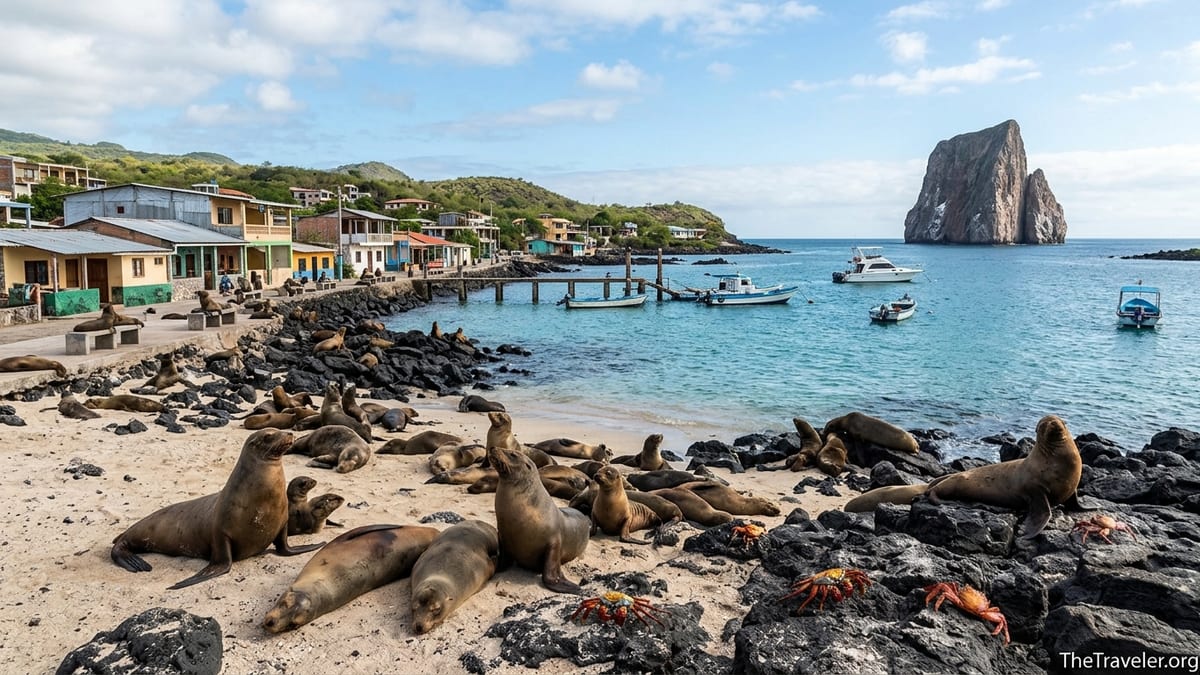
Puerto Baquerizo Moreno faces a broad bay where Galápagos sea lions haul out on the sand, benches and even public walkways. Behind the waterfront, low-rise streets hold simple guesthouses, a few midrange hotels, small tour agencies, cafés and seafood restaurants. The atmosphere is more village than resort, and by island standards it is calm: nightlife is limited, and most visitors are up early for snorkeling or boat excursions rather than bars.
San Cristóbal has its own commercial airport, Aeropuerto San Cristóbal (SCY), just outside town. At the time of writing in November 2026, national airlines run flights from Quito and Guayaquil either directly or via Baltra, with exact routes and frequencies shifting by season and year. Travelers should always confirm current schedules when planning, as airlines occasionally consolidate Galápagos routes or alter which mainland city connects to San Cristóbal nonstop.
Compared with Santa Cruz, San Cristóbal has fewer restaurants, hotels and tour operators, and slightly less inter-island ferry and flight capacity. In exchange, you get quieter streets, sea lions and marine iguanas almost everywhere you look, and easy access to classic sites like Kicker Rock. Versus Isabela, San Cristóbal feels somewhat more organized, with more consistent services and a broader choice of day tours, though Isabela has more sweeping beaches and volcanic hikes.
Who San Cristóbal Suits Best
San Cristóbal is a strong fit for travelers whose priority is time in the water with wildlife. Snorkeling and diving around Kicker Rock, the protected cove at Cerro Tijeretas, and sites reached on full day boat tours regularly offer encounters with sea lions, sea turtles, reef sharks and, in the cooler season, schooling fish and sometimes hammerhead sharks. The island suits confident swimmers and those who are happy to organize day trips locally or through a trusted agency rather than relying on cruise-ship structure.
The island town’s scale and walkability also appeal to travelers who prefer a slower pace. Puerto Baquerizo Moreno is compact enough that many beaches, the Interpretation Center and the main pier are reachable on foot from most lodgings. Families with children, older travelers and people who enjoy evenings strolling a waterfront malecón rather than bar-hopping often find San Cristóbal an easy introduction to land-based Galápagos travel.
On the other hand, visitors who want the widest choice of restaurants, shops and tour options may gravitate toward Santa Cruz. Puerto Ayora has a larger population, more hotel categories, a busier nightlife and more departure points for day tours across the central islands. Serious hikers and those looking for dramatic multi-day volcano treks often put more time into Isabela, whose Sierra Negra and other volcanoes are currently among the main land-based hiking draws.
Because inter-island ferry links and small-plane schedules are limited, travelers with very short trips, or those wary of sea crossings, might opt to spend more of their time on Santa Cruz, which has the most frequent connections. San Cristóbal works best either as a focused 2 to 4 night stay, built around Kicker Rock and nearby sites, or as one leg of a longer island-hopping itinerary that also includes Santa Cruz and Isabela.
Climate, Seasons and When to Visit
The Galápagos have two broad seasons shaped by shifting ocean currents rather than strict calendar dates. The warmer, wetter season generally runs from about December to May, when air temperatures tend to be in the mid to high 20s Celsius and brief but intense showers are common, often followed by sunshine. Seas are usually calmer and surface water temperatures warmer, which many snorkelers and divers find more comfortable.
The cooler, drier season, often called the garúa season, typically runs from June to November, when the Humboldt and other cold currents dominate. Air temperatures are lower, the sky can be overcast, and misty drizzle in the highlands contrasts with relatively dry conditions on the coasts. Surface water temperatures usually drop to around the high teens to low 20s Celsius. As of late October 2026 wildlife calendars compiled by Galápagos based operators report rougher average sea conditions in this season, balanced by especially rich marine life and more frequent sightings of some pelagic species.
On San Cristóbal, both seasons can be rewarding. In the warm season, snorkeling is generally more comfortable without heavy wetsuits, and many land birds and reptiles are breeding or nesting. In the cool garúa months, nutrient rich waters often bring more fish, which in turn attracts sea lions, marine birds and sometimes larger sharks and rays around offshore sites like Kicker Rock. Visibility and sea state can change week to week, so travelers whose primary goal is a specific wildlife encounter should check recent reports from local dive and snorkel operators close to their travel dates.
Before finalizing your trip, it is wise to verify expected sea conditions, water temperature ranges and highlight wildlife events for your specific month using updated resources from Galápagos based tour companies or conservation organizations, noting the verification date. Because El Niño and La Niña patterns can alter currents and conditions, information checked in late 2026 may not hold exactly for future seasons.
Entry Requirements and Galápagos Park Rules
Visiting San Cristóbal means entering the wider Galápagos protected area, which is regulated carefully to limit environmental impact. Before boarding your flight from Quito or Guayaquil, you must obtain the Galápagos Transit Control Card, often called the TCT, at a designated counter in the mainland airport. Staff also inspect your luggage to prevent the introduction of seeds, soil or fresh food that could harm island ecosystems. The TCT carries a fee, which is subject to change and should be confirmed at the time of booking.
On arrival in the islands, travelers pay the Galápagos National Park entrance fee at the airport. As of 2025, the park authority published updated fee tables that distinguish between foreign visitors, Ecuadorian nationals, residents and certain student or transit categories. Amounts are set in US dollars, the legal currency of Ecuador, and are periodically revised, so visitors should check current fees directly with official sources before travel and be prepared to pay in cash on arrival unless procedures change.
Once in San Cristóbal, you are subject to general park rules intended to protect wildlife and habitats. These typically include staying on marked trails, keeping minimum distances from animals, not touching or feeding any wildlife, and taking all litter back with you. Many visitor sites in the Galápagos can only be accessed with a certified naturalist guide and on authorized itineraries, and group sizes are capped.
Regulations evolve as the park responds to conservation needs and tourism pressure, and not every site on San Cristóbal has the same rules. Before visiting, and again when arranging excursions in Puerto Baquerizo Moreno, travelers should confirm which sites are currently open, whether visits must be guided, and what group size limits apply according to the latest Galápagos National Park regulations and licensed tour operators.
Top Things to Do in and around Puerto Baquerizo Moreno
The waterfront and low hills around Puerto Baquerizo Moreno offer several of San Cristóbal’s most accessible experiences without long boat rides. A natural starting point is the Interpretation Center, a modern facility just outside town that explains the natural history, ecosystems and human stories of the archipelago through exhibits and short trails. Panels cover topics from tectonic origins and endemic species to early colonization, conservation challenges and current management of tourism and fisheries.
From the Interpretation Center, a trail climbs to Cerro Tijeretas, or Frigatebird Hill, a lookout with sweeping views over the coast and inland volcanic terrain. Below, a sheltered cove provides one of the island’s classic self-guided snorkel spots, where visitors commonly encounter sea turtles, sea lions and schools of fish close to shore. Access rules, including whether a guide is required or recommended, can shift over time, so it is worth checking with the center or your accommodation before heading out.
Within town, Playa Mann offers a sandy beach that is often shared with dozing sea lions, especially in the late afternoon. Simple eateries nearby make it an easy place to spend a few hours between excursions. Along the main waterfront, the malecón and central pier are also prime areas for sea lion watching at dawn and dusk, when animals return from feeding and clamber onto steps, docks and benches.
Just outside Puerto Baquerizo Moreno, La Lobería beach provides another mix of surfing waves, snorkeling opportunities and abundant sea lions, along with marine iguanas basking on black lava rocks. Access is usually by taxi or a longer walk from town. As with other sites, travelers should verify at the time of visit whether La Lobería is open for self-guided exploration or subject to any seasonal closures, and respect signage indicating where to walk or avoid nesting areas.
Highlands, Kicker Rock and Other Day Trips
San Cristóbal’s interior offers a contrasting landscape of higher, greener ground and agricultural zones. Typical highland excursions visit a giant tortoise reserve where you can walk designated paths among Galápagos giant tortoises roaming semi-wild in fields and forest patches. Many tours also include a stop at a seasonal freshwater crater lake and viewpoints with broad panoramas over the coastline. Depending on current regulations, parts of the highlands may be accessed self-guided by hiring a pickup truck taxi for a few hours, while other areas may require a certified guide.
Offshore, Kicker Rock, known locally as León Dormido, is the island’s emblematic marine site. This towering tuff cone split into two sheer rock faces is reachable only by boat on authorized excursions. Snorkelers and divers drift through the channel between the walls, looking for schools of fish, sea turtles, rays and reef sharks; in the cooler season, operators sometimes report hammerhead sightings in deeper water. Tours typically include lunch on board and a stop at a nearby beach, and prices vary with boat size and inclusions, so comparing a few reputable agencies in town is advisable.
San Cristóbal also serves as a base for longer boat trips that circle the island or reach specific coastal sites for snorkeling and wildlife viewing. Some itineraries marketed locally as “360” style tours make a near complete circuit of the island in a day, stopping at chosen bays and offshore points depending on conditions and permits. These trips are tightly regulated, with daily visitor limits and route restrictions, so travelers should book with licensed operators and confirm exactly what is included.
Where permitted by current rules, day tours from San Cristóbal may reach Española Island, famous for waved albatross breeding in certain months, colorful marine iguanas and dramatic cliffs. Access to Española and other outer islands is strictly controlled by the national park, with only authorized boats and guides allowed to land at designated visitor sites. Availability, landing permissions and the types of tours on offer can change year by year, so it is important to check with operators who hold up-to-date permissions and to avoid assuming that a site will be accessible simply because it appears in older guidebooks.
How Long to Stay and Where to Sleep
San Cristóbal can be approached in different ways depending on your overall Galápagos itinerary. With 2 to 3 full days, most independent travelers can visit the Interpretation Center and Cerro Tijeretas, spend time on Playa Mann and the waterfront, fit in a half or full day in the highlands, and devote one full day to Kicker Rock or a similar marine excursion. This is enough to get a sense of the island without rushing, provided arrival and departure days are not consumed entirely by flights and transfers.
With 4 to 5 full days, you can explore at a more relaxed pace and add further activities, such as an additional offshore snorkeling trip, surfing sessions, or a second highland or coastal excursion tailored to your interests. Extra time also gives flexibility to reschedule marine outings if sea conditions force last minute changes. There is no single “right” length of stay, but travelers who are particularly focused on snorkeling or photography often appreciate at least four nights to allow for weather and to revisit favorite spots.
Almost all visitors base themselves in Puerto Baquerizo Moreno, which concentrates island services and departures. Accommodation spans simple guesthouses and hostales at the budget end, a range of midrange hotels with private bathrooms and air conditioning, and a smaller selection of higher-end properties that may offer sea views, pools or more polished service. Because businesses open, close and renovate frequently, it is better to look for up-to-date reviews and maps than to rely on any fixed list of names.
As a rough guide in late 2026, many budget rooms in town fall in an approximate range that would be considered moderate in mainland Ecuador, reflecting the higher costs of operating in the islands. Midrange properties often cluster in a higher bracket, with premium waterfront or boutique stays priced above that. These ranges fluctuate with demand, season and advance booking, so travelers should treat examples as indicative only and confirm current nightly rates directly with lodgings.
Dining, Services and Everyday Practicalities
Puerto Baquerizo Moreno’s dining scene is compact but sufficient for a stay of several days. Visitors can expect local seafood dishes, simple grills, Ecuadorian staples and a handful of places catering to international tastes with items such as pasta, pizzas or vegetarian plates. Many restaurants are casual, and fixed price “almuerzo” lunch menus are common. Compared with Santa Cruz, there are fewer upscale dining options, but fresh fish and ceviche are easy to find.
Basic services in town include small supermarkets and convenience stores where you can buy water, snacks, sunscreen and some toiletries. There are ATMs connected to Ecuador’s banking network, though outages do occur, especially during power or connectivity issues. It is sensible to carry a buffer of cash in US dollars, especially for park fees, local taxis, smaller eateries and water taxis, as not all businesses accept cards consistently.
Internet access is improving gradually across the Galápagos but remains less reliable and slower than in most mainland cities. Many hotels and guesthouses offer Wi-Fi, though speeds and stability can vary and may be affected by weather or island infrastructure. Mobile data coverage is present but not universal, and visitors should not expect seamless video calls or remote work conditions without interruption. As of late 2026, travelers continue to report fluctuations in connectivity, so anyone who must stay online for work should plan with redundancy and patience.
Card acceptance is more common at midrange and higher-end hotels, established tour agencies and some restaurants, but smaller family-run businesses may prefer cash or add surcharges for card use. Before relying on cards for larger payments such as tours or accommodation, it is prudent to confirm accepted methods and any additional fees. Budgeting some extra funds for unforeseen expenses like ferry changes or equipment rental is also wise.
Getting To, From and Around San Cristóbal
Most travelers reach San Cristóbal by flying from Quito or Guayaquil on the Ecuadorian mainland. Flights operate under national aviation regulations, and at the time of writing their schedules are subject to seasonal adjustment and demand. Some services run directly to San Cristóbal, while others route passengers via Baltra for security and logistical reasons. All Galápagos bound flights apply baggage rules similar to domestic Ecuador services, but travelers should always verify current allowances with the airline to avoid excess charges.
Between the inhabited islands, movement is heavily regulated by the park and local authorities. Public passenger speedboats, often called lanchas, connect San Cristóbal and Santa Cruz on established schedules, typically taking about two to two and a half hours depending on sea conditions. In practice, operators commonly run one early morning and one midafternoon departure, though exact times and the number of boats in service can vary. Tickets are often sold both in advance and through agencies in town; demand can spike in high season, so booking ahead when dates are fixed is advisable.
There is currently no regular direct passenger ferry between San Cristóbal and Isabela. Travelers making that journey by boat usually connect via Santa Cruz, often taking a morning lancha into Puerto Ayora and an afternoon crossing onward, which can occupy most of a day. Water taxis shuttle passengers between the main pier and moored boats for a small per-trip fee that is typically paid in cash; while representative amounts have been reported in recent years, visitors should check the going rate on arrival.
Small inter-island planes operated by authorized companies provide another way to move between San Cristóbal, Baltra and Isabela, subject to weather, demand and regulatory approvals. These flights can save time and reduce exposure to rough seas, but they have strict luggage limits, often lower than standard airline allowances, and may weigh passengers and bags carefully. Prices and schedules shift with fuel costs and maintenance cycles, so anyone considering this option should confirm current routes, baggage rules and safety standards before booking.
Within Puerto Baquerizo Moreno, most places are reachable on foot. The airport sits close enough to town that some travelers choose to walk between the terminal and their accommodation, though taxis are widely available for those with luggage. Local taxis are typically white pickup trucks with set fares for common routes, such as trips to La Lobería or into the highlands, though systems can be updated and posted rates may apply. Short water taxi hops between the pier and anchored boats or nearby coves are part of daily life; as with land transport, visitors should ask about current prices and any shared vs private options.
Sample Itineraries and How This Guide Helps You Decide
For a short 2 to 3 day stay on San Cristóbal, one realistic outline is to arrive and settle in on day one, exploring the waterfront and Playa Mann in the afternoon and perhaps visiting the Interpretation Center if time allows. Day two can focus on a full day Kicker Rock snorkeling or diving tour, chosen with a reputable operator who explains current conditions and permits. Day three might be reserved for a half day highlands excursion combined with free time in town before departure, or for revisiting favorite sites like Cerro Tijeretas and La Lobería if flight times permit.
With 4 to 5 days, you could keep the same core structure but add extra time in the highlands, a second marine day trip such as a “360” style circuit where available, or more unhurried beach time and independent snorkeling near town. This longer stay also makes it easier to connect your visit with other islands, for example arriving in San Cristóbal, then later taking a lancha to Santa Cruz to continue onward to Isabela, or flying on to another island if small-plane schedules suit your plans and budget.
Throughout your planning, this guide is meant to clarify what San Cristóbal offers relative to Santa Cruz and Isabela, what sort of traveler is likely to enjoy it most, how much time different interests might warrant, and which key activities are realistic within your chosen length of stay. It also highlights the practical constraints that shape independent travel here, from park rules and seasonal sea conditions to limited ferry links and variable internet.
Because the Galápagos are a dynamic, tightly managed destination, details related to fees, permitted sites, tour availability, transport schedules and even some local services do change. The most successful trips combine an understanding of the broad patterns outlined here with current confirmations from official park information and reliable local operators checked shortly before travel. With that combination, San Cristóbal can anchor a memorable land-based Galápagos experience that feels both immersive and manageable.