


Landing at Santiago’s Arturo Merino Benítez International Airport can be disorienting, especially after a long-haul flight. The city center lies roughly 15 to 20 kilometers away, and you have several competing options to get there, each with different prices, comfort levels and ideal use cases. This guide breaks down the main ways to travel from Santiago Airport to the city center and popular hotel districts, with current examples, typical costs and practical tips on safety and luggage so you can choose the option that fits your budget and itinerary.
Get the latest updates straight to your inbox!
Understanding Santiago Airport and Main Hotel Areas
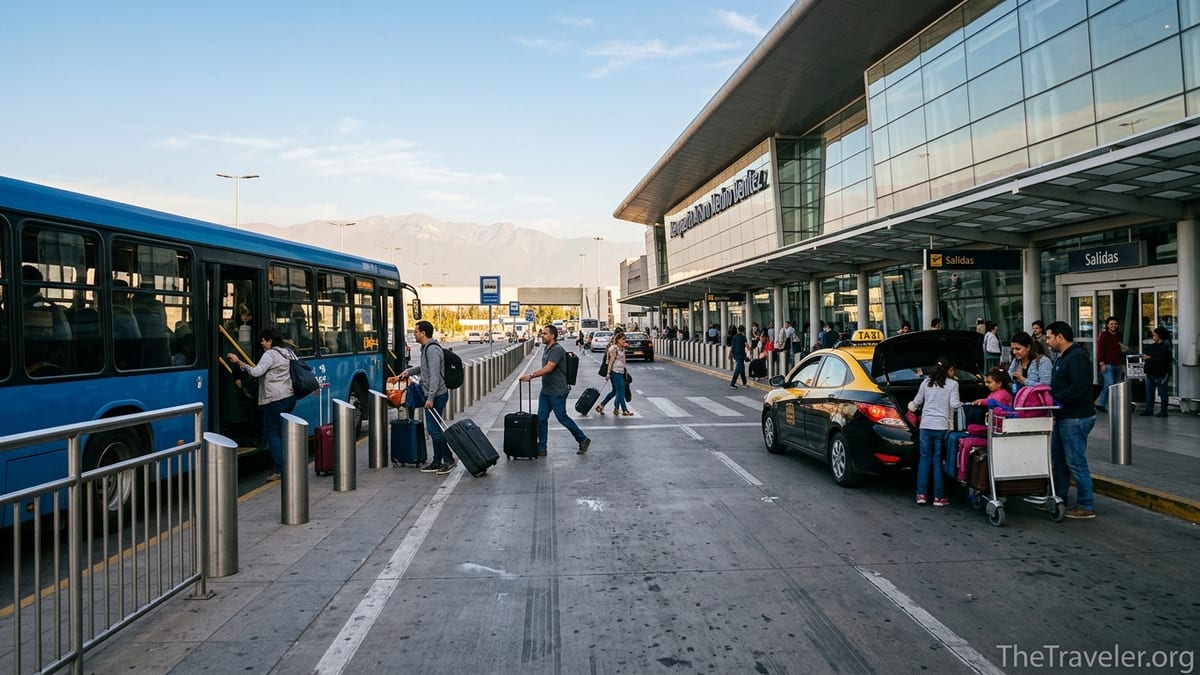
Santiago’s Arturo Merino Benítez Airport sits in the western sector of the metropolitan area, in the comuna of Pudahuel. The terminals are modern and relatively compact, with a shared ground transport center between domestic and international sections. Most transport into town funnels onto Route 68 or Costanera Norte before reaching central districts such as Centro, Providencia and Las Condes.
For most travelers, “city center” means three hotel zones. The first is downtown Santiago Centro and Lastarria, home to Plaza de Armas, the government palace and many budget and mid-range hotels. The second is Providencia, including areas around Manuel Montt and Pedro de Valdivia metro stations, which mix residential streets with business towers and restaurants. Farther east lies Las Condes and El Golf (sometimes marketed as “Sanhattan”), where many business hotels and upscale chains cluster along Apoquindo and Isidora Goyenechea.
Travel times depend heavily on traffic. In light traffic late at night, a taxi or ride-hail can reach downtown in around 20 to 25 minutes. In the evening peak on a weekday, the same trip may stretch to 40 minutes or more. Airport buses and public transport combine a predictable schedule with slightly longer journey times but much lower costs, often under the equivalent of a few US dollars.
Crucially, Santiago now has two layers of public transport linking the airport with the metro: traditional private airport buses and newer Red Movilidad routes 555 and 444 that connect the airport’s intermodal station with metro hubs like Pajaritos and La Cisterna. That makes it possible to reach many central hotels without ever stepping into a taxi, provided you are comfortable rolling your luggage through metro stations.
Official Taxis and Airport-Authorized Transfers
Official airport taxis queue directly outside arrivals and are clearly marked, typically in black or dark colors with yellow roof signs and identification numbers. Inside the terminal, you will also see desks selling fixed-price transfers in standard sedans or larger vehicles. Both options are authorized to operate from the airport and are generally considered safe, provided you use the official line and not someone approaching you in the arrivals hall.
Fares vary with fuel prices and exchange rates, but a typical official taxi into downtown Santiago, Providencia or Las Condes usually falls into a band equivalent to several tens of US dollars per car. Many desks display a board with flat prices by zone, for example one rate to Santiago Centro and Lastarria, a slightly higher one to Providencia, and a bit more again for El Golf or upper Las Condes. The advantage is predictability: you know roughly what you will pay before leaving the terminal, which can be reassuring if you have just landed on a red-eye flight.
Official transfer counters also sell private or shared rides. A private sedan can work out similar in price to a metered taxi but may include meet-and-greet inside the terminal and a prebooked driver who knows your hotel address. Shared shuttle services cost less per person and group passengers going to nearby neighborhoods on the same route, which is useful if you are traveling solo and staying in popular hotel areas like Providencia or downtown. Expect to wait a little longer while other passengers are collected, especially at busy times.
These options are best suited to travelers with heavy luggage, families with children or anyone arriving late at night who prefers a door-to-door service. For example, a family of four arriving around midnight and heading to a hotel near Costanera Center in Providencia will often find that a pre-booked private transfer is only marginally more expensive than paying four separate tickets on buses and metro, while offering a much smoother arrival experience.
Airport Buses: Centropuerto and Turbus
Two dedicated airport bus companies, Centropuerto and Turbus, run frequent services between the airport and key stations on Santiago’s Metro Line 1. These blue and green buses have long been the workhorse option for budget-minded travelers. They depart from the airport’s transport center between terminals and stop at several metro-connected points such as Los Héroes, Universidad de Santiago and Pajaritos before turning back.
Centropuerto publishes a one-way fare in the low thousands of Chilean pesos and a discounted round-trip fare a bit under double the one-way price, often saving the equivalent of a small coffee if you know you will return to the airport in the next few days. You can usually pay in cash Chilean pesos or with card at ticket counters in the terminal, and at least one company allows card purchase on board on the city side. Turbus sets similar fares and frequencies, with buses every 10 to 20 minutes during most of the day, which means long waits are rare.
The main practical difference lies in the routes and stopping patterns. Buses stop at Pajaritos, a large intermodal hub where you can connect to Metro Line 1 and to long-distance buses for Valparaíso and Viña del Mar. For many travelers staying in downtown Santiago or Lastarria, staying on until Los Héroes and connecting to Line 1 or Line 2 is more convenient. If your hotel is in Providencia, you might ride to Pajaritos or Los Héros, then hop on Line 1 eastbound to Manuel Montt or Tobalaba.
Airport buses store larger suitcases in a luggage area inside the cabin or in the low-floor zone near the door. You keep your bags with you, and staff will not tag them as in a long-distance coach, so you should stay alert and keep smaller bags on your lap or between your feet. The buses are used heavily by locals, including commuters and airport staff, which usually contributes to a sense of normality and safety, especially during the day. Late at night, waits can be longer and buses less frequent, so many travelers switch to taxis or ride-hails after midnight.
Public Bus and Metro: The Cheapest Network Option
In recent years Santiago’s integrated public transport network, Red Movilidad, has extended all the way to the airport via lines 555 and 444. Route 555 connects the airport’s intermodal stop with the Pajaritos metro hub on Line 1, while 444 runs between the airport and La Cisterna, a southern interchange for Metro Line 2 and Line 4A. These routes operate broadly in metro hours, typically from early morning to late evening, with headways of around 10 minutes on busy stretches.
If you already plan to use the metro in Santiago, combining it with one of these buses can be extremely economical. With a Bip contactless card purchased at a metro station or larger bus hub, you can tap once and ride a sequence of bus plus metro plus bus within a set time window for a single integrated fare that is usually lower than the sum of separate tickets. In practical terms, a traveler staying in a budget hotel in downtown Santiago could take the airport intermodal shuttle to the Red Movilidad platform, board the 555 to Pajaritos and then transfer to Line 1, paying the equivalent of only a couple of US dollars in total.
The trade-off is complexity. Using public buses means you must buy or already have a Bip card, understand which direction of the metro to take, and manage your luggage in potentially crowded vehicles during rush hour. There are no dedicated luggage racks on city buses, and metro trains fill up quickly in peak times between 7:30 and 9:30 in the morning and again from roughly 5:30 to 7:30 in the evening.
This network option works best if you travel light, arrive during the day and feel comfortable navigating an unfamiliar transit system. For instance, a solo backpacker landing at noon and heading to a hostel near Baquedano station can ride Centropuerto or route 555 to Pajaritos, then metro east to Baquedano and walk ten minutes, spending very little while still reaching a central, lively area.
Uber, Cabify and Other Ride-Hailing Apps
Ride-hailing apps such as Uber, Cabify and DiDi operate in Santiago and are widely used by locals within the city. Their status at the airport, however, is more nuanced. Regulations have evolved over recent years, and while many travelers manage to request and complete rides from the airport, app drivers may ask you to meet them at specific pickup zones or on the departures level rather than right at the arrivals curb to avoid conflicts with taxi concessions.
Fares for ride-hailing services are dynamic and depend on time of day, demand and traffic. On a weekday afternoon with moderate demand, a ride from the airport to a hotel near Plaza de Armas might come out slightly cheaper than an official taxi flat fare, sometimes significantly so if you catch a lull. At peak times, when many people are requesting rides, surge pricing can push the fare close to or even above what you would pay for a traditional taxi or a prebooked private transfer.
For travelers, the app environment offers a few advantages: you see an estimated fare upfront, you can share your trip with friends or family, and payment is cashless via the app. That can be reassuring if you prefer not to carry large amounts of local currency on arrival. On the other hand, if you have bulky luggage or are traveling with a family, you need to ensure you request a suitably large vehicle category. Some drivers may hesitate to handle very large suitcases if they barely fit in the trunk.
Because of these complexities, ride-hailing generally works best for travelers accustomed to using such apps in other countries and who arrive at times when public transport is still running. A business traveler landing early evening and heading to a hotel in El Golf, for example, might compare an in-app quote against the posted official taxi fare and choose whichever is lower, accepting a short walk to the pickup point if necessary.
Private Transfers and Hotel Pickups
Private transfer companies offer door-to-door journeys from Santiago Airport to specific addresses anywhere in the metropolitan area. Services range from shared vans to luxury sedans with English-speaking drivers. Many can be booked online in advance, with instant confirmation and the option to add extras such as child seats, which are required by Chilean law for younger children on longer journeys.
Prices vary by company and vehicle type, but a standard private transfer to central Santiago or Providencia typically falls into a similar bracket as a metered taxi or slightly higher, especially when you add extras. For groups of three or four people, the per-person cost can become highly competitive compared with separate bus tickets and metro fares, especially if you value being dropped right at your hotel door. Luxury options cost more and are geared toward corporate travelers staying in Las Condes or travelers on tight schedules.
Many mid-range and higher-end hotels in areas such as Lastarria, Providencia and El Golf partner with transfer companies and can book a car on your behalf. The advantage is coordination: your driver will know your flight number and track delays, meet you in the arrivals hall with a sign and guide you directly to the vehicle. This can be a relief after an overnight flight from Europe or North America, when you may not feel like negotiating with taxi drivers or deciphering bus stops in Spanish.
Private transfers are also a strong choice if you are connecting between the airport and long-distance bus terminals or train stations with large suitcases. For example, travelers heading straight to ski resorts in the Andes, or connecting from the airport to a private apartment rental in Ñuñoa or La Reina, often choose private transport to avoid balancing heavy bags through multiple transfers on the metro.
Choosing the Best Option by Hotel Area
The best way from Santiago Airport into town depends heavily on where you are staying. For hotels in downtown Santiago Centro or Lastarria, airport buses and metro are usually the sweet spot between cost and convenience. You can ride Centropuerto to Los Héroes, walk underground to Line 1 and continue one stop to Universidad de Chile or two to Santa Lucía, then walk or take a short taxi hop to your hotel. In light traffic, this whole journey often takes under an hour door to door.
If your hotel is in Providencia, such as near Manuel Montt or Pedro de Valdivia stations, the combination of airport bus or route 555 to Pajaritos and then Line 1 eastbound is straightforward. Many travelers simply stay on Centropuerto until Los Héroes, then remain on Line 1 until they reach their stop. This option keeps costs low and avoids the need to negotiate fares in Spanish. However, at peak commuting times, expect crowded metro cars along the central trunk of Line 1 between Pajaritos and Tobalaba.
For business hotels in Las Condes and El Golf, such as those near El Golf, Alcántara or Tobalaba stations, the metro still works but travel times lengthen and luggage on peak-hour trains can become bothersome. In those cases, splitting a taxi, ride-hail or private transfer between two or three colleagues can significantly increase comfort for only a modest extra cost per person. A typical pattern is to take a taxi or ride-hail directly via Costanera Norte to the financial district, arriving in 30 to 40 minutes in normal traffic.
Travelers staying farther afield, such as in residential Ñuñoa, Barrio Italia or near Estadio Nacional, may want to combine options. One common strategy is to take an airport bus to Pajaritos, connect to Line 1, transfer to Line 3 or 5 depending on the final area, then use a short app-based ride for the last kilometer. This hybrid approach keeps the main part of the journey inexpensive and predictable while preserving comfort for the final leg with luggage.
Safety, Luggage and Practical Tips
By regional standards, Santiago’s airport and main transport links are generally safe, especially during the day. Nonetheless, the usual big-city precautions apply. Keep your passport and wallet in a zipped pocket or money belt, avoid displaying large sums of cash, and keep your phone secure when using it to check maps or ride-hailing apps in public areas.
On airport buses and the metro, keep your main suitcase in front of you or in designated spaces and maintain physical contact with smaller bags at all times. Avoid placing backpacks overhead or on empty seats where you cannot feel them. Pickpocketing is more of a risk than violent crime on public transport, particularly at busy interchange stations such as Pajaritos, Los Héroes and Baquedano.
When using taxis, always choose official airport taxis from marked stands, or radio taxis arranged by your hotel. Decline offers from individuals approaching you in the arrivals hall who claim to be drivers without showing visible company identification. If you take a metered taxi in the city, ensure the meter is running from the start of the journey, or confirm a flat fare before setting off if that is the agreed system for airport runs at the time of your visit.
For ride-hailing services, confirm the license plate and driver name in the app before getting into any vehicle. Share your trip status with a trusted contact if traveling alone at night. If anything feels off, do not hesitate to cancel the ride and reorder. With private transfers, reading recent customer reviews and verifying that the company has a clear presence and contact details can provide extra peace of mind.
The Takeaway
Getting from Santiago Airport to the city center no longer means choosing between an expensive taxi and an awkward series of buses. With frequent airport buses, integrated public transport routes and a competitive mix of taxis, ride-hailing services and private transfers, you can select a route that fits your budget, comfort level and final destination.
In broad terms, airport buses and the 555 and 444 public routes paired with the metro are the best value for solo travelers and backpackers staying in central and well-connected neighborhoods. Official taxis, hotel-arranged pickups and private transfers shine for late-night arrivals, families with children and guests at higher-end hotels in El Golf and Las Condes. Ride-hailing apps occupy a flexible middle ground for those comfortable with using them and willing to adjust for occasional pickup quirks at the airport.
Before you land, take a few minutes to confirm your hotel’s exact location on the metro map, estimate your arrival time and decide how much you are comfortable spending on the transfer. With a plan in mind and a realistic sense of local options, your first journey from Arturo Merino Benítez Airport into Santiago can be straightforward, safe and even an interesting introduction to how the city moves.
FAQ
Q1. How long does it usually take to get from Santiago Airport to downtown? It typically takes about 20 to 25 minutes by car in light traffic and up to 40 minutes or more during rush hour. By airport bus plus metro, plan for roughly 45 to 60 minutes door to door depending on your exact hotel location.
Q2. What is the cheapest way to reach the city center from Santiago Airport? The lowest-cost options combine public buses 555 or 444 with the Santiago Metro using a Bip card, or use airport buses like Centropuerto to Pajaritos or Los Héroes and then metro. These combinations usually cost the equivalent of only a few US dollars per person.
Q3. Are airport taxis in Santiago safe and reliable? Official airport taxis from marked stands are generally considered safe and reliable. Always use the official line or prebook through a counter or your hotel, avoid unlicensed drivers approaching you inside arrivals, and confirm the fare or meter before departure.
Q4. Can I pay for the airport bus with a credit or debit card? At the airport, you can usually buy Centropuerto or Turbus tickets with Chilean pesos in cash or card at staffed counters, and in some cases by card on board from the city side. It is wise to carry some local cash in case payment systems are temporarily offline.
Q5. Is it practical to use the metro with large luggage? It is possible but can be uncomfortable in peak hours. Stations like Pajaritos and Los Héroes have elevators and escalators, but trains get crowded. If you have multiple large suitcases or are traveling with small children, a taxi or private transfer may be a better choice.
Q6. Do ride-hailing apps like Uber and Cabify work from the airport? Yes, ride-hailing apps operate in Santiago and many travelers use them from the airport, but pickup spots may be slightly away from the main arrivals curb. Always check the app’s instructions, confirm the license plate and be prepared to walk a short distance to meet your driver.
Q7. Which option is best if my hotel is in Providencia? For most travelers in Providencia, an airport bus to Los Héroes or Pajaritos followed by Metro Line 1 eastbound works well. If you arrive late at night or have heavy luggage, a taxi, ride-hail or hotel-arranged private transfer provides a smoother door-to-door journey.
Q8. How early should I leave my hotel to catch an international flight? For international flights, it is common to arrive at the airport about three hours before departure. From central areas like Lastarria or Providencia, allow at least one hour for the journey by car and longer if using buses and the metro, especially during rush hour or in bad weather.
Q9. Is there night transport from Santiago Airport into the city? Airport buses reduce frequency late at night and public bus routes may stop altogether after metro hours. After midnight, many travelers rely on official taxis, private transfers or ride-hailing apps, which remain the most practical options for late-night arrivals.
Q10. Can I go straight from Santiago Airport to Valparaíso or Viña del Mar? Yes. A common route is to take an airport bus to Pajaritos station and connect there to long-distance buses for Valparaíso or Viña del Mar. This avoids entering downtown Santiago and is often the most efficient way to reach the coast from the airport.