


More news on this day
Saudi Arabia’s already strained aviation network has entered a new phase of disruption, with tracking data and regional coverage indicating 248 flight cancellations and 575 delays in recent days across key hubs including Riyadh, Jeddah, Dammam and Medina.
Get the latest news straight to your inbox!
Major Saudi Hubs Buckle Under Strain
The latest wave of cancellations and delays is hitting the country’s busiest airports hardest. Publicly available airport boards and flight-tracking services point to significant disruption at King Khalid International Airport in Riyadh, King Abdulaziz International in Jeddah, King Fahd International in Dammam and Prince Mohammad bin Abdulaziz Airport in Medina, with domestic and regional routes particularly affected.
The pattern reflects the sheer volume of traffic these hubs handle. Recent air transport statistics for Saudi Arabia show that Jeddah and Riyadh together account for hundreds of thousands of annual flight movements, anchoring the kingdom’s role as a core connector between Asia, Africa and Europe. When flight operations at these hubs slow or stop, the effects cascade quickly across the wider network.
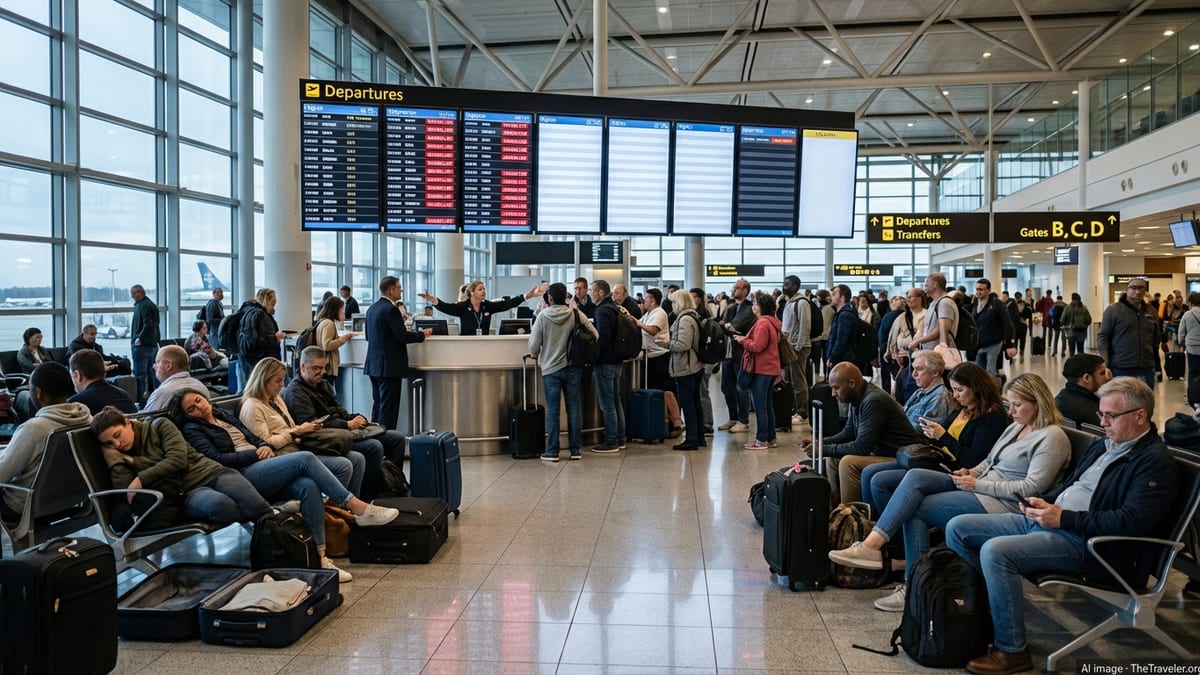
In practical terms, the current figures of 248 cancellations and 575 delays translate into tens of thousands of disrupted passenger journeys over a short window. Travel reports describe crowded terminals, long queues at rebooking counters and pressure on hotel capacity around the major gateways as travelers scramble to rearrange plans.
The disruption is also compounding preexisting operational stress at Saudi airports, where rapid growth in demand, ongoing infrastructure work and tight airline scheduling had already left little slack in the system. The latest shock to the network has pushed that system close to its limits.
Regional Security Crisis Rewrites Flight Paths
The immediate backdrop to the aviation turmoil is the broader regional security crisis centered on the 2026 Iran war and related tensions across the Gulf. International coverage notes that missile and drone strikes, as well as intermittent airspace restrictions, have affected major hubs across the Middle East, including Dubai and Abu Dhabi, and have forced airlines to reroute or suspend services.
Analyses of the conflict’s economic impact highlight aviation as one of the sectors most exposed to these risks. The closure or partial closure of key Gulf air corridors has increased flight times on Asia–Europe routes, raised fuel costs and complicated crew scheduling. For carriers serving or overflying Saudi Arabia, this has reduced flexibility and increased the likelihood that one disruption in the network triggers knock-on delays elsewhere.
Recent advisories from several Western governments underline that travel to parts of Saudi Arabia, particularly areas near the Yemen border and facilities previously targeted by attacks, now carries elevated risk. Some guidance urges travelers to anticipate sudden airport closures, schedule changes and prolonged disruptions as security conditions evolve.
Together, these factors have created a fragile operating environment in which even minor incidents can force airlines to cancel multiple rotations in order to keep crews and aircraft in balance. The current count of 248 cancellations and 575 delays is being interpreted by regional aviation analysts as a manifestation of this broader structural strain rather than a one-off technical issue.
International Airlines Cut and Reroute Services
International carriers have responded to the crisis with a mix of route suspensions, diversions and schedule thinning. Coverage from Gulf-based outlets and global aviation trackers shows that airlines in Asia, Europe and North America have trimmed frequencies into Saudi Arabia, while some regional operators have shifted transit traffic away from the most exposed airspace.
Several large international airlines had already suspended or reduced flights to Middle Eastern gateways earlier in 2026 as hostilities intensified, and Saudi destinations are now increasingly caught in that wider retrenchment. Longer routings to avoid sensitive airspace are consuming more aircraft time and fuel, limiting the number of rotations that can be flown each day and prompting carriers to prioritize their densest or most profitable routes.
At the same time, carriers based in the Gulf have had to make rolling decisions about whether to push ahead with scheduled departures through constrained corridors or to cancel services outright. Reports on recent operational updates for airlines across Dubai, Abu Dhabi and other hubs describe last minute timetable changes, with flights to and from Saudi airports regularly among those disrupted.
For travelers, this has translated into a higher risk of late-notice cancellations even when airports themselves remain officially open. Aviation commentators note that passengers connecting through Riyadh or Jeddah from long haul flights are especially vulnerable when inbound aircraft arrive late or reach crew duty-time limits, forcing onward legs to be delayed or scrubbed.
Domestic Network and Pilgrim Traffic Under Pressure
Inside the kingdom, the strain is being felt most acutely on domestic corridors that are vital for business travel, family visits and religious journeys. Earlier this year, monitoring of flight operations between Riyadh and Jeddah highlighted clusters of delays and cancellations affecting multiple Saudi carriers on the same day, leaving travelers with limited alternative options.
The latest figures for 248 cancellations and 575 delays indicate that such patterns are now occurring across a wider slice of the domestic and regional network. When several departures in a row are disrupted on routes linking major cities, airport congestion becomes difficult to manage, with gate space, baggage systems and ground transport placed under intense pressure.
The timing is particularly challenging given Saudi Arabia’s role as a major destination for religious tourism. Periods of peak pilgrim travel already stretch airport infrastructure and airline resources. When added to a regional security environment that can change rapidly, any additional shock can quickly spill over into protracted disruptions for visitors and residents alike.
Travel-focused observers point out that domestic travelers and regional visitors often have less flexibility than long haul passengers, with fewer alternative routings and tighter schedules tied to work or pilgrimage dates. This amplifies the human impact of each cancellation or multi hour delay.
What Travelers Are Being Urged To Do
Publicly available advisories from foreign ministries, aviation regulators and airlines emphasize the same central message for anyone flying to, from or through Saudi Arabia: conditions are fluid, and travelers should prepare for disruption. Guidance commonly recommends checking flight status repeatedly in the 24 hours before departure and staying alert for schedule changes via airline apps and text alerts.
Some travel and logistics bulletins suggest allowing extra time for security checks, immigration and transit connections, particularly when routing through Riyadh, Jeddah or Dammam. Passengers are also encouraged to familiarize themselves with airline policies on rebooking and refunds, which may differ depending on whether a disruption is categorized as security related, operational or weather driven.
Specialist risk briefings for corporate travelers and essential staff working in the region stress the importance of flexible itineraries and contingency plans. Recommendations include holding fully refundable tickets where possible, avoiding tight same day connections, and ensuring that accommodation and ground transport can be reconfigured at short notice.
For now, the scale of 248 cancellations and 575 delays across Saudi aviation underscores the volatility that has come to define Gulf air travel in 2026. With the broader regional crisis still unresolved and airspace conditions subject to rapid change, travel experts expect Saudi Arabia’s airports to remain under pressure, and passengers to face a heightened risk of disruption in the weeks ahead.